1906 Prince Luigi Amedeo Duke of the Abruzzi and Giuseppe Petigax Rwenzori Mount Stanley First Ascent Expedition
On June 18, 1906, Prince Luigi Amedeo, Duke of the Abruzzi, accompanied by Courmayeur master guides Giuseppe Petigax, César Ollier, and Josef Brocherel, achieved the historic maiden first ascent of Margherita Peak (5,109 m) on Mount Stanley, unlocking the fabled 'Mountains of the Moon' of central Africa.
Mountain Safety & Conditions Disclaimer: High-altitude climbing, glacial travel, and technical ascents entail severe objective risks including avalanches, serac collapses, rapid weather collapse, and altitude illness. Historical route descriptions and summit claims on Mountanity reflect documented archival sources and must not be used as live operational safety assessments. Local regulations, permits, and physical glacial topography change continuously.
Peer Review: Senior Editorial Board & Historical Reviewers • Editorial Standards
Official Expedition Narrative & Archival Record
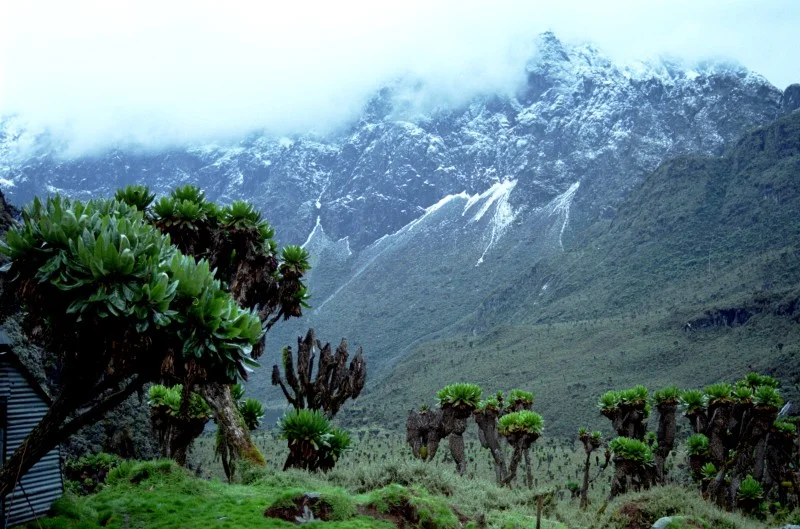
For centuries, the glaciated Rwenzori Mountains straddling modern-day Uganda and the Democratic Republic of the Congo remained shrouded in perpetual cloud, known only from ancient Greek geography as the 'Mountains of the Moon' feeding the sources of the Nile. Multiple expeditions, including those of Henry Morton Stanley and Douglas Freshfield, were turned back by impenetrable tropical bogs, torrential rain, and confusing labyrinthine ridges. In 1906, Prince Luigi Amedeo, Duke of the Abruzzi, fresh from his polar achievements, organized the definitive scientific mountaineering expedition to the Rwenzori. Assembling a peerless team including master photographer Vittorio Sella, cartographer Filippo De Filippi, and Courmayeur guides Giuseppe Petigax, César Ollier, and Josef Brocherel, the Duke departed Entebbe with hundreds of Baganda and Bakonjo porters. Pushing up the Mobuku and Bujuku valleys through otherworldly forests of giant lobelias and ten-foot tree heathers dripping with wet moss, the party established a high camp on the rock rib below the Elena Glacier. On June 18, 1906, climbing in heavy mist, Petigax led the Duke across the crevassed Stanley Plateau and up the steep hanging ice of the Margherita Glacier. Cutting through a corniced summit crest, the Duke and Petigax emerged onto the highest rock pinnacle at 5,109 metres, naming it Margherita Peak in honor of Queen Margherita of Italy, before traversing to its twin sister summit, Alexandra Peak (5,091 m). The expedition successfully climbed and mapped all sixteen major glaciated peaks in the range, producing definitive maps and Vittorio Sella's iconic photographic portfolio.
Documented Team Composition
- Prince Luigi Amedeo, Duke of the Abruzzi (Expedition Commander, Italy)
- Giuseppe Petigax (Lead Alpine Guide, Courmayeur, Italy)
- César Ollier (Alpine Guide, Courmayeur, Italy)
- Josef Brocherel (Alpine Guide, Courmayeur, Italy)
- Vittorio Sella (Expedition Photographer, Italy)
- Dr. Filippo De Filippi (Physician & Expedition Chronicler, Italy)
Key Statistics & Topographic Figures
- Official Elevation
- 5,109 m (16,762 ft)
- Summit Date
- June 18, 1906
- First Ascenders
- Duke of the Abruzzi & Giuseppe Petigax
- Mountain Range
- Rwenzori Mountains (Mountains of the Moon)
- Route Type
- Glaciated Stanley Plateau & Margherita Ice Wall
Archival Primary Source Quotations
“We moved through a prehistoric world where giant tree groundsels reached twenty feet into the fog and moss hung like emerald draperies from every branch.”
Defined Alpine Terminology & Concepts
- Crystalline Horst
- An uplifted fault block of the Earth's crust bounded by faults, created by tectonic compression rather than volcanic eruption.
- Afro-Montane Cloud Forest
- A high-elevation tropical rainforest shrouded in persistent cloud and mist, featuring massive moss-covered tree heathers.
Frequently Asked Questions: 1906 Prince Luigi Amedeo Duke of the Abruzzi and Giuseppe Petigax Rwenzori Mount Stanley First Ascent Expedition
Who conquered Mount Stanley's Margherita Peak in 1906?
Prince Luigi Amedeo, Duke of the Abruzzi, accompanied by Courmayeur master guides Giuseppe Petigax, César Ollier, and Josef Brocherel, reached the summit on June 18, 1906.
What are the Rwenzori Mountains historically called?
They are known as the legendary 'Mountains of the Moon', referenced by Ptolemy as the glaciated sources of the Nile River.
What is the highest point of the Rwenzori range?
Margherita Peak on Mount Stanley, rising to 5,109 metres (16,762 ft) on the border of Uganda and the Democratic Republic of the Congo.
Who captured the famous 1906 photographs of the Rwenzori?
Master mountain photographer Vittorio Sella, whose large-format glass plates documented the virgin glaciers and unique Afro-alpine flora.
Ascent Route & Topography
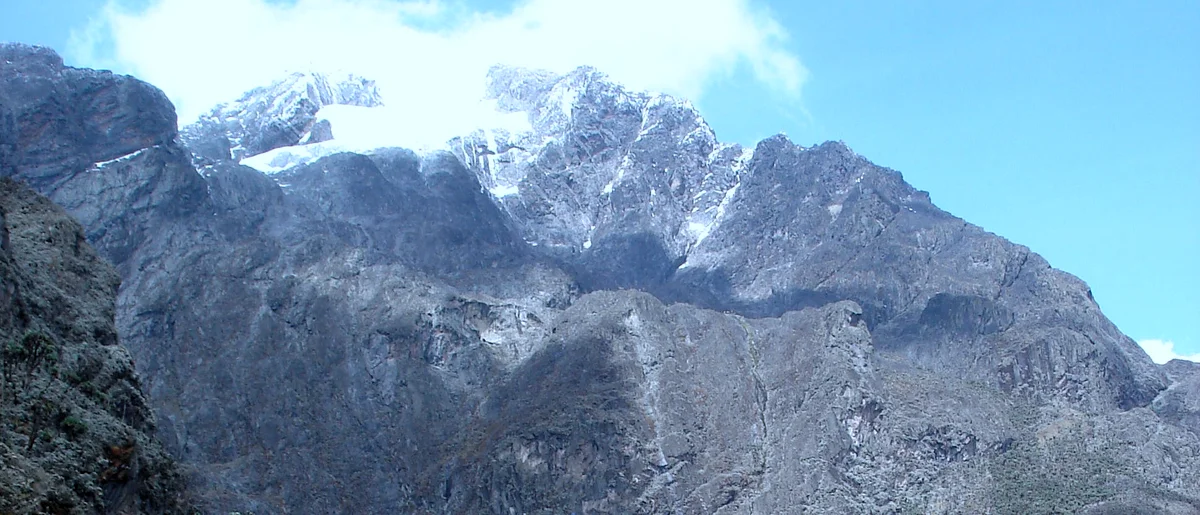
Mount Stanley Margherita Glacier Route via Elena Hut
The standard mountaineering route up Mount Stanley's Margherita Peak (5,109 m), navigating equatorial glaciers, crevassed ice plateaus, and jagged metamorphic rock ridges in the mist-veiled Rwenzori Mountains of Uganda.
Target Objective Peak
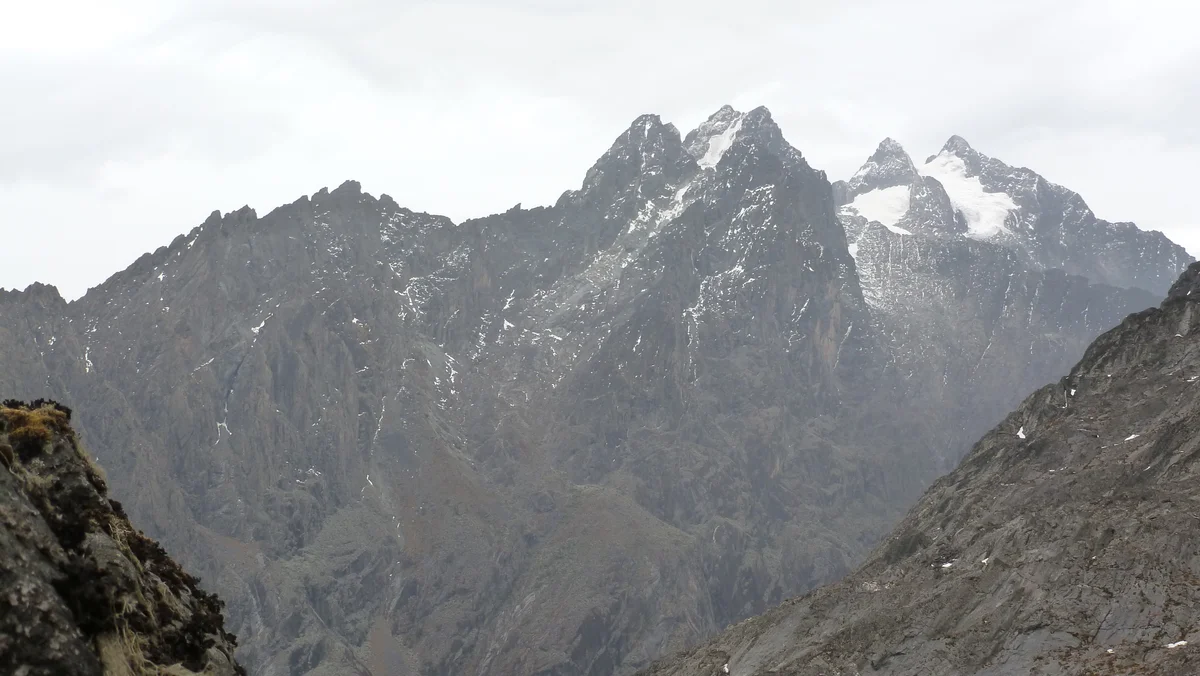

Mount Stanley
Mount Stanley is the third-highest mountain in Africa at 5,109 metres (16,762 ft) and the supreme crown of the Rwenzori Mountains ('Mountains of the Moon'), straddling the international boundary between Uganda and the Democratic Republic of the Congo. Its highest point, Margherita Peak, is a formidable horn of glaciated metamorphic rock, first summitted on June 18, 1906, by Prince Luigi Amedeo, Duke of the Abruzzi, accompanied by master Courmayeur guides Joseph Petigax, César Ollier, and Josef Brocherel.
Featured Expedition Climbers
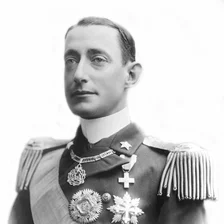
Prince Luigi Amedeo, Duke of the Abruzzi
Prince Luigi Amedeo Giuseppe Maria Ferdinando Francesco di Savoia, Duke of the Abruzzi, was born on January 29, 1873, in Madrid, Spain, son of King Amadeo I of Spain and a scion of the Italian Royal House of Savoy. An admiral in the Italian Royal Navy, the Duke dedicated his immense intellect, discipline, and personal fortune to geographic and polar exploration. In 1897, the Duke led an expedition to Alaska, achieving the historic first ascent of Mount Saint Elias (5,489m) across eighty miles of uncharted ice. In 1899–1900, he mounted an expedition to the Arctic Ocean, setting a new 'Farthest North' world record at latitude 86°34′ N. In 1906, he turned to equatorial Africa, achieving the first ascents of all major glaciated summits of the Rwenzori range (the 'Mountains of the Moon'), including Mount Stanley (Margherita Peak, 5,109m). In 1909, the Duke organized the definitive pioneering expedition to K2 (8,611m) in the Karakoram, accompanied by brilliant mountain photographer Vittorio Sella, topographer Filippo De Filippi, and Courmayeur guides led by Joseph Petigax. Approaching up the Baltoro Glacier, the Duke surveyed K2 from all flanks and identified the southeast ridge as the mountain's only viable climbing route—christening it the 'Abruzzi Spur'. The team climbed the lower ridge to approximately 6,250 meters before being stopped by severe technical terrain and porters' exhaustion. Turning to neighboring Chogolisa (7,665m), the Duke pushed up the Southeast Ridge to 7,498 meters in dense fog, establishing a human altitude world record that remained unbroken until the 1922 British Everest expedition. The Duke's 1909 expedition produced the first accurate topographical maps and panoramic photographic surveys of the Central Karakoram, laying the foundational blueprint for every subsequent expedition on K2. He passed away on March 18, 1933, in Italian Somaliland, revered as one of the greatest expedition commanders in world history.
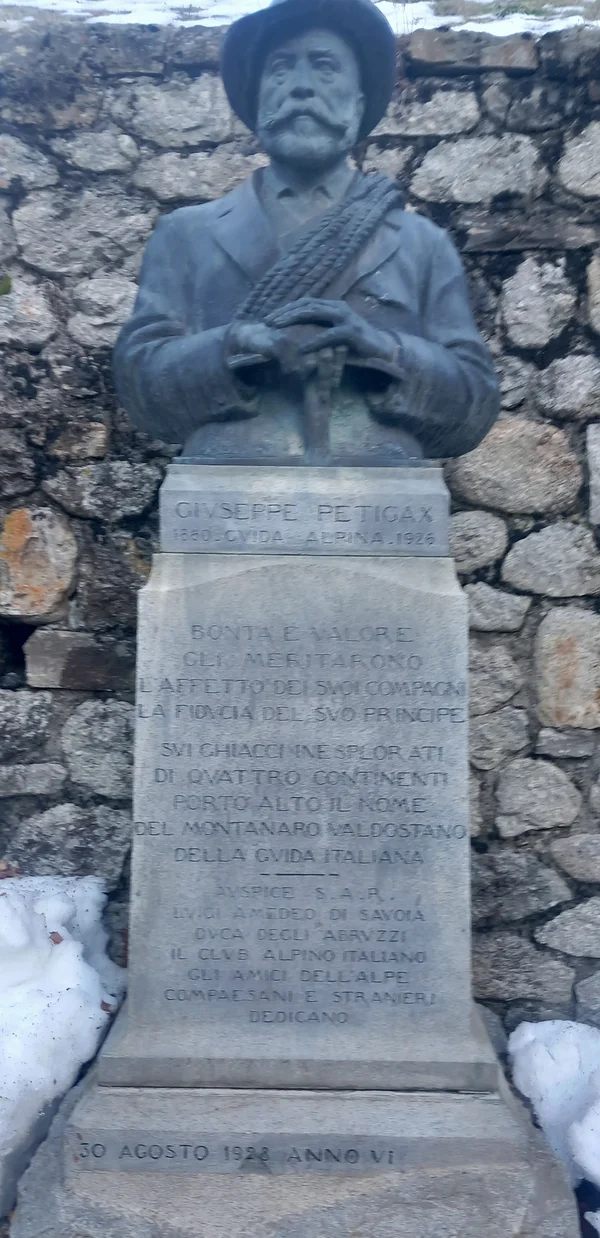
Giuseppe Petigax
Giuseppe 'Joseph' Petigax was born on June 27, 1860, in Courmayeur at the foot of Mont Blanc in the Valle d'Aosta, Italy. Trained from youth in the rigorous traditions of the Courmayeur Mountain Guides Society (Società Guide Alpine Courmayeur), Petigax emerged as one of the most technically accomplished, calm, and trustworthy guides in the Western Alps, renowned for his exceptional route-finding instinct on treacherous ice and loose metamorphic rock. In 1897, Prince Luigi Amedeo, Duke of the Abruzzi, selected Petigax as his chief climbing guide for an expedition to Alaska. Across eighty miles of crevassed glaciers, Petigax led the summit team up the Newton Glacier to achieve the historic maiden first ascent of Mount Saint Elias (5,489 m). In 1899–1900, Petigax accompanied the Duke on his famous Arctic expedition aboard the Stella Polare, surviving an epic polar winter. In the summer of 1906, Petigax led the Duke's expedition into the mist-shrouded Rwenzori Mountains ('Mountains of the Moon') on the border of Uganda and the Congo. In foul weather and dense mist, Petigax hacked steps up equatorial glaciers to summit Margherita Peak (5,109 m) on Mount Stanley, as well as every other major summit in the range. In 1909, Petigax served as head guide on the Duke's historic Karakoram expedition to K2, pioneering the route up the Southeast Ridge that bears the Duke's name—the Abruzzi Spur—and reaching 7,498 metres on Chogolisa to set a world altitude record that stood for thirteen years. Petigax passed away in Courmayeur on February 7, 1926, honored across Italy as a peerless mountain pioneer.
Associated Historical Chronicles & Stories
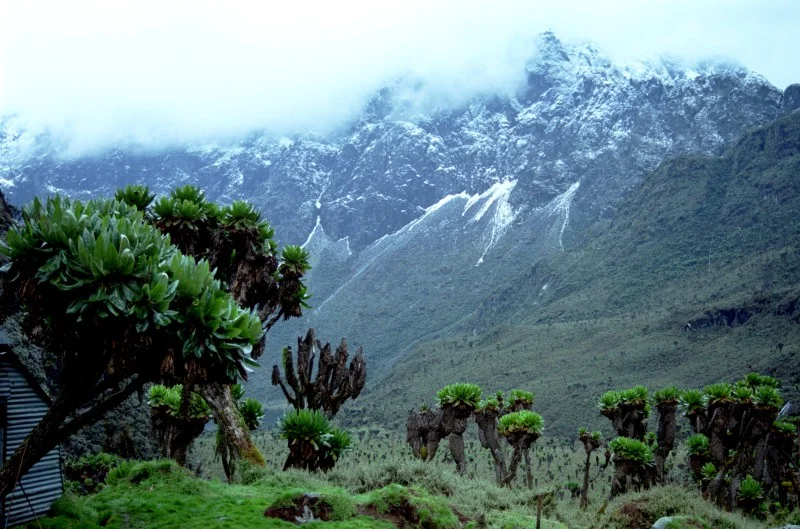
Mountains of the Moon: The Duke of the Abruzzi and the 1906 Ruwenzori Conquest
The Fabled Source of the Nile...
Documented Sources & Archival Citations
- Ruwenzori: An Account of the Expedition of H.R.H. Prince Luigi Amedeo of Savoy(Filippo De Filippi / Archibald Constable & Co.)
Supporting claim: Firsthand official narrative of the 1906 first ascents and mapping
Accessed/Documented: 1908