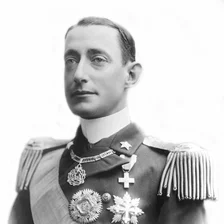
Prince Luigi Amedeo, Duke of the Abruzzi
Prince Luigi Amedeo, Duke of the Abruzzi, was an illustrious Italian royal, naval admiral, and explorer who led the monumental 1909 Karakoram expedition to K2, pioneering the route that bears his name today: the Abruzzi Spur. His expedition established a world mountaineering altitude record on Chogolisa (7,498m) that stood for thirteen years.
Mountain Safety & Conditions Disclaimer: High-altitude climbing, glacial travel, and technical ascents entail severe objective risks including avalanches, serac collapses, rapid weather collapse, and altitude illness. Historical route descriptions and summit claims on Mountanity reflect documented archival sources and must not be used as live operational safety assessments. Local regulations, permits, and physical glacial topography change continuously.
Peer Review: Senior Editorial Board & Historical Reviewers • Editorial Standards
Biographical Record & Archival Chronicle
Prince Luigi Amedeo Giuseppe Maria Ferdinando Francesco di Savoia, Duke of the Abruzzi, was born on January 29, 1873, in Madrid, Spain, son of King Amadeo I of Spain and a scion of the Italian Royal House of Savoy. An admiral in the Italian Royal Navy, the Duke dedicated his immense intellect, discipline, and personal fortune to geographic and polar exploration.
In 1897, the Duke led an expedition to Alaska, achieving the historic first ascent of Mount Saint Elias (5,489m) across eighty miles of uncharted ice. In 1899–1900, he mounted an expedition to the Arctic Ocean, setting a new 'Farthest North' world record at latitude 86°34′ N. In 1906, he turned to equatorial Africa, achieving the first ascents of all major glaciated summits of the Rwenzori range (the 'Mountains of the Moon'), including Mount Stanley (Margherita Peak, 5,109m).
In 1909, the Duke organized the definitive pioneering expedition to K2 (8,611m) in the Karakoram, accompanied by brilliant mountain photographer Vittorio Sella, topographer Filippo De Filippi, and Courmayeur guides led by Joseph Petigax. Approaching up the Baltoro Glacier, the Duke surveyed K2 from all flanks and identified the southeast ridge as the mountain's only viable climbing route—christening it the 'Abruzzi Spur'. The team climbed the lower ridge to approximately 6,250 meters before being stopped by severe technical terrain and porters' exhaustion. Turning to neighboring Chogolisa (7,665m), the Duke pushed up the Southeast Ridge to 7,498 meters in dense fog, establishing a human altitude world record that remained unbroken until the 1922 British Everest expedition.
The Duke's 1909 expedition produced the first accurate topographical maps and panoramic photographic surveys of the Central Karakoram, laying the foundational blueprint for every subsequent expedition on K2. He passed away on March 18, 1933, in Italian Somaliland, revered as one of the greatest expedition commanders in world history.
Notable Milestones & Ascents
- Explored and pioneered the 'Abruzzi Spur' (Southeast Ridge) on K2 in 1909, the route used in the 1954 first ascent and by 85% of all climbers today
- Set a world mountaineering altitude record of 7,498m on Chogolisa on July 18, 1909, which stood for 13 years
- Achieved the maiden first ascent of Mount Saint Elias (5,489m) in Alaska in 1897
- Achieved the maiden first ascents of all major peaks of the Rwenzori Mountains in Uganda/Congo in 1906
- Achieved the 'Farthest North' polar exploration world record (86°34′ N) in 1900
Key Statistics & Topographic Figures
- Lifespan
- 1873–1933
Savoy Royal Dynasty
- World Altitude Record
- 7,498 meters (Chogolisa, 1909)
Stood for 13 Years
- K2 Pioneer Route
- Abruzzi Spur (Southeast Ridge)
Pioneered to 6,250m
- Major First Ascents
- Mount Saint Elias (1897) & Rwenzori (1906)
Alaska & Africa
Archival Primary Source Quotations
“Nature does not yield easily, but human perseverance combined with science can bridge any frontier.”
Defined Alpine Terminology & Concepts
- Abruzzi Spur
- The prominent 3,200m southeast rock and ice pillar on K2, discovered and climbed to 6,250m by the Duke of the Abruzzi in 1909, now the standard normal route.
- Farthest North
- The polar record set by the Duke of the Abruzzi’s expedition ship Stella Polare and Captain Umberto Cagni reaching latitude 86°34′ N in April 1900.
Frequently Asked Questions: Prince Luigi Amedeo, Duke of the Abruzzi
Who was Prince Luigi Amedeo, Duke of the Abruzzi?
Prince Luigi Amedeo of Savoy, Duke of the Abruzzi (1873–1933), was an Italian royal prince, admiral in the Royal Italian Navy, and legendary explorer who led the monumental 1909 expedition to K2 that discovered and pioneered the Abruzzi Spur.
What was the Duke of the Abruzzi’s contribution to K2?
The Duke surveyed K2 from all flanks in 1909, identified the Southeast Ridge as the sole viable route to the summit, climbed it to 6,250 meters, and christened it the Abruzzi Spur—the route used in the 1954 first ascent and by most climbers today.
What world altitude record did the Duke of the Abruzzi set in 1909?
On July 18, 1909, the Duke and his Courmayeur guides reached 7,498 meters (24,600 ft) on Chogolisa (Bride Peak) without bottled oxygen, setting an altitude world record that remained unbroken for 13 years.
What other major expeditions did the Duke of the Abruzzi lead?
The Duke made the first ascent of Mount Saint Elias (5,489m) in Alaska in 1897, set a polar "Farthest North" record (86°34′ N) in 1900, and climbed all major glaciated summits of the African Rwenzori Mountains in 1906.
Who accompanied the Duke of the Abruzzi on his expeditions?
His core expedition team included master photographer Vittorio Sella, topographer Filippo De Filippi, and elite alpine guides from Courmayeur led by Joseph Petigax.
Why did the Duke of the Abruzzi choose the Abruzzi Spur on K2?
After examining the avalanche-scoured North, West, and East faces, the Duke recognized that the Southeast Ridge provided a natural rock backbone sheltered from catastrophic icefalls.
What was the Duke of the Abruzzi’s military career?
He served as a decorated admiral in the Regia Marina (Royal Italian Navy), commanding the Italian naval fleet in the Adriatic during World War I.
Where did the Duke of the Abruzzi die?
The Duke passed away on March 18, 1933, in Villabruzzi (Jowhar), Italian Somaliland, where he had established an agricultural development colony along the Shabelle River.
Associated Summits (3)
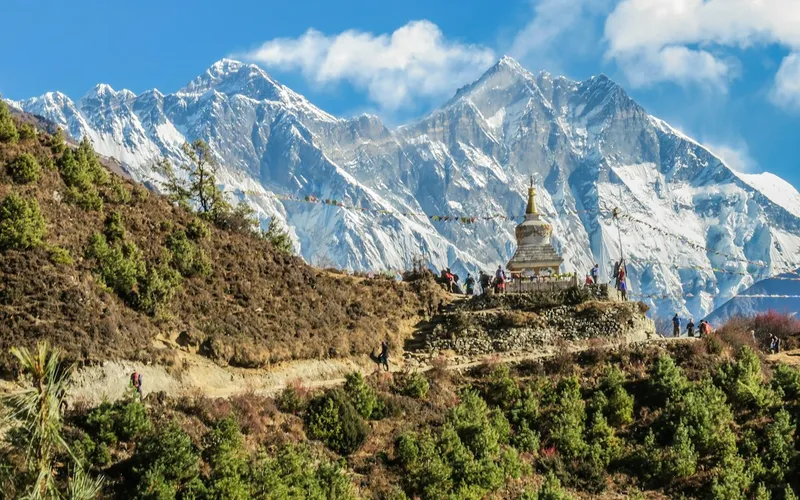


K2
K2, at 8,611 meters (28,251 ft), is the second-highest mountain on Earth and widely regarded as the most technically demanding and lethal 8,000-meter peak. Located in the heart of the Karakoram on the border between Pakistan and China, K2 is characterized by sheer relief, severe weather anomalies, and persistent objective hazards including the notorious Bottleneck couloir.
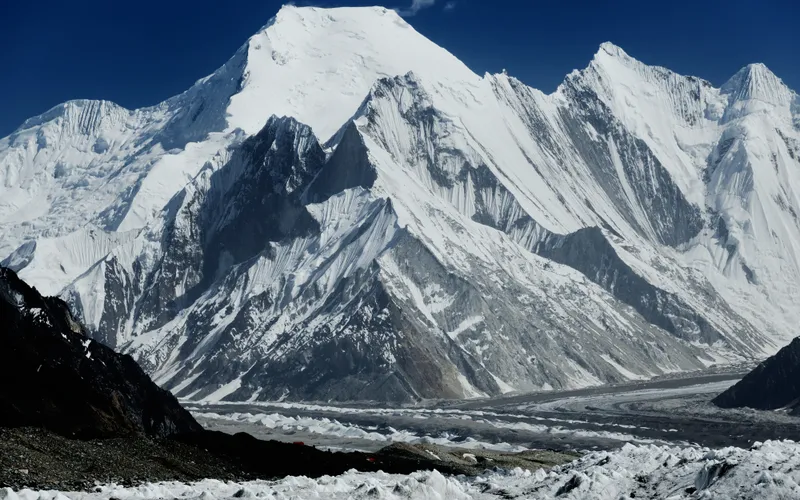
Chogolisa
Chogolisa, standing at 7,665 meters (25,148 ft) in the Karakoram range of Pakistan, is renowned as Bride Peak for its broad, graceful snow-draped profile. Located south of Concordia and the Baltoro Glacier, it features two prominent summits connected by a sweeping knife-edge snow ridge. In 1909, the Duke of the Abruzzi set a world altitude record on its slopes, and in 1957, it became the site of alpine pioneer Hermann Buhl's fatal cornice fall.
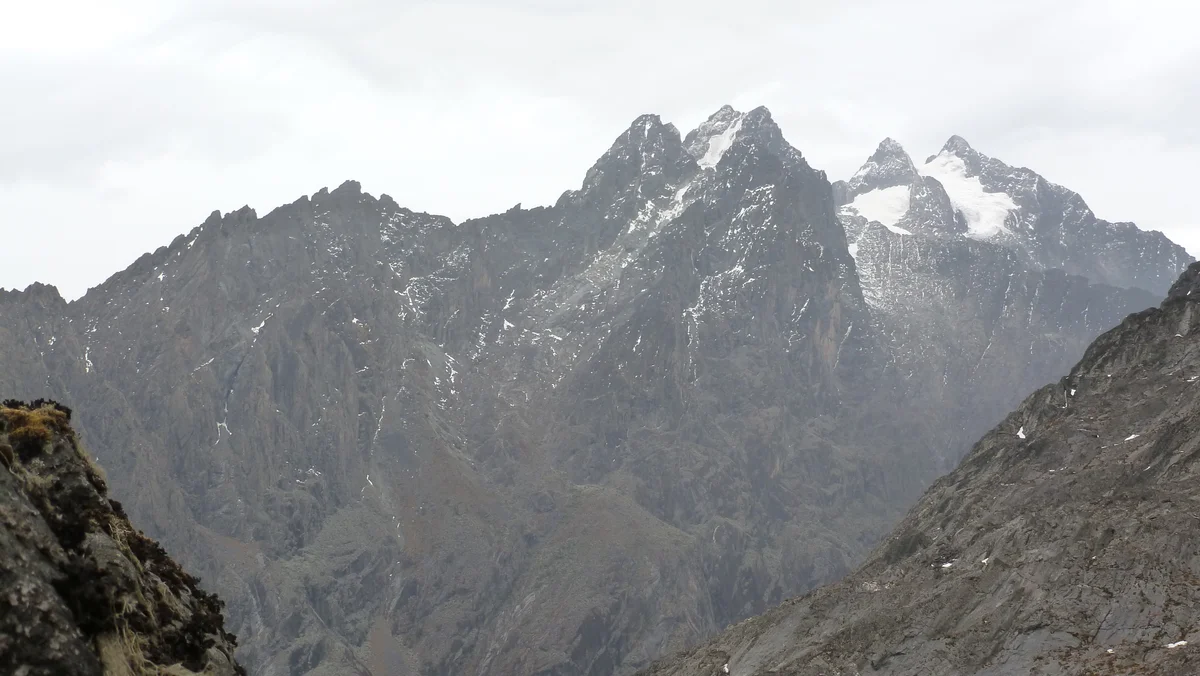

Mount Stanley
Mount Stanley is the third-highest mountain in Africa at 5,109 metres (16,762 ft) and the supreme crown of the Rwenzori Mountains ('Mountains of the Moon'), straddling the international boundary between Uganda and the Democratic Republic of the Congo. Its highest point, Margherita Peak, is a formidable horn of glaciated metamorphic rock, first summitted on June 18, 1906, by Prince Luigi Amedeo, Duke of the Abruzzi, accompanied by master Courmayeur guides Joseph Petigax, César Ollier, and Josef Brocherel.
Pioneered & Associated Routes (5)
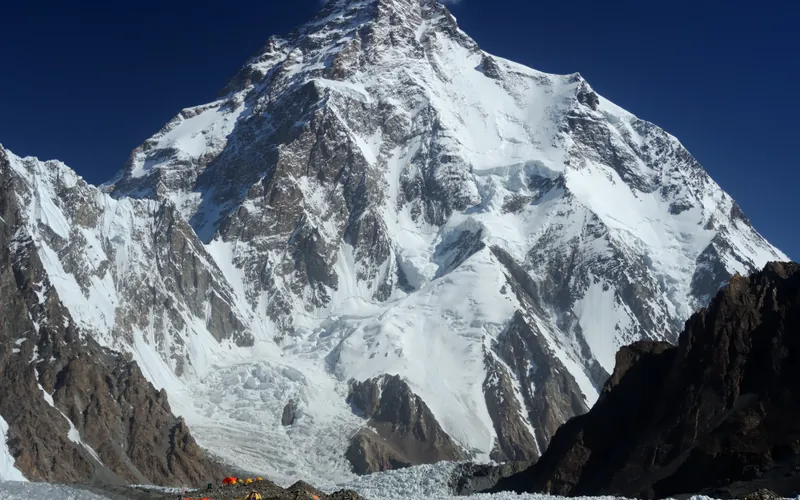
Abruzzi Spur (Southeast Ridge)
The Abruzzi Spur is the most famous and frequently climbed route on K2, tracing the mountain's steep southeast ridge from the Godwin-Austen Glacier to the summit. First explored in 1909 by Prince Luigi Amedeo, Duke of the Abruzzi, it was successfully climbed to the summit in 1954 by an Italian team. The route requires extreme physical endurance and high-grade technical climbing on rock, ice, and mixed terrain through legendary cruxes like House's Chimney, the Black Pyramid, and the Bottleneck couloir.
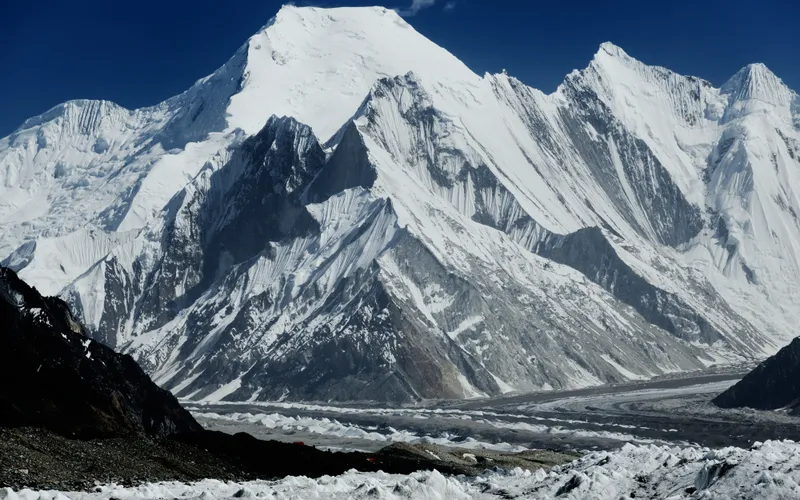
Southeast Ridge (Standard Route)
The Southeast Ridge of Chogolisa (7,665m) ascends from the upper Chogolisa Glacier, scaling steep ice couloirs to gain the elegant, wind-sculpted snow arête leading toward the summit. First explored in 1909 by the Duke of the Abruzzi to 7,498 meters, attempted in alpine style in 1957 by Hermann Buhl and Kurt Diemberger, and first summited on August 4, 1958, by Fred Pressl and Adolf Bräunlich.
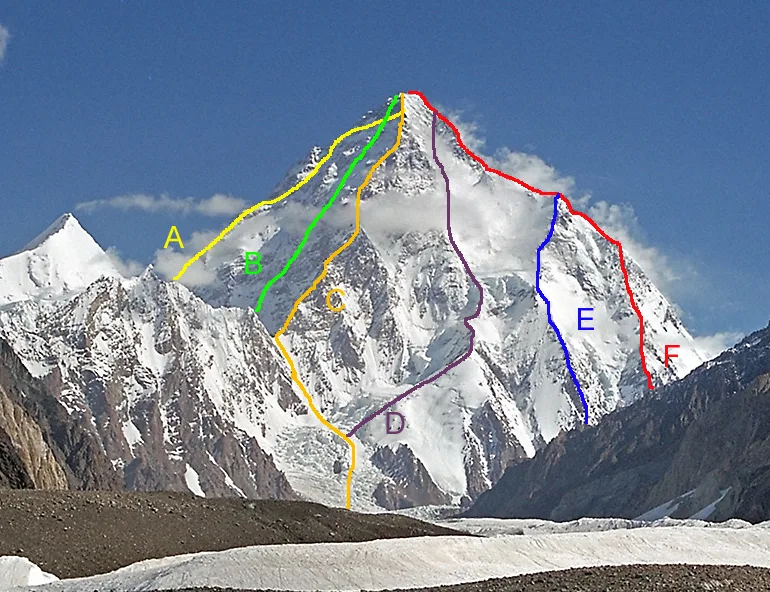
K2 South Face (The Polish Line)
The Polish Line on the South Face of K2 (8,611m) is widely regarded as one of the most perilous and audacious routes ever climbed in high-altitude mountaineering history. Tackling the direct 3,200-meter wall between the Abruzzi Spur and the Magic Line (South-Southwest Pillar), the route ascends through a chaotic labyrinth of hanging seracs, avalanche funnels, and vertical rock bands. Pioneered in alpine style over five harrowing days in July 1986 by Jerzy Kukuczka and Tadeusz Piotrowski without supplemental oxygen, Reinhold Messner famously dubbed it 'suicidal'. Kukuczka and Piotrowski reached the summit on July 8, but tragedy struck during their desperate descent via the Abruzzi Spur when Piotrowski lost both crampons and plunged to his death. To this day, the Polish Line remains unrepeated.
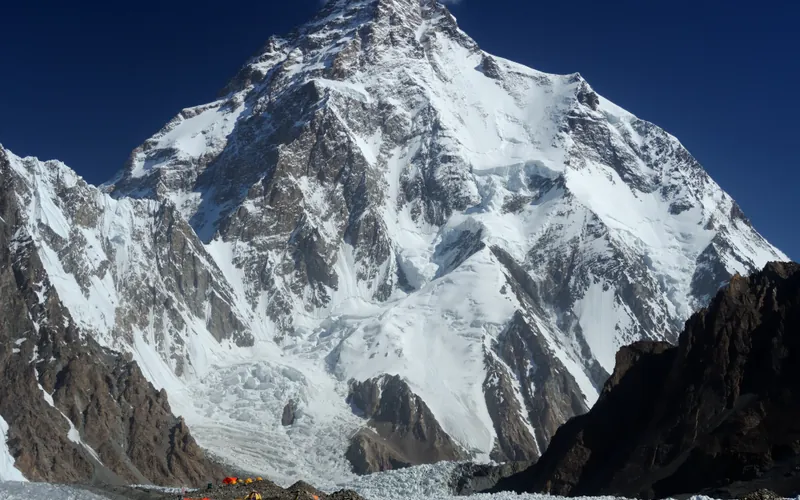
West Ridge (Japanese Route)
The West Ridge of K2 is one of the most formidable and sustained technical lines in high-altitude mountaineering. Pioneered in August 1981 by a joint Japanese-Pakistani expedition, it ascends directly from the Savoia Glacier along the exposed western crest before negotiating the severe Southwest Face directly into the Death Zone. Demanding immense commitment, it was first completed by Pakistani mountaineer Nazir Sabir and Japanese climber Eiho Ohtani after an epic bivouac near 8,500 meters.
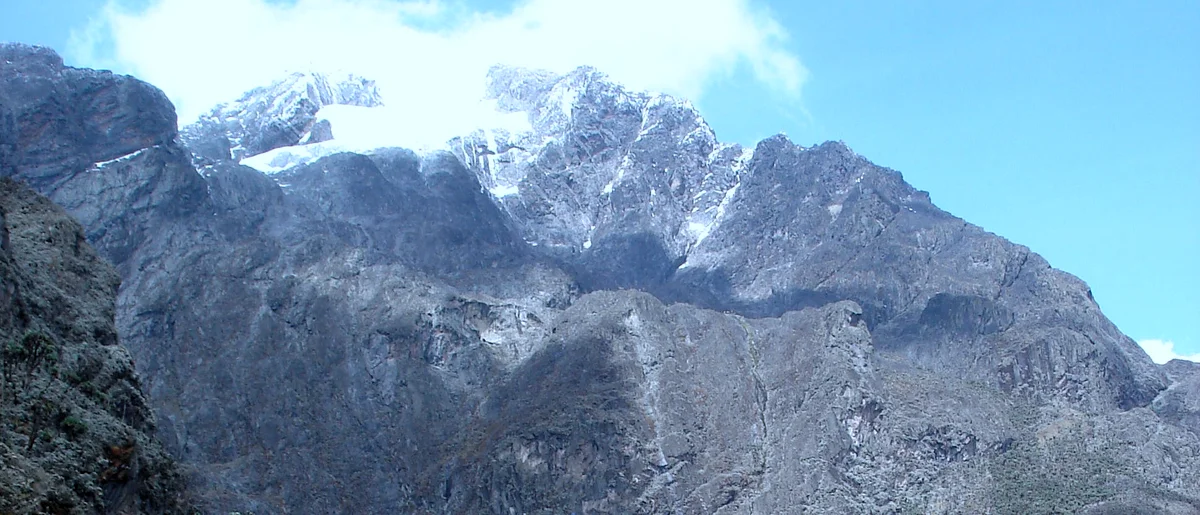
Mount Stanley Margherita Glacier Route via Elena Hut
The standard mountaineering route up Mount Stanley's Margherita Peak (5,109 m), navigating equatorial glaciers, crevassed ice plateaus, and jagged metamorphic rock ridges in the mist-veiled Rwenzori Mountains of Uganda.
Documented Expeditions (2)
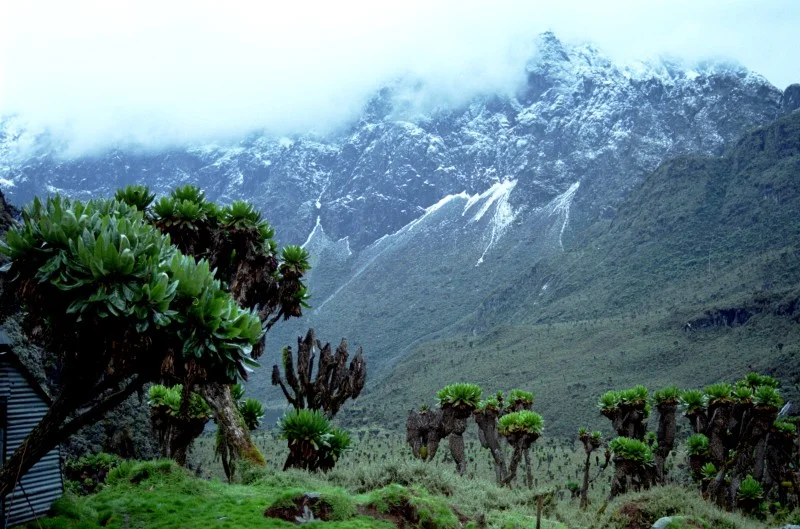
1906 Prince Luigi Amedeo Duke of the Abruzzi and Giuseppe Petigax Rwenzori Mount Stanley First Ascent Expedition
On June 18, 1906, Prince Luigi Amedeo, Duke of the Abruzzi, accompanied by Courmayeur master guides Giuseppe Petigax, César Ollier, and Josef Brocherel, achieved the historic maiden first ascent of Margherita Peak (5,109 m) on Mount Stanley, unlocking the fabled 'Mountains of the Moon' of central Africa.
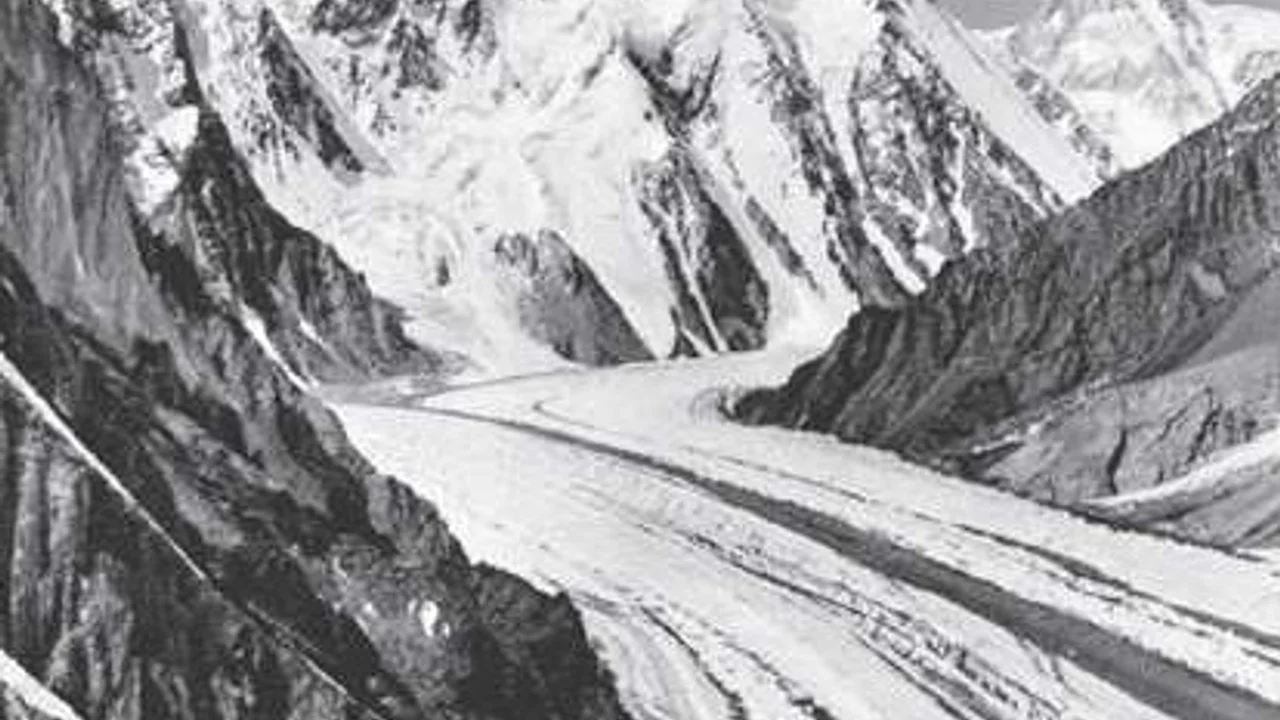
1909 Duke of the Abruzzi Karakoram Expedition
The monumental 1909 Italian expedition led by Prince Luigi Amedeo, Duke of the Abruzzi, accompanied by master photographer Vittorio Sella, that surveyed K2, discovered and pioneered the Abruzzi Spur, and established a world altitude record of 7,498 meters on Chogolisa.
Documented Sources & Archival Citations
- Karakoram and Western Himalaya 1909: An Account of the Expedition of H.R.H. Prince Luigi Amedeo of Savoy(Filippo De Filippi and Vittorio Sella / Edward Arnold)
Supporting claim: Official expedition record documenting the discovery of the Abruzzi Spur and the Chogolisa record
Accessed/Documented: 1912 - The Ascent of Mount St. Elias(Filippo De Filippi / Archibald Constable & Co.)
Supporting claim: Official record of the 1897 Alaskan first ascent
Accessed/Documented: 1900 - National Geographic: The Duke of the Abruzzi - Royal Explorer(National Geographic Society)
Supporting claim: Comprehensive biographical survey and obituary
Accessed/Documented: 1933