1935 Lawrence Wager & Ebbe Munck Anglo-Danish Expedition Historic First Ascent of Gunnbjørn Fjeld
On August 16, 1935, a joint Anglo-Danish party led by Lawrence Wager and Ebbe Munck achieved the historic maiden first ascent of Gunnbjørn Fjeld (3,694 m), the highest peak north of the Arctic Circle. Climbing via the South Ridge snowfields from the Watkins glacier, Wager, Munck, Jack Longland, and Patrick Courtauld conquered the roof of the Arctic.
Mountain Safety & Conditions Disclaimer: High-altitude climbing, glacial travel, and technical ascents entail severe objective risks including avalanches, serac collapses, rapid weather collapse, and altitude illness. Historical route descriptions and summit claims on Mountanity reflect documented archival sources and must not be used as live operational safety assessments. Local regulations, permits, and physical glacial topography change continuously.
Peer Review: Senior Editorial Board & Historical Reviewers • Editorial Standards
Official Expedition Narrative & Archival Record
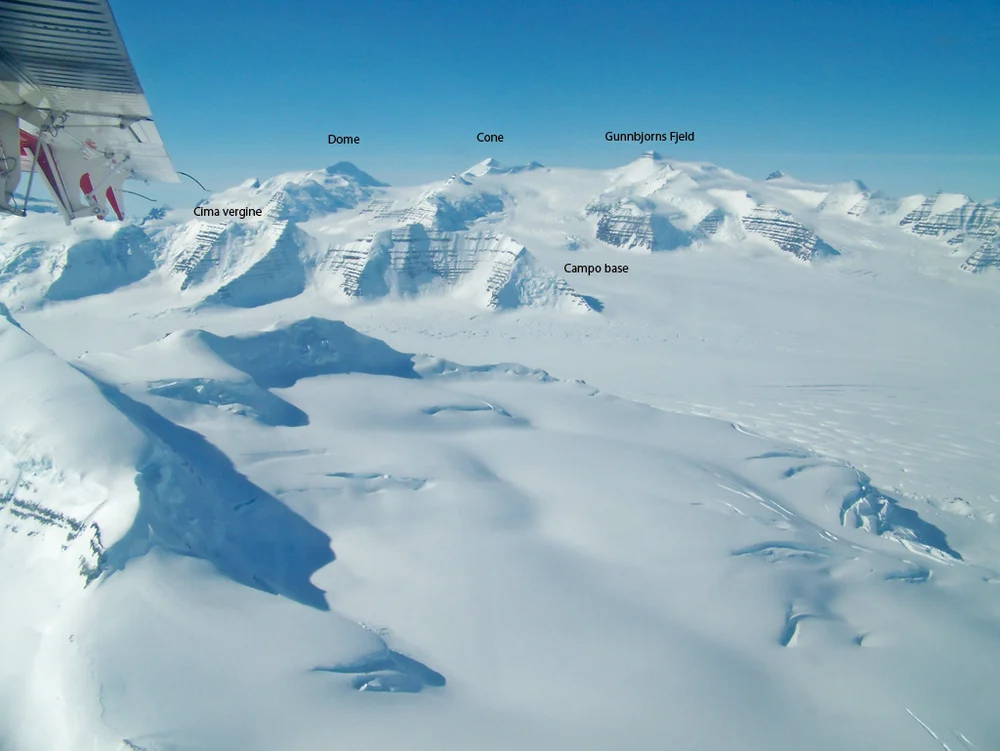
In 1935, British geologist Lawrence Wager and Danish journalist-explorer Ebbe Munck organized a joint Anglo-Danish expedition to conquer Gunnbjørn Fjeld (3,694 m), the highest summit in the Arctic, discovered five years earlier during Gino Watkins' expedition. Sailing from Norway in the veteran sealing vessel Quest, the expedition pushed through heavy Arctic pack ice to make landfall in Kangerlussuaq Fjord. Establishing Base Camp at the glacier snout, the climbing party—comprising Wager, Munck, Jack Longland (a veteran of the 1933 Everest expedition), and Patrick Courtauld—hauled equipment and sledges 80 kilometres inland onto the elevated glacial plateau of the Watkins Range. On August 16, 1935, under pristine polar skies and biting wind, the four climbers ascended the sweeping snow slopes and moderate rock bands of the South Ridge. Reaching the narrow summit crest at 3,694 metres, Wager and Munck stood atop the highest point in Greenland, planting the British and Danish flags and carrying out pioneering geological surveys of the basalt plateau.
Documented Team Composition
- Lawrence Rickard Wager (Co-Leader & Geologist, UK)
- Ebbe Munck (Co-Leader & Journalist, Denmark)
- Jack Longland (Climber, UK)
- Patrick Courtauld (Climber, UK)
- Augustine Courtauld (Expedition Sponsor & Support, UK)
Key Statistics & Topographic Figures
- Official Elevation
- 3,694 metres (12,119 ft)
- Summit Date
- August 16, 1935
- Co-Leaders
- Lawrence Rickard Wager & Ebbe Munck
- Summit Party
- Wager, Munck, Longland, Courtauld
- Significance
- Highest peak north of the Arctic Circle
Archival Primary Source Quotations
“We stood on the highest point in the Arctic, looking out over hundreds of square miles of glaciated cordillera where no human eye had ever rested.”
Defined Alpine Terminology & Concepts
- Flood Basalt
- Extensive volcanic basalt flows that erupted during the breakup of the North Atlantic, forming the dark rock layers of the Watkins Range.
- Arctic Apex
- The highest geographic altitude north of the Arctic Circle, crowned by the summit pinnacle of Gunnbjørn Fjeld.
Frequently Asked Questions: 1935 Lawrence Wager & Ebbe Munck Anglo-Danish Expedition Historic First Ascent of Gunnbjørn Fjeld
Who made the first ascent of Gunnbjørn Fjeld in 1935?
British geologist Lawrence Wager, Danish explorer Ebbe Munck, Jack Longland, and Patrick Courtauld achieved the maiden first ascent on August 16, 1935.
What is Gunnbjørn Fjeld and how high is it?
Gunnbjørn Fjeld is the highest mountain in Greenland and the entire Arctic, rising to an elevation of 3,694 metres (12,119 ft) in the Watkins Range.
What route was climbed on the 1935 first ascent of Gunnbjørn Fjeld?
The expedition ascended the South Ridge via the glacier plateau of the Watkins Range, climbing 35-degree snow ramps to the rocky summit ridge.
Ascent Route & Topography
South Ridge Normal Route of Gunnbjørn Fjeld
The South Ridge Normal Route on Gunnbjørn Fjeld ascends from the upper glaciated basin of the Watkins Range to follow a broad, windswept snow and ice ramp onto the narrow summit ridge. First climbed on August 16, 1935, by Lawrence Wager, Ebbe Munck, Jack Longland, and Patrick Courtauld, it is the classic line to the highest summit in the Arctic. Although technical difficulties are modest (Grade II alpine snow up to 35 degrees), climbers must manage severe Arctic cold, hidden crevasses, and utter remote wilderness where rescue by ski-equipped aircraft is weather-dependent.
Target Objective Peak
Gunnbjørn Fjeld
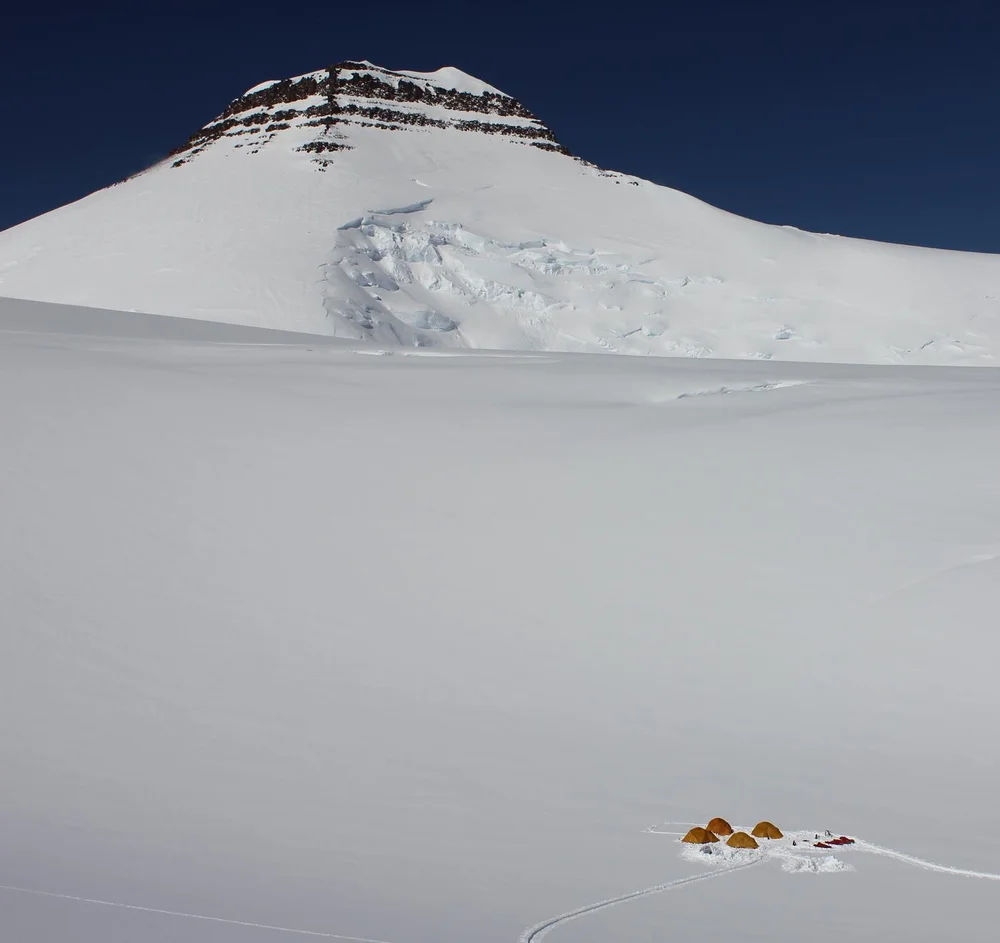
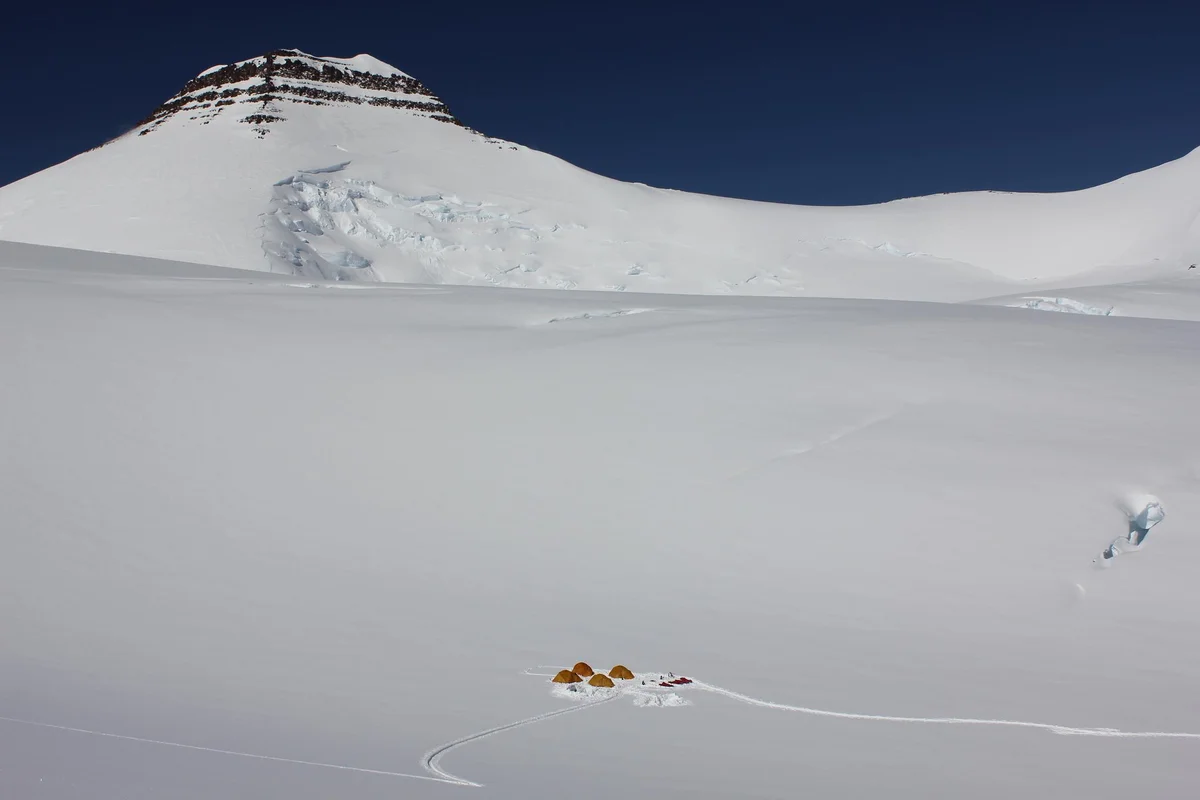
Gunnbjørn Fjeld is the highest mountain in Greenland and the highest peak north of the Arctic Circle at 3,694 metres (12,119 ft). Rising as an enormous basaltic nunatak above the glaciated plateau of the Watkins Range in East Greenland, it was first sighted from the air in 1930 by Gino Watkins and named after the 9th-century Norse explorer Gunnbjørn Ulfsson. The maiden first ascent was achieved on August 16, 1935, by Lawrence Wager, Ebbe Munck, Jack Longland, and Patrick Courtauld during an Anglo-Danish expedition. Climbing Gunnbjørn Fjeld involves moderate alpine glacier ascents, but requires complete self-reliance against extreme polar gales, severe windchill, and isolated Arctic conditions.
Featured Expedition Climbers
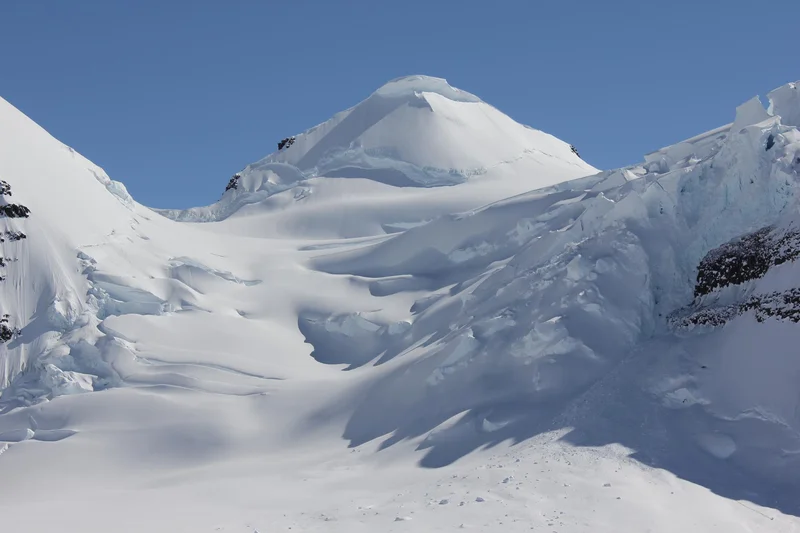
Augustine Courtauld
Augustine Courtauld was born on August 26, 1904, in Braintree, Essex, England, into the prominent Courtauld industrial and textile family. Educated at Charterhouse and Trinity College, Cambridge, Courtauld developed formidable seamanship as a competitive deep-sea yachtsman and joined James Wordie's 1926 expedition to East Greenland and 1929 expedition to Jan Mayen, mastering Arctic maritime navigation and survival. In 1930, Courtauld joined Gino Watkins' British Arctic Air Route Expedition as surveyor and meteorologist. To obtain vital year-round meteorological data for proposed North Atlantic commercial air routes, the expedition constructed an isolated weather station—Ice Cap Station—perched at 2,620 metres elevation on the crest of the Greenland Inland Ice. When winter reliefs were threatened by savage blizzards, Courtauld volunteered on December 6, 1930, to man the station entirely alone for the winter. Over the ensuing five months, brutal polar blizzards completely buried the small dome tent beneath snow and rime. Courtauld's ventilation pipe froze, his kerosene supplies dwindled, and on March 22, 1931, the entrance tunnel collapsed, entombing him in utter darkness beneath the ice sheet. For six weeks in total silence, rationing food in sub-zero cold, Courtauld maintained his calm resolve until May 5, 1931, when Watkins, Chapman, and Rymill located the buried station's protruding vent pipe and dug him out alive and in high spirits. Courtauld received the Polar Medal with Arctic Clasp in 1932. In 1935, he helped finance and plan the Anglo-Danish Expedition led by Lawrence Wager that conquered Gunnbjørn Fjeld. He served in the Royal Navy during World War II and authored 'Man the Mountain: An Anthology of Mount Exploration'. Courtauld died on March 3, 1959, at age 54, commemorated by Mount Augustine in East Greenland.
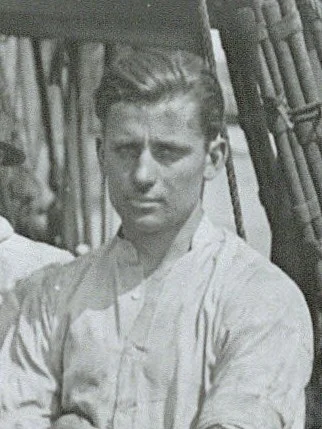
Ebbe Munck
Ebbe Munck was born on January 14, 1905, in Frederiksberg, Denmark. Educated in political science at the University of Copenhagen, Munck joined the Danish newspaper 'Berlingske Tidende' as a foreign correspondent. Drawn irresistibly to the icy frontiers of Greenland, Munck participated in Charcot's French expeditions in Scoresby Sound in 1926 and the 1930 Danish Jubilee Expedition to Northeast Greenland, gaining seasoned experience in dogsledging and Arctic maritime navigation. In 1935, Munck partnered with British geologist Lawrence Wager to co-lead the Anglo-Danish Expedition to East Greenland. Sailing through treacherous pack ice aboard the expedition vessel 'Quest', the expedition penetrated the coastal bluffs of King Christian IX Land to establish Base Camp beneath the Watkins Range. On August 16, 1935, Munck, Wager, Jack Longland, and Patrick Courtauld reached the summit of Gunnbjørn Fjeld (3,694 m), planting the flags of Denmark and Great Britain upon the highest mountain in the Arctic. Between 1938 and 1940, Munck served as co-leader of the Danish Northeast Greenland Expedition to Mørkefjord. During World War II, stationed as a foreign correspondent in Stockholm, Munck served as the critical secret conduit between the Danish Resistance Movement and Britain's Special Operations Executive (SOE), funneling intelligence and weapons that proved vital to the Allied war effort. Following the war, Munck entered diplomatic service, serving as Danish Ambassador to Finland, Thailand, and Belgium. He co-founded the Danish Expedition Foundation and served as advisor to the Royal Danish Geographical Society until his death on May 2, 1974.
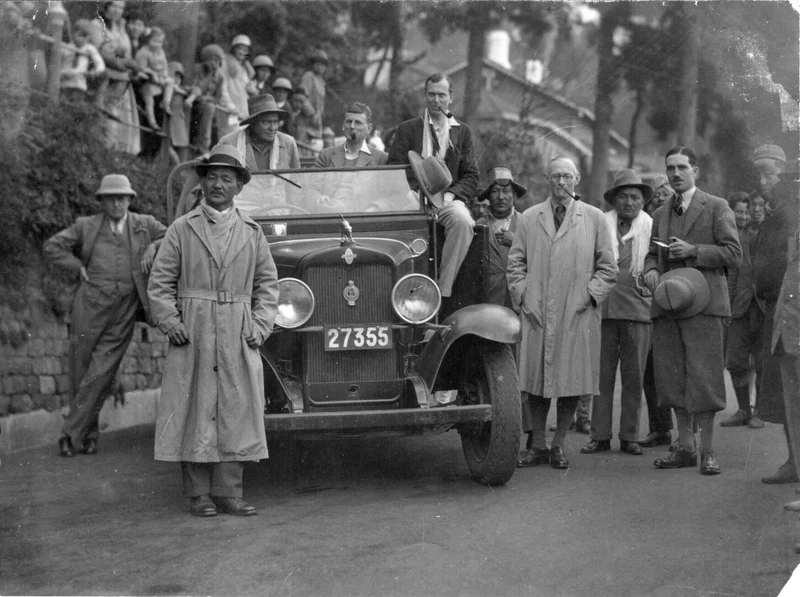
Lawrence Wager
Lawrence Rickard Wager was born on February 5, 1904, in Batley, Yorkshire, England. An exceptionally gifted student of natural sciences, Wager earned first-class honours in geology from Pembroke College, Cambridge. He quickly established himself as one of Britain's most formidable alpine climbers, honing his rock and ice skills in the Lake District, Wales, and the Alps. In 1930, Wager was appointed chief geologist on Gino Watkins' British Arctic Air Route Expedition to East Greenland. Over fourteen months of rigorous fieldwork, Wager carried out landmark geological surveys of the coastal layered igneous formations, discovering the world-renowned Skaergaard intrusion in Kangerlussuaq Fjord—a geological marvel that remains one of the world's most studied magma chamber sequences. In 1933, Wager was selected for Hugh Ruttledge's fourth British Mount Everest Expedition. On May 30, 1933, Wager and Percy Wyn-Harris made a legendary summit bid on the North Face of Everest, climbing above 8,500 metres without supplementary oxygen. Near the First Step, Wager discovered Andrew Irvine's ice axe from the fateful 1924 expedition. Wager and Wyn-Harris pushed to an altitude of approximately 8,570 metres—matching Edward Norton's 1924 world altitude record—before being turned back by treacherous sloping snow slabs in the Great Couloir. In 1935, Wager returned to Greenland to co-lead the Anglo-Danish Expedition alongside Ebbe Munck. Navigating through sea ice in the sealer 'Quest', the expedition ventured into the unexplored Watkins Range. On August 16, 1935, Wager, Munck, Jack Longland, and Patrick Courtauld achieved the maiden first ascent of Gunnbjørn Fjeld (3,694 m), conquering the roof of the Arctic. Wager was later elected a Fellow of the Royal Society and served as Professor of Geology at Oxford University until his death on November 20, 1965.
Associated Historical Chronicles & Stories
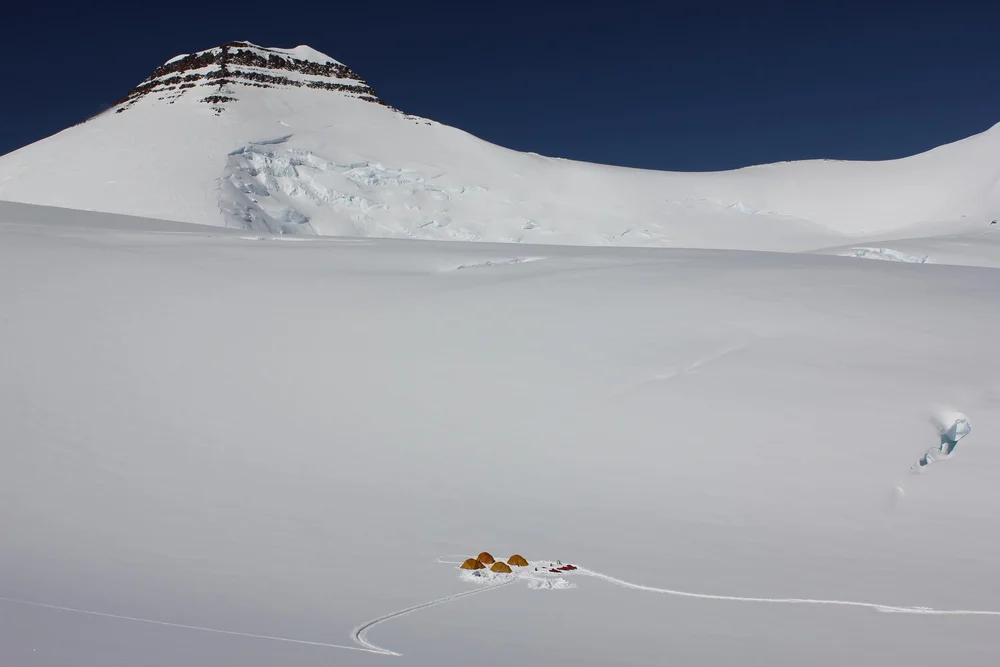
Roof of the Arctic: The 1935 Maiden First Ascent of Gunnbjørn Fjeld
Lawrence Wager and Ebbe Munck lead an Anglo-Danish team into the Watkins Range to stand atop Gunnbjørn Fjeld (3,694 m), the highest peak in the Arctic.
Documented Sources & Archival Citations
- The Anglo-Danish Expedition to East Greenland in 1935(The Geographical Journal / L. R. Wager)
Supporting claim: Firsthand official report of the Gunnbjørn Fjeld first ascent
Accessed/Documented: 1936