Lawrence Wager
Lawrence Rickard Wager was an eminent British geologist, high-altitude mountaineer, and Arctic explorer who led the historic 1935 Anglo-Danish expedition that achieved the maiden first ascent of Gunnbjørn Fjeld (3,694 m), the highest peak in the Arctic. Wager also served on the 1933 British Mount Everest Expedition, reaching 8,570 metres without supplemental oxygen alongside Percy Wyn-Harris.
Mountain Safety & Conditions Disclaimer: High-altitude climbing, glacial travel, and technical ascents entail severe objective risks including avalanches, serac collapses, rapid weather collapse, and altitude illness. Historical route descriptions and summit claims on Mountanity reflect documented archival sources and must not be used as live operational safety assessments. Local regulations, permits, and physical glacial topography change continuously.
Peer Review: Senior Editorial Board & Historical Reviewers • Editorial Standards
Biographical Record & Archival Chronicle
Lawrence Rickard Wager was born on February 5, 1904, in Batley, Yorkshire, England. An exceptionally gifted student of natural sciences, Wager earned first-class honours in geology from Pembroke College, Cambridge. He quickly established himself as one of Britain's most formidable alpine climbers, honing his rock and ice skills in the Lake District, Wales, and the Alps.
In 1930, Wager was appointed chief geologist on Gino Watkins' British Arctic Air Route Expedition to East Greenland. Over fourteen months of rigorous fieldwork, Wager carried out landmark geological surveys of the coastal layered igneous formations, discovering the world-renowned Skaergaard intrusion in Kangerlussuaq Fjord—a geological marvel that remains one of the world's most studied magma chamber sequences.
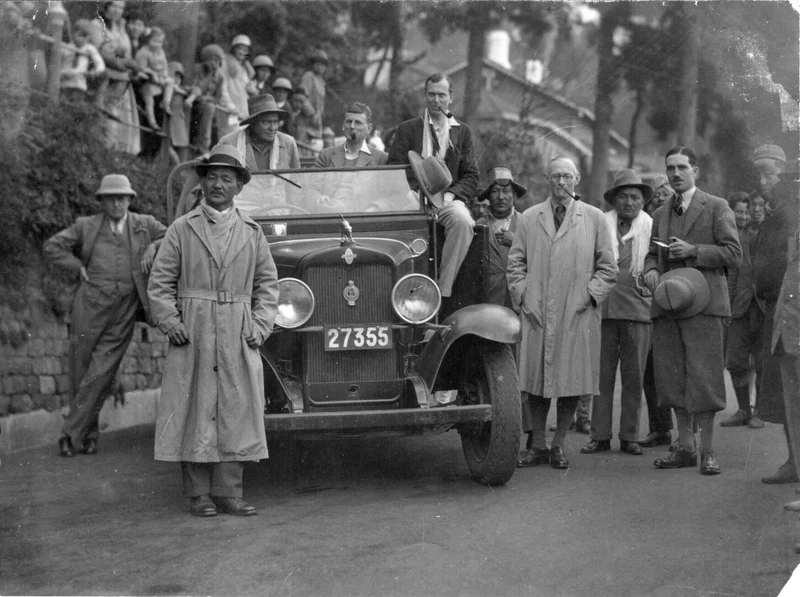
In 1933, Wager was selected for Hugh Ruttledge's fourth British Mount Everest Expedition. On May 30, 1933, Wager and Percy Wyn-Harris made a legendary summit bid on the North Face of Everest, climbing above 8,500 metres without supplementary oxygen. Near the First Step, Wager discovered Andrew Irvine's ice axe from the fateful 1924 expedition. Wager and Wyn-Harris pushed to an altitude of approximately 8,570 metres—matching Edward Norton's 1924 world altitude record—before being turned back by treacherous sloping snow slabs in the Great Couloir.
In 1935, Wager returned to Greenland to co-lead the Anglo-Danish Expedition alongside Ebbe Munck. Navigating through sea ice in the sealer 'Quest', the expedition ventured into the unexplored Watkins Range. On August 16, 1935, Wager, Munck, Jack Longland, and Patrick Courtauld achieved the maiden first ascent of Gunnbjørn Fjeld (3,694 m), conquering the roof of the Arctic. Wager was later elected a Fellow of the Royal Society and served as Professor of Geology at Oxford University until his death on November 20, 1965.
Notable Milestones & Ascents
- Led and completed the maiden first ascent of Gunnbjørn Fjeld (3,694 m), highest peak in the Arctic, on August 16, 1935
- Reached 8,570 metres on the North Face of Mount Everest without oxygen in 1933, matching the world altitude record
- Discovered Andrew Irvine's historic 1924 ice axe on the upper Northeast Ridge of Mount Everest
- Discovered and mapped the world-famous Skaergaard geological intrusion in East Greenland
- Awarded the Polar Medal with Arctic Clasp, the RGS Murchison Grant, and the Lyell Medal
Key Statistics & Topographic Figures
- Lifespan
- 1904–1965 (Age 61)
- Nationality
- British
- First Ascent
- Gunnbjørn Fjeld (3,694 m, 1935)
- Everest Record
- 8,570 metres without oxygen (1933)
- Academic Chair
- Professor of Geology at Oxford University (FRS)
Archival Primary Source Quotations
“On Everest as on Gunnbjørn Fjeld, the rock tells the history of our planet while the ice tests the fortitude of the human spirit.”
Defined Alpine Terminology & Concepts
- Skaergaard Intrusion
- A classic layered gabbroic igneous rock body in East Greenland discovered by Lawrence Wager in 1930, revealing processes of fractional magma crystallization.
- Oxygenless High Altitude
- Ascending above 8,500m without supplementary oxygen, accomplished by Wager on the North Face of Everest in 1933.
Frequently Asked Questions: Lawrence Wager
Who was Lawrence Wager and what mountains did he pioneer?
Lawrence Rickard Wager was an eminent British geologist who led the 1935 maiden first ascent of Gunnbjørn Fjeld (3,694 m) and reached 8,570 metres on Mount Everest in 1933.
What historic artifact did Lawrence Wager discover on Mount Everest in 1933?
Near the First Step at 8,460 metres, Wager discovered the wooden ice axe belonging to Andrew Irvine from the ill-fated 1924 Mallory and Irvine summit push.
What major geological discovery did Lawrence Wager make in Greenland?
Wager discovered the Skaergaard intrusion in Kangerlussuaq Fjord, which became the world's primary reference model for layered igneous magma crystallization.
Associated Summits (1)

Gunnbjørn Fjeld
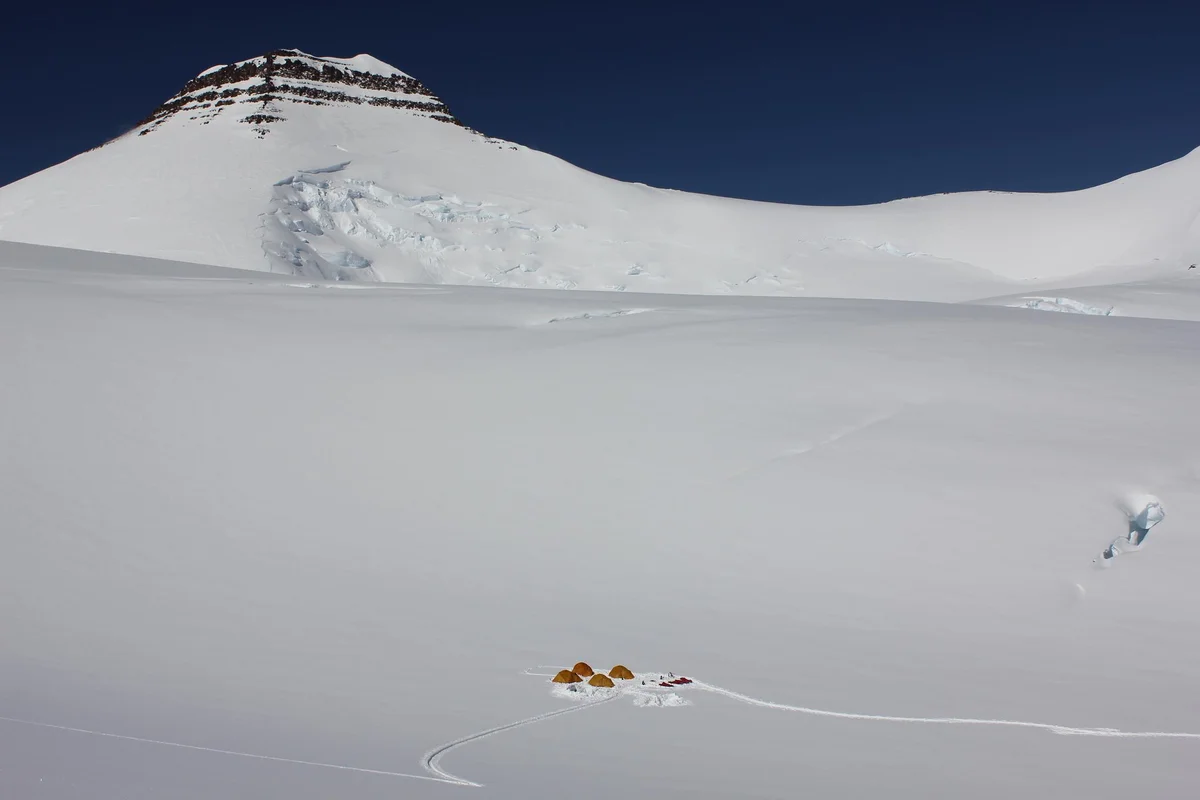
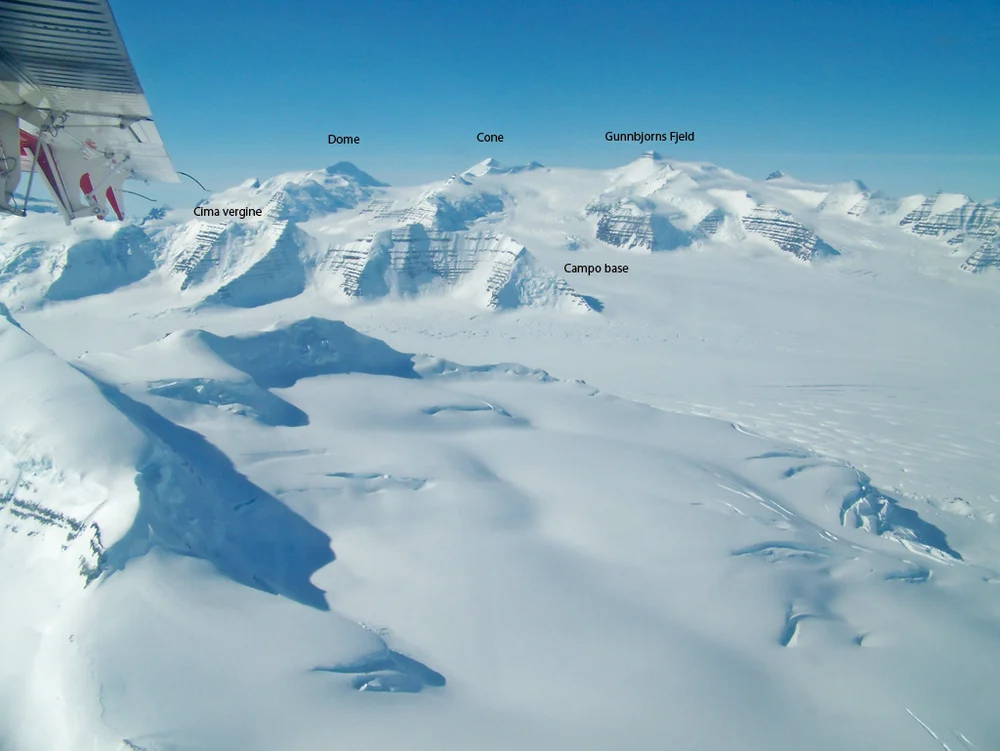
Gunnbjørn Fjeld is the highest mountain in Greenland and the highest peak north of the Arctic Circle at 3,694 metres (12,119 ft). Rising as an enormous basaltic nunatak above the glaciated plateau of the Watkins Range in East Greenland, it was first sighted from the air in 1930 by Gino Watkins and named after the 9th-century Norse explorer Gunnbjørn Ulfsson. The maiden first ascent was achieved on August 16, 1935, by Lawrence Wager, Ebbe Munck, Jack Longland, and Patrick Courtauld during an Anglo-Danish expedition. Climbing Gunnbjørn Fjeld involves moderate alpine glacier ascents, but requires complete self-reliance against extreme polar gales, severe windchill, and isolated Arctic conditions.
Pioneered & Associated Routes (1)
South Ridge Normal Route of Gunnbjørn Fjeld
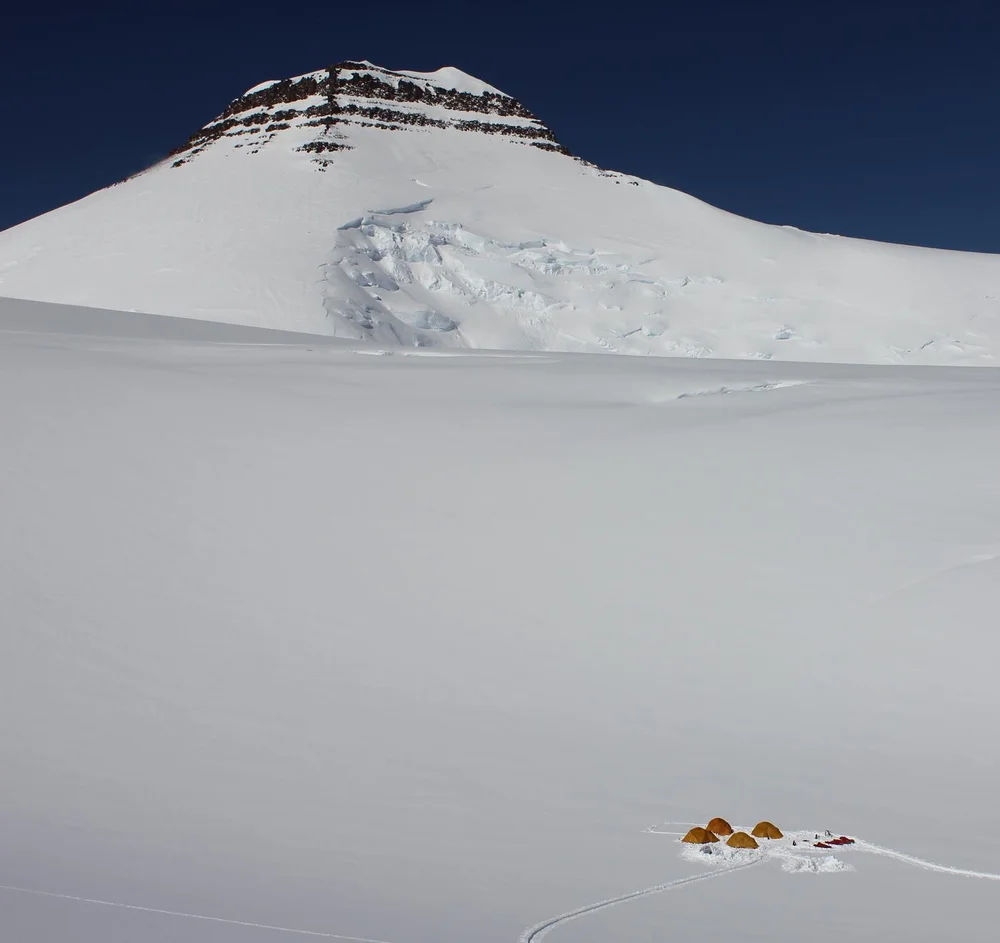
The South Ridge Normal Route on Gunnbjørn Fjeld ascends from the upper glaciated basin of the Watkins Range to follow a broad, windswept snow and ice ramp onto the narrow summit ridge. First climbed on August 16, 1935, by Lawrence Wager, Ebbe Munck, Jack Longland, and Patrick Courtauld, it is the classic line to the highest summit in the Arctic. Although technical difficulties are modest (Grade II alpine snow up to 35 degrees), climbers must manage severe Arctic cold, hidden crevasses, and utter remote wilderness where rescue by ski-equipped aircraft is weather-dependent.
Documented Expeditions (2)
1930–1931 British Arctic Air Route Expedition (BAARE) Discovery of the Watkins Range
Led by 23-year-old Gino Watkins, the 1930–1931 British Arctic Air Route Expedition conducted the definitive scientific exploration of East Greenland. Using de Havilland Gipsy Moth aircraft and dog sleds, Watkins discovered the Watkins Range, discovered Gunnbjørn Fjeld (3,694 m), mapped the Schweizerland Alps, and surveyed potential transatlantic air corridors.
1935 Lawrence Wager & Ebbe Munck Anglo-Danish Expedition Historic First Ascent of Gunnbjørn Fjeld
On August 16, 1935, a joint Anglo-Danish party led by Lawrence Wager and Ebbe Munck achieved the historic maiden first ascent of Gunnbjørn Fjeld (3,694 m), the highest peak north of the Arctic Circle. Climbing via the South Ridge snowfields from the Watkins glacier, Wager, Munck, Jack Longland, and Patrick Courtauld conquered the roof of the Arctic.
Associated Chronicles & Stories (1)
Roof of the Arctic: The 1935 Maiden First Ascent of Gunnbjørn Fjeld
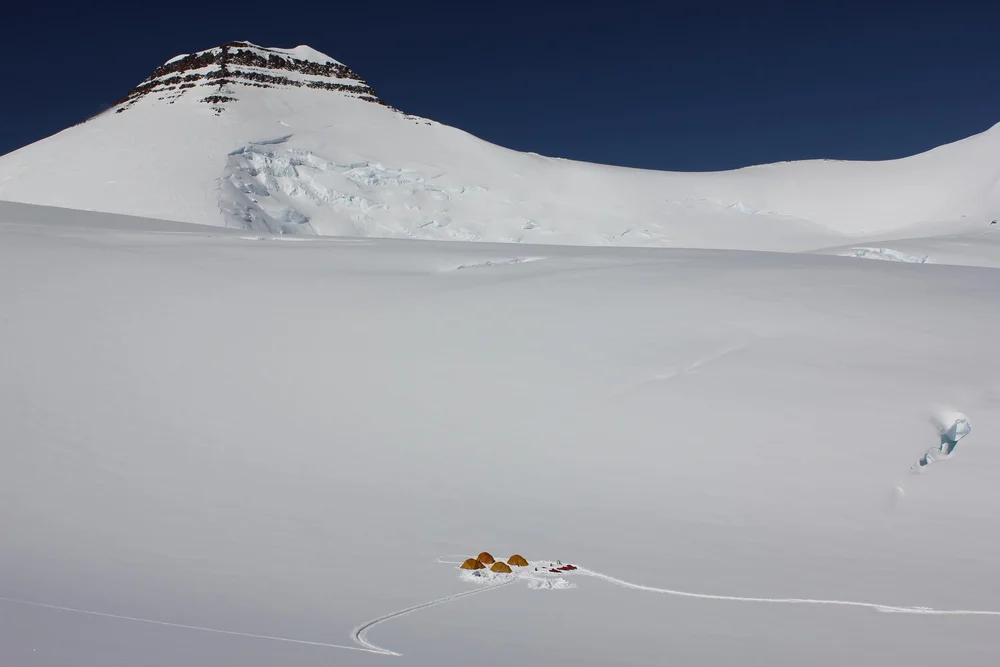
Lawrence Wager and Ebbe Munck lead an Anglo-Danish team into the Watkins Range to stand atop Gunnbjørn Fjeld (3,694 m), the highest peak in the Arctic.
Documented Sources & Archival Citations
- The Anglo-Danish Expedition to East Greenland in 1935(The Geographical Journal / L.R. Wager)
Supporting claim: Firsthand official expedition report and summit narrative
Accessed/Documented: 1936 - Everest 1933(Hugh Ruttledge / Hodder & Stoughton)
Supporting claim: Account of Wager's 8,570m summit push and ice axe discovery
Accessed/Documented: 1934