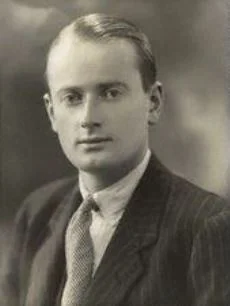
Gino Watkins
Henry George 'Gino' Watkins was a charismatic British Arctic explorer who organized and led the historic 1930–1931 British Arctic Air Route Expedition to Greenland. Watkins discovered the Watkins Range, mapped vast uncharted stretches of the Greenland Ice Sheet, and pioneered the exploratory reconnaissance of Mount Forel before tragically losing his life in a kayak hunting accident at age 25.
Mountain Safety & Conditions Disclaimer: High-altitude climbing, glacial travel, and technical ascents entail severe objective risks including avalanches, serac collapses, rapid weather collapse, and altitude illness. Historical route descriptions and summit claims on Mountanity reflect documented archival sources and must not be used as live operational safety assessments. Local regulations, permits, and physical glacial topography change continuously.
Peer Review: Senior Editorial Board & Historical Reviewers • Editorial Standards
Biographical Record & Archival Chronicle
Henry George 'Gino' Watkins was born on January 29, 1907, in London, England. Educated at Lancing College and Trinity College, Cambridge, Watkins developed an early passion for mountaineering and polar survival under the mentorship of polar veteran James Wordie. Possessing extraordinary leadership qualities, personal charm, and an instinctive mastery of indigenous Inuit hunting techniques, Watkins organized and led his first Arctic expedition to Edgeøya, Svalbard, in 1927 at just twenty years of age.
In 1930, Watkins conceived and directed the ambitious British Arctic Air Route Expedition (BAARE) to East Greenland. Supported by the Royal Geographical Society, the expedition aimed to survey the feasibility of a transatlantic air route linking Britain to Canada via the Arctic ice sheet. Operating from a coastal base near Ammassalik, Watkins utilized two de Havilland Gipsy Moth biplanes, dog-sled teams, and Inuit kayaks. Flying reconnaissance missions deep over King Christian IX Land, Watkins discovered an immense, uncharted mountain range protruding through the inland ice—later officially designated the Watkins Range, containing the highest summits in the entire Arctic.
In 1931, Watkins, alongside surveyor Alfred Stephenson, mounted a bold attempt to climb Mount Forel (3,383 m) in the Schweizerland Alps, reaching the high ice dome before being turned back by crevasses. In August 1932, while leading the East Greenland Expedition at Lake Fjord to continue meteorological surveys for Pan American Airways, Watkins went hunting alone in his seal-skin kayak. His empty kayak and clothing were found floating among sea ice; his body was never recovered. Watkins died on August 20, 1932, at age 25, mourned worldwide as one of Britain's most gifted and inspiring polar leaders.
Notable Milestones & Ascents
- Organized and led the historic British Arctic Air Route Expedition (1930–1931) at age 23
- Discovered and mapped the Watkins Range, the highest mountain chain in the Arctic
- Established Ice Cap Station at 2,600 metres on the central Greenland Ice Sheet
- Led the 1931 alpine reconnaissance attempt on Mount Forel (3,383 m)
- Awarded the RGS Founder's Medal in 1932 and the polar medal
Key Statistics & Topographic Figures
- Lifespan
- 1907–1932 (Age 25)
- Nationality
- British
- Major Discovery
- Watkins Range & Gunnbjørn Fjeld
- Key Expedition
- British Arctic Air Route Expedition (1930–1931)
- Honors
- RGS Founder's Medal (1932), Polar Medal
Archival Primary Source Quotations
“Watkins had that rare quality of genius that made men eager to follow him anywhere, confident that with him failure was impossible.”
Defined Alpine Terminology & Concepts
- BAARE
- The British Arctic Air Route Expedition (1930–1931), an ambitious multi-disciplinary expedition to survey transatlantic air routes via Greenland.
- Kayak Rolling
- An Inuit survival technique of righting a capsized skin kayak using a single paddle stroke in sub-zero Arctic waters.
Frequently Asked Questions: Gino Watkins
Who was Gino Watkins and what did he discover in Greenland?
Henry George 'Gino' Watkins was a British polar explorer who led the 1930–1931 BAARE and discovered the Watkins Range, the highest mountain chain in the Arctic.
How did Gino Watkins die?
Watkins tragically died on August 20, 1932, at age 25, when his seal-skin hunting kayak overturned among sea ice in Lake Fjord, East Greenland.
What climbing attempt did Gino Watkins make on Mount Forel?
In May 1931, Watkins and Alfred Stephenson climbed to 3,250 metres on Mount Forel, reaching the base of the summit ice dome in lightweight alpine style.
Associated Summits (2)
Gunnbjørn Fjeld
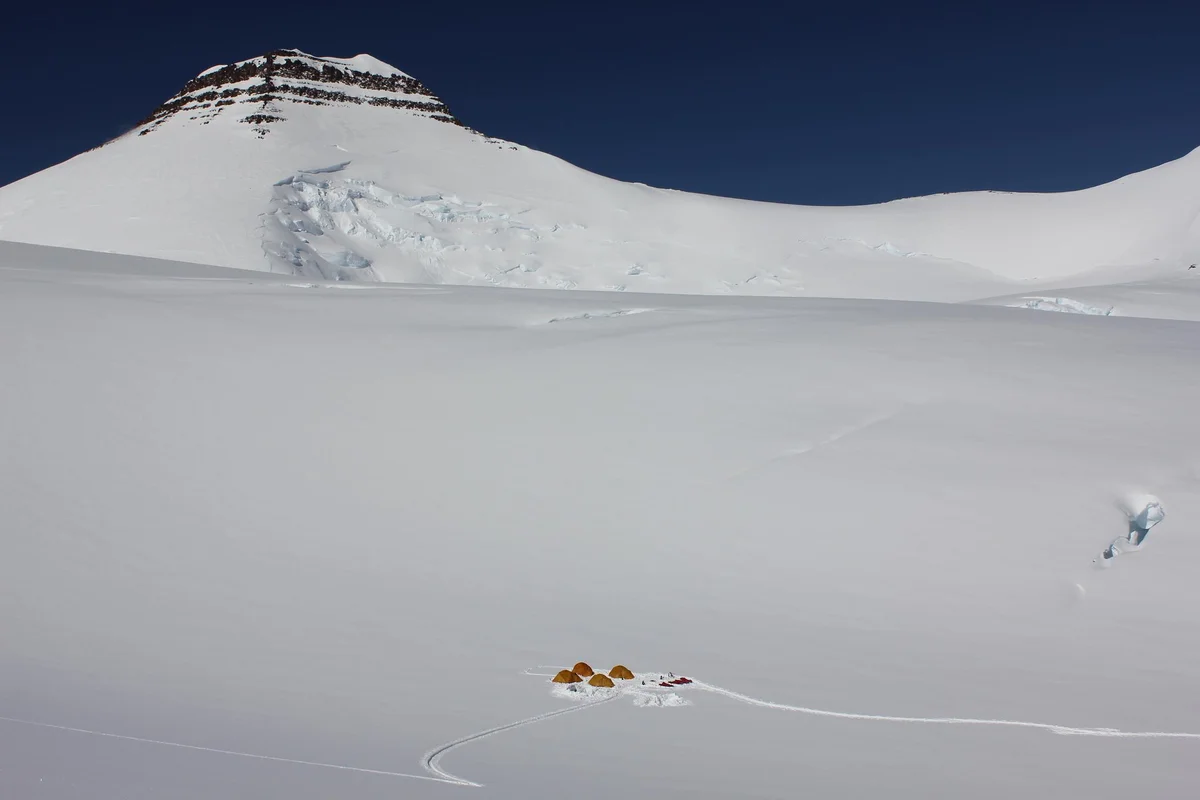
Gunnbjørn Fjeld is the highest mountain in Greenland and the highest peak north of the Arctic Circle at 3,694 metres (12,119 ft). Rising as an enormous basaltic nunatak above the glaciated plateau of the Watkins Range in East Greenland, it was first sighted from the air in 1930 by Gino Watkins and named after the 9th-century Norse explorer Gunnbjørn Ulfsson. The maiden first ascent was achieved on August 16, 1935, by Lawrence Wager, Ebbe Munck, Jack Longland, and Patrick Courtauld during an Anglo-Danish expedition. Climbing Gunnbjørn Fjeld involves moderate alpine glacier ascents, but requires complete self-reliance against extreme polar gales, severe windchill, and isolated Arctic conditions.
Mount Forel
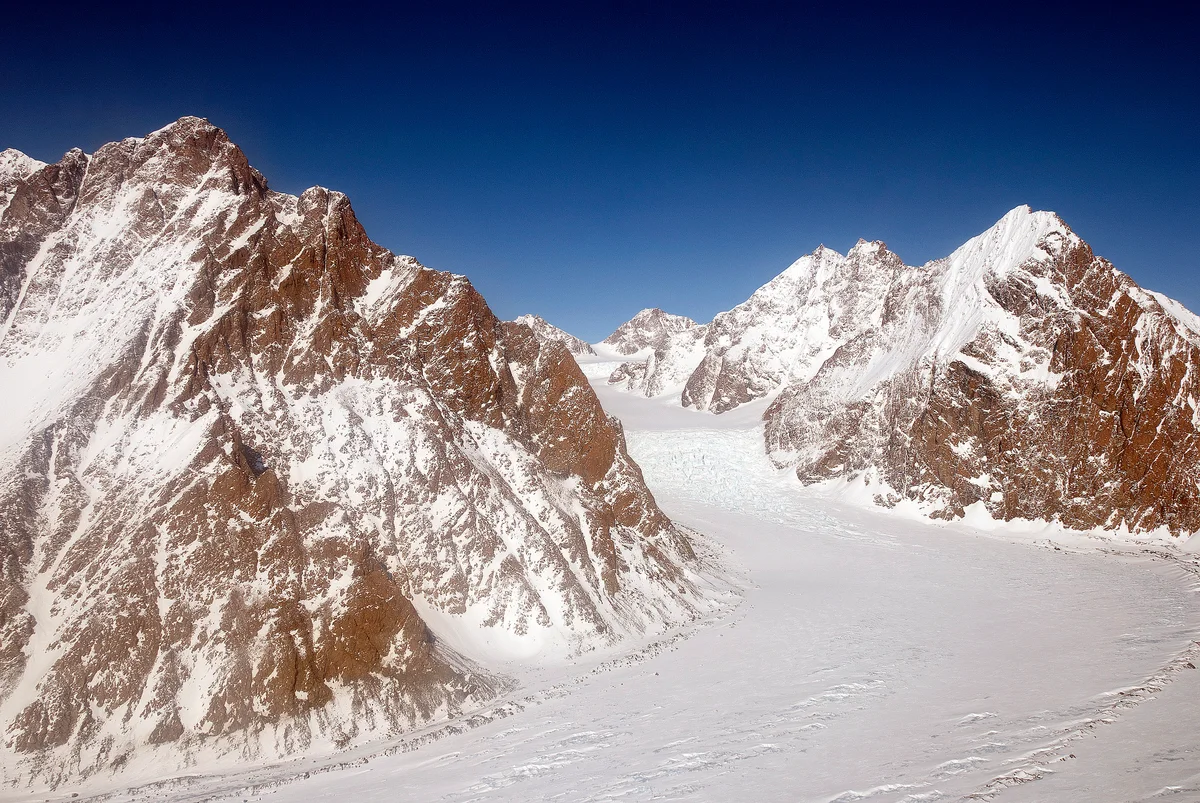
Mount Forel is a magnificent glaciated dome summit standing at 3,383 metres (11,099 ft) in the Schweizerland Alps of East Greenland, just north of the Arctic Circle. It is the highest mountain in Greenland outside the Watkins Range. Named in 1912 by Swiss explorer Alfred de Quervain in honor of limnologist François-Alphonse Forel, the mountain was famously explored by Gino Watkins and Alfred Stephenson in 1931, before being conquered on its first ascent by André Roch's Swiss expedition in 1938. The peak is renowned for its perpetual summit ice dome and sweeping views across the Sermilik fjord and coastal glacier systems.
Pioneered & Associated Routes (2)
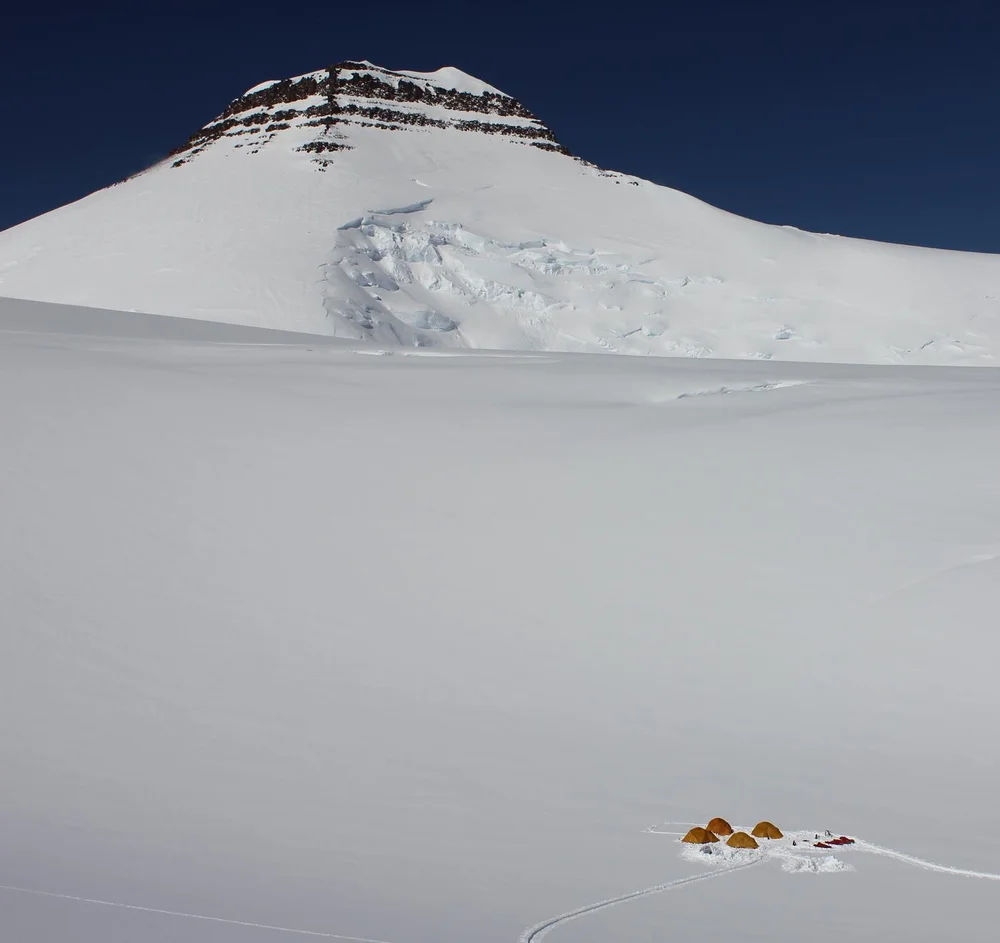
South Ridge Normal Route of Gunnbjørn Fjeld
The South Ridge Normal Route on Gunnbjørn Fjeld ascends from the upper glaciated basin of the Watkins Range to follow a broad, windswept snow and ice ramp onto the narrow summit ridge. First climbed on August 16, 1935, by Lawrence Wager, Ebbe Munck, Jack Longland, and Patrick Courtauld, it is the classic line to the highest summit in the Arctic. Although technical difficulties are modest (Grade II alpine snow up to 35 degrees), climbers must manage severe Arctic cold, hidden crevasses, and utter remote wilderness where rescue by ski-equipped aircraft is weather-dependent.
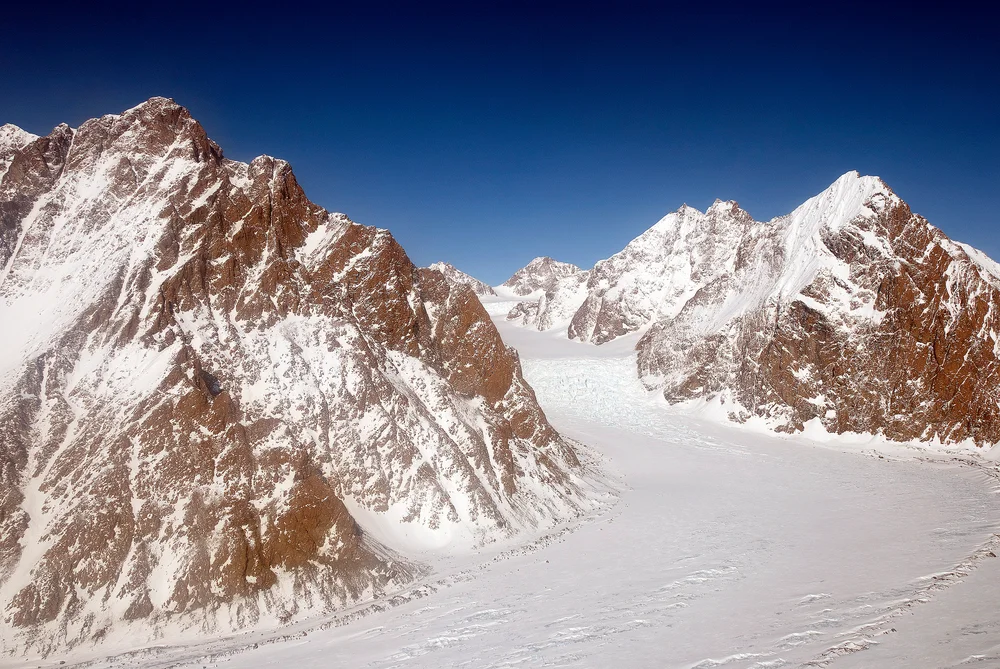
Northeast Ridge & Summit Ice Dome of Mount Forel
The Northeast Ridge of Mount Forel ascends glaciated slopes from the Schweizerland plateau before tackling the steep, crevassed approach to the mountain's prominent summit ice dome. First reconnoitred by Gino Watkins and Alfred Stephenson in 1931 and climbed to the apex by André Roch's Swiss expedition in 1938, this route combines alpine glacier route-finding with 45-degree ice climbing over the final rim to reach the top. Climbers face ferocious coastal Greenland storms and complex crevasse fields.
Documented Expeditions (3)
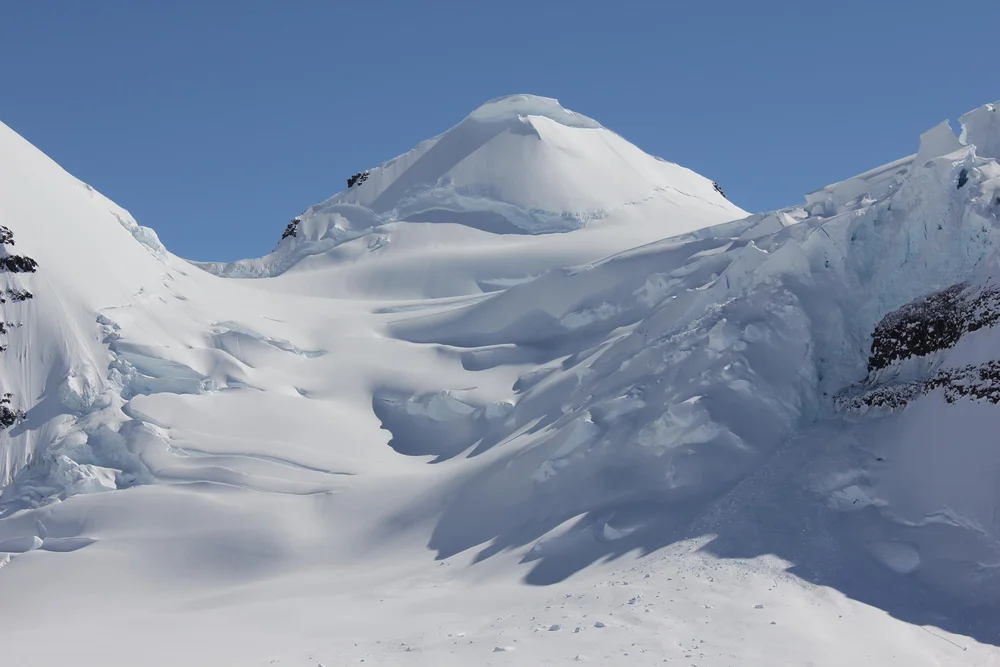
1930–1931 Augustine Courtauld Five-Month Solitary Winter Vigil at Ice Cap Station
From December 6, 1930, to May 5, 1931, British explorer Augustine Courtauld spent five months completely alone manning Ice Cap Station at 2,620 metres on the Greenland ice sheet. Buried beneath severe snowdrifts for six weeks in total darkness when his entrance collapsed, Courtauld maintained precise weather observations until rescued by Gino Watkins.
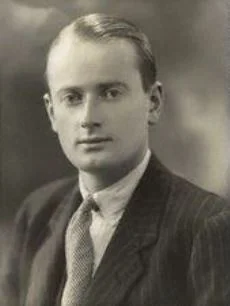
1930–1931 British Arctic Air Route Expedition (BAARE) Discovery of the Watkins Range
Led by 23-year-old Gino Watkins, the 1930–1931 British Arctic Air Route Expedition conducted the definitive scientific exploration of East Greenland. Using de Havilland Gipsy Moth aircraft and dog sleds, Watkins discovered the Watkins Range, discovered Gunnbjørn Fjeld (3,694 m), mapped the Schweizerland Alps, and surveyed potential transatlantic air corridors.
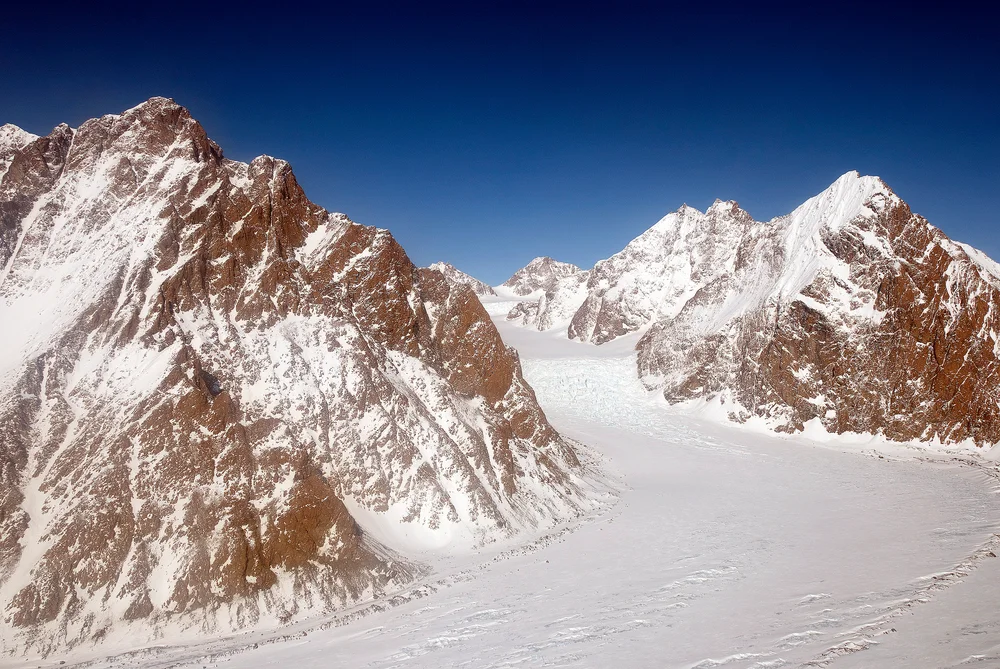
1931 Gino Watkins & Alfred Stephenson Schweizerland Alps Reconnaissance & Mount Forel Attempt
In May 1931, British Arctic explorer Gino Watkins and chief surveyor Alfred Stephenson ventured into the unexplored Schweizerland Alps to attempt Mount Forel (3,383 m). Navigating steep outlet glaciers and granite walls, the pair climbed to within 130 metres of the summit ice dome before impassable crevasses and soft snow forced a prudent retreat.
Associated Chronicles & Stories (3)
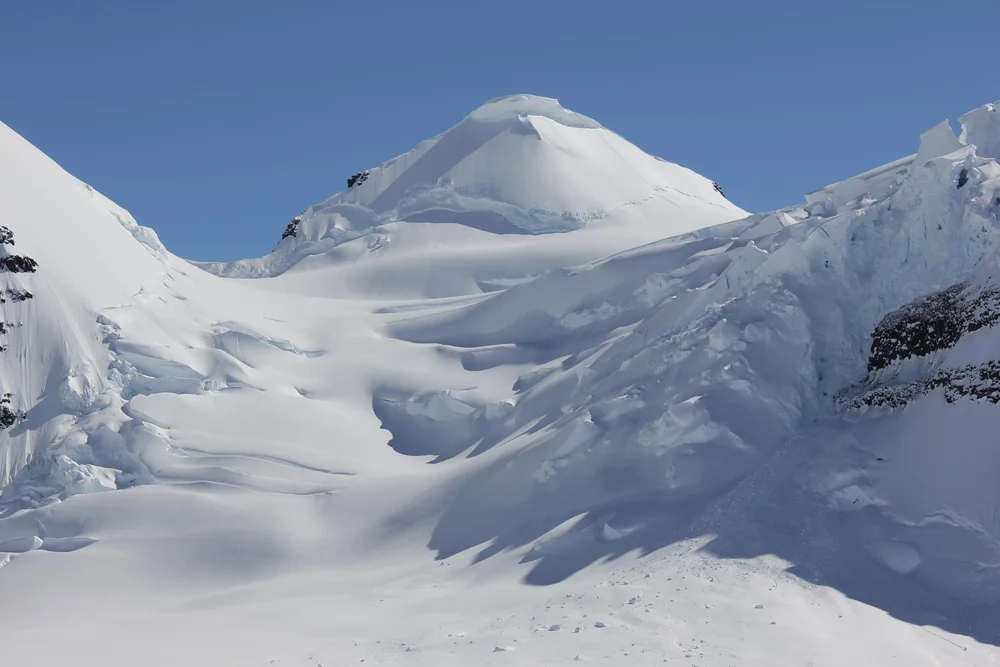
Buried Alive in the Ice: Augustine Courtauld's Five-Month Solitary Vigil
Trapped in darkness for five months beneath the Greenland Ice Sheet at -50°C, Augustine Courtauld survives one of the most harrowing solitary vigils in polar history.
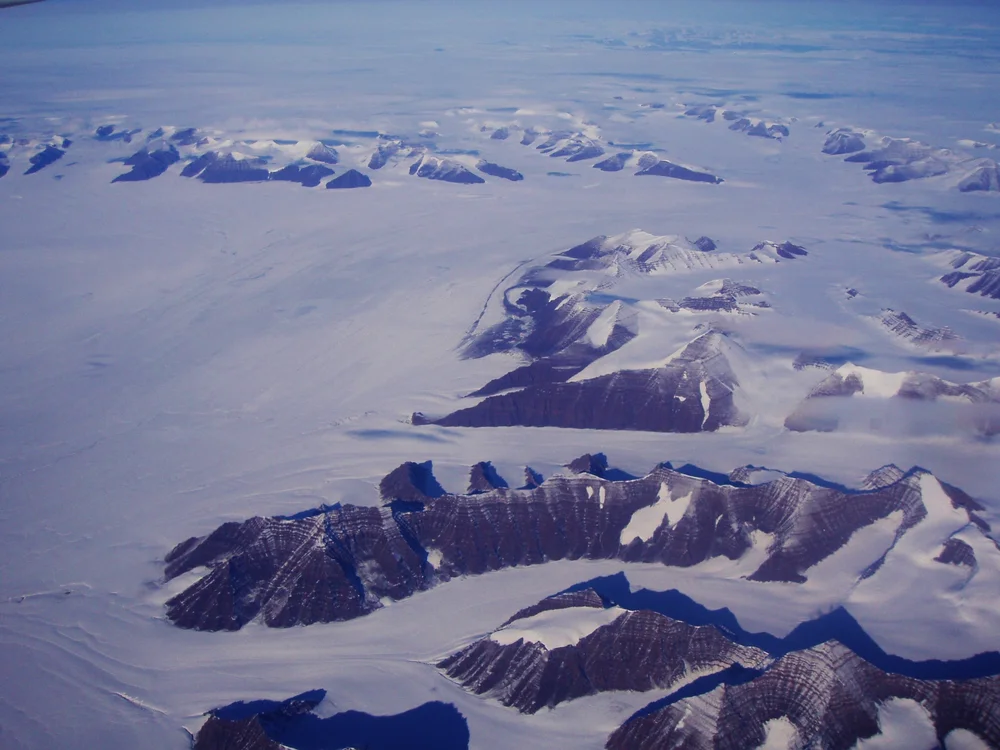
Wings Over the Ice Cap: The 1930 Watkins BAARE Expedition
Gino Watkins and his band of young British explorers take Gipsy Moth biplanes and dog sleds into East Greenland, discovering the Arctic's highest summits.
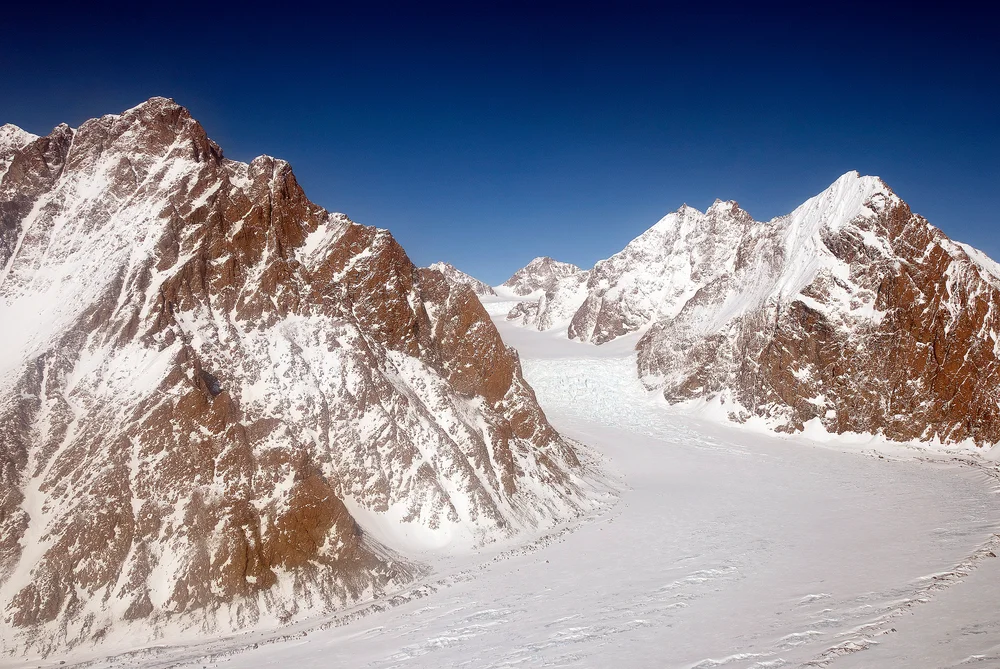
Storming the Schweizerland: The 1931 Mount Forel Attempt
Gino Watkins and Alfred Stephenson push high into the unexplored Schweizerland Alps to make the first alpine assault on Mount Forel.
Documented Sources & Archival Citations
- The British Arctic Air Route Expedition 1930–1931(The Geographical Journal / H.G. Watkins)
Supporting claim: Primary official narrative of the BAARE expedition
Accessed/Documented: 1932 - Gino Watkins(J.M. Scott / Hodder & Stoughton)
Supporting claim: Definitive biographical memoir by fellow expedition member
Accessed/Documented: 1935