1936 British-American Himalayan Expedition to Nanda Devi
The landmark 1936 joint British-American expedition that achieved the maiden first ascent of Nanda Devi (7,816m) on August 29, 1936, by Bill Tilman and Noel Odell without supplemental oxygen, setting an absolute altitude record on an ascended peak that stood for fourteen years.
Mountain Safety & Conditions Disclaimer: High-altitude climbing, glacial travel, and technical ascents entail severe objective risks including avalanches, serac collapses, rapid weather collapse, and altitude illness. Historical route descriptions and summit claims on Mountanity reflect documented archival sources and must not be used as live operational safety assessments. Local regulations, permits, and physical glacial topography change continuously.
Peer Review: Senior Editorial Board & Historical Reviewers • Editorial Standards
Official Expedition Narrative & Archival Record
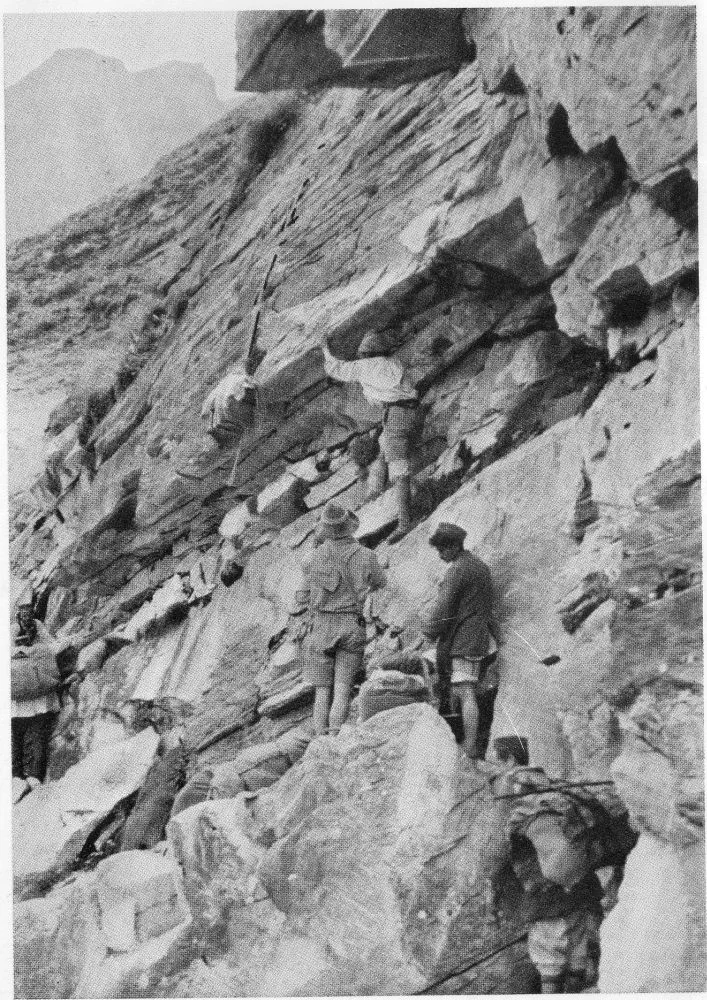
In July 1936, four British and four American mountaineers united without an official leader to attempt Nanda Devi (7,816m / 25,643 ft) in the Garhwal Himalayas. Utilizing the route through the near-vertical Rishi Ganga gorge discovered two years earlier by Eric Shipton and Bill Tilman, the team navigated treacherous sheer rock ledges with Sherpa porters to establish Base Camp inside the idyllic inner Nanda Devi Sanctuary. Moving in pure alpine style without fixed siege camps or supplemental oxygen, the climbers tackled the glaciated south flank. Establishing high camps up to 7,160 meters, the team identified the jagged, corniced rock rib known as the Coxcomb as the key to the mountain. After Charles Houston and Noel Odell carried supplies to the high assault camp, Houston was incapacitated by food poisoning from canned rations, graciously yielding his summit position to Bill Tilman. On the morning of August 29, 1936, Tilman and 45-year-old Everest veteran Noel Odell set out in clear, frigid weather. Traversing steep snow slopes and scrambling over friable rock bands on the upper pyramid, the pair stepped onto the pristine 7,816-meter summit at 3:00 PM. Embracing in triumph, Tilman famously quipped, 'I believe we have knocked the bastard off.' Nanda Devi remained the highest mountain summit ever attained by humankind until French climbers scaled Annapurna I in 1950, standing as a timeless testament to lightweight, cooperative mountaineering.
Documented Team Composition
- Harold William 'Bill' Tilman (British Co-Leader & Summiter)
- Noel Ewart Odell (British Co-Leader & Summiter)
- Charles Snead Houston (American Mountaineer & Physician)
- H. Adams Carter (American Mountaineer & Spanish Linguist)
- Peter Lloyd (British Mountaineer & Engineer)
- T. Graham Brown (British Mountaineer & Physiologist)
- Arthur Emmons (American Mountaineer)
- W.F. Loomis (American Mountaineer)
Key Statistics & Topographic Figures
- Summit Date
- August 29, 1936 (3:00 PM)
Maiden First Ascent
- Summit Elevation
- 7,816 meters (25,643 ft)
Highest Scaled Peak 1936–1950
- Expedition Style
- Alpine Style without Oxygen
Joint British-American
- Historical Record
- 14-Year World Peak Record
Prior to Annapurna 1950
Archival Primary Source Quotations
“I believe we have knocked the bastard off.”
Defined Alpine Terminology & Concepts
- Nanda Devi Sanctuary
- A pristine high-altitude glacial amphitheater in Uttarakhand, India, encircled by an unbroken ring of peaks above 6,000 meters and drained only by the sheer Rishi Ganga gorge.
- Coxcomb Ridge
- A sharp, serrated granite rock ridge forming the southern spine of Nanda Devi, climbed by Tilman and Odell during the 1936 first ascent.
Frequently Asked Questions: 1936 British-American Himalayan Expedition to Nanda Devi
Who made the first ascent of Nanda Devi in 1936?
British climbers Harold William "Bill" Tilman and Noel Ewart Odell achieved the historic maiden first ascent of Nanda Devi (7,816m) on August 29, 1936, without supplemental oxygen.
Why was the 1936 ascent of Nanda Devi historically significant?
Nanda Devi (7,816m) was the highest mountain summit ever climbed by human beings from 1936 until the French conquest of Annapurna I (8,091m) in 1950, holding the world record for 14 years.
What route was climbed on Nanda Devi in 1936?
Tilman and Odell pioneered the South Ridge via the knife-edge rock and ice crest known as the Coxcomb Ridge, ascending from inside the inner Nanda Devi Sanctuary.
Did Tilman and Odell use supplemental oxygen on Nanda Devi?
No. The 1936 British-American expedition climbed Nanda Devi entirely without supplemental bottled oxygen, relying on lightweight alpine style and natural acclimatization.
How did the 1936 climbers reach the base of Nanda Devi?
They traversed the near-vertical, terrifying chasm of the Rishi Ganga gorge, a narrow granite canyon previously forced by Eric Shipton and Bill Tilman in 1934.
Why did Charles Houston step down from the summit team of Nanda Devi?
American climber and physician Charles Houston suffered acute food poisoning from a spoiled can of meat at Camp IV, selflessly surrendering his summit place to Bill Tilman to keep the bid alive.
What was Bill Tilman’s famous quote upon summiting Nanda Devi?
Upon reaching the 7,816m summit on August 29, 1936, Tilman shook hands with Noel Odell and famously remarked: "I believe we have knocked the bastard off."
Why is Nanda Devi currently closed to all climbers?
The Indian government declared the entire Nanda Devi Sanctuary a strictly protected National Park in 1982 (now a UNESCO World Heritage Site), closing it to all human entry to preserve its fragile alpine ecosystem.
Ascent Route & Topography
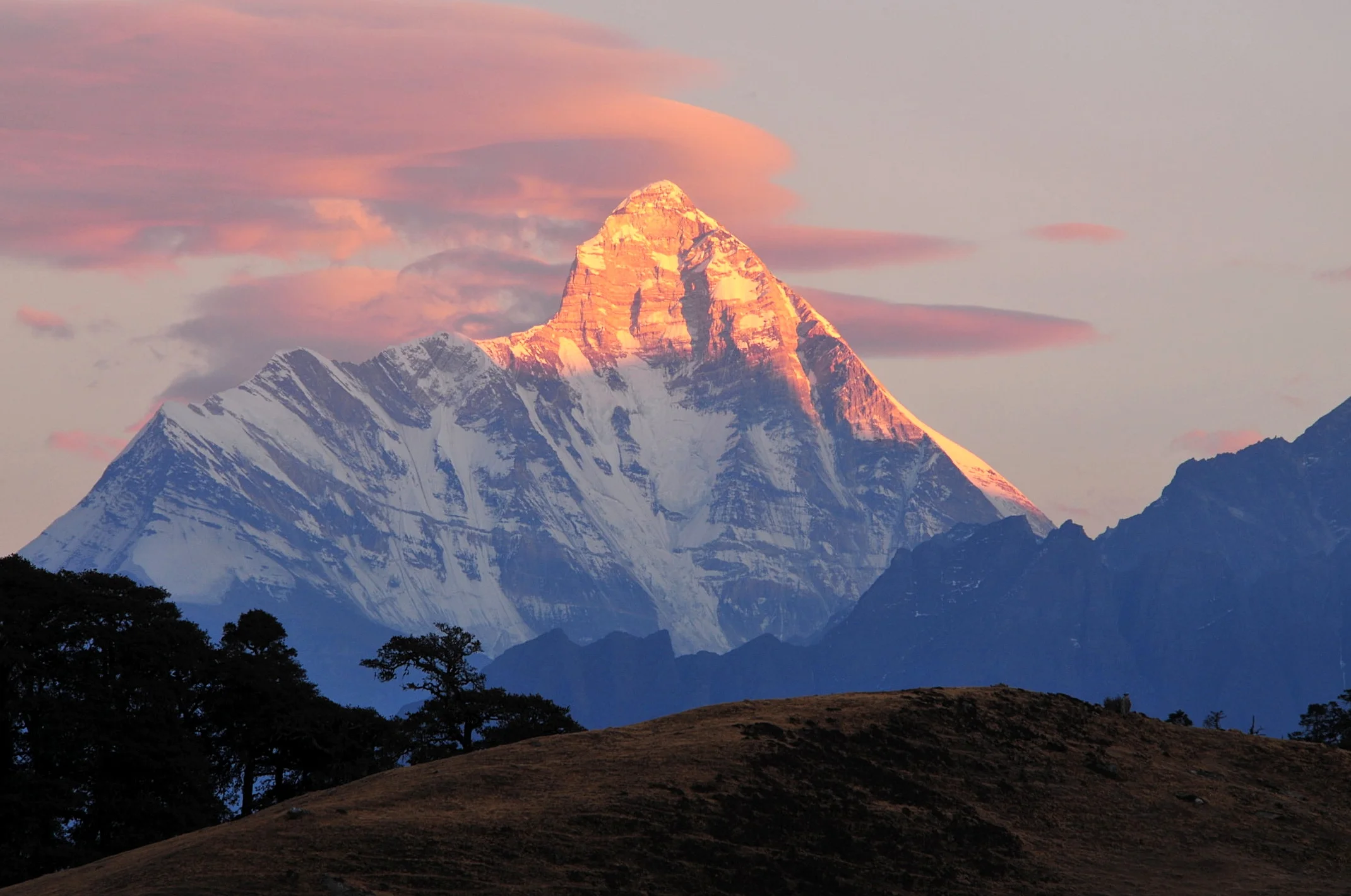
South Ridge & Coxcomb (Original 1936 Route)
The historic maiden first ascent route on Nanda Devi (7,816m), pioneered during the landmark 1936 British-American expedition by Bill Tilman and Noel Odell. Approached through the terrifyingly narrow, sheer chasms of the Rishi Ganga gorge into the virgin meadows of the Nanda Devi Sanctuary, the climb traverses the southern glaciated basin to ascend a razor-sharp rock spine known as the Coxcomb. Overcoming steep mixed rock towers and narrow snow ridges without supplemental oxygen, Tilman and Odell achieved the summit on August 29, 1936, establishing the highest mountain climbed by humans until 1950.
Target Objective Peak
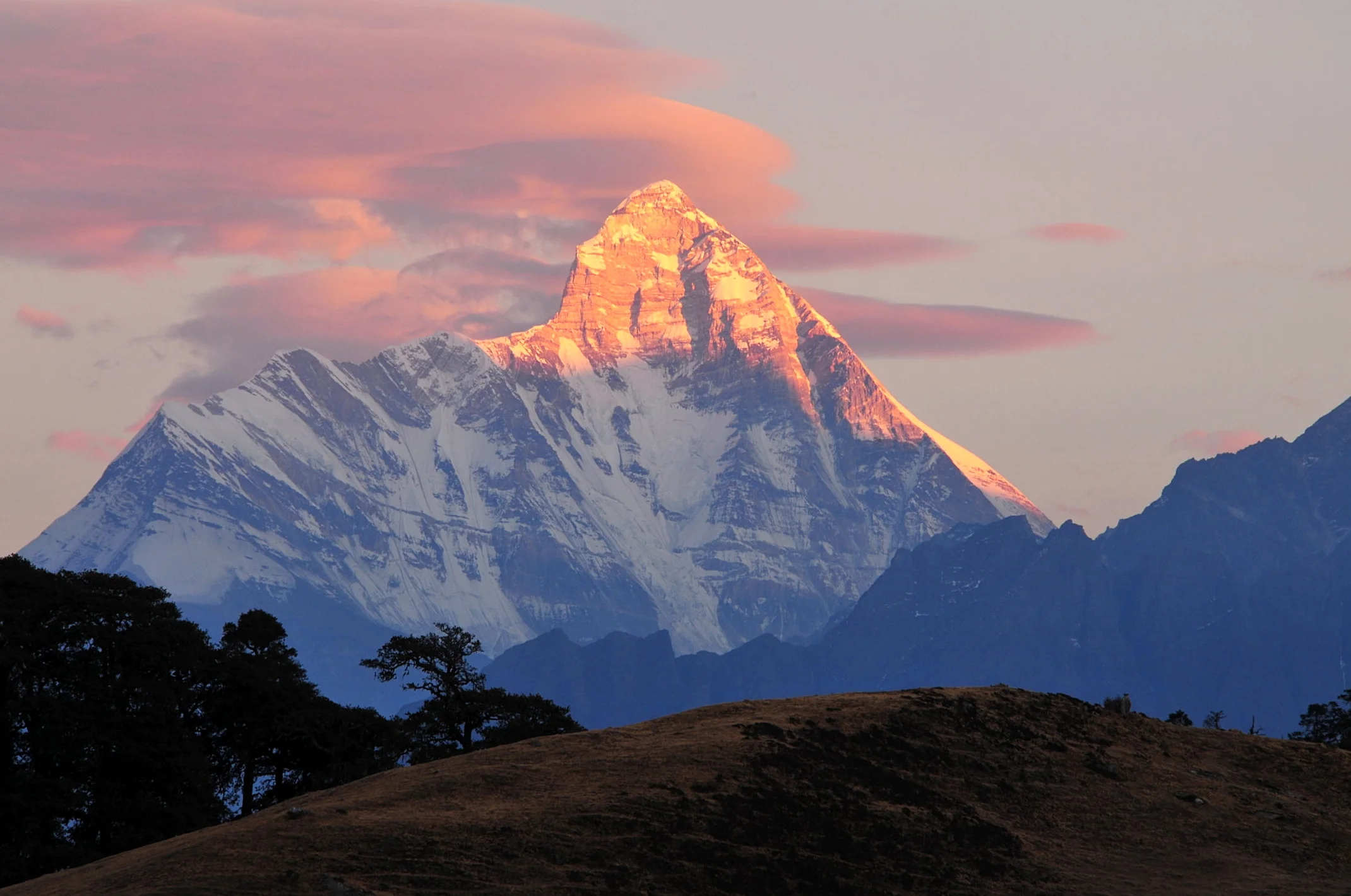

Nanda Devi
Nanda Devi, standing at 7,816 meters (25,643 ft), is the second-highest mountain in India and the highest peak situated entirely within Indian territory. Revered as a sacred manifestation of the patron goddess of Uttarakhand, the mountain rises within a formidable natural fortress—the Nanda Devi Sanctuary—ringed by seventy miles of razor-sharp peaks exceeding 6,000 meters. Its historic first ascent on August 29, 1936, by Bill Tilman and Noel Odell remained the highest summit ever achieved by human beings until the conquest of Annapurna in 1950.
Featured Expedition Climbers
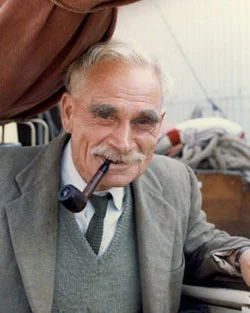
Harold William Tilman
Harold William 'Bill' Tilman was born on February 14, 1898, in Wallasey, Cheshire, England. Commissioned into the Royal Field Artillery at age 17 during the First World War, Tilman fought at the Somme, was wounded twice, and received the Military Cross with Bar for exceptional bravery. Following the war, Tilman moved to Kenya as a coffee planter, where in 1930 he met fellow alpinist Eric Shipton, beginning one of the most celebrated partnerships in the history of geographic exploration. Tilman possessed legendary physical stamina and an aversion to unnecessary luxury. In 1933, having sold his Kenyan farm, Tilman bicycled 3,000 miles across the equator from Uganda to the Atlantic coast of Cameroon with minimal provisions. In 1934, he joined Shipton on a shoestring expedition to the Garhwal Himalayas. Traveling with only three Sherpas (including Ang Tharkay) on a total budget of just £287, Tilman and Shipton forced a route through the terrifying, vertical chasm of the Rishi Ganga gorge, becoming the first humans ever to set foot in the sacred, enclosed paradise of the Nanda Devi Sanctuary. Two years later, in 1936, Tilman returned to the Sanctuary as part of the joint British-American Himalayan Expedition. Refusing to use supplemental bottled oxygen, Tilman and veteran Everest geologist Noel Odell tackled the steep, knife-edge rock crest of the South Ridge (the Coxcomb). On August 29, 1936, Tilman and Odell stepped onto the 7,816-meter (25,643 ft) summit of Nanda Devi. It was the highest mountain summit ever attained by humankind, an absolute altitude benchmark that remained undefeated for fourteen years until Maurice Herzog and Louis Lachenal stood on Annapurna I in 1950. As they embraced on the summit, Tilman famously remarked with characteristic British understatement: 'I believe we have knocked the bastard off.' In 1938, Tilman was appointed leader of the seventh British Mount Everest Expedition, pushing to 8,320 meters on the North Ridge without oxygen. During the Second World War, he served with distinction behind enemy lines with the Special Operations Executive (SOE), dropping into Albania and the Italian Dolomites to organize anti-fascist partisan resistance. In his later years, Tilman purchased an antique 14-ton Bristol Channel pilot cutter named *Mischief*, sailing thousands of miles through the treacherous Roaring Forties to explore and climb remote unmapped peaks in Patagonia, South Georgia, Greenland, and Baffin Island. In November 1977, at the age of 79, Tilman sailed from Rio de Janeiro as navigator aboard the tug *En Avant* bound for Smith Island in the South Shetlands of Antarctica. The vessel and all hands disappeared without a trace in the South Atlantic, a fittingly mysterious end to one of the most rugged and unpretentious explorers in world history.
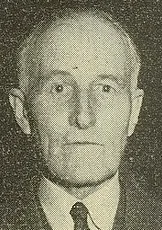
Noel Ewart Odell
Noel Ewart Odell was born on December 25, 1890, in St Lawrence, Isle of Wight, England. Educated at the Royal School of Mines, Imperial College London, Odell became a world-renowned geologist specializing in high-altitude glaciology and stratigraphy. In 1924, he was chosen as expedition geologist and lead climber for the third British Mount Everest Expedition. On Everest, Odell astonished his teammates with his superhuman physiological adaptation to extreme altitude. While other climbers collapsed from exhaustion or succumbed to coughing fits in the thin air, Odell spent nearly two continuous weeks living above 7,000 meters without using supplemental bottled oxygen. On the fateful morning of June 8, 1924, Odell climbed alone from Camp V (7,770m) to Camp VI (8,140m) in support of George Mallory and Andrew Irvine's summit bid. Scrambling up a small rocky crag at approximately 7,900 meters around 12:50 PM, the dense clouds suddenly parted to reveal the upper pyramid of Everest. Looking toward the Northeast Ridge, Odell spotted two tiny silhouettes moving across a prominent snow crest near a prominent rock step (the First or Second Step), 'going strong for the top.' Seconds later, the clouds swept in again, closing the curtain forever. When neither climber returned to Camp VI that evening, Odell courageously climbed back into the Death Zone twice more in search of his friends. Finding Camp VI deserted, Odell laid out two sleeping bags in the shape of a giant 'T' (later transformed into a cross) on the snow, signaling the dreadful news to his teammates watching through telescopes on the North Col four thousand feet below. For the remaining 63 years of his life, Odell steadfastly maintained his conviction that Mallory and Irvine had achieved the summit of Mount Everest before meeting their deaths. Twelve years later, in 1936, Odell joined the British-American Himalayan Expedition to Nanda Devi (7,816m / 25,643 ft) in the Garhwal Himalayas. Climbing alongside Bill Tilman in pure alpine style without supplemental oxygen, 45-year-old Odell surmounted the steep, knife-edge rock towers of the Coxcomb ridge. On August 29, 1936, Odell and Tilman stood upon the summit, setting an absolute human altitude record on an ascended mountain that remained unbeaten until Annapurna in 1950. Odell enjoyed an illustrious academic career, serving as Professor of Geology at Harvard University, Cambridge University, and the University of Otago in New Zealand. Known for his extraordinary physical longevity, Odell continued climbing technical alpine peaks well into his senior years, famously ascending Mount Sir Donald (3,284m) in the Canadian Rockies at the age of 87. He passed away peacefully on February 21, 1987, at the venerable age of 96.
Associated Historical Chronicles & Stories
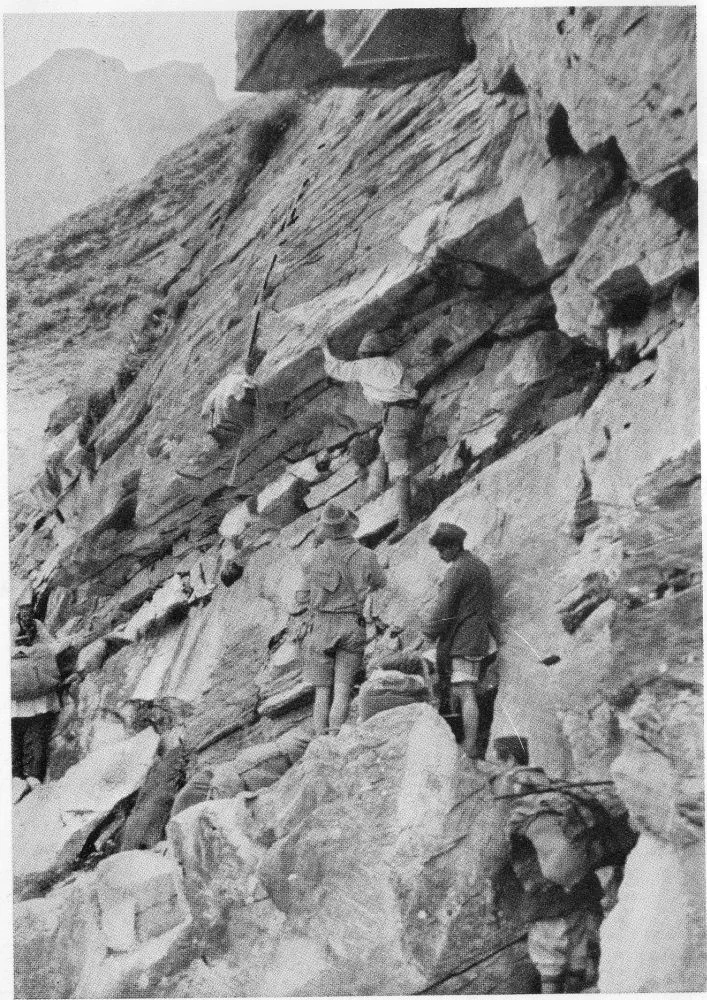
Nanda Devi 1936: Tilman, Odell, and the Conquest of the Blessed Goddess
On August 29, 1936, Bill Tilman and Noel Odell reached the 7,816-meter summit of Nanda Devi without bottled oxygen, conquering the highest mountain scaled on Earth until 1950.
Documented Sources & Archival Citations
- The Ascent of Nanda Devi(H.W. Tilman / Cambridge University Press)
Supporting claim: Official expedition narrative describing the Rishi Ganga approach, camps, and the August 29 summit
Accessed/Documented: 1937 - American Alpine Journal: The British-American Himalayan Expedition to Nanda Devi, 1936(American Alpine Club)
Supporting claim: Official expedition report authored by Charles Houston and H. Adams Carter
Accessed/Documented: 1937 - The Alpine Journal Archive: The Conquest of Nanda Devi(The Alpine Club UK)
Supporting claim: Technical climbing analysis of the Coxcomb ridge and historical evaluation
Accessed/Documented: 1937