Nanda Devi
Nanda Devi, standing at 7,816 meters (25,643 ft), is the second-highest mountain in India and the highest peak situated entirely within Indian territory. Revered as a sacred manifestation of the patron goddess of Uttarakhand, the mountain rises within a formidable natural fortress—the Nanda Devi Sanctuary—ringed by seventy miles of razor-sharp peaks exceeding 6,000 meters.
 India
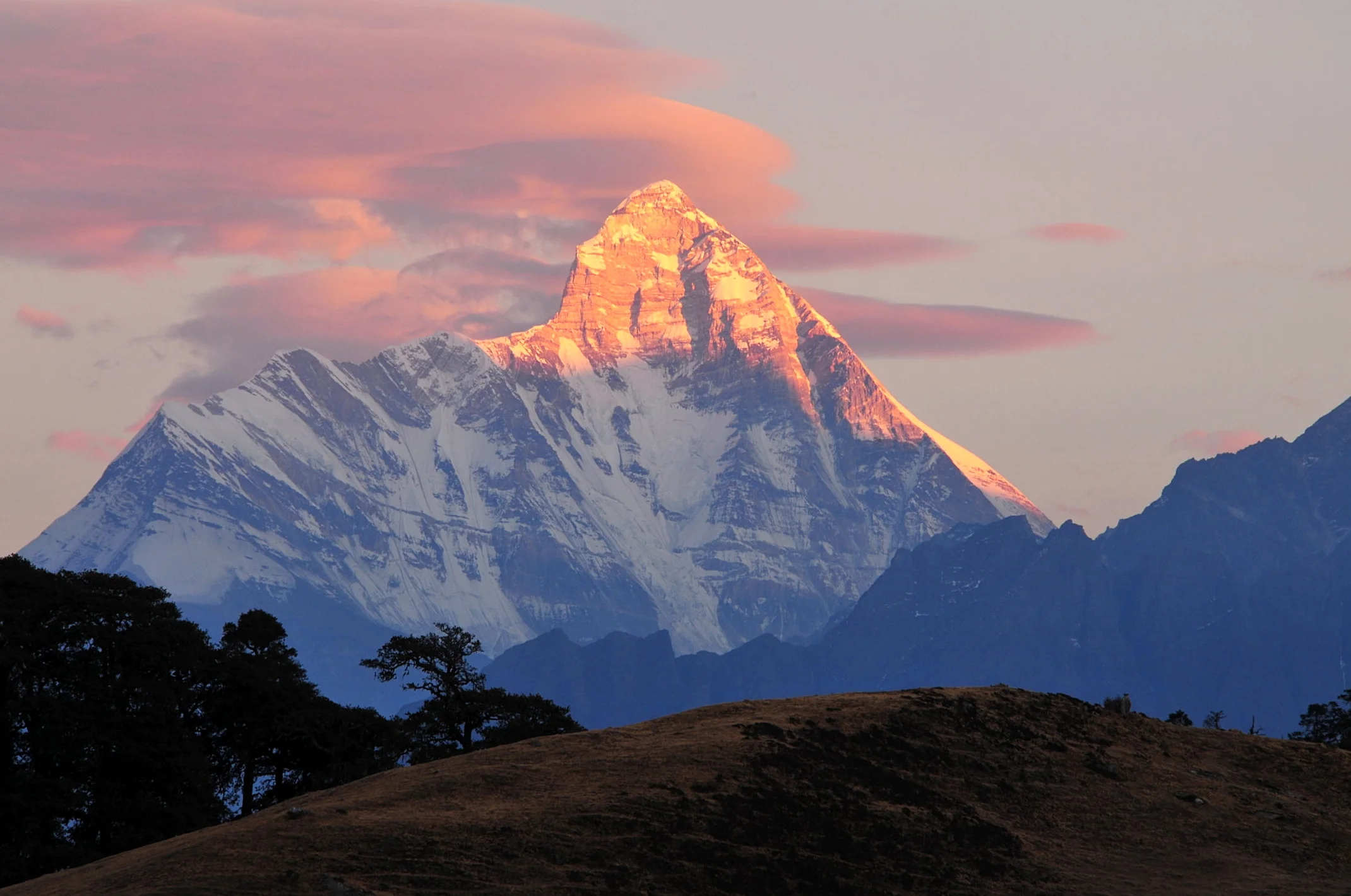
Mountain Safety & Conditions Disclaimer: High-altitude climbing, glacial travel, and technical ascents entail severe objective risks including avalanches, serac collapses, rapid weather collapse, and altitude illness. Historical route descriptions and summit claims on Mountanity reflect documented archival sources and must not be used as live operational safety assessments. Local regulations, permits, and physical glacial topography change continuously.
Peer Review: Senior Editorial Board & Historical Reviewers • Editorial Standards
Geographical Setting & Topography
Garhwal Himalayas, situated between the Rishiganga valley to the west and the Goriganga valley to the east, draining into the sacred Ganges watershed.
Historic First Ascent
Date: August 29, 1936
Ascent Team: Harold William Tilman and Noel Ewart Odell (British-American Himalayan Expedition)
Key Statistics & Topographic Figures
- Summit Elevation
- 7,816 meters (25,643 ft)
Second Highest in India
- First Ascent Date
- August 29, 1936
Tilman & Odell
- World Altitude Record
- 14-Year Benchmark (1936–1950)
Prior to Annapurna
- Sanctuary Protection
- Closed Since 1982
UNESCO World Heritage
Archival Primary Source Quotations
“I believe we have knocked the bastard off.”
Defined Alpine Terminology & Concepts
- Nanda Devi Sanctuary
- A pristine, ring-fenced glacial amphitheater enclosed by a continuous wall of twelve peaks above 6,000m, accessible only via the sheer cliffs of the Rishi Ganga.
- Rishi Ganga Gorge
- A near-vertical, deep granite gorge carved by the Rishi Ganga river, presenting one of the most formidable natural barriers in Himalayan mountaineering.
Nanda Devi Mountain Weather Forecast
Detailed 14-Day Summit Window & Weather Timeline
Explore day-by-day summit push safety windows, wind shear analysis, and extended multi-day forecasts for Nanda Devi.
Explore Nanda Devi (7,816 m) in Interactive 3D
Inspect steep glacial walls, hanging seracs, ridge approaches, and elevation relief with 360° rotation and terrain tilt in WebGL.
Documented Climbing Routes (1)
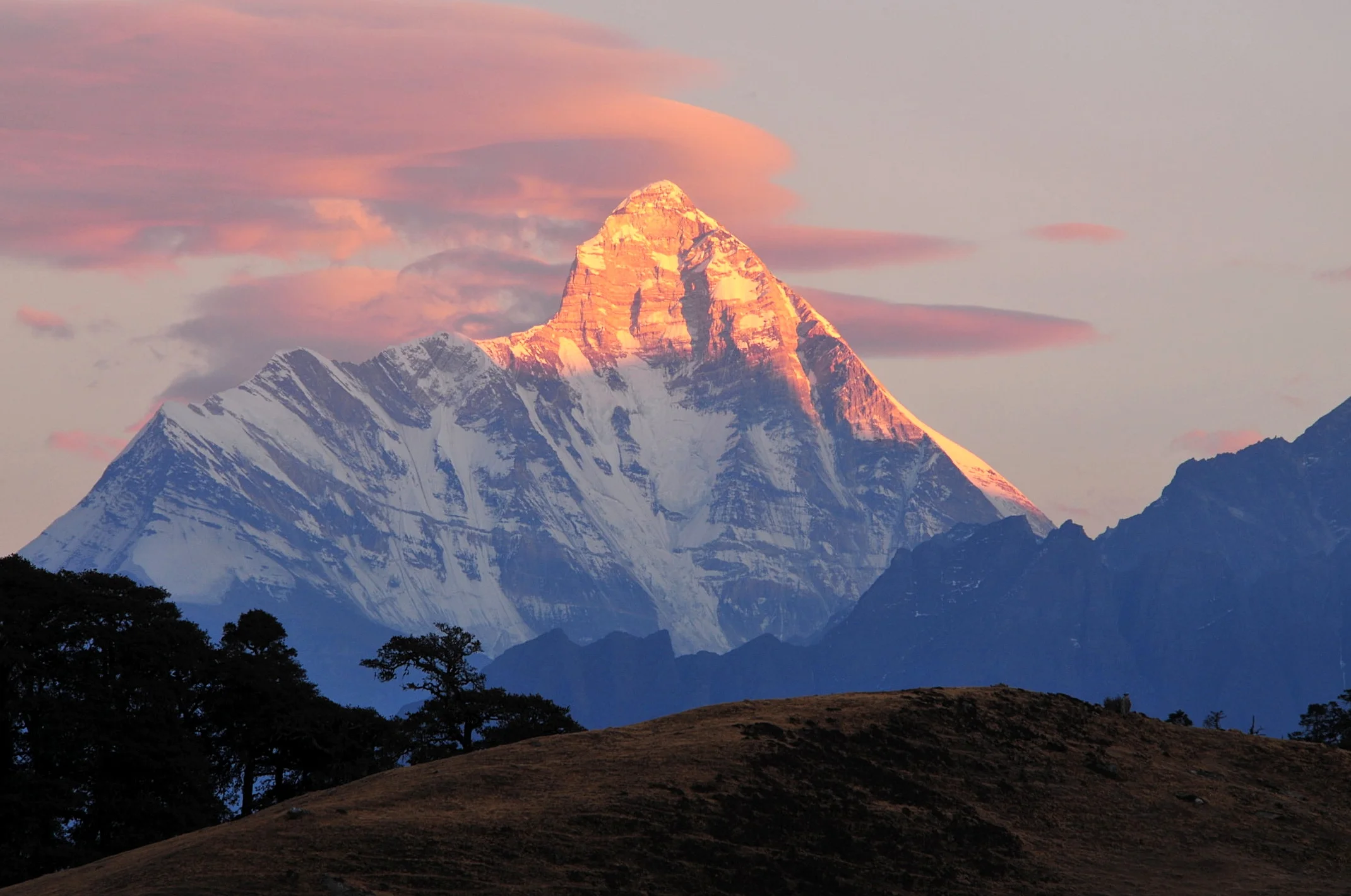
South Ridge & Coxcomb (Original 1936 Route)
The historic maiden first ascent route on Nanda Devi (7,816m), pioneered during the landmark 1936 British-American expedition by Bill Tilman and Noel Odell. Approached through the terrifyingly narrow, sheer chasms of the Rishi Ganga gorge into the virgin meadows of the Nanda Devi Sanctuary, the climb traverses the southern glaciated basin to ascend a razor-sharp rock spine known as the Coxcomb. Overcoming steep mixed rock towers and narrow snow ridges without supplemental oxygen, Tilman and Odell achieved the summit on August 29, 1936, establishing the highest mountain climbed by humans until 1950.
Historical Expeditions (1)
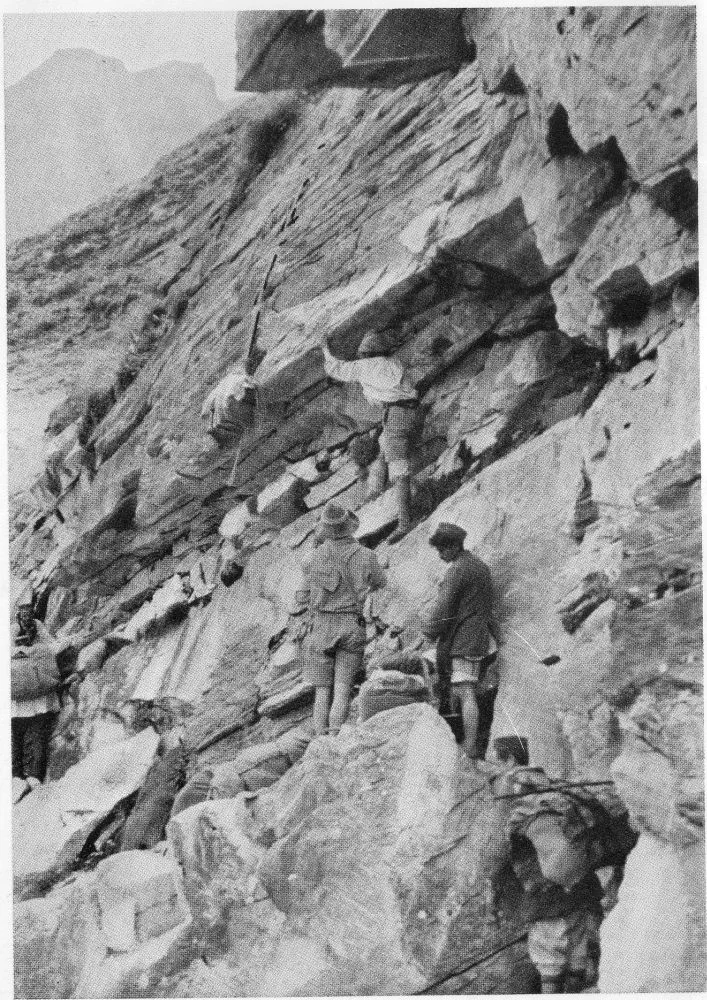
1936 British-American Himalayan Expedition to Nanda Devi
The landmark 1936 joint British-American expedition that achieved the maiden first ascent of Nanda Devi (7,816m) on August 29, 1936, by Bill Tilman and Noel Odell without supplemental oxygen, setting an absolute altitude record on an ascended peak that stood for fourteen years.
Summit Chronicles & Stories (1)
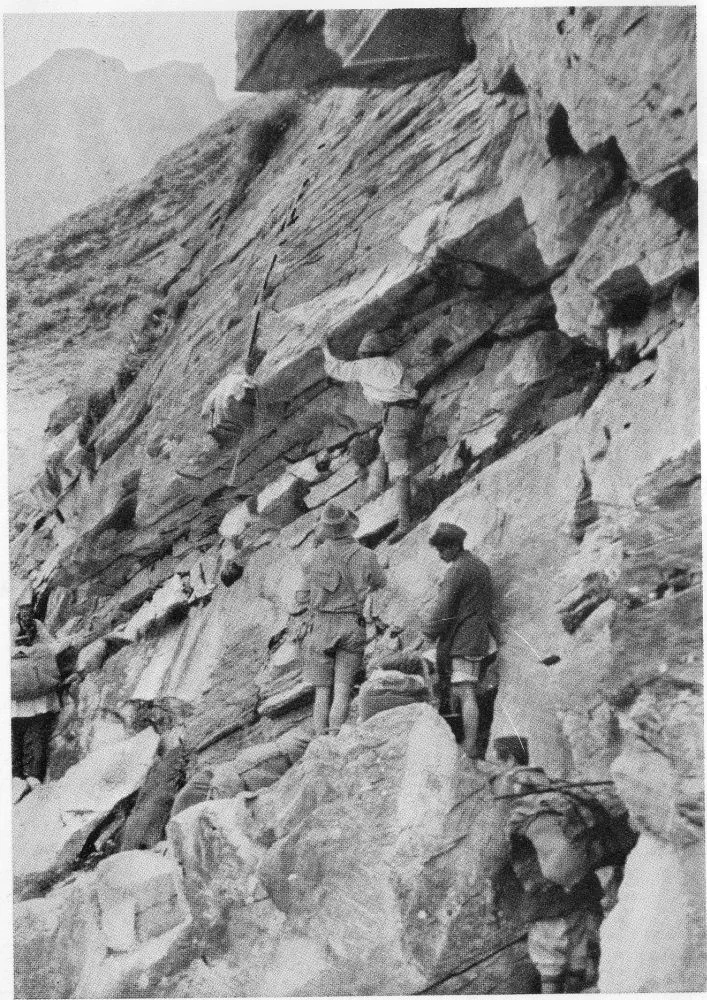
Nanda Devi 1936: Tilman, Odell, and the Conquest of the Blessed Goddess
On August 29, 1936, Bill Tilman and Noel Odell reached the 7,816-meter summit of Nanda Devi without bottled oxygen, conquering the highest mountain scaled on Earth until 1950.
Frequently Asked Questions: Nanda Devi
What is the official height of Nanda Devi?
Nanda Devi stands at an official elevation of 7,816 meters (25,643 feet), making it the second-highest mountain in India and the 23rd-highest peak in the world.
Where is Nanda Devi located?
Nanda Devi is located in the Chamoli district of Uttarakhand in northern India, rising within the Garhwal Himalayas in the Ganges watershed.
What does the name Nanda Devi mean?
In Sanskrit and Hindi, Nanda Devi translates to "Bliss-Giving Goddess," revered by local mountain communities as the patron deity and spiritual guardian of Uttarakhand.
Who made the first ascent of Nanda Devi and in what year?
British mountaineers Harold William "Bill" Tilman and Noel Ewart Odell achieved the historic maiden first ascent of Nanda Devi on August 29, 1936, without supplemental oxygen.
What is the Nanda Devi Sanctuary?
The Nanda Devi Sanctuary is a massive, natural glacial basin enclosed by a continuous ring of 6,000-meter peaks spanning seventy miles, drained exclusively through the narrow Rishi Ganga gorge.
Why is Nanda Devi closed to mountaineers today?
In 1982, the Indian government permanently closed the Nanda Devi Sanctuary to all mountaineering, trekking, and human entry to preserve its pristine, fragile biosphere, designating it a UNESCO World Heritage Site.
How long did Nanda Devi hold the record as the highest peak climbed on Earth?
From its ascent on August 29, 1936, until the French summit of Annapurna I on June 3, 1950, Nanda Devi stood as the highest mountain summit ever climbed by human beings—a record that held for 14 years.
What river gorge provides the only access into the Nanda Devi Sanctuary?
The Rishi Ganga gorge, a vertical, terrifying granite canyon with sheer drops into roaring whitewater, represents the sole natural breach into the inner Sanctuary.
Documented Sources & Archival Citations
- The Ascent of Nanda Devi(H.W. Tilman / Cambridge University Press)
Supporting claim: Official expedition record of the 1936 first ascent and the breach of the Sanctuary
Accessed/Documented: 1937 - Nanda Devi: The Exploration of the Garhwal Himalaya(Eric Shipton / Hodder & Stoughton)
Supporting claim: First-hand documentation of the 1934 breach of the Rishi Ganga gorge
Accessed/Documented: 1936 - The Alpine Journal Archive: Nanda Devi and the Garhwal Expeditions(The Alpine Club UK)
Supporting claim: Cartographic and historical evaluation of the 1936 summit achievement
Accessed/Documented: 2026