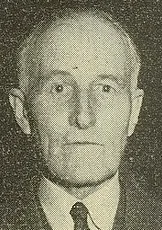
Noel Ewart Odell
Noel Ewart Odell was an eminent British geologist, explorer, and mountaineer who achieved the historic maiden first ascent of Nanda Devi (7,816m) in 1936 alongside Bill Tilman. He is immortalized in alpine lore as the last human being to see George Mallory and Andrew Irvine alive on Mount Everest on June 8, 1924.
Mountain Safety & Conditions Disclaimer: High-altitude climbing, glacial travel, and technical ascents entail severe objective risks including avalanches, serac collapses, rapid weather collapse, and altitude illness. Historical route descriptions and summit claims on Mountanity reflect documented archival sources and must not be used as live operational safety assessments. Local regulations, permits, and physical glacial topography change continuously.
Peer Review: Senior Editorial Board & Historical Reviewers • Editorial Standards
Biographical Record & Archival Chronicle
Noel Ewart Odell was born on December 25, 1890, in St Lawrence, Isle of Wight, England. Educated at the Royal School of Mines, Imperial College London, Odell became a world-renowned geologist specializing in high-altitude glaciology and stratigraphy. In 1924, he was chosen as expedition geologist and lead climber for the third British Mount Everest Expedition.
On Everest, Odell astonished his teammates with his superhuman physiological adaptation to extreme altitude. While other climbers collapsed from exhaustion or succumbed to coughing fits in the thin air, Odell spent nearly two continuous weeks living above 7,000 meters without using supplemental bottled oxygen. On the fateful morning of June 8, 1924, Odell climbed alone from Camp V (7,770m) to Camp VI (8,140m) in support of George Mallory and Andrew Irvine's summit bid. Scrambling up a small rocky crag at approximately 7,900 meters around 12:50 PM, the dense clouds suddenly parted to reveal the upper pyramid of Everest. Looking toward the Northeast Ridge, Odell spotted two tiny silhouettes moving across a prominent snow crest near a prominent rock step (the First or Second Step), 'going strong for the top.' Seconds later, the clouds swept in again, closing the curtain forever.
When neither climber returned to Camp VI that evening, Odell courageously climbed back into the Death Zone twice more in search of his friends. Finding Camp VI deserted, Odell laid out two sleeping bags in the shape of a giant 'T' (later transformed into a cross) on the snow, signaling the dreadful news to his teammates watching through telescopes on the North Col four thousand feet below. For the remaining 63 years of his life, Odell steadfastly maintained his conviction that Mallory and Irvine had achieved the summit of Mount Everest before meeting their deaths.
Twelve years later, in 1936, Odell joined the British-American Himalayan Expedition to Nanda Devi (7,816m / 25,643 ft) in the Garhwal Himalayas. Climbing alongside Bill Tilman in pure alpine style without supplemental oxygen, 45-year-old Odell surmounted the steep, knife-edge rock towers of the Coxcomb ridge. On August 29, 1936, Odell and Tilman stood upon the summit, setting an absolute human altitude record on an ascended mountain that remained unbeaten until Annapurna in 1950.
Odell enjoyed an illustrious academic career, serving as Professor of Geology at Harvard University, Cambridge University, and the University of Otago in New Zealand. Known for his extraordinary physical longevity, Odell continued climbing technical alpine peaks well into his senior years, famously ascending Mount Sir Donald (3,284m) in the Canadian Rockies at the age of 87. He passed away peacefully on February 21, 1987, at the venerable age of 96.
Notable Milestones & Ascents
- Historic maiden first ascent of Nanda Devi (7,816m) on August 29, 1936, with Bill Tilman without oxygen
- Last person to see George Mallory and Andrew Irvine alive near the Second Step on Mount Everest on June 8, 1924
- Spent nearly two continuous weeks above 7,000 meters on Mount Everest in 1924 entirely without supplemental oxygen
- Co-founder and leader of the 1936 British-American Himalayan Expedition
- Surveyed the complex geological stratigraphy of Mount Everest and the Garhwal Himalayas
- Scaled technical alpine rock peaks well into his 80s, summiting Mount Sir Donald at age 87
Key Statistics & Topographic Figures
- Lifespan
- 1890–1987 (Age 96)
Isle of Wight & Cambridge
- Nanda Devi First Ascent
- August 29, 1936 (7,816m)
With Bill Tilman
- 1924 Everest Sighting
- June 8, 1924 (12:50 PM)
Last Eyewitness
- Climbing Longevity
- Mount Sir Donald at Age 87
Technical Rock Ascent
Archival Primary Source Quotations
“My eyes became fixed on one tiny black spot silhouetted on a small snow-crest beneath a rock-step in the ridge... going strong for the top.”
Defined Alpine Terminology & Concepts
- High-Altitude Acclimatization
- The physiological process of adjusting to extreme hypoxia, demonstrated by Odell’s extended stays above 7,000m on Everest in 1924 without oxygen.
- Signal Cross
- A distress signal created by arranging sleeping bags in a cross on high snow slopes to communicate across valleys before the advent of radios.
Frequently Asked Questions: Noel Ewart Odell
Who was Noel Ewart Odell?
Noel Ewart Odell (1890–1987) was an eminent British geologist, mountaineer, and academic who achieved the 1936 first ascent of Nanda Devi (7,816m) and was the last person to see Mallory and Irvine alive on Mount Everest in 1924.
What did Noel Odell see on Mount Everest on June 8, 1924?
At 12:50 PM, through a sudden break in storm clouds at 7,900m, Odell saw two small silhouettes moving swiftly across a snow crest near the Second Step on the Northeast Ridge, "going strong for the top."
What major Himalayan peak did Noel Odell first summit in 1936?
Odell made the maiden first ascent of Nanda Devi (7,816m) on August 29, 1936, alongside Bill Tilman without supplemental oxygen, setting a world altitude record on an ascended peak.
What was Noel Odell’s profession outside of mountaineering?
Odell was a distinguished professor of geology, teaching at Harvard University, Cambridge University, and the University of Otago, conducting pioneering high-altitude geological surveys.
Did Noel Odell use supplemental oxygen on Everest in 1924?
No. Odell possessed extraordinary natural acclimatization, spending two weeks living and climbing above 7,000 meters on Everest entirely without bottled oxygen.
How did Noel Odell signal the death of Mallory and Irvine to the North Col?
Finding their high assault tent empty on June 10, Odell laid two sleeping bags in the snow in the shape of a cross, signaling across 4,000 feet to teammates that no trace of the men had been found.
Until what age did Noel Odell climb technical mountains?
Known for extraordinary vitality, Odell climbed technical alpine peaks well into his 80s, summiting Mount Sir Donald (3,284m) in Canada at the age of 87.
Did Noel Odell believe Mallory and Irvine reached the summit of Mount Everest?
Yes. For the remaining 63 years of his life, Odell maintained his steadfast conviction that Mallory and Irvine had surmounted the Second Step and conquered the summit before meeting disaster.
Associated Summits (2)



Mount Everest
Mount Everest is the highest mountain above sea level on Earth, standing at an official elevation of 8,848.86 meters (29,031.7 ft). Straddling the international frontier between Nepal and China, it is known locally as Sagarmatha in Nepali ('Goddess of the Sky') and Chomolungma in Tibetan ('Mother Goddess of the World'). The peak rises into the extreme upper troposphere, where oxygen levels drop to barely one-third of sea-level pressure. Climbers face hurricane-force jet stream winds, severe frostbite conditions, shifting ice crevasses in the Khumbu Icefall, and the dangerous Death Zone above 8,000 meters.
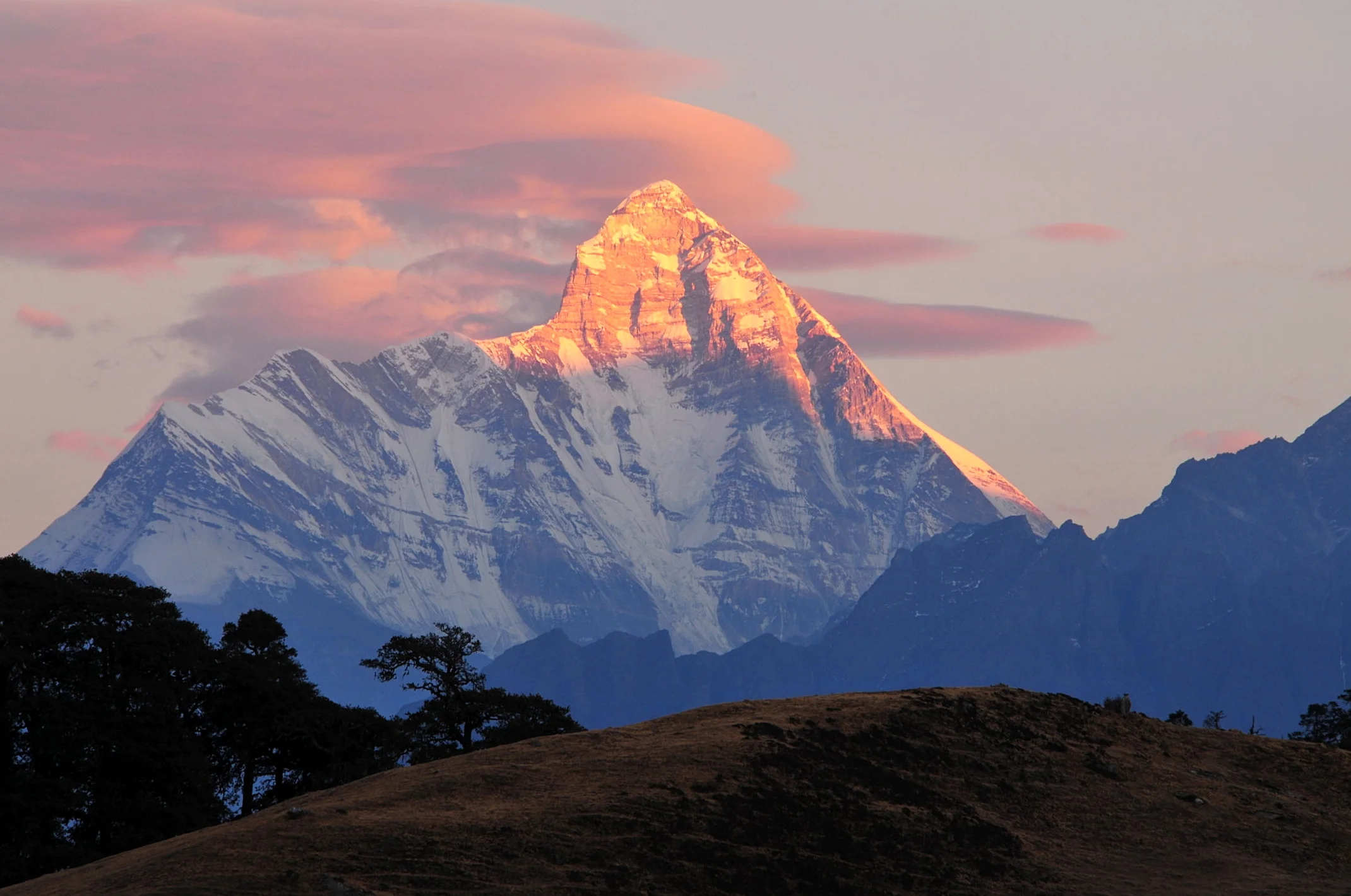

Nanda Devi
Nanda Devi, standing at 7,816 meters (25,643 ft), is the second-highest mountain in India and the highest peak situated entirely within Indian territory. Revered as a sacred manifestation of the patron goddess of Uttarakhand, the mountain rises within a formidable natural fortress—the Nanda Devi Sanctuary—ringed by seventy miles of razor-sharp peaks exceeding 6,000 meters. Its historic first ascent on August 29, 1936, by Bill Tilman and Noel Odell remained the highest summit ever achieved by human beings until the conquest of Annapurna in 1950.
Pioneered & Associated Routes (6)
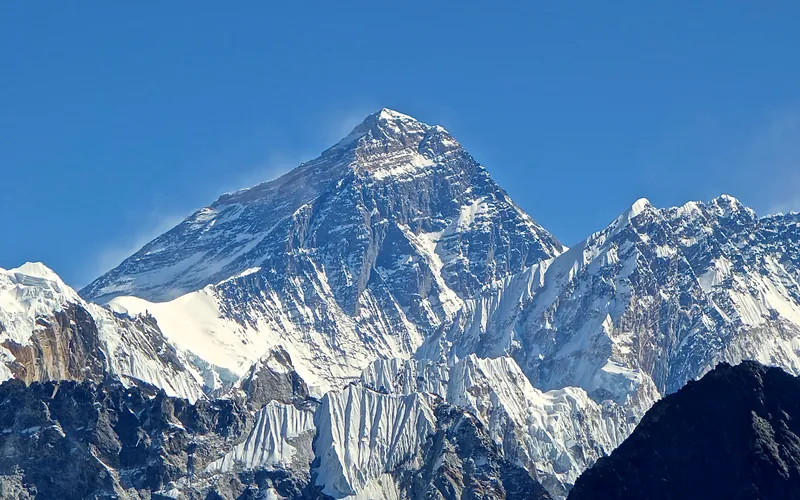
Mount Everest North Face (Hornbein Couloir Direct)
The North Face of Mount Everest via the Japanese Couloir and the sheer Hornbein Couloir is one of the most direct and formidable ice lines in the Himalayas. Rising 3,000 vertical meters from the Rongbuk Glacier to the summit, it funnels through a narrow 60-degree snow-and-ice cleft slicing straight through the Yellow Band and upper limestone cliffs of the North Face. In August 1986, Swiss alpinists Erhard Loretan and Jean Troillet executed one of the most audacious speed climbs in mountain history: climbing the entire face in a single 31-hour push at night without supplemental oxygen, tents, or fixed ropes. After summiting on August 30, they glissaded down the 3,000-meter face on their backs and buttocks in just 3.5 hours, completing the entire round trip in an astonishing 43 hours.
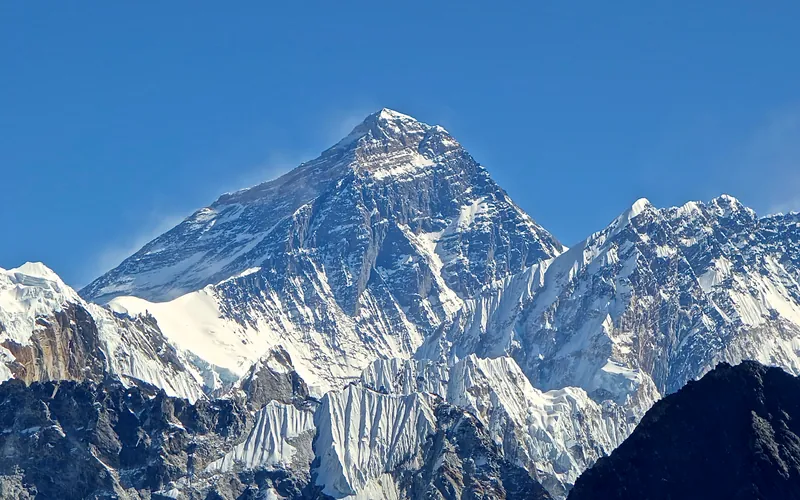
North Col & Northeast Ridge Route
The historic northern route on Mount Everest (8,848.86m), ascending from the Rongbuk and East Rongbuk glaciers to breach the icy wall of the North Col (7,020m). From the col, the route traverses the wind-blasted Northwest Ridge onto the North Face before joining the razor-like Northeast Ridge, navigating the notorious First, Second, and Third Steps in the Death Zone. This was the stage of George Mallory and Andrew Irvine's fateful 1924 climb and was first definitively surmounted on May 25, 1960, by Chinese climbers Wang Fuzhou, Qu Yinhua, and Gongbu.
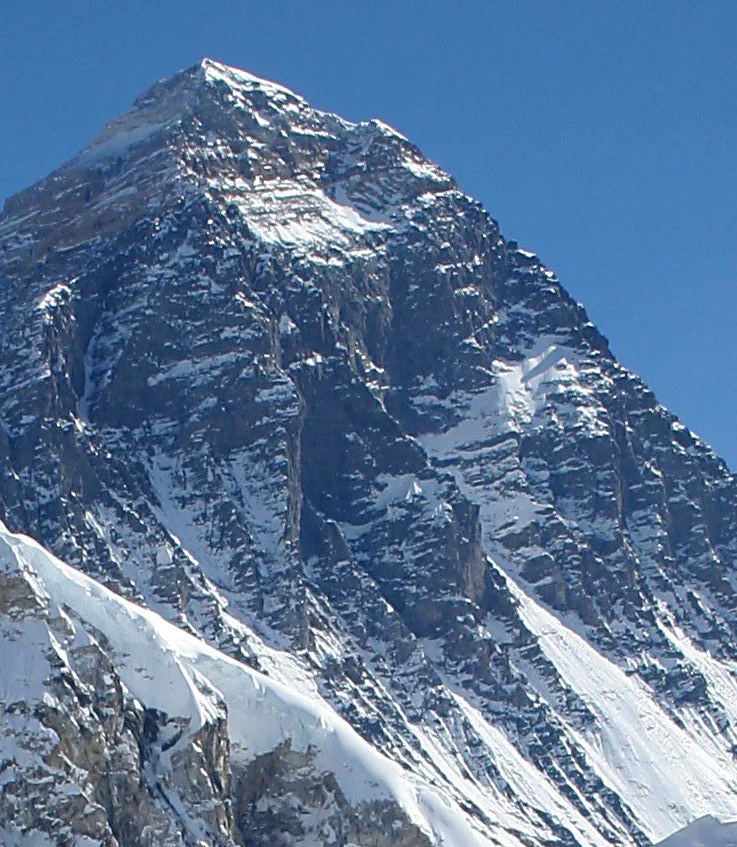
Mount Everest Southwest Face (Bonington Route)
The Southwest Face of Mount Everest (8,848.86m) rises 2,300 vertical meters from the Western Cwm to the summit, presenting one of the largest and most forbidding rock and ice faces in the world. Dominated by the vertical 300-meter 'Rock Band' at 8,200–8,500 meters, the face repelled six international attempts between 1969 and 1974. In autumn 1975, a legendary British expedition led by Chris Bonington breached the face when Paul Braithwaite and Nick Estcourt unlocked the key ramp through the Rock Band. On September 24, 1975, Doug Scott and Dougal Haston climbed to the South Summit and pushed on to the main summit, becoming the first Britons to conquer Everest. Trapped by nightfall during their descent, they survived an epic open bivouac at 8,760 meters without oxygen, sleeping bags, or frostbite.
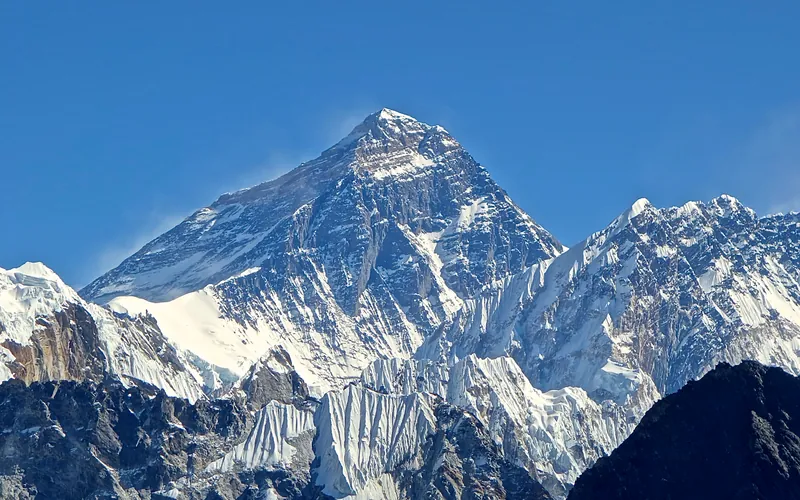
Mount Everest Complete West Ridge (Yugoslav Direct)
The Complete West Ridge of Mount Everest is one of the most formidable and sustained technical routes on the mountain. Pioneered in spring 1979 by an elite Yugoslav expedition led by Tone Škarja, the route tackles the integral knife-edge crest directly from the Lho La col (6,026m) all the way to the 8,848.86m summit. Unlike the 1963 American West Ridge route which diverted into the Hornbein Couloir from the North Face, the Yugoslav line stayed strictly along the razor-edge crest of the West Ridge, surmounting technical rock buttresses up to Grade V+ at extreme altitude before traversing around the Yellow Band. On May 13, 1979, Andrej Štremfelj and Nejc Zaplotnik achieved the first ascent of the complete ridge, followed two days later by Stane Belak, Marjan Manfreda, and Ang Phu Sherpa in one of the greatest feats in Himalayan history.
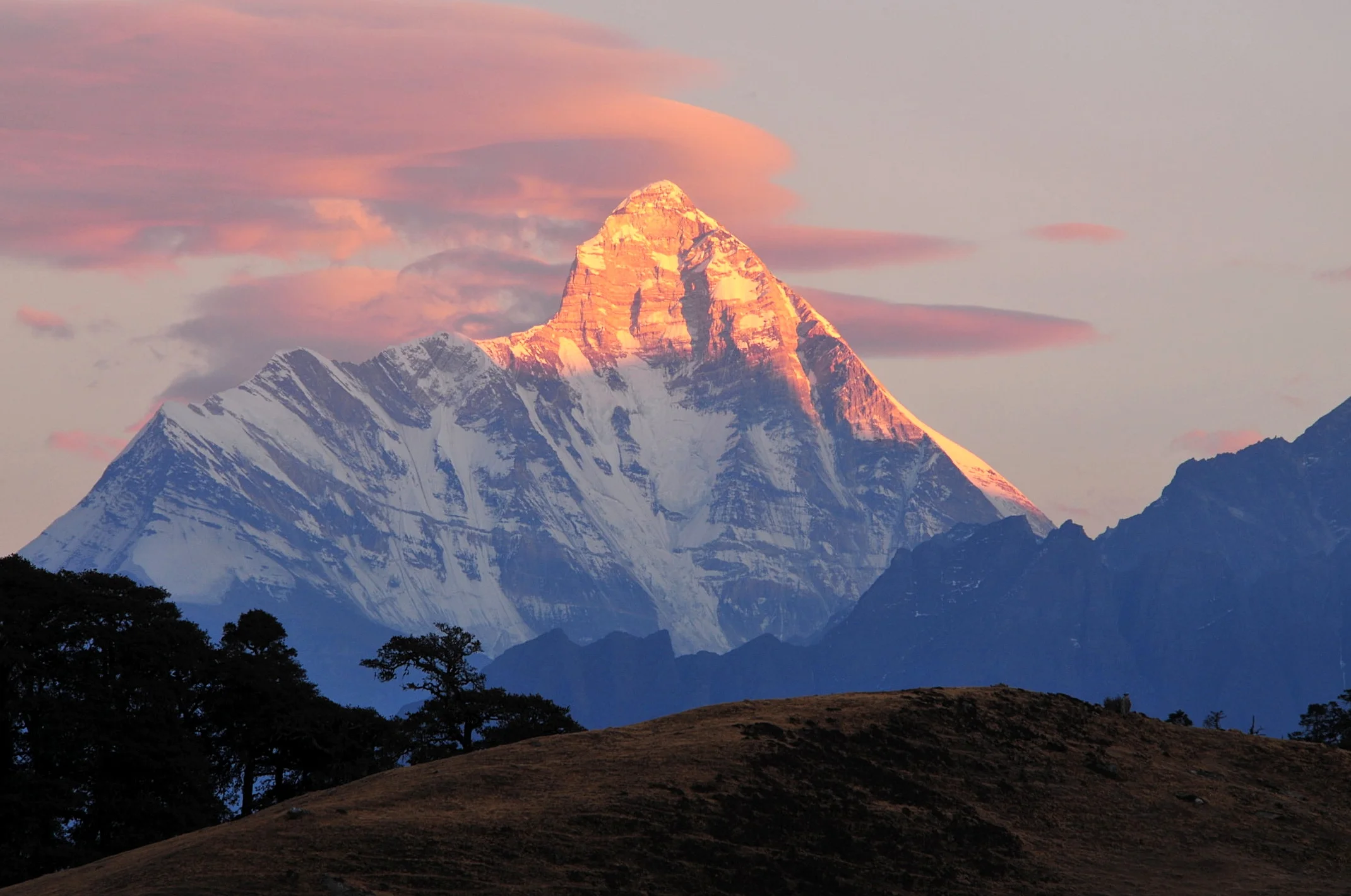
South Ridge & Coxcomb (Original 1936 Route)
The historic maiden first ascent route on Nanda Devi (7,816m), pioneered during the landmark 1936 British-American expedition by Bill Tilman and Noel Odell. Approached through the terrifyingly narrow, sheer chasms of the Rishi Ganga gorge into the virgin meadows of the Nanda Devi Sanctuary, the climb traverses the southern glaciated basin to ascend a razor-sharp rock spine known as the Coxcomb. Overcoming steep mixed rock towers and narrow snow ridges without supplemental oxygen, Tilman and Odell achieved the summit on August 29, 1936, establishing the highest mountain climbed by humans until 1950.
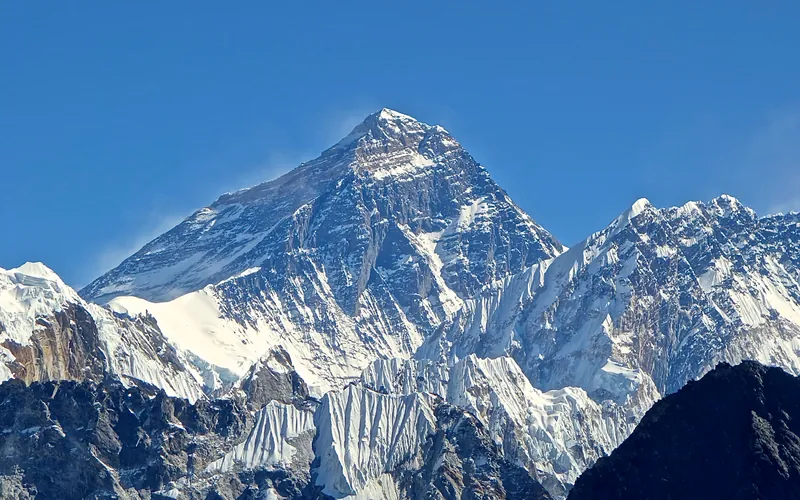
South Col & Southeast Ridge (Normal Route)
The South Col Route along the Southeast Ridge is the historic path of the 1953 first ascent and the most popular route on Mount Everest. Starting from Base Camp on the Khumbu Glacier in Nepal, climbers navigate the shifting seracs of the Khumbu Icefall into the Western Cwm. The route then scales the icy 45-degree slope of the Lhotse Face to the South Col at 7,925 meters, launching the final summit bid through the Balcony, South Summit, and Hillary Step to the summit of Earth at 8,848.86 meters.
Documented Expeditions (2)
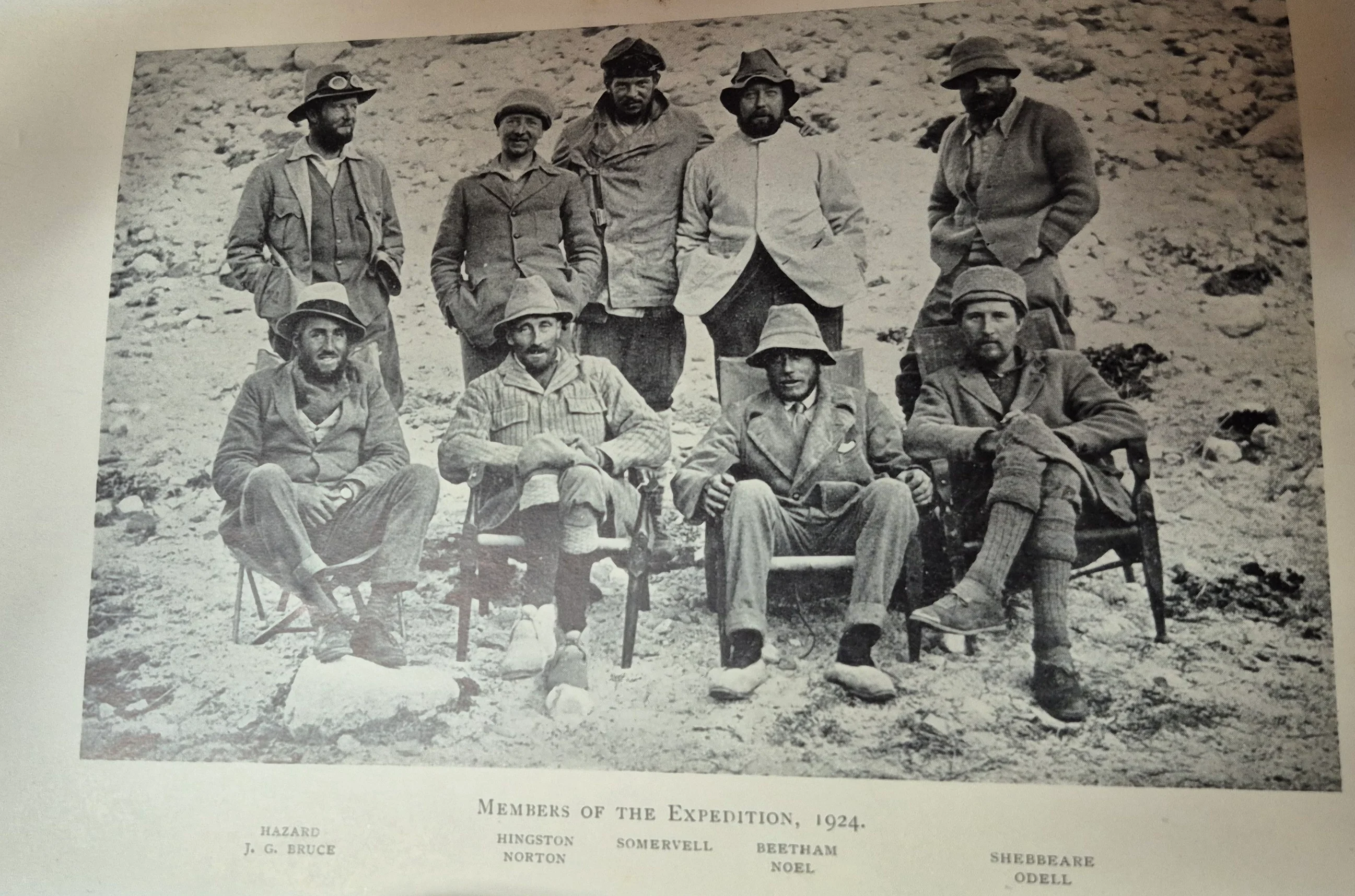
1924 British Mount Everest Expedition
The third British expedition to Mount Everest, marked by Edward Norton reaching 8,570m without supplemental oxygen and the tragic disappearance of George Mallory and Andrew Irvine high on the Northeast Ridge on June 8, 1924.
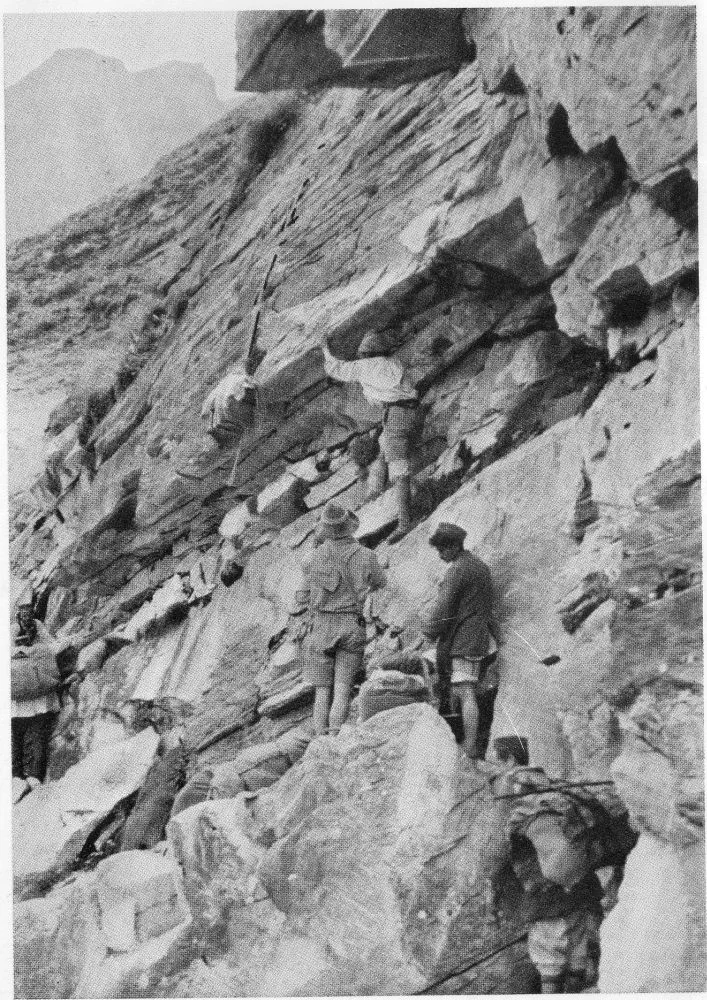
1936 British-American Himalayan Expedition to Nanda Devi
The landmark 1936 joint British-American expedition that achieved the maiden first ascent of Nanda Devi (7,816m) on August 29, 1936, by Bill Tilman and Noel Odell without supplemental oxygen, setting an absolute altitude record on an ascended peak that stood for fourteen years.
Documented Sources & Archival Citations
- The Fight for Everest: 1924(E.F. Norton / Edward Arnold & Co.)
Supporting claim: Official eyewitness deposition of the 12:50 PM sighting of Mallory and Irvine and the search of Camp VI
Accessed/Documented: 1925 - The Ascent of Nanda Devi(H.W. Tilman / Cambridge University Press)
Supporting claim: Official expedition record of the 1936 first ascent and Odell's geological surveys
Accessed/Documented: 1937 - The Alpine Journal: In Memoriam - Noel Ewart Odell (1890–1987)(The Alpine Club UK)
Supporting claim: Official obituary, evaluation of the 1924 Everest sighting, and career tribute
Accessed/Documented: 1988