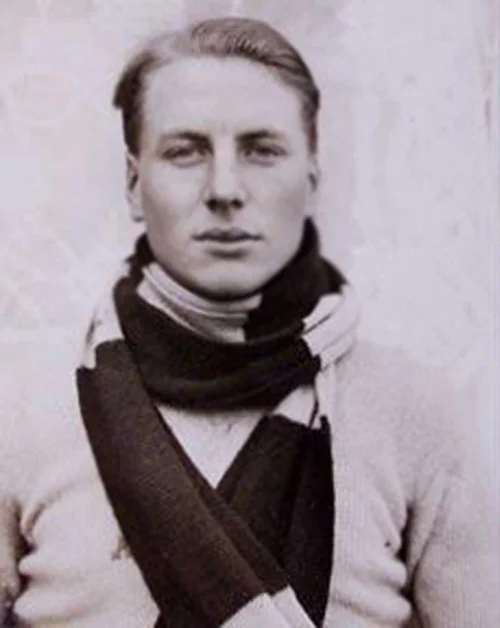
Andrew Comyn Irvine
Andrew 'Sandy' Irvine was an English engineering prodigy, champion Oxford oarsman, and mountaineer who disappeared alongside George Mallory on Mount Everest on June 8, 1924. Celebrated for redesigning the expedition's primitive oxygen sets, his missing Kodak camera remains the tantalizing key to the world's greatest alpine mystery.
Mountain Safety & Conditions Disclaimer: High-altitude climbing, glacial travel, and technical ascents entail severe objective risks including avalanches, serac collapses, rapid weather collapse, and altitude illness. Historical route descriptions and summit claims on Mountanity reflect documented archival sources and must not be used as live operational safety assessments. Local regulations, permits, and physical glacial topography change continuously.
Peer Review: Senior Editorial Board & Historical Reviewers • Editorial Standards
Biographical Record & Archival Chronicle
Andrew Comyn 'Sandy' Irvine was born on April 8, 1902, in Birkenhead, Cheshire, England. Blessed with immense physical strength, towering height, and an extraordinary gift for mechanical engineering, Irvine was educated at Shrewsbury School, where he famously patented a synchronization gear for machine guns during the First World War while still a teenage schoolboy. He entered Merton College, Oxford, in 1921 to study engineering science, quickly becoming a sporting icon by rowing the Oxford crew to victory in the dramatic 1923 Boat Race against Cambridge.
In the summer of 1923, Irvine took part in the Merton College Arctic Expedition to Spitsbergen. His immense physical endurance across glaciers and uncanny ability to repair sledges, surveying instruments, and Primus stoves deeply impressed expedition geologist Noel Odell. When the Mount Everest Committee met to select the roster for the 1924 Everest Expedition, Odell strongly championed the 21-year-old student as the ideal 'practical engineer' needed to manage the temperamental, experimental bottled oxygen apparatus.
Upon arriving in Tibet in the spring of 1924, Irvine demonstrated his worth immediately. Dismantling the heavy, leaky 'Mark V' oxygen sets, he stripped away dead metal, rebuilt the copper manifolds, and lightened each rig by several pounds. His warmth, boundless cheerfulness, and technical brilliance earned the deep admiration of George Mallory. Although Irvine was by far the youngest and least experienced rock climber on the team, Mallory personally selected him as his partner for the final summit assault, trusting that Irvine's intimate knowledge of the oxygen sets would give them their best chance of surviving the Death Zone.
On the morning of June 8, 1924, carrying two oxygen cylinders each, Mallory and Irvine departed their high assault camp (Camp VI) at 8,140 meters. At 12:50 PM, Noel Odell spotted them high on the Northeast Ridge, moving with determination toward the summit pyramid before afternoon blizzard clouds swallowed them forever.
For a century, Irvine's whereabouts remained a haunting enigma. It was widely believed that Irvine had carried the party's Vest Pocket Kodak camera, whose film might contain definitive proof of a 1924 summit. In September 2024, a National Geographic documentary team led by mountaineer Jimmy Chin discovered a vintage leather boot and woolen sock containing human remains melting out of the Central Rongbuk Glacier, bearing an embroidered red label stitched into the cloth: 'A.C. IRVINE'. The discovery provided the first physical proof of Sandy Irvine's descent path, keeping the immortal romance of his final climb alive.
Notable Milestones & Ascents
- Selected for the 1924 British Mount Everest Expedition at age 21 as oxygen equipment engineer
- Re-engineered and lightened the experimental high-altitude oxygen apparatus, making the 1924 assault possible
- Partnered with George Mallory on the fateful June 8, 1924 summit bid, reaching the upper Death Zone
- Won the prestigious Oxford and Cambridge Boat Race in 1923 as key oarsman
- His boot and foot identified on the Central Rongbuk Glacier in September 2024 by Jimmy Chin
Key Statistics & Topographic Figures
- Lifespan
- 1902–1924 (Age 22)
Birkenhead & Everest
- University
- Merton College, Oxford
Engineering Science
- Boat Race Champion
- 1923 (Oxford Crew)
Championship Oarsman
- Boot Discovery
- September 2024 (Rongbuk)
Jimmy Chin / Nat Geo
Archival Primary Source Quotations
“Sandy was an engineering genius who made the clumsy oxygen apparatus reliable enough to climb above 8,000 meters.”
Defined Alpine Terminology & Concepts
- Vest Pocket Kodak (VPK)
- A compact folding roll-film camera carried by Andrew Irvine on June 8, 1924, whose still-missing film could resolve the 1924 Everest summit controversy.
- Mark V Oxygen Apparatus
- The experimental high-altitude oxygen apparatus re-engineered and lightened by Andrew Irvine to enable survival in the Everest Death Zone.
Frequently Asked Questions: Andrew Comyn Irvine
Who was Andrew "Sandy" Irvine?
Andrew Comyn "Sandy" Irvine (1902–1924) was a brilliant English engineering student, champion Oxford oarsman, and high-altitude climber who vanished with George Mallory on Mount Everest on June 8, 1924.
How old was Sandy Irvine on the 1924 Everest expedition?
Irvine was only 22 years old, making him the youngest member of the 1924 British expedition and the youngest person to climb into the upper Death Zone of Everest at the time.
Why was Andrew Irvine chosen for the 1924 Everest summit bid?
Mallory chose Irvine because of his exceptional physical stamina and his mechanical genius in stripping, rebuilding, and lightening the expedition’s temperamental Mark V bottled oxygen apparatus.
When was Andrew Irvine’s boot found on Mount Everest?
In September 2024, a National Geographic expedition led by Jimmy Chin discovered Andrew Irvine’s boot and foot with an embroidered "A.C. IRVINE" nametag melting out of the Central Rongbuk Glacier.
What camera did Andrew Irvine carry on Mount Everest?
Irvine carried a small Vest Pocket Kodak (VPK) folding camera, whose unrecovered film is believed to hold the definitive photographic record of whether they achieved the summit in 1924.
What sporting event did Sandy Irvine win while at Oxford?
Irvine was a star rower for Merton College and rowed in the Oxford boat that won the dramatic 1923 Oxford and Cambridge Boat Race on the River Thames.
Who was the last person to see Sandy Irvine alive?
Geologist Noel Odell was the last person to see Irvine alive, observing him and Mallory through a telescope at 12:50 PM on June 8, 1924, moving strongly near the Second Step.
What engineering improvements did Irvine make to the oxygen equipment?
Irvine stripped unnecessary brass clamps, rebuilt the copper gas manifolds, and reduced the weight of the Mark V oxygen sets by several pounds, making the high-altitude assault feasible.
Associated Summits (1)
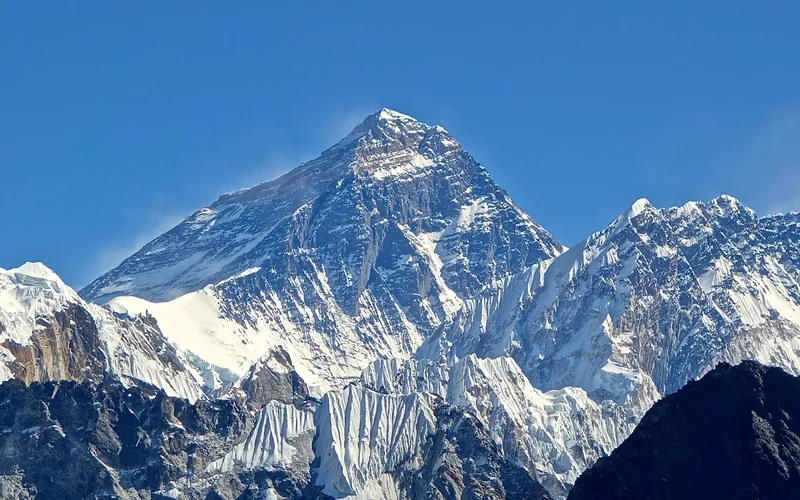


Mount Everest
Mount Everest is the highest mountain above sea level on Earth, standing at an official elevation of 8,848.86 meters (29,031.7 ft). Straddling the international frontier between Nepal and China, it is known locally as Sagarmatha in Nepali ('Goddess of the Sky') and Chomolungma in Tibetan ('Mother Goddess of the World'). The peak rises into the extreme upper troposphere, where oxygen levels drop to barely one-third of sea-level pressure. Climbers face hurricane-force jet stream winds, severe frostbite conditions, shifting ice crevasses in the Khumbu Icefall, and the dangerous Death Zone above 8,000 meters.
Pioneered & Associated Routes (5)
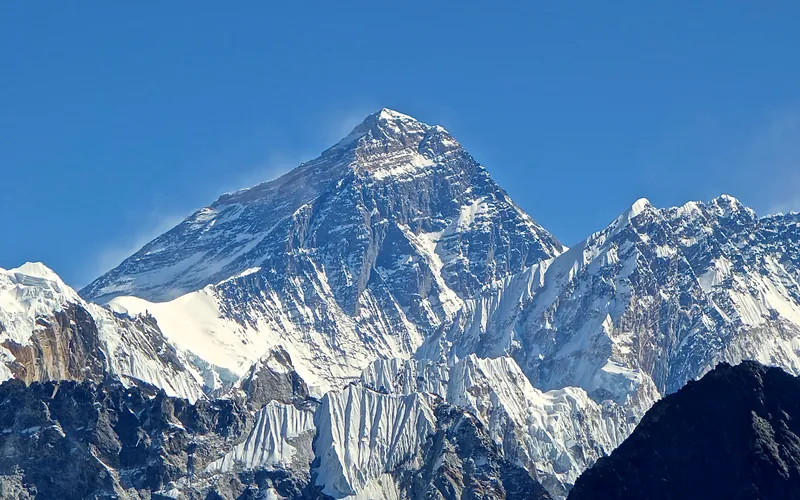
Mount Everest North Face (Hornbein Couloir Direct)
The North Face of Mount Everest via the Japanese Couloir and the sheer Hornbein Couloir is one of the most direct and formidable ice lines in the Himalayas. Rising 3,000 vertical meters from the Rongbuk Glacier to the summit, it funnels through a narrow 60-degree snow-and-ice cleft slicing straight through the Yellow Band and upper limestone cliffs of the North Face. In August 1986, Swiss alpinists Erhard Loretan and Jean Troillet executed one of the most audacious speed climbs in mountain history: climbing the entire face in a single 31-hour push at night without supplemental oxygen, tents, or fixed ropes. After summiting on August 30, they glissaded down the 3,000-meter face on their backs and buttocks in just 3.5 hours, completing the entire round trip in an astonishing 43 hours.
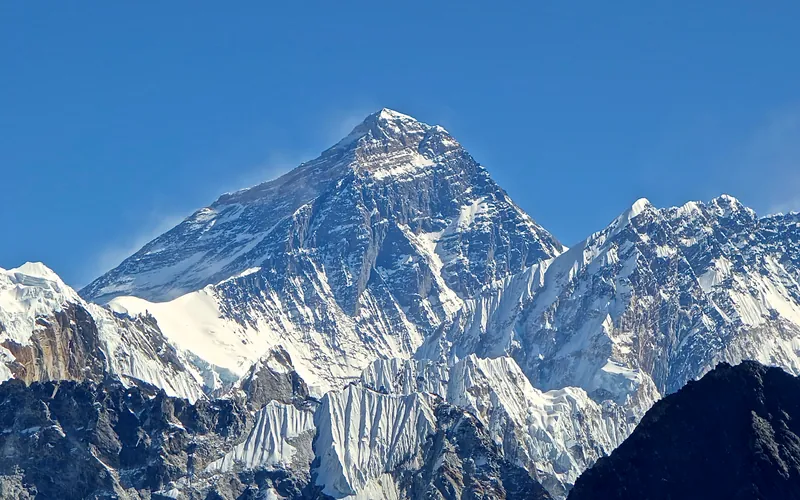
North Col & Northeast Ridge Route
The historic northern route on Mount Everest (8,848.86m), ascending from the Rongbuk and East Rongbuk glaciers to breach the icy wall of the North Col (7,020m). From the col, the route traverses the wind-blasted Northwest Ridge onto the North Face before joining the razor-like Northeast Ridge, navigating the notorious First, Second, and Third Steps in the Death Zone. This was the stage of George Mallory and Andrew Irvine's fateful 1924 climb and was first definitively surmounted on May 25, 1960, by Chinese climbers Wang Fuzhou, Qu Yinhua, and Gongbu.
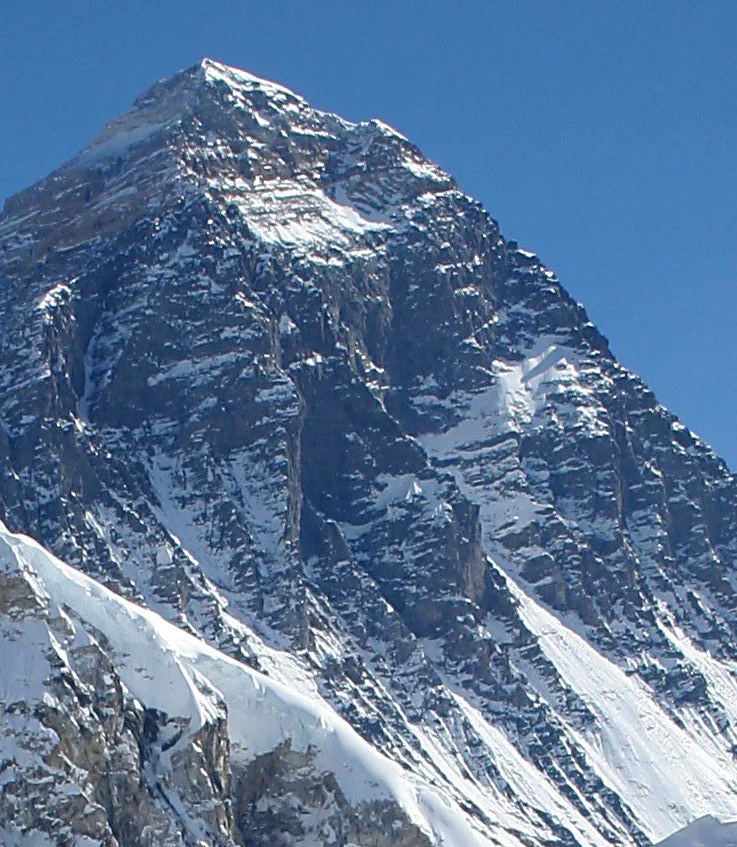
Mount Everest Southwest Face (Bonington Route)
The Southwest Face of Mount Everest (8,848.86m) rises 2,300 vertical meters from the Western Cwm to the summit, presenting one of the largest and most forbidding rock and ice faces in the world. Dominated by the vertical 300-meter 'Rock Band' at 8,200–8,500 meters, the face repelled six international attempts between 1969 and 1974. In autumn 1975, a legendary British expedition led by Chris Bonington breached the face when Paul Braithwaite and Nick Estcourt unlocked the key ramp through the Rock Band. On September 24, 1975, Doug Scott and Dougal Haston climbed to the South Summit and pushed on to the main summit, becoming the first Britons to conquer Everest. Trapped by nightfall during their descent, they survived an epic open bivouac at 8,760 meters without oxygen, sleeping bags, or frostbite.
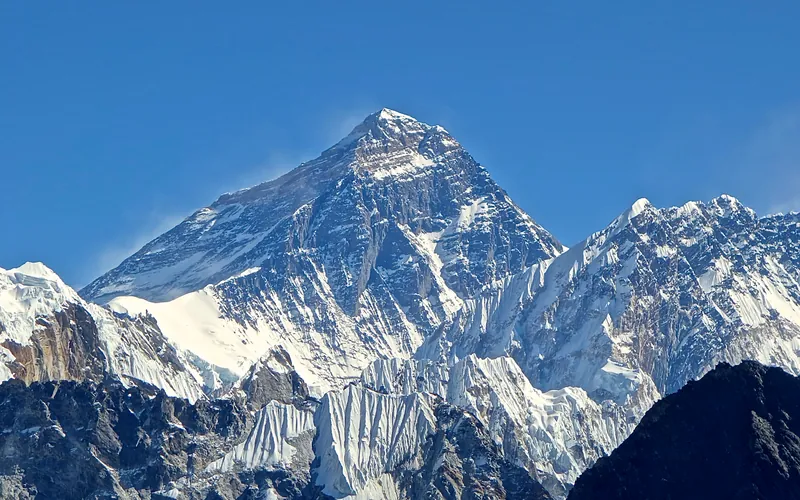
Mount Everest Complete West Ridge (Yugoslav Direct)
The Complete West Ridge of Mount Everest is one of the most formidable and sustained technical routes on the mountain. Pioneered in spring 1979 by an elite Yugoslav expedition led by Tone Škarja, the route tackles the integral knife-edge crest directly from the Lho La col (6,026m) all the way to the 8,848.86m summit. Unlike the 1963 American West Ridge route which diverted into the Hornbein Couloir from the North Face, the Yugoslav line stayed strictly along the razor-edge crest of the West Ridge, surmounting technical rock buttresses up to Grade V+ at extreme altitude before traversing around the Yellow Band. On May 13, 1979, Andrej Štremfelj and Nejc Zaplotnik achieved the first ascent of the complete ridge, followed two days later by Stane Belak, Marjan Manfreda, and Ang Phu Sherpa in one of the greatest feats in Himalayan history.
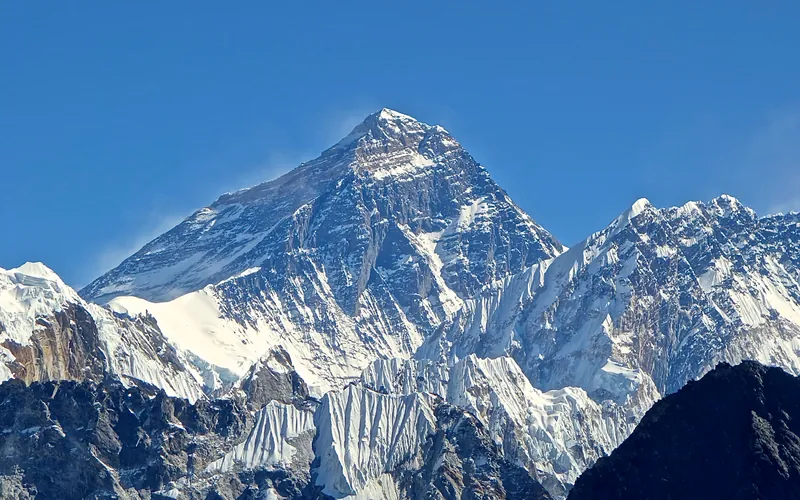
South Col & Southeast Ridge (Normal Route)
The South Col Route along the Southeast Ridge is the historic path of the 1953 first ascent and the most popular route on Mount Everest. Starting from Base Camp on the Khumbu Glacier in Nepal, climbers navigate the shifting seracs of the Khumbu Icefall into the Western Cwm. The route then scales the icy 45-degree slope of the Lhotse Face to the South Col at 7,925 meters, launching the final summit bid through the Balcony, South Summit, and Hillary Step to the summit of Earth at 8,848.86 meters.
Documented Expeditions (1)
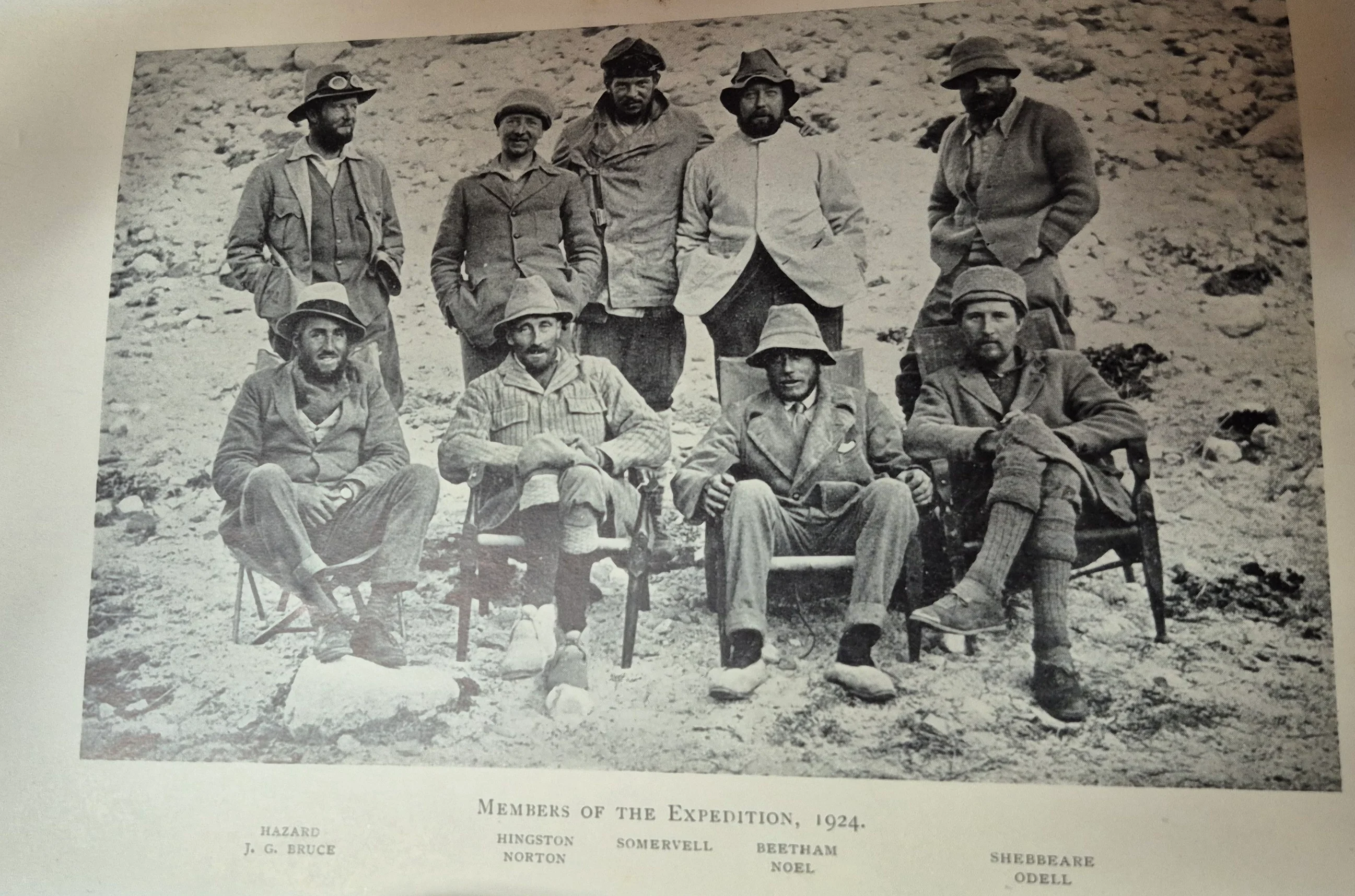
1924 British Mount Everest Expedition
The third British expedition to Mount Everest, marked by Edward Norton reaching 8,570m without supplemental oxygen and the tragic disappearance of George Mallory and Andrew Irvine high on the Northeast Ridge on June 8, 1924.
Documented Sources & Archival Citations
- Sandy Irvine: Mountain Genius(Julie Summers / Simon & Schuster)
Supporting claim: Authoritative biography written by Irvine's great-niece using family diaries, letters, and engineering logs
Accessed/Documented: 2000 - The Fight for Everest: 1924(E.F. Norton / Edward Arnold & Co.)
Supporting claim: Official expedition record detailing Irvine's oxygen work and the final ascent logs
Accessed/Documented: 1925 - National Geographic: Discovery of Andrew Irvine's Remains on Everest(National Geographic Society)
Supporting claim: Official documentation of the September 2024 discovery of Irvine's boot and remains by Jimmy Chin
Accessed/Documented: 2024