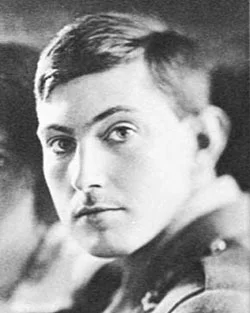
George Leigh Mallory
George Leigh Mallory was an iconic British mountaineer who participated in the first three expeditions to Mount Everest in 1921, 1922, and 1924. Famous for coining the phrase 'Because it's there', he vanished with Andrew Irvine high on Everest's Northeast Ridge on June 8, 1924, sparking mountaineering's greatest enduring mystery.
Mountain Safety & Conditions Disclaimer: High-altitude climbing, glacial travel, and technical ascents entail severe objective risks including avalanches, serac collapses, rapid weather collapse, and altitude illness. Historical route descriptions and summit claims on Mountanity reflect documented archival sources and must not be used as live operational safety assessments. Local regulations, permits, and physical glacial topography change continuously.
Peer Review: Senior Editorial Board & Historical Reviewers • Editorial Standards
Biographical Record & Archival Chronicle
George Herbert Leigh Mallory was born on June 18, 1886, in Mobberley, Cheshire, England. Educated at Winchester College and Magdalene College, Cambridge, Mallory developed into an extraordinarily graceful and daring rock climber, establishing formidable new routes in the English Lake District and North Wales (most notably Mallory's Route on Pillar Rock). Following military service as an artillery officer on the Western Front during the First World War, Mallory was chosen by the Mount Everest Committee for the historic 1921 British Reconnaissance Expedition.
In 1921, Mallory was the first Western explorer to view Mount Everest from close quarters. Navigating the untracked Rongbuk and East Rongbuk glaciers, he discovered the crucial breach through the 1,000-foot ice wall of the North Col (7,020m), establishing the route that would serve as the highway for all pre-war British summit attempts. Returning in 1922 for the first serious assault on the summit, Mallory and his companions broke the world altitude record, reaching 8,320 meters (27,300 ft) without supplemental oxygen. However, their third summit attempt triggered an avalanche on the North Col slopes that killed seven Sherpa porters—a tragedy that haunted Mallory for the rest of his life.
During a 1923 lecture tour in the United States, when exasperated by a New York Times journalist asking repeatedly why anyone would wish to climb Mount Everest, Mallory uttered the three words that became the defining ethos of exploration: 'Because it's there.'
In the spring of 1924, Mallory returned to Everest for a third and final enterprise. On June 8, 1924, Mallory (aged 37) and 22-year-old Oxford engineer Andrew 'Sandy' Irvine departed Camp VI at 8,140 meters, carrying heavy, modified oxygen apparatuses for a final push toward the summit. At 12:50 PM, teammate Noel Odell, ascending supportively from below, caught a brief glimpse through a sudden break in the swirling summit mists: two tiny figures were moving rapidly across a snow crest near the rocky First or Second Step, 'going strong for the top.' Clouds promptly enveloped the ridge, and neither man was ever seen alive again.
For 75 years, the fate of Mallory and Irvine remained mountaineering's ultimate puzzle: had they conquered the summit 29 years before Hillary and Tenzing before dying on descent? On May 1, 1999, the Mallory and Irvine Research Expedition discovered Mallory's frozen body at 8,157 meters on the North Face. His waist showed severe rope-jerk trauma indicative of an arresting fall, his snow goggles were in his pocket (suggesting a descent in dusk), but the photograph of his wife Ruth—which he had promised to leave on the summit—was missing from his jacket. George Mallory remains an immortal symbol of human aspiration and alpine romance.
Notable Milestones & Ascents
- Participated in the first three human expeditions to Mount Everest (1921, 1922, 1924)
- Discovered and mapped the primary northern climbing route to Everest via the East Rongbuk Glacier and North Col in 1921
- Set a world mountaineering altitude record of 8,320 meters on Mount Everest without oxygen in 1922
- Pioneered classic rock climbing routes in the UK, including Mallory's Route on Pillar Rock
- Coined the most iconic quote in mountaineering history: 'Because it's there'
- Body discovered at 8,157m on Everest's North Face in 1999 by Conrad Anker
Key Statistics & Topographic Figures
- Lifespan
- 1886–1924 (Age 37)
Cheshire & Mount Everest
- 1922 Altitude Record
- 8,320 meters (27,300 ft)
Without Oxygen
- Body Discovered
- May 1, 1999 (8,157m)
Conrad Anker / Simonson
- Famous Phrase
- "Because it’s there"
New York, 1923
Archival Primary Source Quotations
“Because it’s there.”
Defined Alpine Terminology & Concepts
- "Because it’s there"
- The defining phrase of mountain exploration uttered by George Mallory in 1923, encapsulating the innate human urge to test limits against nature.
- North Col
- A glaciated saddle at 7,020m connecting Mount Everest to Changtse, discovered by George Mallory in 1921 as the key northern breach to the mountain.
Frequently Asked Questions: George Leigh Mallory
Who was George Leigh Mallory?
George Leigh Mallory (1886–1924) was an iconic British mountaineer who participated in the first three British expeditions to Mount Everest (1921, 1922, 1924) and disappeared high on the Northeast Ridge on June 8, 1924.
Why did George Mallory say "Because it’s there"?
During a 1923 lecture tour in New York, when repeatedly pressed by a journalist to explain why he wanted to climb Mount Everest, Mallory famously retorted: "Because it’s there," creating the most famous quote in mountaineering history.
When and how did George Mallory die?
Mallory died on June 8, 1924, high on Mount Everest during a summit assault with Andrew Irvine, suffering a fatal fall on the down-sloping limestone slabs of the North Face.
When was George Mallory’s body found on Mount Everest?
On May 1, 1999, the Mallory and Irvine Research Expedition discovered George Mallory’s remarkably preserved frozen body at 8,157 meters on Mount Everest’s North Face, 75 years after his disappearance.
Who was climbing with George Mallory when he disappeared?
Mallory was climbing with 22-year-old Oxford University engineering student and rowing champion Andrew "Sandy" Irvine, using experimental bottled oxygen equipment.
Did George Mallory reach the summit of Mount Everest in 1924?
It remains unproven. Circumstantial evidence—such as his snow goggles being in his pocket (indicating nightfall descent) and the missing photograph of his wife Ruth—suggests they may have summited, but definitive proof remains elusive without Irvine’s camera.
What route did George Mallory discover on Mount Everest in 1921?
During the 1921 Reconnaissance Expedition, Mallory discovered the route up the East Rongbuk Glacier to the 7,020m North Col, which became the standard northern climbing route to Everest.
What artifacts were found on George Mallory’s body in 1999?
Climbers found his altimeter, pocket knife, letters, snow goggles, and climbing notes, but the photograph of his wife Ruth—which he had promised to leave on the summit—was missing.
Associated Summits (1)
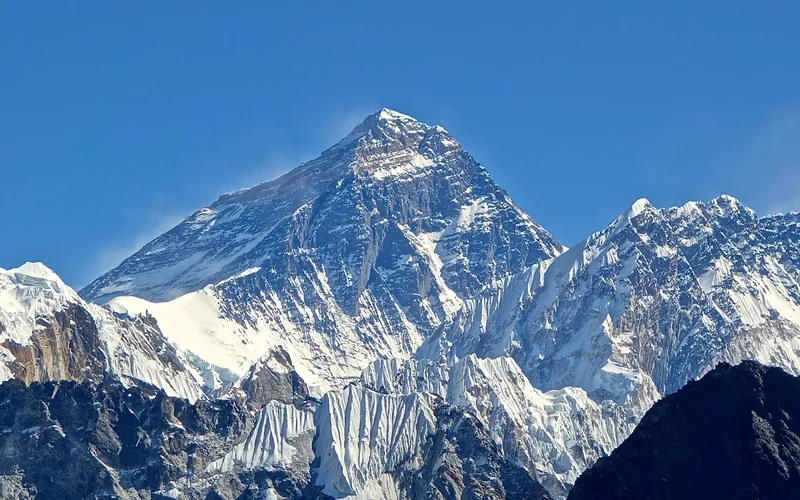


Mount Everest
Mount Everest is the highest mountain above sea level on Earth, standing at an official elevation of 8,848.86 meters (29,031.7 ft). Straddling the international frontier between Nepal and China, it is known locally as Sagarmatha in Nepali ('Goddess of the Sky') and Chomolungma in Tibetan ('Mother Goddess of the World'). The peak rises into the extreme upper troposphere, where oxygen levels drop to barely one-third of sea-level pressure. Climbers face hurricane-force jet stream winds, severe frostbite conditions, shifting ice crevasses in the Khumbu Icefall, and the dangerous Death Zone above 8,000 meters.
Pioneered & Associated Routes (5)
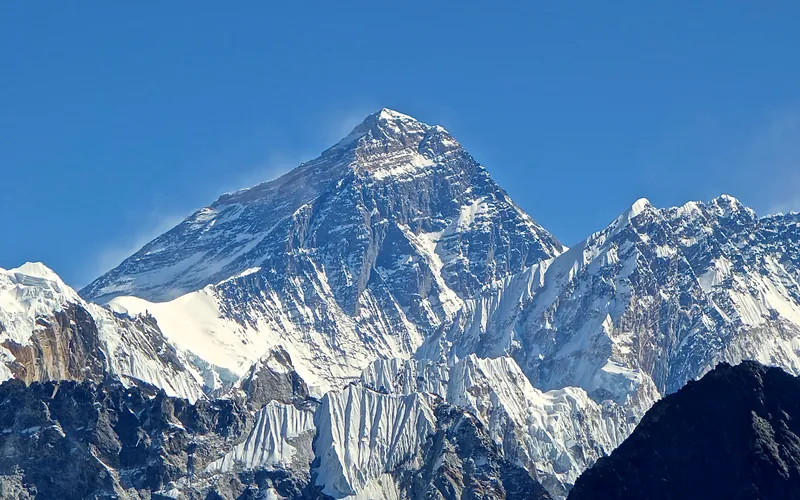
Mount Everest North Face (Hornbein Couloir Direct)
The North Face of Mount Everest via the Japanese Couloir and the sheer Hornbein Couloir is one of the most direct and formidable ice lines in the Himalayas. Rising 3,000 vertical meters from the Rongbuk Glacier to the summit, it funnels through a narrow 60-degree snow-and-ice cleft slicing straight through the Yellow Band and upper limestone cliffs of the North Face. In August 1986, Swiss alpinists Erhard Loretan and Jean Troillet executed one of the most audacious speed climbs in mountain history: climbing the entire face in a single 31-hour push at night without supplemental oxygen, tents, or fixed ropes. After summiting on August 30, they glissaded down the 3,000-meter face on their backs and buttocks in just 3.5 hours, completing the entire round trip in an astonishing 43 hours.
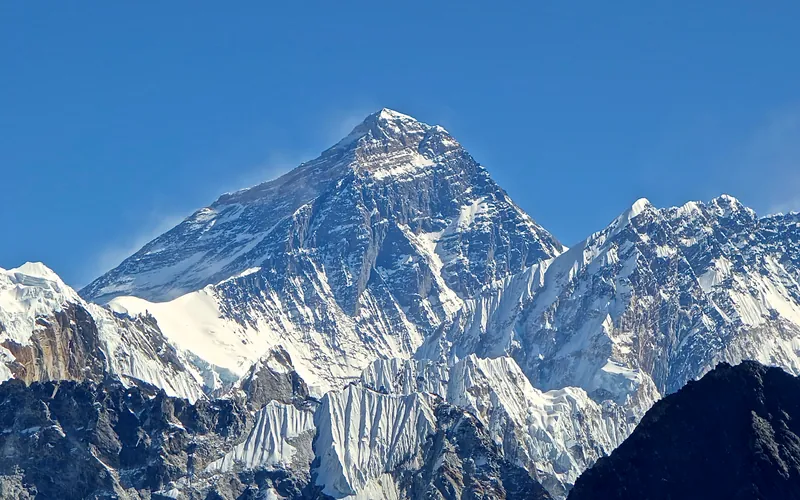
North Col & Northeast Ridge Route
The historic northern route on Mount Everest (8,848.86m), ascending from the Rongbuk and East Rongbuk glaciers to breach the icy wall of the North Col (7,020m). From the col, the route traverses the wind-blasted Northwest Ridge onto the North Face before joining the razor-like Northeast Ridge, navigating the notorious First, Second, and Third Steps in the Death Zone. This was the stage of George Mallory and Andrew Irvine's fateful 1924 climb and was first definitively surmounted on May 25, 1960, by Chinese climbers Wang Fuzhou, Qu Yinhua, and Gongbu.
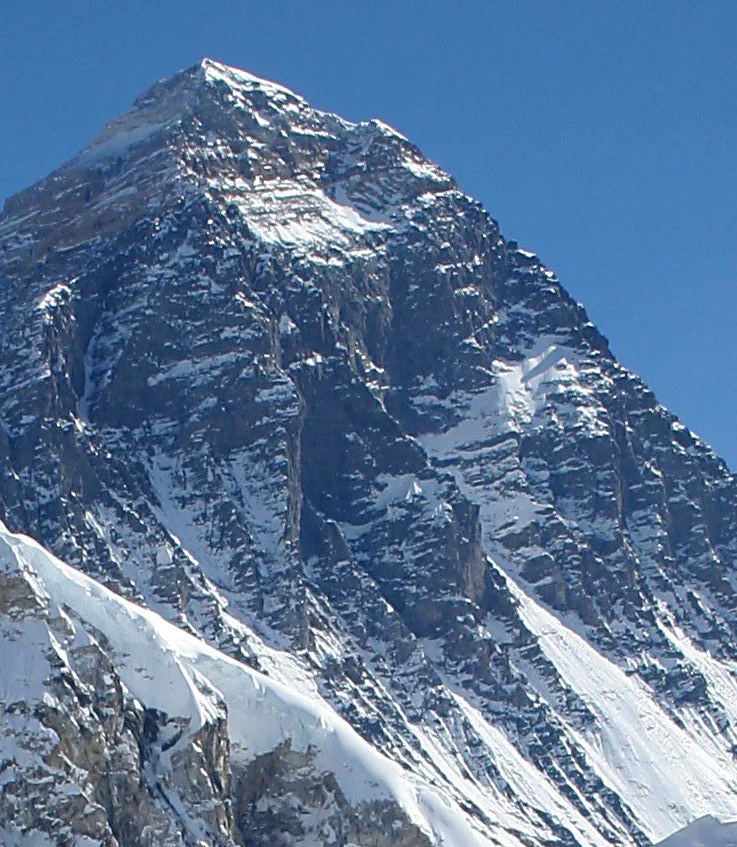
Mount Everest Southwest Face (Bonington Route)
The Southwest Face of Mount Everest (8,848.86m) rises 2,300 vertical meters from the Western Cwm to the summit, presenting one of the largest and most forbidding rock and ice faces in the world. Dominated by the vertical 300-meter 'Rock Band' at 8,200–8,500 meters, the face repelled six international attempts between 1969 and 1974. In autumn 1975, a legendary British expedition led by Chris Bonington breached the face when Paul Braithwaite and Nick Estcourt unlocked the key ramp through the Rock Band. On September 24, 1975, Doug Scott and Dougal Haston climbed to the South Summit and pushed on to the main summit, becoming the first Britons to conquer Everest. Trapped by nightfall during their descent, they survived an epic open bivouac at 8,760 meters without oxygen, sleeping bags, or frostbite.
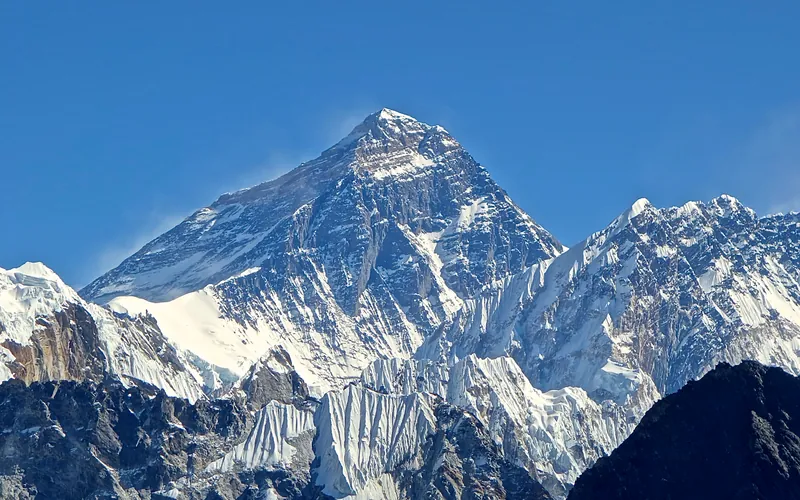
Mount Everest Complete West Ridge (Yugoslav Direct)
The Complete West Ridge of Mount Everest is one of the most formidable and sustained technical routes on the mountain. Pioneered in spring 1979 by an elite Yugoslav expedition led by Tone Škarja, the route tackles the integral knife-edge crest directly from the Lho La col (6,026m) all the way to the 8,848.86m summit. Unlike the 1963 American West Ridge route which diverted into the Hornbein Couloir from the North Face, the Yugoslav line stayed strictly along the razor-edge crest of the West Ridge, surmounting technical rock buttresses up to Grade V+ at extreme altitude before traversing around the Yellow Band. On May 13, 1979, Andrej Štremfelj and Nejc Zaplotnik achieved the first ascent of the complete ridge, followed two days later by Stane Belak, Marjan Manfreda, and Ang Phu Sherpa in one of the greatest feats in Himalayan history.
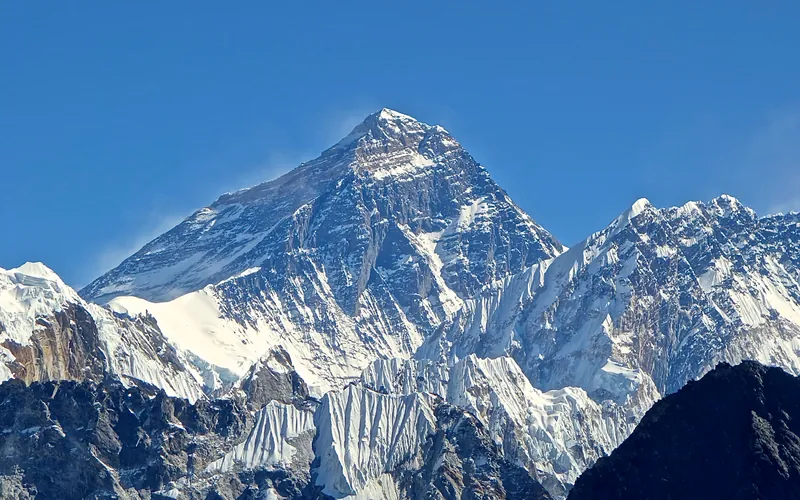
South Col & Southeast Ridge (Normal Route)
The South Col Route along the Southeast Ridge is the historic path of the 1953 first ascent and the most popular route on Mount Everest. Starting from Base Camp on the Khumbu Glacier in Nepal, climbers navigate the shifting seracs of the Khumbu Icefall into the Western Cwm. The route then scales the icy 45-degree slope of the Lhotse Face to the South Col at 7,925 meters, launching the final summit bid through the Balcony, South Summit, and Hillary Step to the summit of Earth at 8,848.86 meters.
Documented Expeditions (1)
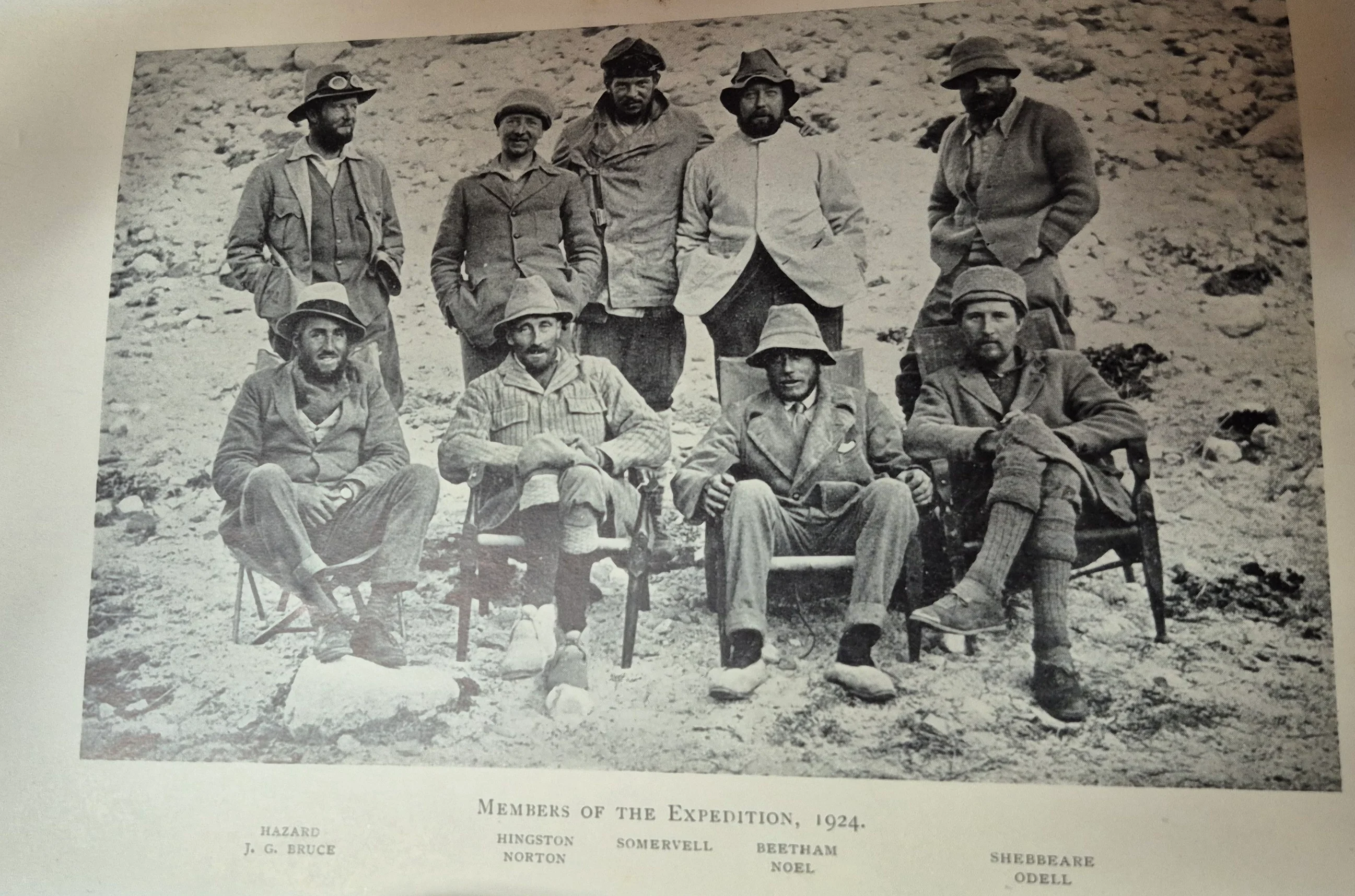
1924 British Mount Everest Expedition
The third British expedition to Mount Everest, marked by Edward Norton reaching 8,570m without supplemental oxygen and the tragic disappearance of George Mallory and Andrew Irvine high on the Northeast Ridge on June 8, 1924.
Documented Sources & Archival Citations
- The Fight for Everest: 1924(E.F. Norton / Edward Arnold & Co.)
Supporting claim: Official expedition record detailing Mallory's camps, letters, and the final June 8 summit bid
Accessed/Documented: 1925 - Ghosts of Everest: The Search for Mallory & Irvine(Jochen Hemmleb, Larry A. Johnson, Eric R. Simonson / Mountaineers Books)
Supporting claim: Forensic documentation of the 1999 discovery of George Mallory's body on the North Face
Accessed/Documented: 1999 - George Mallory(David Robertson / Faber and Faber)
Supporting claim: Comprehensive biographical chronicle utilizing personal letters and family archives
Accessed/Documented: 1969