1924 British Mount Everest Expedition
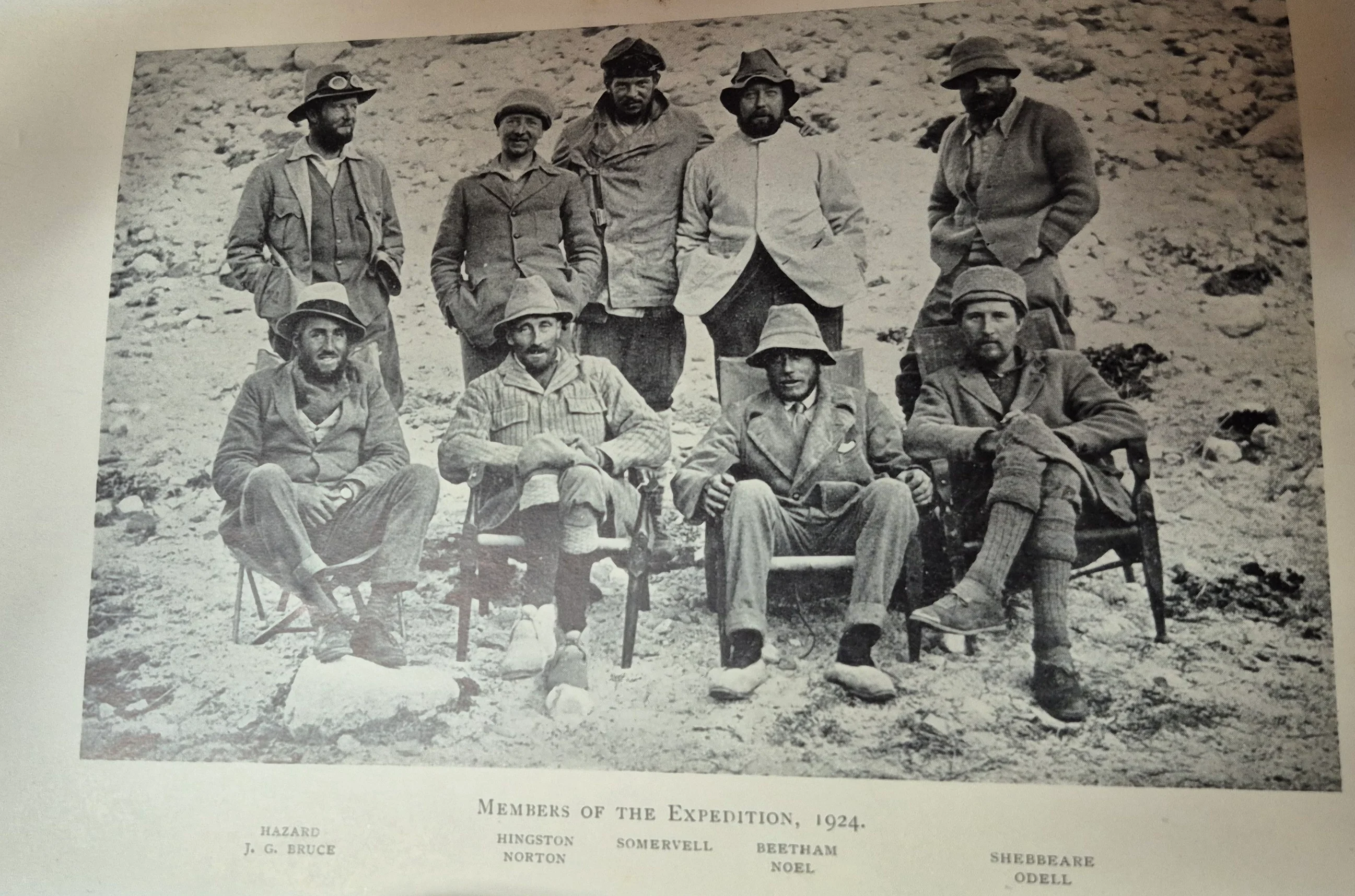
The third British expedition to Mount Everest, marked by Edward Norton reaching 8,570m without supplemental oxygen and the tragic disappearance of George Mallory and Andrew Irvine high on the Northeast Ridge on June 8, 1924.
Mountain Safety & Conditions Disclaimer: High-altitude climbing, glacial travel, and technical ascents entail severe objective risks including avalanches, serac collapses, rapid weather collapse, and altitude illness. Historical route descriptions and summit claims on Mountanity reflect documented archival sources and must not be used as live operational safety assessments. Local regulations, permits, and physical glacial topography change continuously.
Peer Review: Senior Editorial Board & Historical Reviewers • Editorial Standards
Official Expedition Narrative & Archival Record
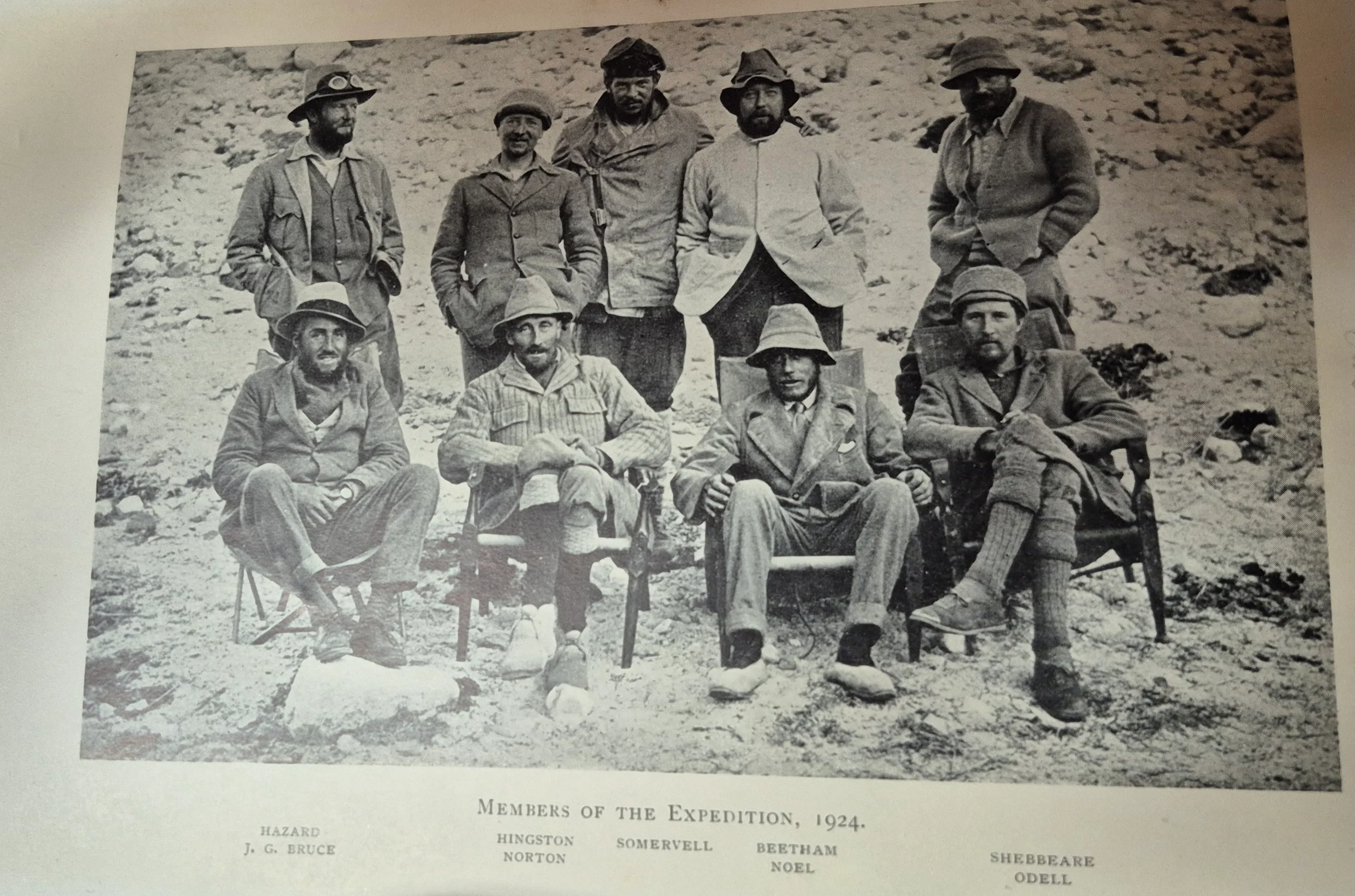
In the spring of 1924, the Mount Everest Committee dispatched Britain's finest mountaineers to Tibet for a third attempt to conquer the world's highest peak. Led by Brigadier General Charles Bruce (who was soon incapacitated by malaria, passing command to Lt. Col. Edward Norton), the expedition marched across the arid Tibetan plateau to establish Base Camp near the Rongbuk Monastery. Pushing up the East Rongbuk Glacier, the team established Advanced Base Camp beneath the icy precipice of the North Col (7,020m). After brutal blizzards trapped porters on the col and forced a harrowing rescue, the assault commenced in early June. On June 4, Edward Norton and Howard Somervell pushed up the North Face without supplemental oxygen; Somervell was halted by severe altitude throat spasms at 8,534m, but Norton pressed on alone into the Great Couloir (now Norton Couloir) to reach an astonishing altitude of 8,570 meters (28,126 ft)—a world altitude record without bottled oxygen that stood for 54 years until Messner and Habeler in 1978. Four days later, on June 8, George Mallory and 22-year-old Andrew Irvine departed Camp VI (8,140m) carrying modified oxygen sets. At 12:50 PM, support climber Noel Odell caught a brief glimpse of two tiny silhouettes surmounting a prominent rock crest near the Second Step, 'going strong for the top.' When storm clouds enveloped the ridge and neither man returned, Odell climbed up into the Death Zone, finding their abandoned tent before laying out sleeping bags in a signal cross on the snow to alert the North Col. Mallory and Irvine vanished into mountaineering eternity, creating the sport's greatest unsolved mystery.
Documented Team Composition
- Lt. Col. Edward F. Norton (Expedition Leader & 8,570m Record Climber)
- George Leigh Mallory (Lead Climber, Disappeared)
- Andrew 'Sandy' Irvine (Oxygen Engineer & Climber, Disappeared)
- Noel Ewart Odell (Expedition Geologist & Final Eyewitness)
- Dr. Howard Somervell (Climber & Surgeon)
- Captain John Noel (Official Photographer & Cinematographer)
- Captain Geoffrey Bruce (Climber & Transport Officer)
- Bentley Beetham (Climber)
- John de Vars Hazard (Climber)
- Dr. R.W.G. Hingston (Expedition Medical Officer & Naturalist)
Key Statistics & Topographic Figures
- Expedition Year
- 1924 (March–June)
Third British Everest Expedition
- Oxygenless Record
- 8,570 meters (Norton Couloir)
Stood for 54 Years
- Mallory Discovery
- May 1, 1999 (8,157m)
Conrad Anker
- Irvine Boot Discovery
- September 2024 (Rongbuk)
Jimmy Chin / Nat Geo
Archival Primary Source Quotations
“My eyes became fixed on one tiny black spot silhouetted on a small snow-crest beneath a rock-step in the ridge... going strong for the top.”
Defined Alpine Terminology & Concepts
- Second Step
- A formidable 30-meter vertical limestone cliff on Mount Everest’s Northeast Ridge at 8,610m, representing the premier technical climbing crux of the North Route.
- Norton Couloir (Great Couloir)
- A steep, immense snow-and-ice gully bisecting the upper North Face of Everest, climbed to 8,570m by Edward Norton in 1924 without oxygen.
Frequently Asked Questions: 1924 British Mount Everest Expedition
Who led the 1924 British Mount Everest expedition?
Brigadier General Charles Bruce was the nominal commander, but after falling ill with malaria, leadership was assumed by Lieutenant Colonel Edward F. Norton, who climbed to an oxygenless altitude record of 8,570 meters.
How high did Edward Norton climb on Everest in 1924 without oxygen?
On June 4, 1924, Edward Norton climbed solo into the Great Couloir (now Norton Couloir) to reach 8,570 meters (28,126 ft) without bottled oxygen, a world record that stood unbroken for 54 years until 1978.
What happened to George Mallory and Andrew Irvine on Everest in 1924?
On June 8, 1924, Mallory and Irvine departed Camp VI carrying oxygen sets. At 12:50 PM, Noel Odell saw them moving near the Second Step, "going strong for the top." Clouds closed in and both men disappeared, creating mountaineering’s greatest mystery.
When and where were George Mallory’s remains discovered?
On May 1, 1999, the Mallory and Irvine Research Expedition discovered George Mallory’s preserved body at 8,157 meters on Mount Everest’s North Face, bearing severe rope-jerk contusions indicating a fatal fall while roped to Irvine.
When and where was Andrew Irvine’s boot discovered?
In September 2024, a National Geographic expedition led by Jimmy Chin discovered an antique mountaineering boot with an embroidered "A.C. IRVINE" nametag on a sock and foot melting out of the Central Rongbuk Glacier.
What did Noel Odell see through his telescope on June 8, 1924?
At 12:50 PM, during a brief clearing of the clouds, Noel Odell observed two tiny silhouettes moving swiftly across a snow crest near a prominent rock step along the Northeast Ridge toward the summit pyramid.
Did George Mallory and Andrew Irvine reach the summit of Mount Everest?
It remains unknown. While Mallory’s snow goggles were found in his pocket (indicating a descent in dusk) and the photo of his wife Ruth was missing from his wallet, no conclusive photographic proof has been recovered from Irvine’s missing Kodak camera.
What route did the 1924 expedition take up Everest?
The expedition climbed from Tibet, ascending the East Rongbuk Glacier to the North Col (7,020m) and traversing along the Northwest and Northeast ridges toward the summit.
Ascent Route & Topography
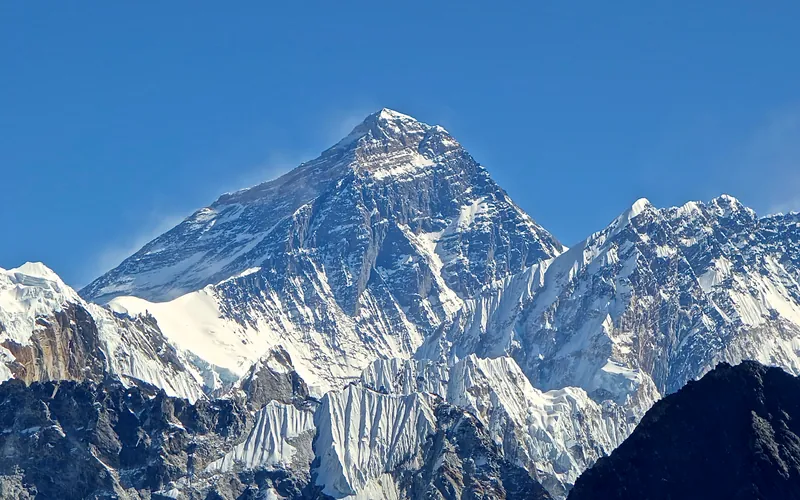
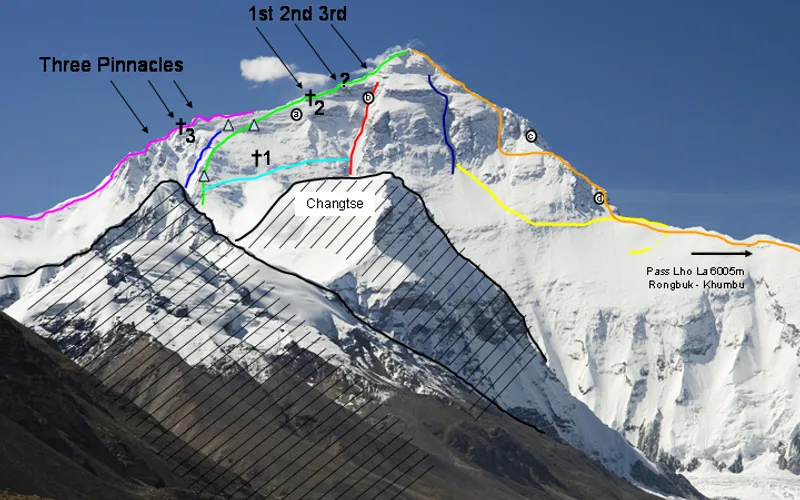
North Col & Northeast Ridge Route
The historic northern route on Mount Everest (8,848.86m), ascending from the Rongbuk and East Rongbuk glaciers to breach the icy wall of the North Col (7,020m). From the col, the route traverses the wind-blasted Northwest Ridge onto the North Face before joining the razor-like Northeast Ridge, navigating the notorious First, Second, and Third Steps in the Death Zone. This was the stage of George Mallory and Andrew Irvine's fateful 1924 climb and was first definitively surmounted on May 25, 1960, by Chinese climbers Wang Fuzhou, Qu Yinhua, and Gongbu.
Target Objective Peak
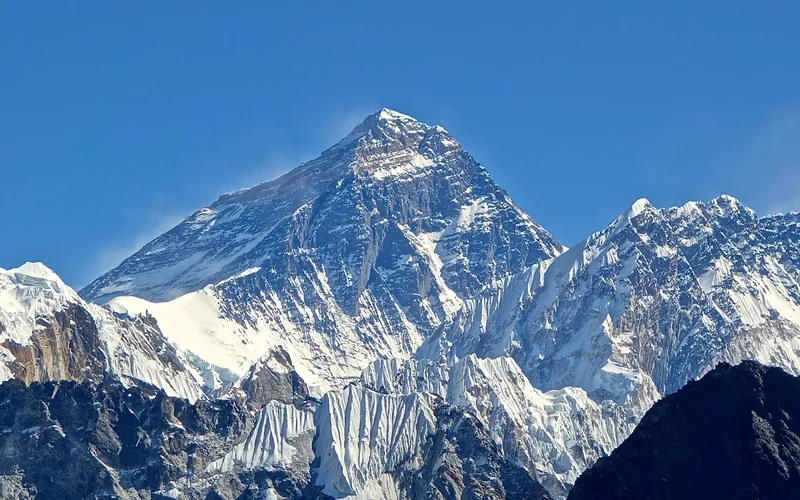


Mount Everest
Mount Everest is the highest mountain above sea level on Earth, standing at an official elevation of 8,848.86 meters (29,031.7 ft). Straddling the international frontier between Nepal and China, it is known locally as Sagarmatha in Nepali ('Goddess of the Sky') and Chomolungma in Tibetan ('Mother Goddess of the World'). The peak rises into the extreme upper troposphere, where oxygen levels drop to barely one-third of sea-level pressure. Climbers face hurricane-force jet stream winds, severe frostbite conditions, shifting ice crevasses in the Khumbu Icefall, and the dangerous Death Zone above 8,000 meters.
Featured Expedition Climbers
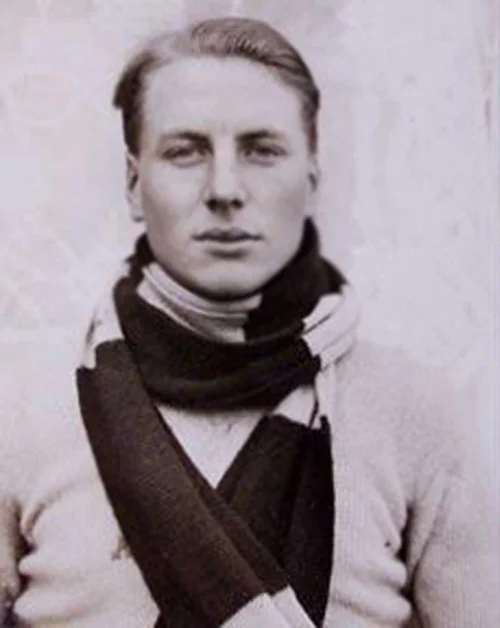
Andrew Comyn Irvine
Andrew Comyn 'Sandy' Irvine was born on April 8, 1902, in Birkenhead, Cheshire, England. Blessed with immense physical strength, towering height, and an extraordinary gift for mechanical engineering, Irvine was educated at Shrewsbury School, where he famously patented a synchronization gear for machine guns during the First World War while still a teenage schoolboy. He entered Merton College, Oxford, in 1921 to study engineering science, quickly becoming a sporting icon by rowing the Oxford crew to victory in the dramatic 1923 Boat Race against Cambridge. In the summer of 1923, Irvine took part in the Merton College Arctic Expedition to Spitsbergen. His immense physical endurance across glaciers and uncanny ability to repair sledges, surveying instruments, and Primus stoves deeply impressed expedition geologist Noel Odell. When the Mount Everest Committee met to select the roster for the 1924 Everest Expedition, Odell strongly championed the 21-year-old student as the ideal 'practical engineer' needed to manage the temperamental, experimental bottled oxygen apparatus. Upon arriving in Tibet in the spring of 1924, Irvine demonstrated his worth immediately. Dismantling the heavy, leaky 'Mark V' oxygen sets, he stripped away dead metal, rebuilt the copper manifolds, and lightened each rig by several pounds. His warmth, boundless cheerfulness, and technical brilliance earned the deep admiration of George Mallory. Although Irvine was by far the youngest and least experienced rock climber on the team, Mallory personally selected him as his partner for the final summit assault, trusting that Irvine's intimate knowledge of the oxygen sets would give them their best chance of surviving the Death Zone. On the morning of June 8, 1924, carrying two oxygen cylinders each, Mallory and Irvine departed their high assault camp (Camp VI) at 8,140 meters. At 12:50 PM, Noel Odell spotted them high on the Northeast Ridge, moving with determination toward the summit pyramid before afternoon blizzard clouds swallowed them forever. For a century, Irvine's whereabouts remained a haunting enigma. It was widely believed that Irvine had carried the party's Vest Pocket Kodak camera, whose film might contain definitive proof of a 1924 summit. In September 2024, a National Geographic documentary team led by mountaineer Jimmy Chin discovered a vintage leather boot and woolen sock containing human remains melting out of the Central Rongbuk Glacier, bearing an embroidered red label stitched into the cloth: 'A.C. IRVINE'. The discovery provided the first physical proof of Sandy Irvine's descent path, keeping the immortal romance of his final climb alive.
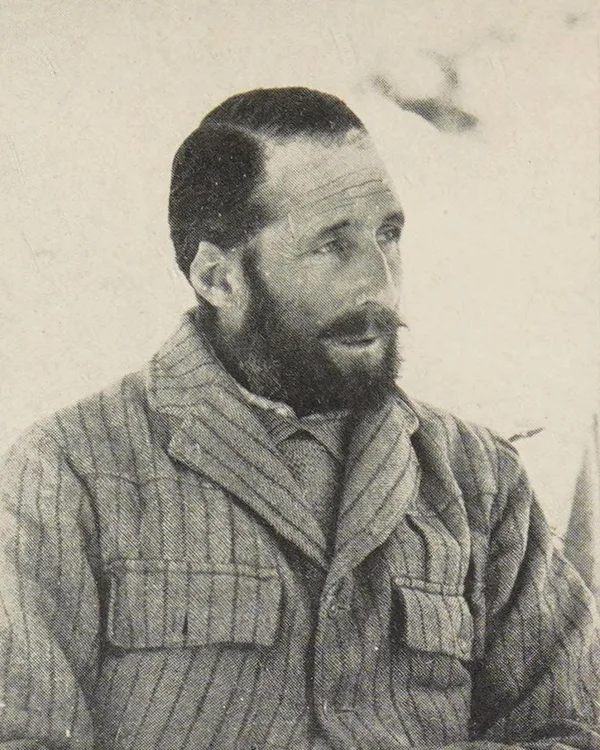
Edward Felix Norton
Edward Felix Norton was born on February 21, 1884, in San Salvador, the son of a British diplomat, and was educated at Charterhouse and the Royal Military Academy, Woolwich. Commissioned into the Royal Artillery, Norton developed a passionate devotion to alpine climbing during leaves in the Swiss and Italian Alps, honing his ice-craft, route finding, and high-altitude navigation. In 1922, Norton was selected for the second British expedition to Mount Everest (8,848m) in Tibet. On May 21, 1922, climbing alongside George Mallory and Howard Somervell without supplemental oxygen, Norton reached an elevation of 8,225 meters on the North Ridge, setting what was then the highest human altitude ever attained. Two years later, Norton returned as second-in-command for the 1924 British expedition. When expedition leader Brigadier General Charles Bruce was incapacitated by severe malaria during the march across Tibet, Norton assumed command. Pushing operations through brutal Himalayan blizzards to establish Camp VI at 8,140 meters on the North Face, Norton and Dr. Howard Somervell launched an assault on June 4, 1924, climbing without supplemental oxygen. When Somervell was crippled by agonizing throat spasms at 8,534 meters, Norton pressed on alone. Traversing across steep, down-sloping limestone slabs into the yawning gorge now known as the Norton Couloir (the Great Couloir), Norton reached a calculated altitude of 8,570 meters (28,126 ft) at 1:00 PM before severe snow-blindness and exhaustion compelled him to turn back. Norton's 8,570-meter mark stood as the absolute world altitude record achieved without supplemental oxygen for fifty-four years—until Reinhold Messner and Peter Habeler finally reached the summit of Everest in 1978. Four days after his climb, Norton endured the heartbreaking duty of organizing the search and signaling the loss when George Mallory and Andrew Irvine vanished high on the Northeast Ridge. Awarded the Founder's Medal of the Royal Geographical Society and an Olympic Gold Medal at the 1924 Chamonix Games, Norton later served as Governor of Hong Kong before passing away on November 3, 1954, remembered as a gentleman commander of extraordinary physical fortitude.
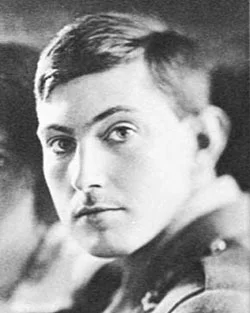
George Leigh Mallory
George Herbert Leigh Mallory was born on June 18, 1886, in Mobberley, Cheshire, England. Educated at Winchester College and Magdalene College, Cambridge, Mallory developed into an extraordinarily graceful and daring rock climber, establishing formidable new routes in the English Lake District and North Wales (most notably Mallory's Route on Pillar Rock). Following military service as an artillery officer on the Western Front during the First World War, Mallory was chosen by the Mount Everest Committee for the historic 1921 British Reconnaissance Expedition. In 1921, Mallory was the first Western explorer to view Mount Everest from close quarters. Navigating the untracked Rongbuk and East Rongbuk glaciers, he discovered the crucial breach through the 1,000-foot ice wall of the North Col (7,020m), establishing the route that would serve as the highway for all pre-war British summit attempts. Returning in 1922 for the first serious assault on the summit, Mallory and his companions broke the world altitude record, reaching 8,320 meters (27,300 ft) without supplemental oxygen. However, their third summit attempt triggered an avalanche on the North Col slopes that killed seven Sherpa porters—a tragedy that haunted Mallory for the rest of his life. During a 1923 lecture tour in the United States, when exasperated by a New York Times journalist asking repeatedly why anyone would wish to climb Mount Everest, Mallory uttered the three words that became the defining ethos of exploration: 'Because it's there.' In the spring of 1924, Mallory returned to Everest for a third and final enterprise. On June 8, 1924, Mallory (aged 37) and 22-year-old Oxford engineer Andrew 'Sandy' Irvine departed Camp VI at 8,140 meters, carrying heavy, modified oxygen apparatuses for a final push toward the summit. At 12:50 PM, teammate Noel Odell, ascending supportively from below, caught a brief glimpse through a sudden break in the swirling summit mists: two tiny figures were moving rapidly across a snow crest near the rocky First or Second Step, 'going strong for the top.' Clouds promptly enveloped the ridge, and neither man was ever seen alive again. For 75 years, the fate of Mallory and Irvine remained mountaineering's ultimate puzzle: had they conquered the summit 29 years before Hillary and Tenzing before dying on descent? On May 1, 1999, the Mallory and Irvine Research Expedition discovered Mallory's frozen body at 8,157 meters on the North Face. His waist showed severe rope-jerk trauma indicative of an arresting fall, his snow goggles were in his pocket (suggesting a descent in dusk), but the photograph of his wife Ruth—which he had promised to leave on the summit—was missing from his jacket. George Mallory remains an immortal symbol of human aspiration and alpine romance.
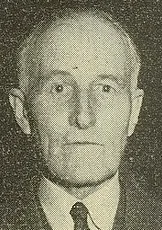
Noel Ewart Odell
Noel Ewart Odell was born on December 25, 1890, in St Lawrence, Isle of Wight, England. Educated at the Royal School of Mines, Imperial College London, Odell became a world-renowned geologist specializing in high-altitude glaciology and stratigraphy. In 1924, he was chosen as expedition geologist and lead climber for the third British Mount Everest Expedition. On Everest, Odell astonished his teammates with his superhuman physiological adaptation to extreme altitude. While other climbers collapsed from exhaustion or succumbed to coughing fits in the thin air, Odell spent nearly two continuous weeks living above 7,000 meters without using supplemental bottled oxygen. On the fateful morning of June 8, 1924, Odell climbed alone from Camp V (7,770m) to Camp VI (8,140m) in support of George Mallory and Andrew Irvine's summit bid. Scrambling up a small rocky crag at approximately 7,900 meters around 12:50 PM, the dense clouds suddenly parted to reveal the upper pyramid of Everest. Looking toward the Northeast Ridge, Odell spotted two tiny silhouettes moving across a prominent snow crest near a prominent rock step (the First or Second Step), 'going strong for the top.' Seconds later, the clouds swept in again, closing the curtain forever. When neither climber returned to Camp VI that evening, Odell courageously climbed back into the Death Zone twice more in search of his friends. Finding Camp VI deserted, Odell laid out two sleeping bags in the shape of a giant 'T' (later transformed into a cross) on the snow, signaling the dreadful news to his teammates watching through telescopes on the North Col four thousand feet below. For the remaining 63 years of his life, Odell steadfastly maintained his conviction that Mallory and Irvine had achieved the summit of Mount Everest before meeting their deaths. Twelve years later, in 1936, Odell joined the British-American Himalayan Expedition to Nanda Devi (7,816m / 25,643 ft) in the Garhwal Himalayas. Climbing alongside Bill Tilman in pure alpine style without supplemental oxygen, 45-year-old Odell surmounted the steep, knife-edge rock towers of the Coxcomb ridge. On August 29, 1936, Odell and Tilman stood upon the summit, setting an absolute human altitude record on an ascended mountain that remained unbeaten until Annapurna in 1950. Odell enjoyed an illustrious academic career, serving as Professor of Geology at Harvard University, Cambridge University, and the University of Otago in New Zealand. Known for his extraordinary physical longevity, Odell continued climbing technical alpine peaks well into his senior years, famously ascending Mount Sir Donald (3,284m) in the Canadian Rockies at the age of 87. He passed away peacefully on February 21, 1987, at the venerable age of 96.
Associated Historical Chronicles & Stories
Everest 1924: Mallory, Irvine, and the Enduring Riddle of the Second Step
On June 8, 1924, George Leigh Mallory and Andrew 'Sandy' Irvine were seen 'going strong for the top' before vanishing into swirling clouds near the Second Step of Mount Everest, igniting a century-long quest for truth.
Alone at 8,570 Meters: Edward Norton's 1924 Everest Record That Stood for 54 Years
On June 4, 1924, British officer Edward Norton traversed solo into the Great Couloir of Everest to reach 8,570 meters without supplemental oxygen, setting a world record that stood unbroken until 1978.
Documented Sources & Archival Citations
- The Fight for Everest: 1924(Lt. Col. E.F. Norton / Edward Arnold & Co.)
Supporting claim: Official expedition narrative documenting Norton's 8,570m record and the final Mallory-Irvine bid
Accessed/Documented: 1925 - The Alpine Journal Archive: The Mount Everest Expedition of 1924(The Alpine Club UK)
Supporting claim: Contemporary technical reports, depositions of Noel Odell, and meteorological logs
Accessed/Documented: 1925 - Ghosts of Everest: The Search for Mallory & Irvine(Jochen Hemmleb, Larry A. Johnson, Eric R. Simonson / Mountaineers Books)
Supporting claim: Forensic reconstruction of the 1924 climb following the discovery of Mallory's body
Accessed/Documented: 1999