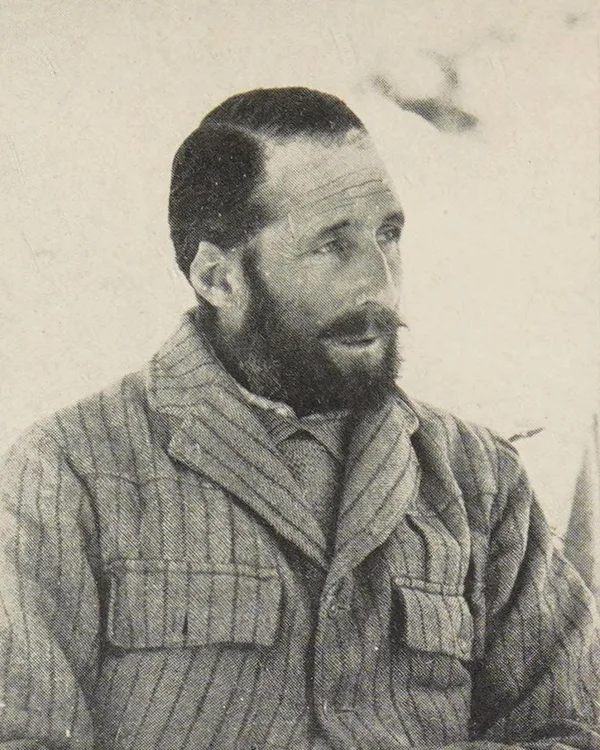
Edward Felix Norton
Edward Felix Norton (1884–1954) was a British military officer and mountaineer who led the 1924 British Mount Everest Expedition. On June 4, 1924, Norton climbed solo without supplemental oxygen into the Great Couloir to 8,570 meters (28,126 feet), establishing a world altitude record that stood unbroken for 54 years.
Mountain Safety & Conditions Disclaimer: High-altitude climbing, glacial travel, and technical ascents entail severe objective risks including avalanches, serac collapses, rapid weather collapse, and altitude illness. Historical route descriptions and summit claims on Mountanity reflect documented archival sources and must not be used as live operational safety assessments. Local regulations, permits, and physical glacial topography change continuously.
Peer Review: Senior Editorial Board & Historical Reviewers • Editorial Standards
Biographical Record & Archival Chronicle
Edward Felix Norton was born on February 21, 1884, in San Salvador, the son of a British diplomat, and was educated at Charterhouse and the Royal Military Academy, Woolwich. Commissioned into the Royal Artillery, Norton developed a passionate devotion to alpine climbing during leaves in the Swiss and Italian Alps, honing his ice-craft, route finding, and high-altitude navigation.
In 1922, Norton was selected for the second British expedition to Mount Everest (8,848m) in Tibet. On May 21, 1922, climbing alongside George Mallory and Howard Somervell without supplemental oxygen, Norton reached an elevation of 8,225 meters on the North Ridge, setting what was then the highest human altitude ever attained.
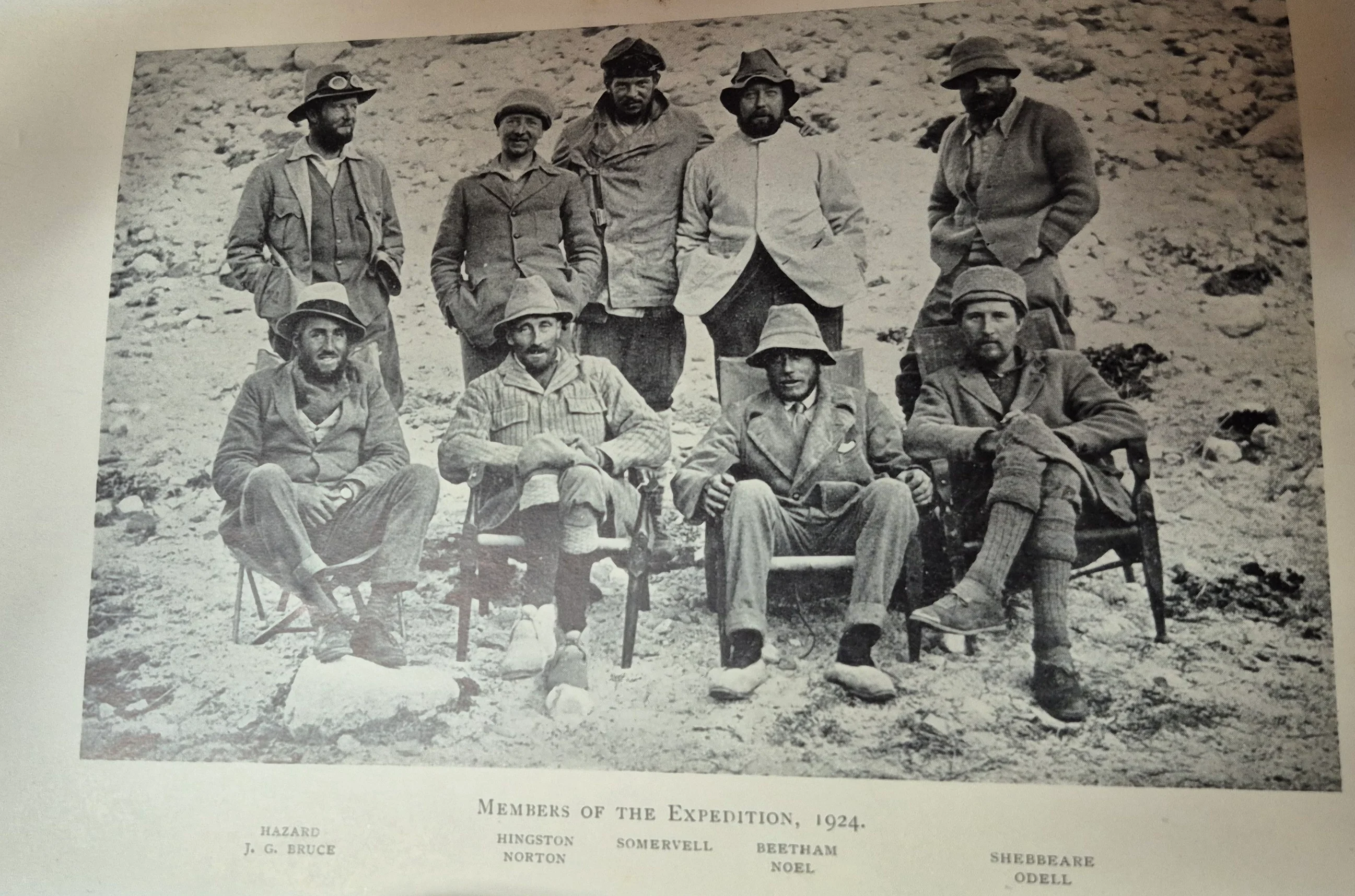
Two years later, Norton returned as second-in-command for the 1924 British expedition. When expedition leader Brigadier General Charles Bruce was incapacitated by severe malaria during the march across Tibet, Norton assumed command. Pushing operations through brutal Himalayan blizzards to establish Camp VI at 8,140 meters on the North Face, Norton and Dr. Howard Somervell launched an assault on June 4, 1924, climbing without supplemental oxygen. When Somervell was crippled by agonizing throat spasms at 8,534 meters, Norton pressed on alone. Traversing across steep, down-sloping limestone slabs into the yawning gorge now known as the Norton Couloir (the Great Couloir), Norton reached a calculated altitude of 8,570 meters (28,126 ft) at 1:00 PM before severe snow-blindness and exhaustion compelled him to turn back.
Norton's 8,570-meter mark stood as the absolute world altitude record achieved without supplemental oxygen for fifty-four years—until Reinhold Messner and Peter Habeler finally reached the summit of Everest in 1978. Four days after his climb, Norton endured the heartbreaking duty of organizing the search and signaling the loss when George Mallory and Andrew Irvine vanished high on the Northeast Ridge. Awarded the Founder's Medal of the Royal Geographical Society and an Olympic Gold Medal at the 1924 Chamonix Games, Norton later served as Governor of Hong Kong before passing away on November 3, 1954, remembered as a gentleman commander of extraordinary physical fortitude.
Notable Milestones & Ascents
- Established a world altitude record of 8,570 meters (28,126 ft) without supplemental oxygen on Mount Everest on June 4, 1924
- His 1924 oxygenless altitude record stood unbroken for 54 years until Messner and Habeler's 1978 Everest summit
- Pioneered the route across the North Face of Everest into the Great Couloir (subsequently named the Norton Couloir)
- Led the 1924 British Mount Everest Expedition following the illness of General Charles Bruce
- Reached 8,225 meters without supplemental oxygen during the 1922 British Everest Expedition
- Awarded the Founder's Gold Medal by the Royal Geographical Society in 1926
- Conferred an Olympic Gold Medal for Alpinism at the 1924 Winter Olympics in Chamonix, France
Key Statistics & Topographic Figures
- Lifespan
- 1884–1954 (Age 70)
Winchester, Hampshire, UK
- Altitude Record
- 8,570 meters (28,126 ft)
World Record Without O2 (1924–1978)
- Record Duration
- 54 Years
Surpassed by Messner & Habeler in 1978
- Feature Named
- Norton Couloir (Great Couloir)
North Face of Mount Everest
- Honors
- RGS Founder’s Medal & Olympic Gold
Conferred in 1924 & 1926
Archival Primary Source Quotations
“My eyes were dim and useless, and every step required twenty breaths. Yet in that great couloir, I felt closer to the sky than any man had ever stood.”
“Norton’s solo climb into the Great Couloir in 1924 was a monument to the ultimate possibilities of the human body.”
Defined Alpine Terminology & Concepts
- Norton Couloir
- The colossal vertical snow and ice cleft slicing through the North Face of Everest, leading directly to the summit ridge.
- Yellow Band (Everest)
- A geological stratum of yellow-grey limestone tilting downward across Everest’s North Face at approximately 8,200 to 8,600 meters.
- Photophthalmia
- Severe ocular inflammation and temporary blindness caused by intense ultraviolet light reflected from high-altitude snow fields.
Frequently Asked Questions: Edward Felix Norton
Who was Edward Felix Norton and what altitude record did he establish on Everest?
Lt. Col. Edward Felix Norton (1884–1954) was the British leader of the 1924 Everest Expedition who reached 8,570m (28,126 ft) without supplemental oxygen, setting a world record that stood for 54 years.
What route did Edward Norton climb to set his 1924 altitude record?
Norton traversed across the North Face of Mount Everest from Camp VI into the Great Couloir (subsequently named the Norton Couloir), reaching 8,570m on June 4, 1924.
Why did Edward Norton turn back at 8,570 meters on Everest?
Norton was suffering from acute photophthalmia (snow-blindness) and realized that continuing into the treacherous waist-deep powder snow would leave him unable to safely descend.
Who was Edward Norton’s climbing partner during the 1924 push?
Dr. Howard Somervell climbed with Norton to 8,534 meters before severe altitude-induced throat spasms forced him to stop and let Norton push ahead alone.
What is the Norton Couloir on Mount Everest?
The Norton Couloir (historically the Great Couloir) is a colossal, steep gully cutting through the North Face of Everest beneath the summit pyramid, first explored by Edward Norton in 1924.
What role did Edward Norton play in the search for Mallory and Irvine?
As expedition leader, Norton coordinated search attempts from the North Col after Mallory and Irvine disappeared on June 8, 1924, and signaled their tragic loss to Base Camp.
What medals did Edward Norton receive for his mountaineering achievements?
Norton was awarded the Founder’s Gold Medal by the Royal Geographical Society in 1926 and an Olympic Gold Medal for Alpinism at the 1924 Chamonix Winter Games.
How long did Edward Norton’s oxygenless altitude record endure?
Norton’s record of 8,570 meters without supplemental oxygen stood unbroken for 54 years until Reinhold Messner and Peter Habeler summited Everest without oxygen in May 1978.
Associated Summits (1)


Mount Everest
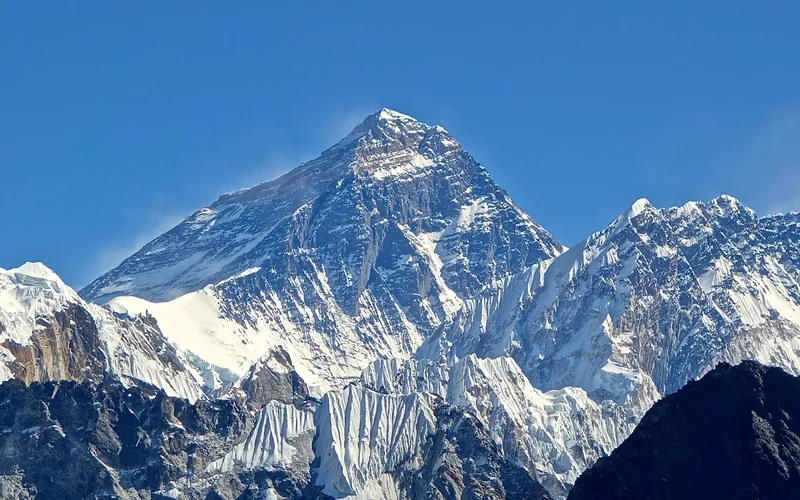
Mount Everest is the highest mountain above sea level on Earth, standing at an official elevation of 8,848.86 meters (29,031.7 ft). Straddling the international frontier between Nepal and China, it is known locally as Sagarmatha in Nepali ('Goddess of the Sky') and Chomolungma in Tibetan ('Mother Goddess of the World'). The peak rises into the extreme upper troposphere, where oxygen levels drop to barely one-third of sea-level pressure. Climbers face hurricane-force jet stream winds, severe frostbite conditions, shifting ice crevasses in the Khumbu Icefall, and the dangerous Death Zone above 8,000 meters.
Pioneered & Associated Routes (5)
Mount Everest North Face (Hornbein Couloir Direct)
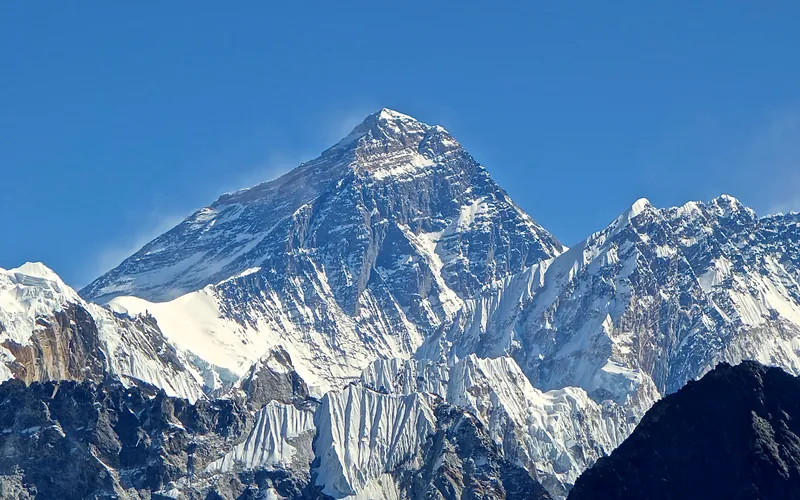
The North Face of Mount Everest via the Japanese Couloir and the sheer Hornbein Couloir is one of the most direct and formidable ice lines in the Himalayas. Rising 3,000 vertical meters from the Rongbuk Glacier to the summit, it funnels through a narrow 60-degree snow-and-ice cleft slicing straight through the Yellow Band and upper limestone cliffs of the North Face. In August 1986, Swiss alpinists Erhard Loretan and Jean Troillet executed one of the most audacious speed climbs in mountain history: climbing the entire face in a single 31-hour push at night without supplemental oxygen, tents, or fixed ropes. After summiting on August 30, they glissaded down the 3,000-meter face on their backs and buttocks in just 3.5 hours, completing the entire round trip in an astonishing 43 hours.
North Col & Northeast Ridge Route
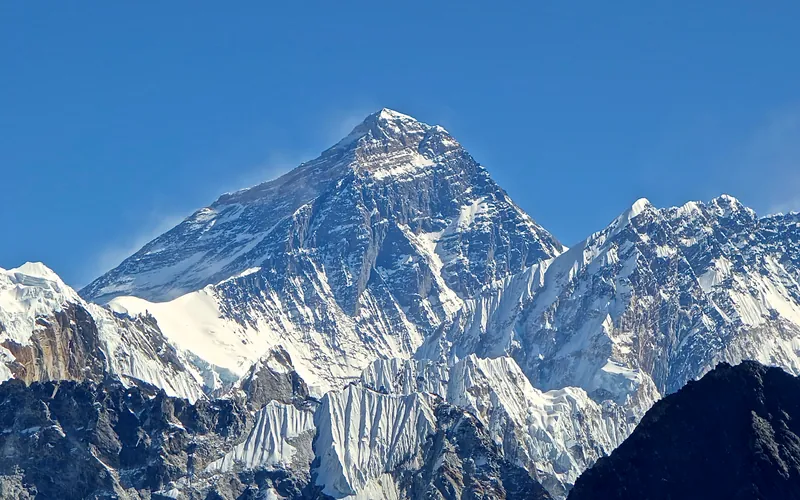
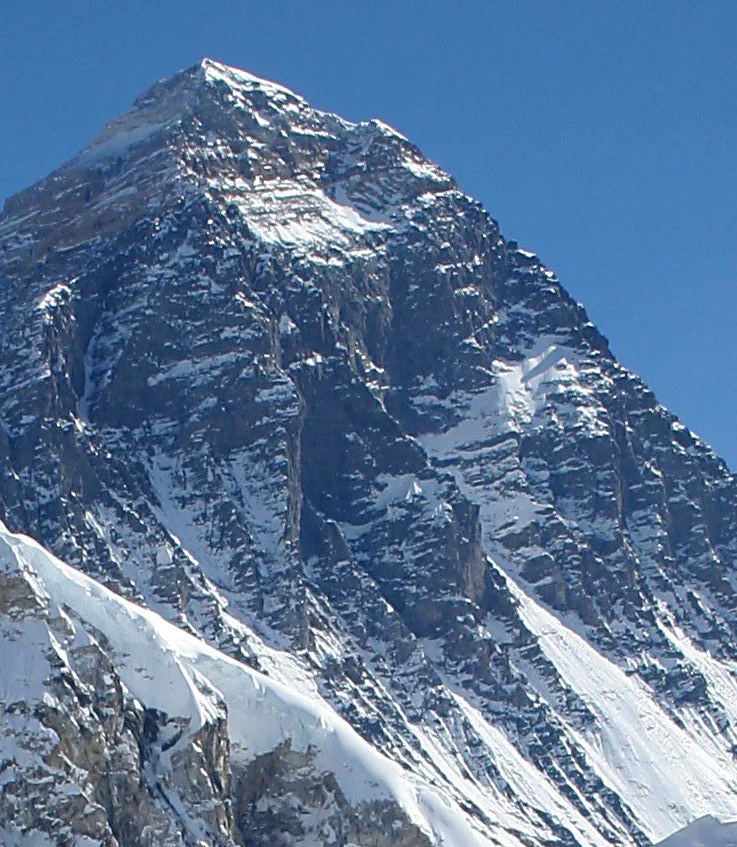
The historic northern route on Mount Everest (8,848.86m), ascending from the Rongbuk and East Rongbuk glaciers to breach the icy wall of the North Col (7,020m). From the col, the route traverses the wind-blasted Northwest Ridge onto the North Face before joining the razor-like Northeast Ridge, navigating the notorious First, Second, and Third Steps in the Death Zone. This was the stage of George Mallory and Andrew Irvine's fateful 1924 climb and was first definitively surmounted on May 25, 1960, by Chinese climbers Wang Fuzhou, Qu Yinhua, and Gongbu.
Mount Everest Southwest Face (Bonington Route)
The Southwest Face of Mount Everest (8,848.86m) rises 2,300 vertical meters from the Western Cwm to the summit, presenting one of the largest and most forbidding rock and ice faces in the world. Dominated by the vertical 300-meter 'Rock Band' at 8,200–8,500 meters, the face repelled six international attempts between 1969 and 1974. In autumn 1975, a legendary British expedition led by Chris Bonington breached the face when Paul Braithwaite and Nick Estcourt unlocked the key ramp through the Rock Band. On September 24, 1975, Doug Scott and Dougal Haston climbed to the South Summit and pushed on to the main summit, becoming the first Britons to conquer Everest. Trapped by nightfall during their descent, they survived an epic open bivouac at 8,760 meters without oxygen, sleeping bags, or frostbite.
Mount Everest Complete West Ridge (Yugoslav Direct)
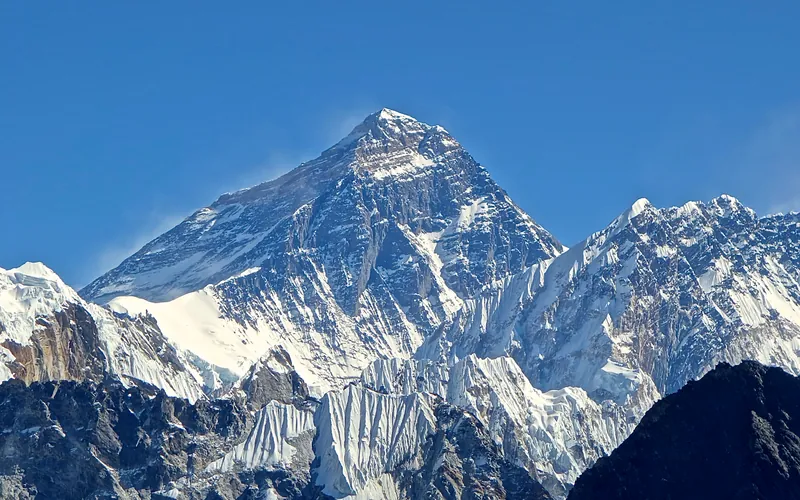
The Complete West Ridge of Mount Everest is one of the most formidable and sustained technical routes on the mountain. Pioneered in spring 1979 by an elite Yugoslav expedition led by Tone Škarja, the route tackles the integral knife-edge crest directly from the Lho La col (6,026m) all the way to the 8,848.86m summit. Unlike the 1963 American West Ridge route which diverted into the Hornbein Couloir from the North Face, the Yugoslav line stayed strictly along the razor-edge crest of the West Ridge, surmounting technical rock buttresses up to Grade V+ at extreme altitude before traversing around the Yellow Band. On May 13, 1979, Andrej Štremfelj and Nejc Zaplotnik achieved the first ascent of the complete ridge, followed two days later by Stane Belak, Marjan Manfreda, and Ang Phu Sherpa in one of the greatest feats in Himalayan history.
South Col & Southeast Ridge (Normal Route)
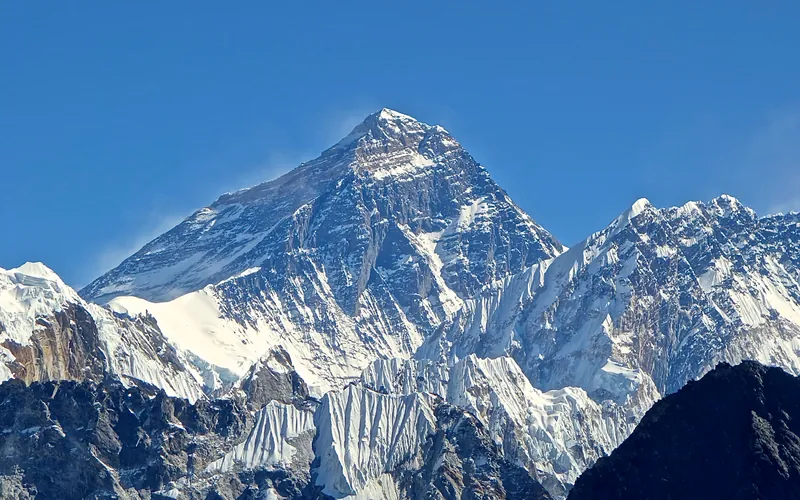
The South Col Route along the Southeast Ridge is the historic path of the 1953 first ascent and the most popular route on Mount Everest. Starting from Base Camp on the Khumbu Glacier in Nepal, climbers navigate the shifting seracs of the Khumbu Icefall into the Western Cwm. The route then scales the icy 45-degree slope of the Lhotse Face to the South Col at 7,925 meters, launching the final summit bid through the Balcony, South Summit, and Hillary Step to the summit of Earth at 8,848.86 meters.
Documented Expeditions (1)
1924 British Mount Everest Expedition
The third British expedition to Mount Everest, marked by Edward Norton reaching 8,570m without supplemental oxygen and the tragic disappearance of George Mallory and Andrew Irvine high on the Northeast Ridge on June 8, 1924.
Documented Sources & Archival Citations
- The Fight for Everest: 1924(Lt. Col. E.F. Norton / Edward Arnold & Co.)
Supporting claim: Primary expedition narrative documenting Norton's 8,570m climb in the Great Couloir
Accessed/Documented: 1925 - Geographical Journal: The 1924 Mount Everest Expedition(Royal Geographical Society)
Supporting claim: Official scientific measurement and verification of Norton's altitude record
Accessed/Documented: 1924 - Ghosts of Everest: The Search for Mallory & Irvine(Jochen Hemmleb, Larry A. Johnson, Eric R. Simonson / The Mountaineers)
Supporting claim: Historical analysis of Norton's route across the North Face and decision to retreat
Accessed/Documented: 1999