1967 Barry Corbet and John Evans Historic First Ascent of Mount Tyree
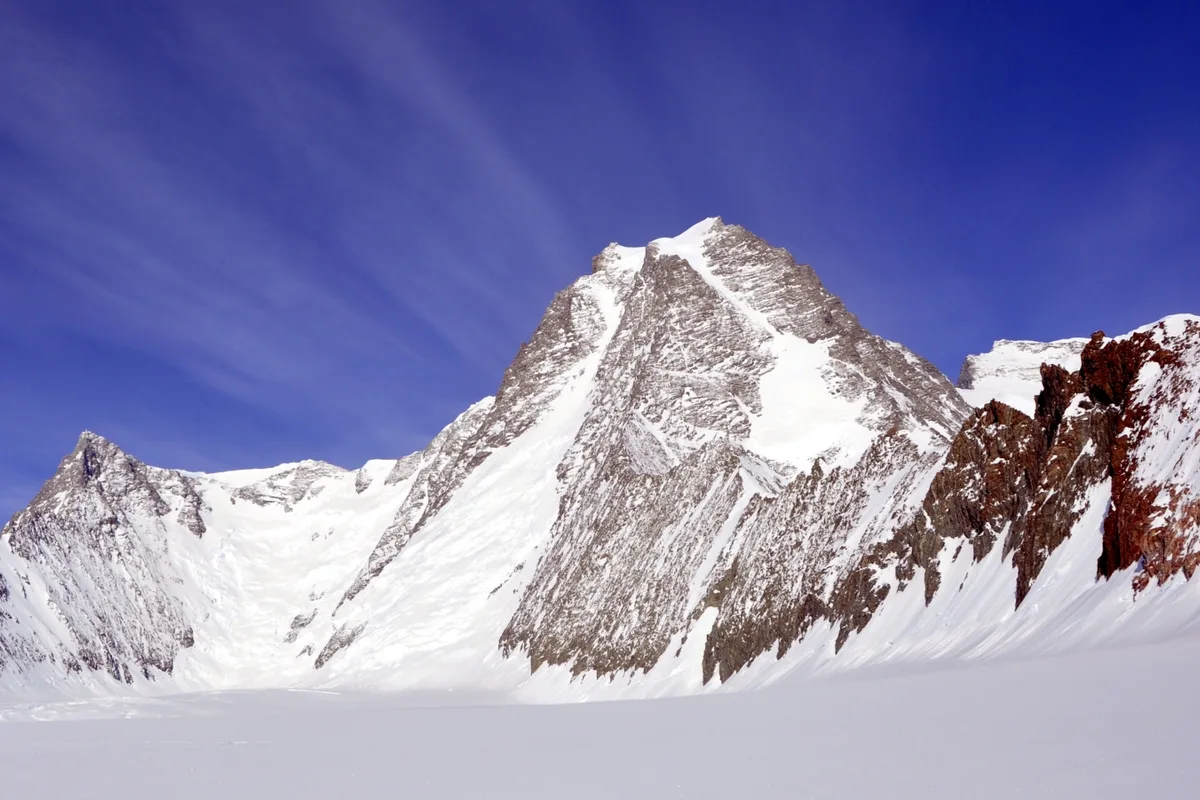
On January 6, 1967, American mountaineers Barry Corbet and John Evans completed the legendary maiden first ascent of Mount Tyree (4,852 m) via its daunting 2,000-metre Northwest Face. Pushed in a single continuous 22-hour alpine-style assault in -35°C polar cold, the pair conquered vertical 5.8 granite rock and 55° blue ice without fixed ropes, achieving one of the greatest technical climbs in polar history.
Mountain Safety & Conditions Disclaimer: High-altitude climbing, glacial travel, and technical ascents entail severe objective risks including avalanches, serac collapses, rapid weather collapse, and altitude illness. Historical route descriptions and summit claims on Mountanity reflect documented archival sources and must not be used as live operational safety assessments. Local regulations, permits, and physical glacial topography change continuously.
Peer Review: Senior Editorial Board & Historical Reviewers • Editorial Standards
Official Expedition Narrative & Archival Record
While Mount Vinson offered broad glaciated slopes, its neighbouring sister peak—Mount Tyree (4,852 m)—presented a terrifying, near-vertical fortress of shattered granite and blue ice, soaring 2,000 metres above the Patton Glacier. Renowned as the second-highest mountain in Antarctica, it was recognized by the 1966 American team as an alpine challenge of the highest magnitude. On January 4, 1967, Barry Corbet and John Evans skied from the Vinson base to the foot of Tyree's monstrous northwest wall. Recognizing that hauling heavy siege camps up the vertical face was impossible in the brutal sub-zero temperatures, the pair made a daring decision: to attempt the entire 2,000-metre face in a single, non-stop alpine push. Departing their bivouac at 2:00 AM on January 6, Corbet and Evans climbed unroped up the lower 50-degree ice couloir to save time. At 3,800 metres, they roped up to tackle a succession of steep granite steps and ice gullies. Evans led the 5.8 crux rock pitch wearing heavy mountaineering boots and mitts, chipping ice from micro-cracks in -35°C frost. Surmounting the knife-edge Northwest Ridge, the two climbers reached the sharp pinnacle summit at 1:30 PM. After a brief photograph with the American flag, they commenced a grueling 15-hour descent of continuous rappels and down-climbing, arriving back at their tent after 22 hours of non-stop exertion. Mount Tyree would not be climbed again for nearly two decades.
Documented Team Composition
- Barry Corbet (Lead Climber, USA)
- John Evans (Lead Climber, USA)
Key Statistics & Topographic Figures
- Official Elevation
- 4,852 metres (15,919 ft)
- Summit Date
- January 6, 1967
- Climbers
- Barry Corbet and John Evans
- Continuous Push
- 22 hours round trip
- Crux Grade
- 5.8 rock in heavy boots, 55° blue ice
Archival Primary Source Quotations
“Vinson was a glorious polar walk; Tyree was an assassin. It was steep, shattered, and brutally cold. We knew we had to climb it in one single, desperate push or not at all.”
Defined Alpine Terminology & Concepts
- Single-Push Alpinism
- A lightweight climbing tactic where a major technical face is tackled continuously without established camps, fixed ropes, or bivouacs.
- Polar Granite
- Granitic rock subjected to extreme freeze-thaw cracking and continuous sub-zero temperatures, making protection placement difficult.
Frequently Asked Questions: 1967 Barry Corbet and John Evans Historic First Ascent of Mount Tyree
Who made the first ascent of Mount Tyree in Antarctica?
American mountaineers Barry Corbet and John Evans made the maiden first ascent of Mount Tyree (4,852 metres) on January 6, 1967.
Why is Mount Tyree considered harder than Mount Vinson?
While Mount Vinson features moderate glacier snowfields, Mount Tyree presents a steep 2,000-metre face of vertical granite rock and brittle blue ice requiring technical multi-pitch climbing.
How long was the first ascent of Mount Tyree?
Barry Corbet and John Evans completed the 2,000-metre Northwest Face in a single non-stop 22-hour alpine-style push in temperatures below minus 35 degrees Celsius.
Ascent Route & Topography
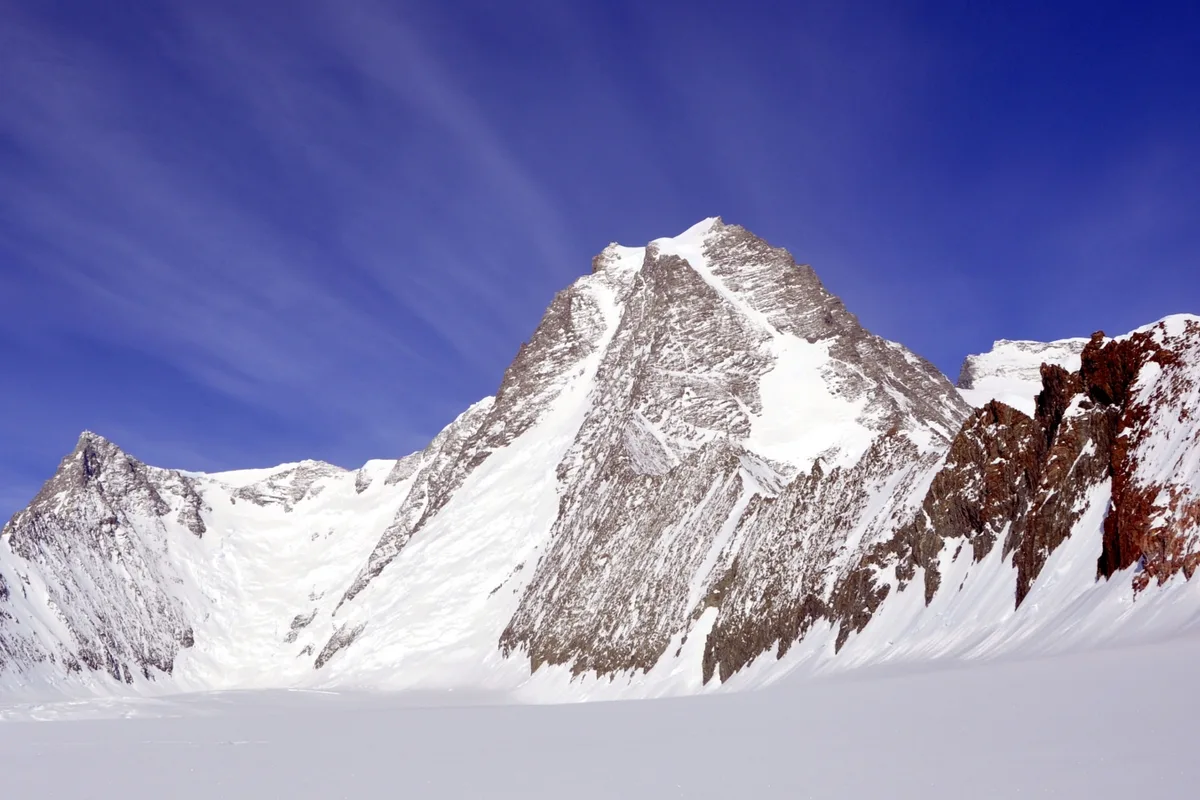
Northwest Face of Mount Tyree (Corbet-Evans Route)
The Northwest Face is the legendary maiden route up Mount Tyree (4,852 m), the second-highest and most difficult mountain in Antarctica. Established on January 6, 1967, by Barry Corbet and John Evans, the route tackles a 2,000-metre vertical wall of shattered granite, steep snow couloirs, and brittle blue ice pitches (Grade IV, 5.8 rock and 55° ice). Pushed in a single continuous 22-hour assault in sub-zero polar temperatures without fixed ropes or camps on the face, it stands as one of the finest bold alpine achievements in polar history.
Target Objective Peak
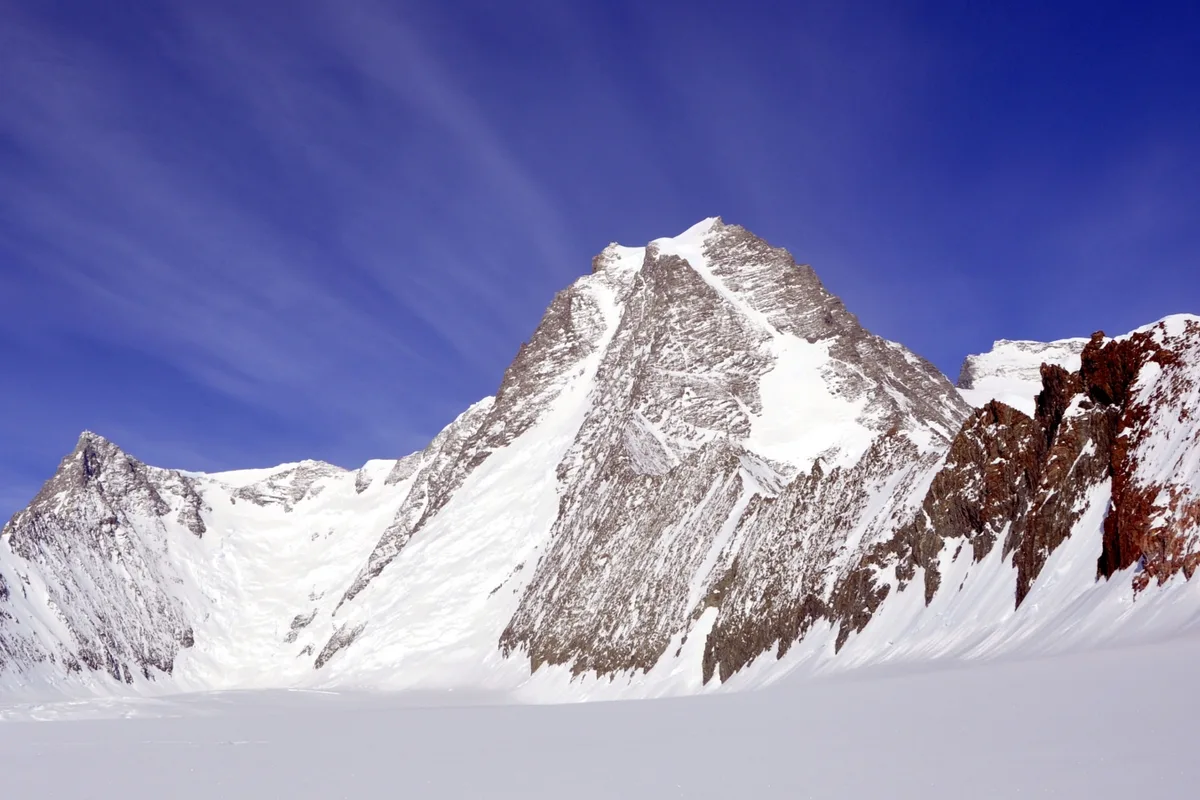

Mount Tyree
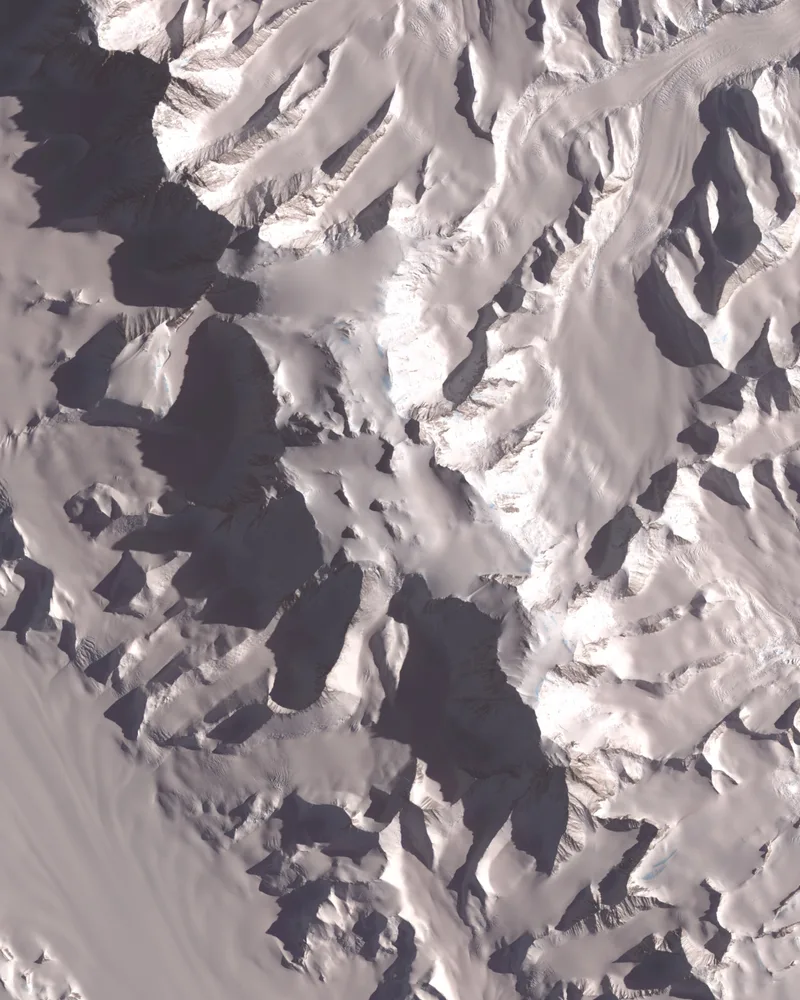
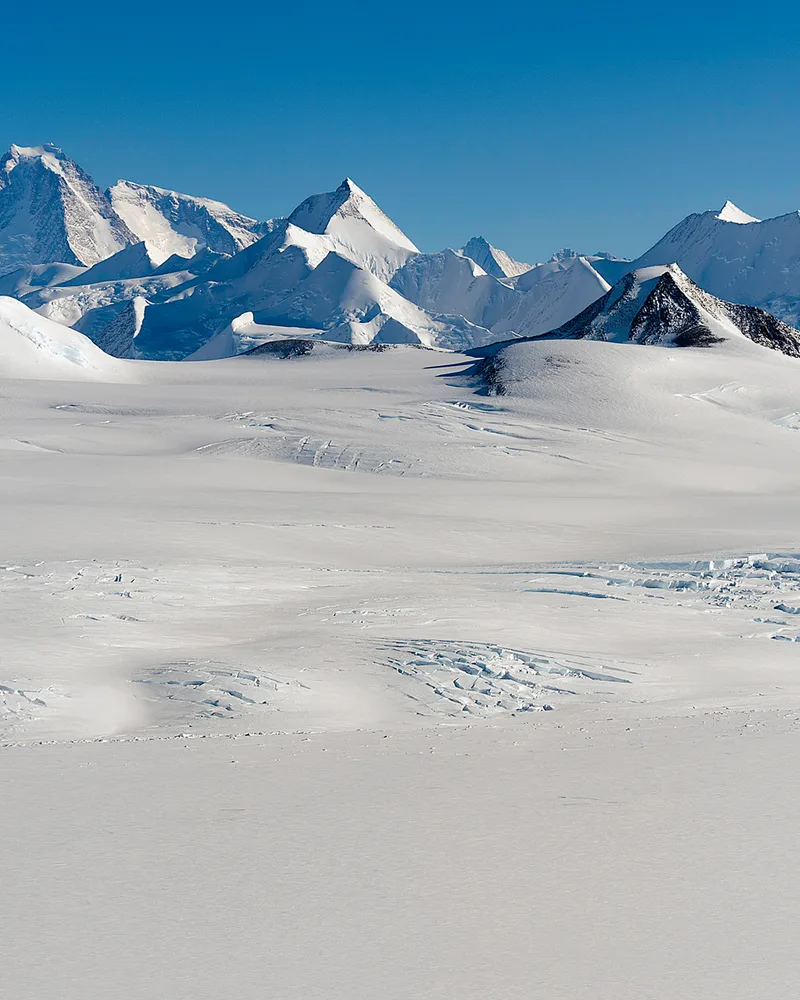
Mount Tyree is the second-highest mountain in Antarctica at 4,852 metres (15,919 ft), located just 13 kilometres northwest of Mount Vinson in the Sentinel Range. In stark contrast to the rounded, glaciated ramps of Mount Vinson, Mount Tyree is a terrifying, sheer horn of dark metamorphic rock and steep blue ice, rising over 2,000 metres directly from its surrounding glaciers. First ascended on January 6, 1967, by Barry Corbet and John Evans via the Northwest Face, it is widely acknowledged as the most technically demanding and formidable high peak in all of Antarctica, having seen fewer than twenty ascents in mountaineering history.
Featured Expedition Climbers
Barry Corbet
Barry Corbet was born on November 27, 1936, in Vancouver, British Columbia, and grew up in the Pacific Northwest before moving to Jackson Hole, Wyoming, where he became one of the star alpine guides for Exum Mountain Guides on the Grand Teton. Renowned for his extraordinary strength, humor, and technical rock and ice mastery, Corbet spotted a terrifying, near-vertical ski slot off the top of Rendezvous Mountain in 1960, remarking that someday someone would ski it—a run now internationally famous as *Corbet's Couloir*. In 1963, Corbet served as a key lead climber on the legendary American Mount Everest Expedition. On the unclimbed West Ridge, Corbet carried heavy loads and forged the technical route through the rock cruxes up to 8,300 metres, enabling Tom Hornbein and Willi Unsoeld to complete the historic first traverse of Everest. In late 1966, Corbet joined Nicholas Clinch's American Antarctic Mountaineering Expedition. On December 18, 1966, Corbet was on the four-man lead rope that reached the summit of Mount Vinson (4,892 m). Seeking a far greater technical challenge, Corbet teamed up with John Evans on January 6, 1967, to attempt the terrifying, unclimbed 2,000-metre Northwest Face of Mount Tyree (4,852 m). Climbing for 22 continuous hours in temperatures of -35°C, Corbet and Evans conquered the vertical rock pitches and blue ice gullies to stand upon Antarctica's most difficult summit. In 1968, Corbet survived a devastating helicopter crash in the Colorado Rockies that left him paralyzed from the waist down. Refusing to surrender his adventuring spirit, Corbet became a pioneering filmmaker, wheelchair athlete, and editor of *New Mobility* magazine, advocating passionately for disability rights. He passed away on December 18, 2004—exactly thirty-eight years to the day after summiting Mount Vinson.
John Evans
John P. Evans was born in 1939 in Minnesota and developed into one of the most accomplished all-around technical climbers in North America during the 1960s. A standout member of the Dartmouth Mountaineering Club, Evans mastered extreme granite climbing in the Bugaboos and Canadian Rockies before joining the 1966–1967 American Antarctic Mountaineering Expedition organized by Nicholas Clinch. On December 18, 1966, Evans roped up with Clinch, Barry Corbet, and Peter Anderson to make the maiden first ascent of Mount Vinson (4,892 m), the continental roof of Antarctica. Not content with climbing the glaciated ramps of Vinson, Evans and Corbet fixed their sights on the terrifying, dark granite obelisk of Mount Tyree (4,852 m). On January 6, 1967, starting from an advance camp on the Patton Glacier, Evans and Corbet tackled the 2,000-metre Northwest Face in alpine style. Evans led severe technical rock pitches (5.8) wearing heavy gloves and plastic boots on frozen, brittle granite, overcoming vertical chimneys choked with blue ice. After twenty-two continuous hours of non-stop climbing in -35°C polar cold, the pair safely reached the summit and descended without fixed ropes. In recognition of his legendary contributions, the US Advisory Committee on Antarctic Names named Evans Peak (3,950 m) in the Sentinel Range in his honour.
Associated Historical Chronicles & Stories
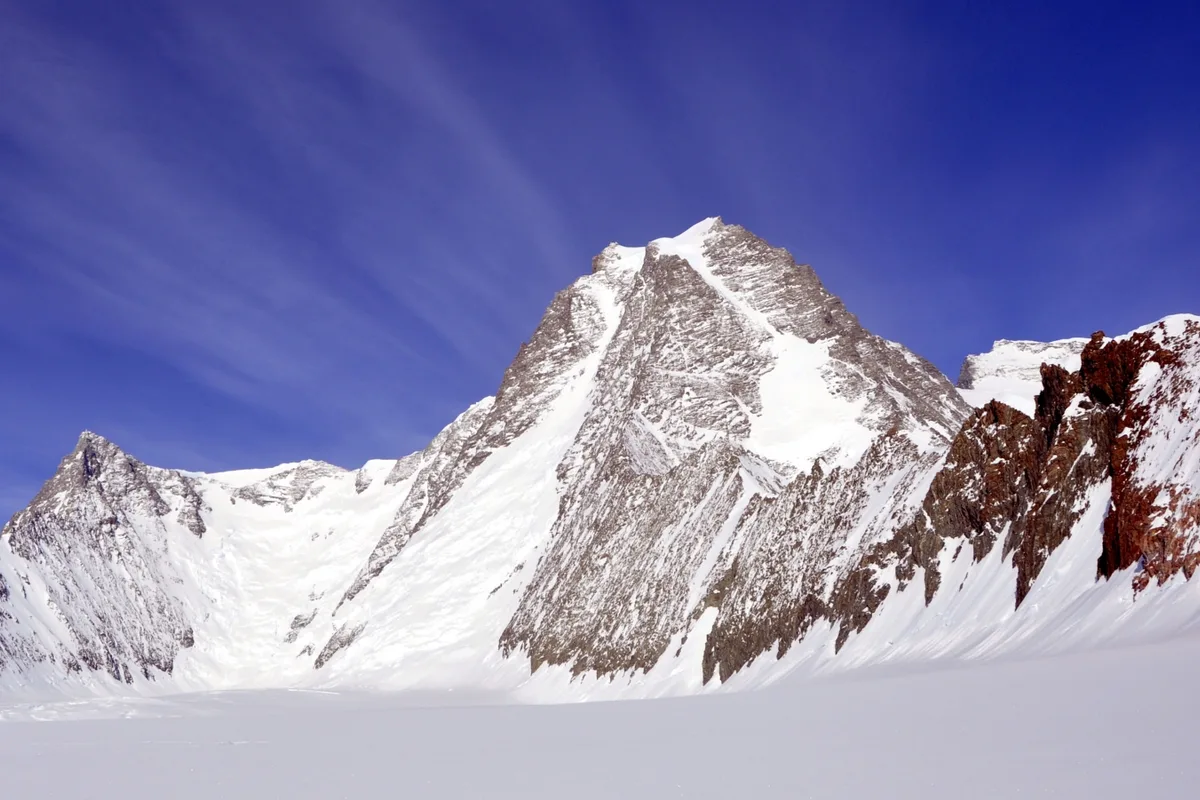
Antarctica's Hardest Peak: The 1967 First Ascent of Mount Tyree
Twenty-two continuous hours on a 2,000-metre frozen rock wall: Barry Corbet and John Evans conquer Mount Tyree in pure alpine style.
Documented Sources & Archival Citations
- First Ascent of Mount Tyree(Barry Corbet / American Alpine Journal)
Supporting claim: Primary technical ascent report by Corbet
Accessed/Documented: 1967 - Mount Tyree: Antarctica's Toughest Summit(Damien Gildea / Alpine Journal)
Supporting claim: Historical review of ascents on Mount Tyree
Accessed/Documented: 2012