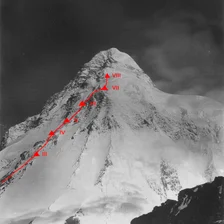
Pete Schoening
Pete Schoening was an iconic American mountaineer celebrated for making the historic first ascent of Gasherbrum I (8,080m) on July 5, 1958, with Andy Kauffman—the only 8,000-meter peak first summited by an American team. He is immortalized worldwide for 'The Belay' on K2 in 1953, where he single-handedly arrested the fall of six sliding climbers, saving their lives.
Mountain Safety & Conditions Disclaimer: High-altitude climbing, glacial travel, and technical ascents entail severe objective risks including avalanches, serac collapses, rapid weather collapse, and altitude illness. Historical route descriptions and summit claims on Mountanity reflect documented archival sources and must not be used as live operational safety assessments. Local regulations, permits, and physical glacial topography change continuously.
Peer Review: Senior Editorial Board & Historical Reviewers • Editorial Standards
Biographical Record & Archival Chronicle
Peter Kittilsby Schoening was born on July 30, 1927, in Seattle, Washington. Learning to climb in the rugged Cascade Range and the Olympic Mountains of the Pacific Northwest, Schoening quickly established a reputation for phenomenal physical strength, rock-solid composure under extreme duress, and meticulous ropework.
In 1953, Schoening was selected for the third American Karakoram Expedition to K2 (8,611m), led by Charles Houston. Trapped at Camp VIII (7,770m) by a ten-day blizzard while teammate Art Gilkey was stricken with thrombophlebitis, the team was forced to attempt a desperate evacuation down steep mixed ice. During the descent on August 10 at approximately 7,600 meters, George Bell slipped, pulling Tony Streather, Bob Bates, Charles Houston, and Dee Molenaar into a catastrophic tangle of falling bodies. Positioned slightly above, Schoening wedged his wooden-shafted ice axe behind a rock outcrop, braced his shoulder and hips, and held the entire rope system. Absorbing the violent kinetic shock of five falling men and Gilkey's litter simultaneously, Schoening held firm, single-handedly preventing the entire team from plunging thousands of meters to the Godwin-Austen Glacier. 'The Belay' remains universally celebrated as the most miraculous single act of belaying in mountaineering history.
Five years later, in 1958, Schoening returned to the Karakoram on the American expedition to Gasherbrum I (Hidden Peak, 8,080m) led by Nick Clinch. Approaching up the South Gasherbrum Glacier, Schoening and Andy Kauffman spearheaded the route up the Roch Ridge and upper snow face. On July 5, 1958, using supplemental oxygen, Schoening and Kauffman reached the summit of Gasherbrum I at 3:00 PM, achieving the maiden first ascent of the mountain. It stands as the only first ascent of an 8,000-meter peak achieved by American mountaineers.
In 1966, Schoening led the American Antarctic Mountaineering Expedition, achieving the maiden first ascent of Mount Vinson (4,892m), the highest peak in Antarctica. In 1996, at age 68, he joined Scott Fischer's Mountain Madness expedition on Mount Everest, reaching Camp III before retiring due to heart arrhythmia and descending safely prior to the deadly May storm. He passed away on September 22, 2004, leaving an enduring legacy of selfless heroism, humility, and pioneering alpine achievement.
Notable Milestones & Ascents
- Achieved the maiden first ascent of Gasherbrum I (Hidden Peak, 8,080m) on July 5, 1958, with Andy Kauffman
- Performed 'The Belay' on K2 (1953), arresting the fall of six teammates at 7,600m and saving all their lives
- Achieved the historic maiden first ascent of Mount Vinson (4,892m), the highest peak in Antarctica, in 1966
- First ascents of Mount Augusta and Mount King in the Saint Elias Mountains of Alaska and Yukon
- Awarded the David A. Sowles Memorial Award by the American Alpine Club for valor in mountaineering
Key Statistics & Topographic Figures
- Gasherbrum I First Ascent
- July 5, 1958 (8,080m)
Only US 8,000m Maiden Ascent
- The Belay on K2
- August 10, 1953
6 Climbers Saved Simultaneously
- Mount Vinson First Ascent
- December 18, 1966 (4,892m)
Highest Peak in Antarctica
- AAC Award
- David A. Sowles Memorial Award
Valor in Mountaineering
- Life Span
- 1927–2004 (Seattle, USA)
American Hero
Archival Primary Source Quotations
“I just jammed the axe behind the boulder and held on with everything I had. There was no other choice.”
Defined Alpine Terminology & Concepts
- The Belay
- The legendary high-altitude ice-axe arrest performed by Pete Schoening on K2 in 1953 that saved six climbers from plunging thousands of meters.
- Hidden Peak
- The alternative name for Gasherbrum I (8,080m), named by William Martin Conway because it is concealed behind other giants.
Frequently Asked Questions: Pete Schoening
Who was Pete Schoening in mountaineering history?
Pete Schoening was an iconic American mountaineer celebrated for making the first ascent of Gasherbrum I (8,080m) in 1958 and performing "The Belay" on K2 in 1953, saving the lives of six falling teammates.
What was "The Belay" on K2 in 1953?
At 7,600 meters on K2 during a desperate blizzard evacuation, Schoening held his wooden ice axe braced behind a rock and arrested the fall of five tumbling climbers and an injured teammate, universally hailed as the greatest belay in history.
Why is Pete Schoening’s summit of Gasherbrum I historic?
Schoening and Andy Kauffman summited Gasherbrum I on July 5, 1958, securing the only maiden first ascent of an 8,000-meter peak ever achieved by American climbers.
What other high-altitude first ascents did Pete Schoening make?
In 1966, Schoening made the maiden first ascent of Mount Vinson (4,892m), the highest peak in Antarctica.
Was Pete Schoening on Mount Everest in 1996?
Yes, at age 68, Schoening reached Camp III on Everest with Scott Fischer’s Mountain Madness team before safely descending prior to the May 10 disaster.
Associated Summits (2)
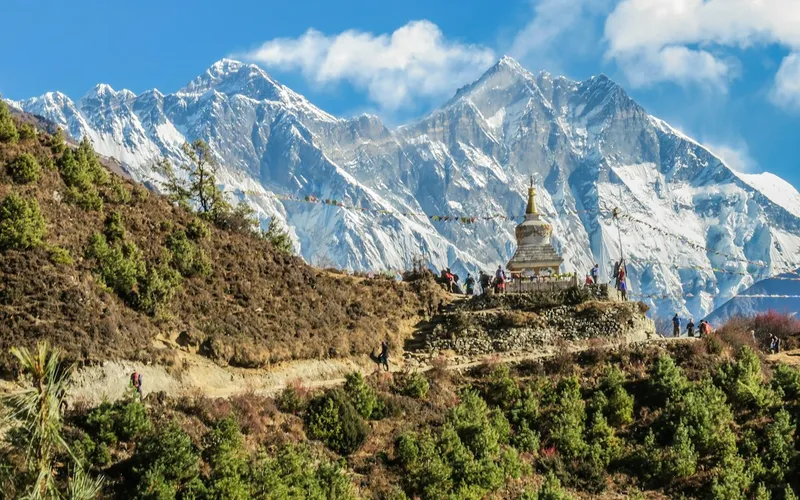


K2
K2, at 8,611 meters (28,251 ft), is the second-highest mountain on Earth and widely regarded as the most technically demanding and lethal 8,000-meter peak. Located in the heart of the Karakoram on the border between Pakistan and China, K2 is characterized by sheer relief, severe weather anomalies, and persistent objective hazards including the notorious Bottleneck couloir.
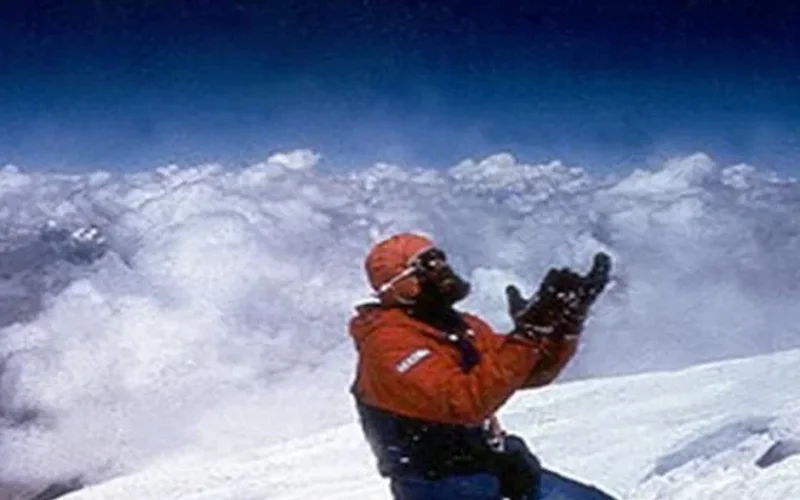
Gasherbrum I
Gasherbrum I, at 8,068 meters (26,470 ft), is the eleventh-highest mountain in the world. Named 'Hidden Peak' by explorer William Martin Conway due to its concealment behind surrounding Karakoram giants, it stands on the border between Pakistan and China. The peak was first climbed in 1958 by an American team led by Nick Clinch, and in 1992 Nazir Sabir summited it with Rajab Shah and Mehrban Shah, marking his fourth Pakistani eight-thousander.
Pioneered & Associated Routes (4)
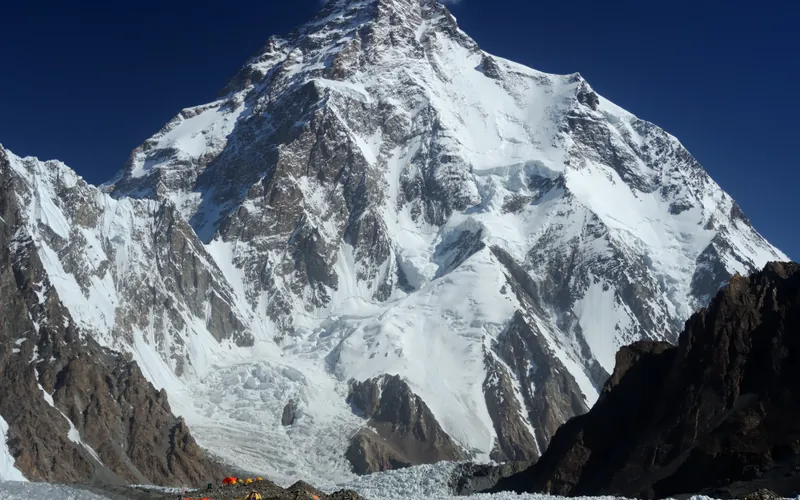
Abruzzi Spur (Southeast Ridge)
The Abruzzi Spur is the most famous and frequently climbed route on K2, tracing the mountain's steep southeast ridge from the Godwin-Austen Glacier to the summit. First explored in 1909 by Prince Luigi Amedeo, Duke of the Abruzzi, it was successfully climbed to the summit in 1954 by an Italian team. The route requires extreme physical endurance and high-grade technical climbing on rock, ice, and mixed terrain through legendary cruxes like House's Chimney, the Black Pyramid, and the Bottleneck couloir.
Northwest Face & Japanese Couloir (Normal Route)
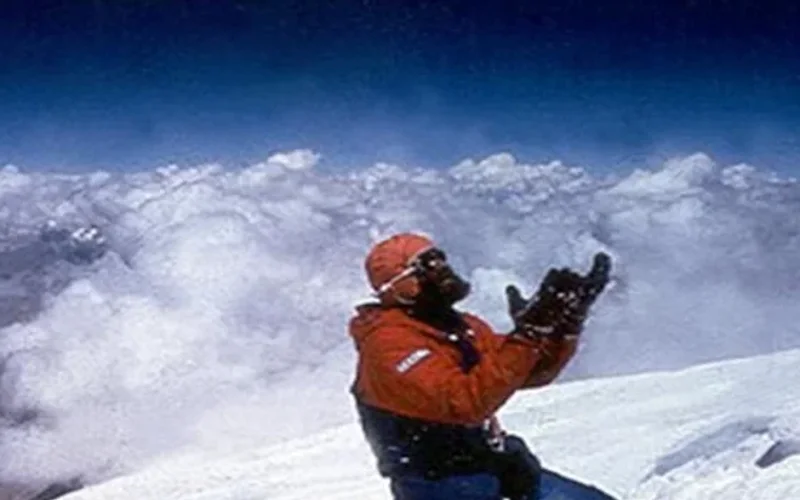
The Northwest Face via the Japanese Couloir is the standard and most frequently climbed line on Gasherbrum I (8,068m / Hidden Peak). Starting from the South Gasherbrum Glacier, climbers traverse the shared lower icefall into the Gasherbrum Cwm, then branch southward toward the forbidding northwest wall. The technical centerpiece is the Japanese Couloir—a sustained 50 to 60-degree gully of hard blue ice and shattered rock leading to the high col and summit slopes. First ascended in 1958 by Americans Pete Schoening and Andy Kauffman via the South Ridge, the Japanese Couloir line became the modern benchmark, climbed rapidly in 1992 by Nazir Sabir, Rajab Shah, and Mehrban Shah.
K2 South Face (The Polish Line)
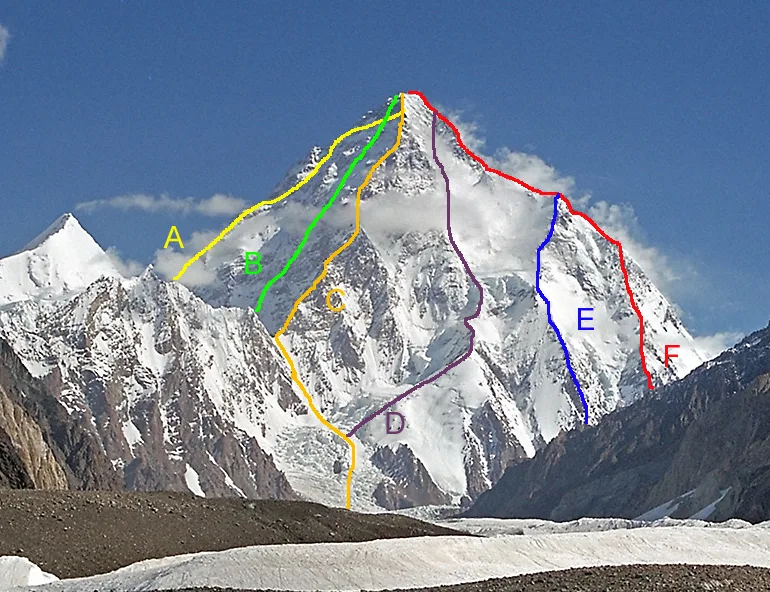
The Polish Line on the South Face of K2 (8,611m) is widely regarded as one of the most perilous and audacious routes ever climbed in high-altitude mountaineering history. Tackling the direct 3,200-meter wall between the Abruzzi Spur and the Magic Line (South-Southwest Pillar), the route ascends through a chaotic labyrinth of hanging seracs, avalanche funnels, and vertical rock bands. Pioneered in alpine style over five harrowing days in July 1986 by Jerzy Kukuczka and Tadeusz Piotrowski without supplemental oxygen, Reinhold Messner famously dubbed it 'suicidal'. Kukuczka and Piotrowski reached the summit on July 8, but tragedy struck during their desperate descent via the Abruzzi Spur when Piotrowski lost both crampons and plunged to his death. To this day, the Polish Line remains unrepeated.
West Ridge (Japanese Route)
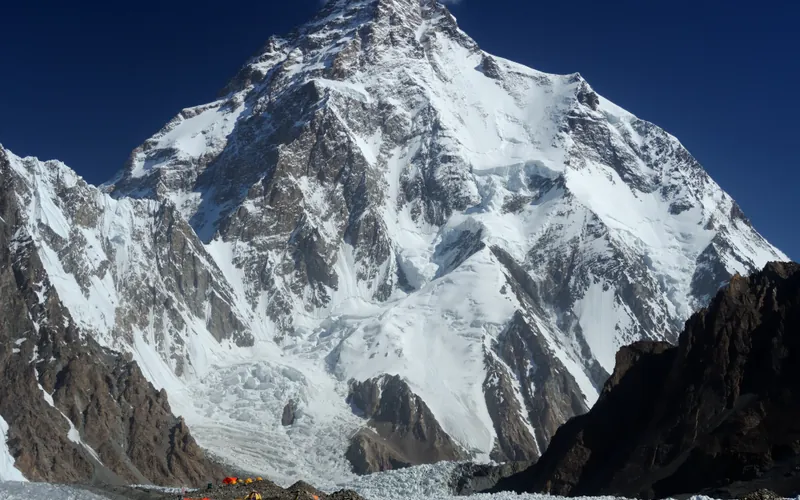
The West Ridge of K2 is one of the most formidable and sustained technical lines in high-altitude mountaineering. Pioneered in August 1981 by a joint Japanese-Pakistani expedition, it ascends directly from the Savoia Glacier along the exposed western crest before negotiating the severe Southwest Face directly into the Death Zone. Demanding immense commitment, it was first completed by Pakistani mountaineer Nazir Sabir and Japanese climber Eiho Ohtani after an epic bivouac near 8,500 meters.
Documented Expeditions (1)
1958 American Karakoram Expedition to Gasherbrum I
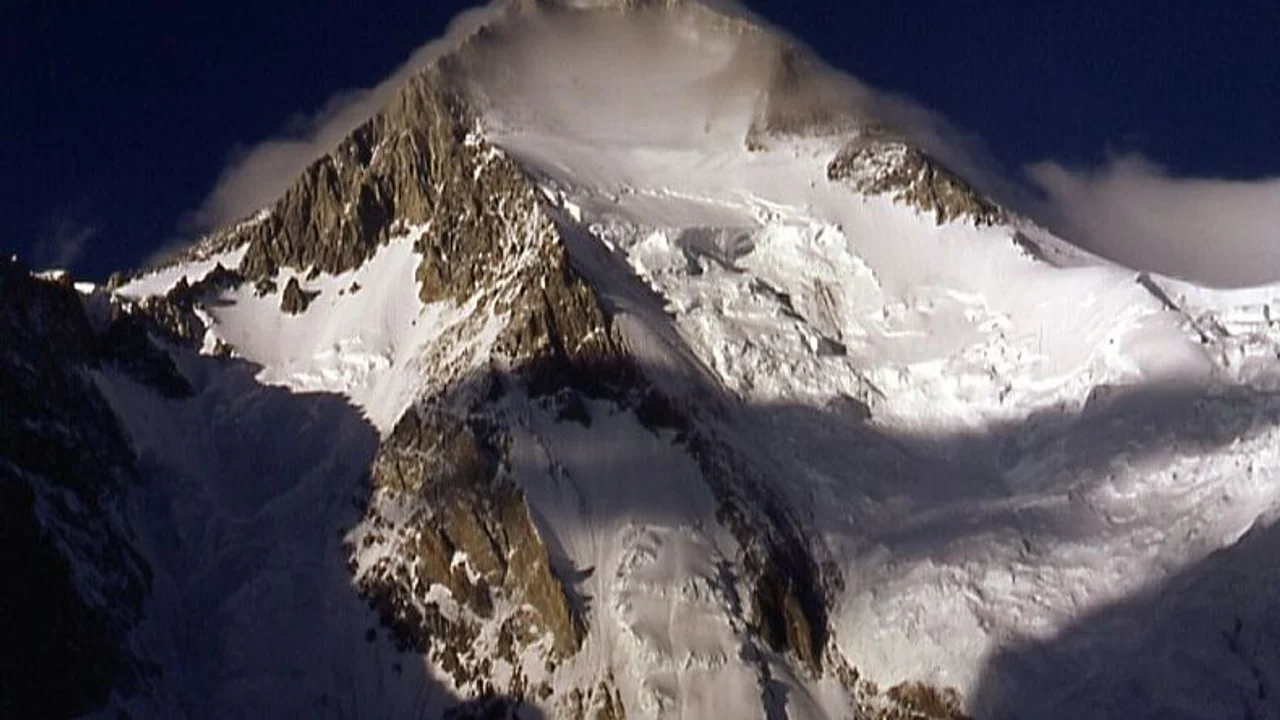
The historic American expedition led by Nick Clinch that achieved the maiden first ascent of Gasherbrum I (Hidden Peak, 8,080m) on July 5, 1958, by Pete Schoening and Andy Kauffman—the only 8,000m peak first summited by Americans.
Associated Chronicles & Stories (1)
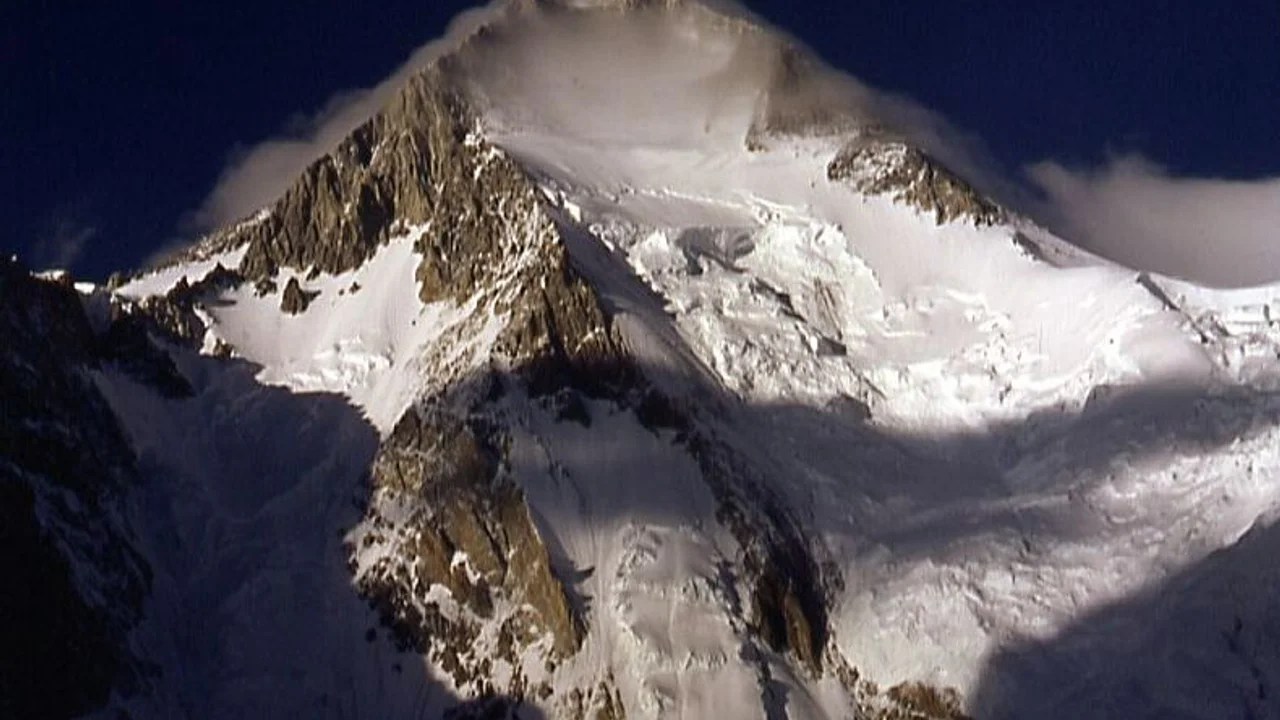
Gasherbrum I 1958: The American Conquest of Hidden Peak
On July 5, 1958, Pete Schoening and Andy Kauffman conquered the 8,080-meter summit of Gasherbrum I (Hidden Peak), achieving the only maiden first ascent of an eight-thousander in world history credited to an American team.
Documented Sources & Archival Citations
- A Walk in the Sky: Nicholas Clinch and the 1958 Ascent of Hidden Peak(The Mountaineers Books)
Supporting claim: Official chronicle of Schoening's summit ascent of Gasherbrum I
Accessed/Documented: 1982 - K2: The Savage Mountain(Charles S. Houston and Robert H. Bates / McGraw-Hill)
Supporting claim: Eyewitness account of the 1953 K2 evacuation and Schoening's miraculous belay
Accessed/Documented: 1954 - American Alpine Journal: In Memoriam - Peter K. Schoening (1927–2004)(American Alpine Club)
Supporting claim: Comprehensive biographical survey and award citations
Accessed/Documented: 2005