Marmolada
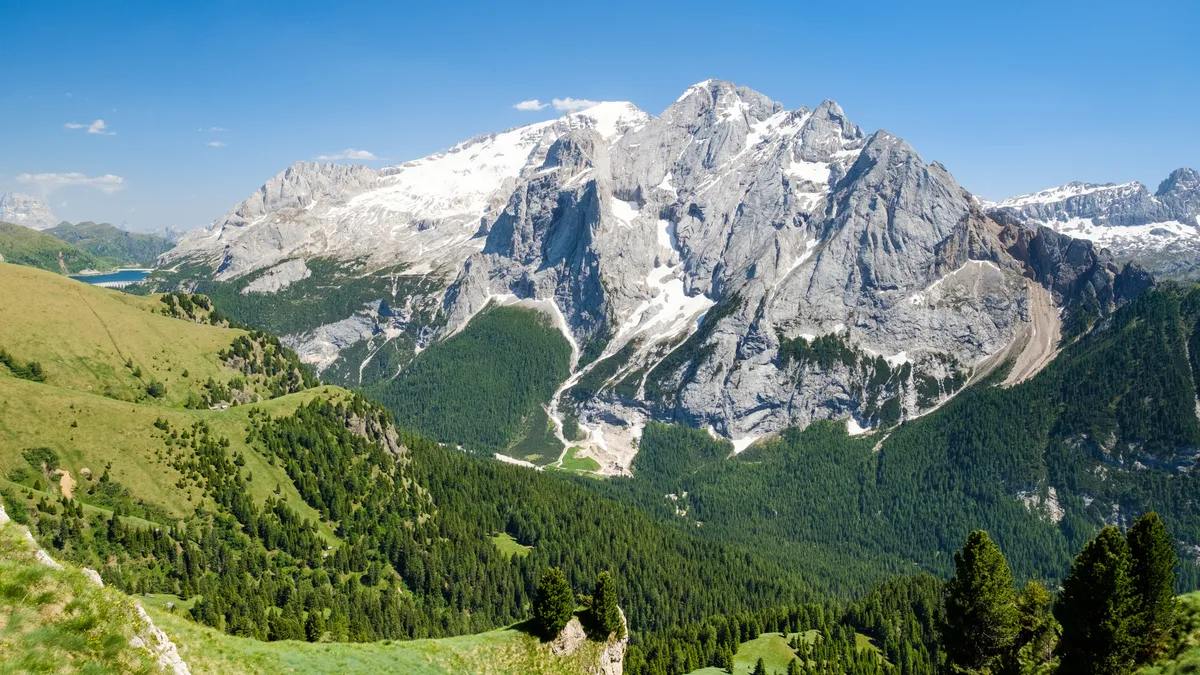
Marmolada (3,343 m / 10,968 ft) is the highest peak in the Dolomites, celebrated as the Queen of the Dolomites. Presiding over the Trentino and Veneto regions of northern Italy, its glaciated northern slopes contrast dramatically with its formidable 800-metre south face (Parete d'Argento).

Mountain Safety & Conditions Disclaimer: High-altitude climbing, glacial travel, and technical ascents entail severe objective risks including avalanches, serac collapses, rapid weather collapse, and altitude illness. Historical route descriptions and summit claims on Mountanity reflect documented archival sources and must not be used as live operational safety assessments. Local regulations, permits, and physical glacial topography change continuously.
Peer Review: Senior Editorial Board & Historical Reviewers • Editorial Standards
Geographical Setting & Topography
Between the Val di Fassa and the Cordevole valley in the eastern Dolomites, hosting the only true glacier in the Dolomite range.
Historic First Ascent
Date: September 28, 1864
Ascent Team: Paul Grohmann (Austria) guided by Angelo and Fulgenzio Dimai
Key Statistics & Topographic Figures
- Summit Elevation
- 3,343 m (10,968 ft) — Punta Penia
- Topographic Prominence
- 2,131 metres (Ultra-prominent peak)
- South Face Height
- 800–1,000 m vertical limestone wall
- First Ascent Date
- September 28, 1864 (Paul Grohmann)
- Glacier Size
- Largest remaining ice sheet in the Dolomites
Archival Primary Source Quotations
“The South Face of the Marmolada is the most colossal and imposing limestone wall in the whole chain of the Alps.”
Defined Alpine Terminology & Concepts
- Parete d'Argento
- The "Silver Wall", the gleaming, unbroken 1,000-metre south face of the Marmolada rising above the Ombretta Valley.
- Eisstadt (City of Ice)
- A subterranean military fortress of 8 kilometres of tunnels carved inside the Marmolada Glacier by Austro-Hungarian engineers during WWI.
Marmolada Mountain Weather Forecast
Detailed 14-Day Summit Window & Weather Timeline
Explore day-by-day summit push safety windows, wind shear analysis, and extended multi-day forecasts for Marmolada.
Explore Marmolada (3,343 m) in Interactive 3D
Inspect steep glacial walls, hanging seracs, ridge approaches, and elevation relief with 360° rotation and terrain tilt in WebGL.
Documented Climbing Routes (1)
Marmolada South Face (Via Tomasson-Bettega-Zagonel)
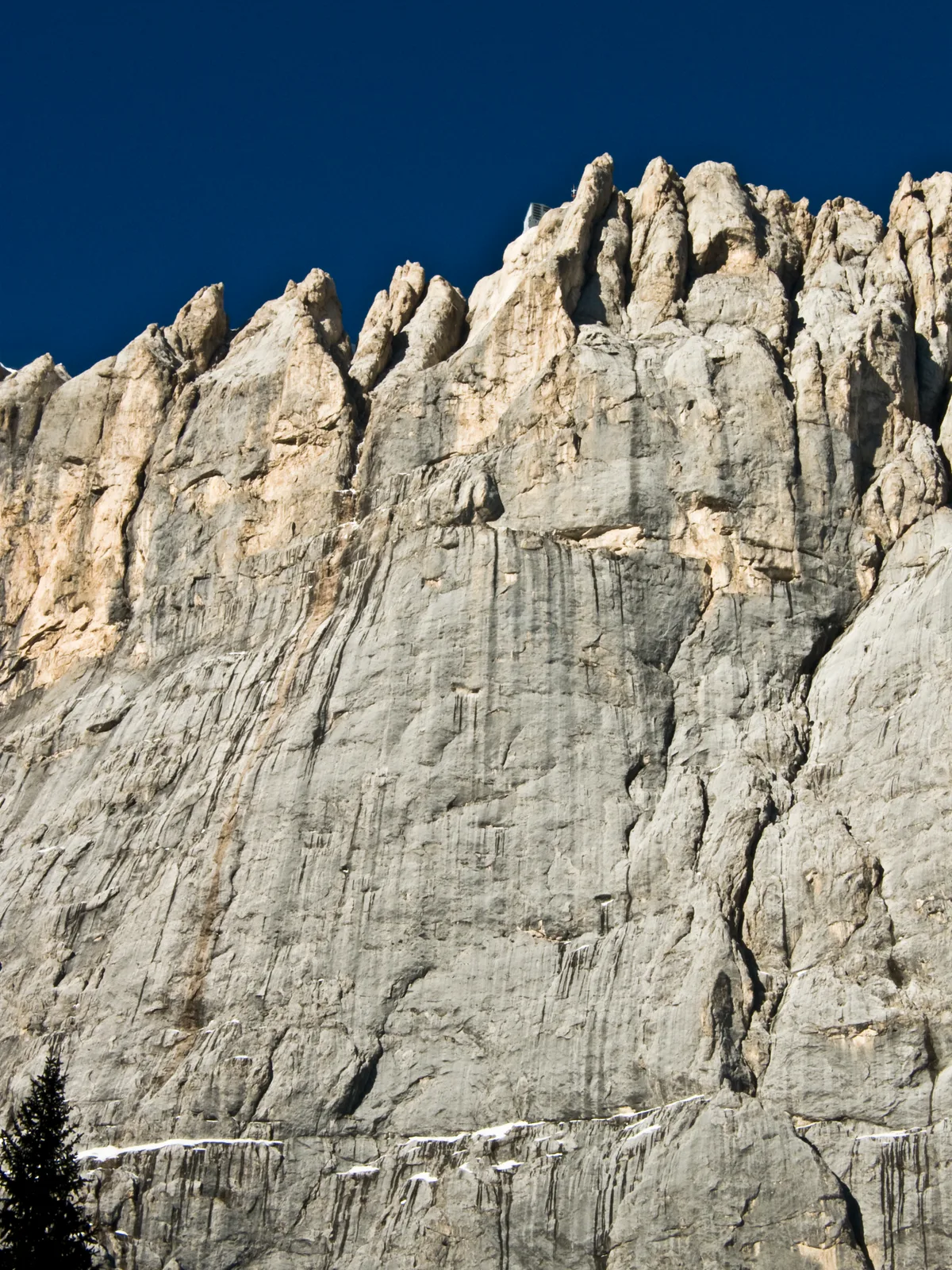
The Via Tomasson-Bettega-Zagonel on the South Face of Marmolada (3,343 m) is revered as the Silver Wall (Parete d'Argento) masterwork. Opened on July 1, 1901, by British climber Beatrice Tomasson with legendary Primiero guides Michele Bettega and Bortolo Zagonel, the 800-metre route scales over thirty pitches of compact, polished limestone graded UIAA V, standing as one of the boldest pre-World War I ascents in Europe.
Historical Expeditions (1)
1901 Tomasson & Bettega Marmolada South Face First Ascent
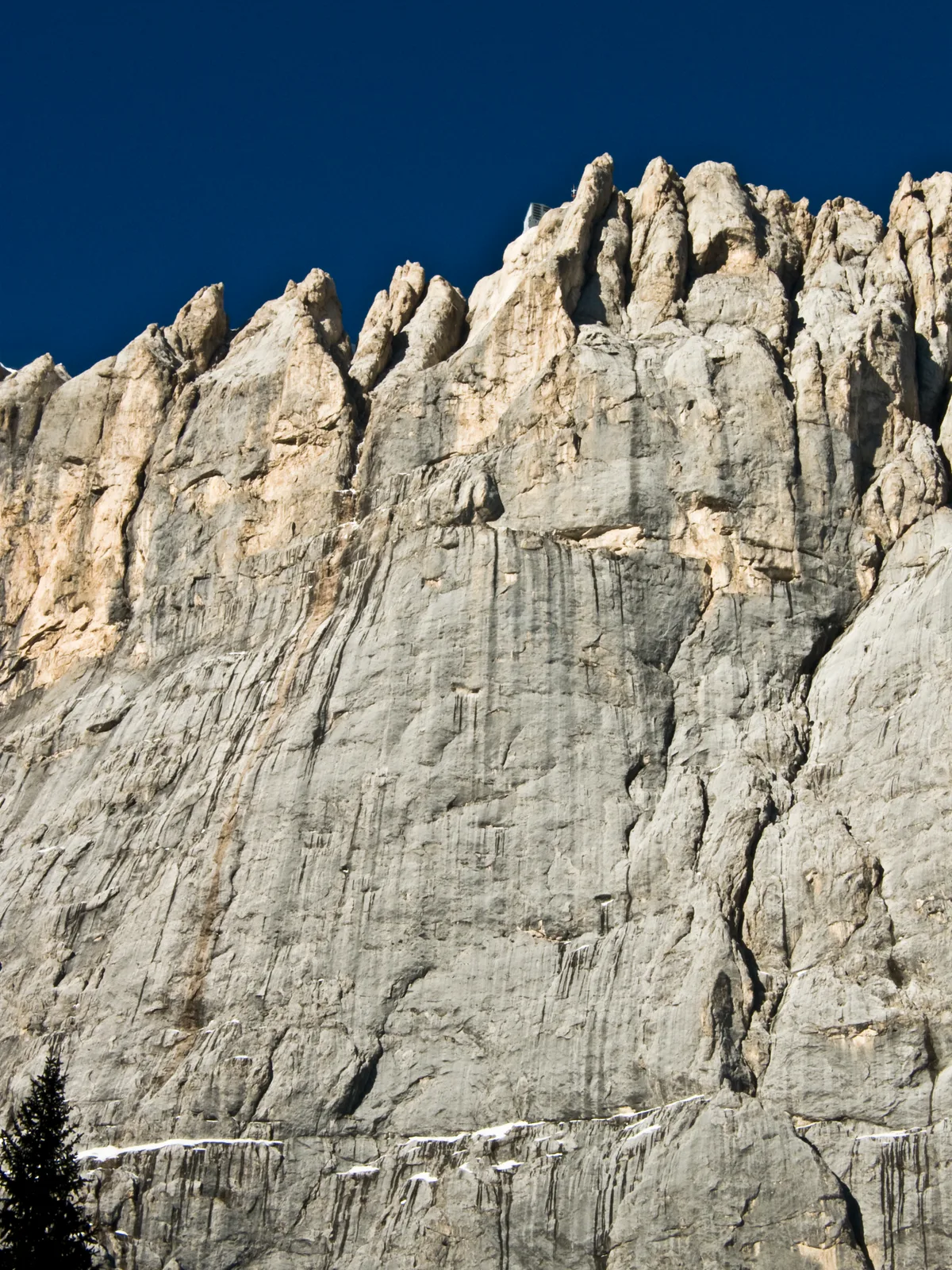
On July 1, 1901, British female mountaineer Beatrice Tomasson with guides Michele Bettega and Bortolo Zagonel conquered the formidable 800-metre Silver Wall (South Face) of Marmolada, the Queen of the Dolomites.
Summit Chronicles & Stories (1)
The Silver Wall Conquered: Beatrice Tomasson's 1901 Marmolada South Face Epic
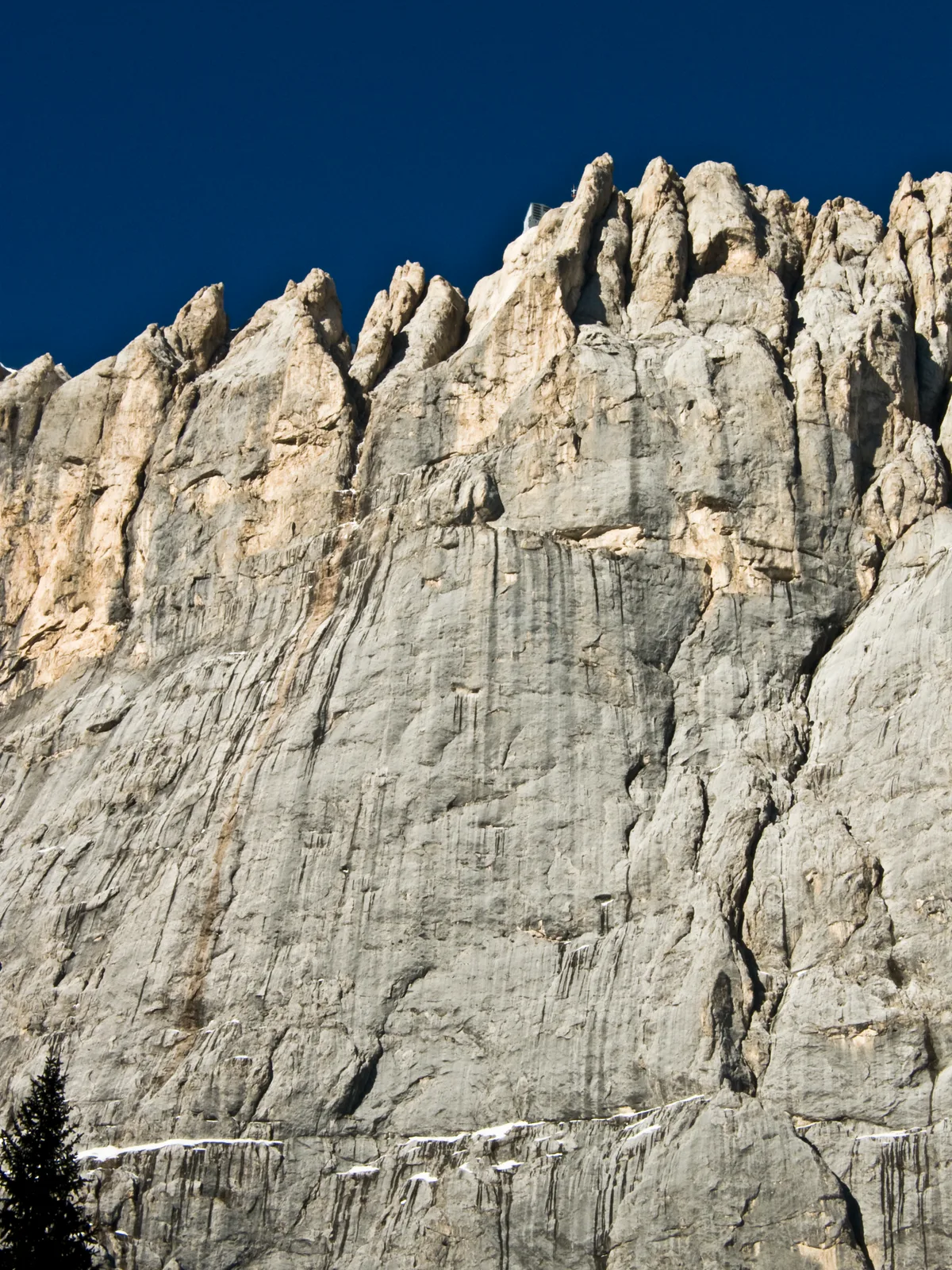
On July 1, 1901, British climber Beatrice Tomasson and guides Michele Bettega and Bortolo Zagonel climbed the 800-metre South Face of Marmolada, establishing one of the greatest pre-WWI big wall ascents in Europe.
Frequently Asked Questions: Marmolada
What is the Marmolada and why is it called the Queen of the Dolomites?
The Marmolada is the highest massif in the Dolomites, crowned by Punta Penia at 3,343 metres, and is nicknamed the "Queen of the Dolomites" (Regina delle Dolomiti).
What is the highest point of the Marmolada?
Punta Penia, rising to 3,343 metres (10,968 feet) above sea level, boasting a prominence of 2,131 metres.
Who made the first ascent of Marmolada's Punta Penia?
Viennese mountaineer Paul Grohmann with alpine guides Angelo and Fulgenzio Dimai made the first ascent on September 28, 1864, via the North Glacier.
What is the famous Marmolada South Face (Parete d'Argento)?
The South Face is an 800-to-1,000-metre high, two-kilometre wide vertical limestone precipice known as the "Silver Wall", containing some of the greatest rock climbs in Europe.
Who pioneered the first route on the Marmolada South Face?
Englishwoman Beatrice Tomasson with guides Michele Bettega and Bartolo Zagonel conquered the imposing South Face on July 1, 1901.
What was the "City of Ice" (Eisstadt) on the Marmolada during WWI?
During 1916–1917, Austro-Hungarian troops excavated a massive labyrinth of tunnels, barracks, and depots deep within the Marmolada Glacier to shelter from Italian artillery.
What glacier exists on the Marmolada?
The Marmolada Glacier (Ghiacciaio della Marmolada) spans the mountain's northern flank, representing the only substantial glacier in the Dolomites.
What classic modern routes ascend the Marmolada South Face?
Iconic climbs include "Through the Fish" (Il Pesce) climbed by Igor Koller and Jindřich Šustr in 1981, and the Vinatzer-Messner direct route.
Documented Sources & Archival Citations
- The Dolomites: Historical Climbs and Pioneers(Club Alpino Italiano)
Supporting claim: Official CAI historical register for the first ascents of Punta Penia and the Marmolada South Face
Accessed/Documented: 2026 - A mezzo secolo dalla conquista della Sud della Marmolada(Tita Piaz / Rivista Mensile del CAI)
Supporting claim: Personal memoirs of early explorations and the historic 1901 South Face campaign
Accessed/Documented: 2026