1950 French Annapurna Expedition
Led by Maurice Herzog, the 1950 French expedition made history by achieving the first summit of an 8,000-meter peak when Herzog and Louis Lachenal reached the top of Annapurna I (8,091m) on June 3, 1950, without supplemental oxygen.
Mountain Safety & Conditions Disclaimer: High-altitude climbing, glacial travel, and technical ascents entail severe objective risks including avalanches, serac collapses, rapid weather collapse, and altitude illness. Historical route descriptions and summit claims on Mountanity reflect documented archival sources and must not be used as live operational safety assessments. Local regulations, permits, and physical glacial topography change continuously.
Peer Review: Senior Editorial Board & Historical Reviewers • Editorial Standards
Official Expedition Narrative & Archival Record
In the spring of 1950, the Club Alpin Français mounted the French Himalayan Expedition to Nepal under the leadership of Maurice Herzog. Operating in a completely unexplored region without accurate maps, the team initially explored Dhaulagiri I before determining that Annapurna I (8,091m) offered a feasible line via its North Face and sickle-shaped glacier. Moving swiftly against the encroaching summer monsoon, the assault team established Camp V at 7,400 meters on June 2. On June 3, 1950, Maurice Herzog and Chamonix guide Louis Lachenal set off for the summit without bottled oxygen. Battling severe hypoxia, frostbite, and biting winds, the two men stood on the summit of Annapurna at 2:00 PM—the first human beings ever to reach the crest of an eight-thousander. During the harrowing descent through whiteout blizzards, Herzog lost his gloves and suffered catastrophic frostbite in both hands and feet, while Lachenal's feet froze solid. Reunited with Gaston Rébuffat and Lionel Terray, the quartet endured an emergency bivouac trapped inside a glacial crevasse at 7,400 meters. The subsequent retreat through the Nepalese jungles during torrential monsoon rains became an epic of human survival, with expedition doctor Jacques Oudot performing emergency amputations of all Herzog's fingers and toes and all Lachenal's toes to save their lives.
Documented Team Composition
- Maurice Herzog (Expedition Leader & Summit Climber)
- Louis Lachenal (Lead Guide & Summit Climber)
- Lionel Terray (Lead Climber)
- Gaston Rébuffat (Lead Climber)
- Jean Couzy (Climber)
- Marcel Schatz (Climber)
- Dr. Jacques Oudot (Expedition Doctor)
- Marcel Ichac (Cinematographer)
- Francis de Noyelle (Diplomatic Liaison)
Key Statistics & Topographic Figures
- Summit Timestamp
- 2:00 PM, June 3, 1950
First 8,000m Summit in History
- Summit Climbers
- Maurice Herzog & Louis Lachenal
First Ascenders
- Oxygen Equipment
- 0 Liters / No Bottled Oxygen
Pure Natural Respiration
- Mountain Elevation
- 8,091 meters (26,545 ft)
10th Highest Peak on Earth
- Expedition Leader
- Maurice Herzog
Club Alpin Français
- Climbing Route
- North Face (Sickle Glacier)
Virgin Himalayan Ascent
Archival Primary Source Quotations
“There are other Annapurnas in the lives of men.”
Defined Alpine Terminology & Concepts
- Eight-Thousander
- One of the fourteen distinct mountain peaks on Earth with a summit elevation exceeding 8,000 meters (26,247 ft) above sea level, all located in the Himalayas and Karakoram.
- Crevasse Bivouac
- An emergency overnight survival shelter inside a glacial crevasse to escape lethal high-altitude wind chill and storm blizzards on open mountain slopes.
Frequently Asked Questions: 1950 French Annapurna Expedition
Who made the first ascent of Annapurna in 1950?
Maurice Herzog and Louis Lachenal made the historic first ascent of Annapurna I (8,091m) on June 3, 1950. It was the first time in human history that any 8,000-meter mountain was successfully summited.
Why was the 1950 Annapurna expedition historic?
Annapurna I was the very first 8,000-meter peak ever conquered. The French team explored an uncharted region of Nepal without accurate maps, established a route up the North Face via the sickle glacier, and reached the summit on their first attempt without bottled oxygen.
Did Maurice Herzog and Louis Lachenal use supplemental oxygen on Annapurna?
No. Maurice Herzog and Louis Lachenal climbed Annapurna I entirely without supplemental bottled oxygen, relying purely on natural acclimatization and sheer physical endurance in the Death Zone.
Why did Maurice Herzog lose all his fingers and toes on Annapurna?
After reaching the summit at 2:00 PM, Herzog removed his heavy climbing mitts to take photographs and dropped them down the mountainside. On the descent through a blinding blizzard, severe frostbite destroyed all his fingers and toes, requiring emergency field amputations during the retreat.
What did Louis Lachenal ask Maurice Herzog before the summit of Annapurna?
Suffering from severe frostbite in his feet, Lachenal stopped and asked Herzog: "If I turn back now, what will you do?" Herzog replied that he would continue alone. Knowing Herzog would die without him, Lachenal replied: "Then I will follow you," sacrificing his feet to save his leader.
How did the climbers survive their night trapped on Annapurna?
Caught in a whiteout near Camp V, Herzog, Lachenal, Gaston Rébuffat, and Lionel Terray fell into a deep glacial crevasse at 7,400 meters. They huddled together through the freezing night without sleeping bags or food, miraculously surviving an avalanche that buried the crevasse entrance.
What was the famous closing sentence of Maurice Herzog’s book Annapurna?
Herzog concluded his bestselling memoir with the immortal line: "There are other Annapurnas in the lives of men," encapsulating the spiritual and philosophical transcendence of human adventure.
What route did the 1950 French expedition take to summit Annapurna?
The team pioneered the North Face route, ascending from the Miristi Khola gorge, climbing the steep sickle-shaped glacier to Camp IV and Camp V, and navigating the upper snow couloir to the summit crest.
Ascent Route & Topography
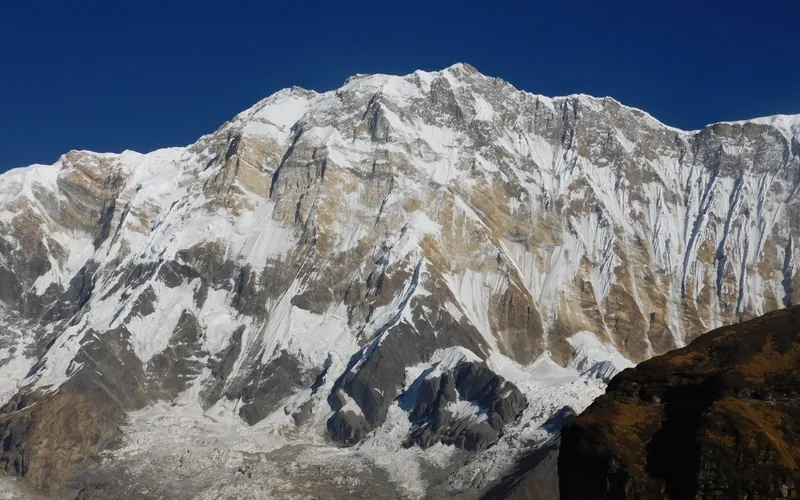
Annapurna I North Face (Herzog-Lachenal Route)
The North Face of Annapurna I is the historic first route ever climbed on an 8,000-meter peak, pioneered by French climbers Maurice Herzog and Louis Lachenal on June 3, 1950. Approached via the remote Miristi Khola valley, the route ascends the shattered North Annapurna Glacier, negotiates the terrifying avalanche-swept Sickle Glacier serac wall, and ascends steep snow gullies along the French Rib to gain the 8,091m summit.
Target Objective Peak
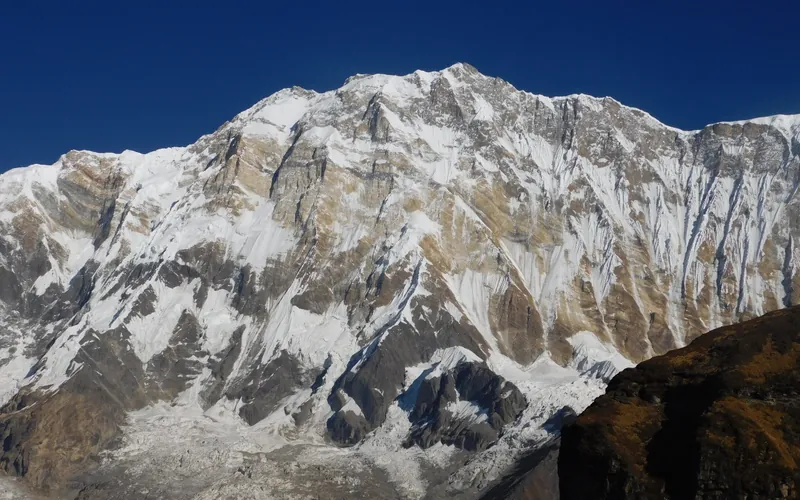

Annapurna I
Annapurna I, at 8,091 meters (26,545 ft), is the tenth-highest mountain in the world and historically the first 8,000-meter peak ever summited (June 3, 1950 by Maurice Herzog and Louis Lachenal). Rising above the Annapurna Sanctuary, its north and south walls present extreme avalanche and serac fall hazards.
Featured Expedition Climbers
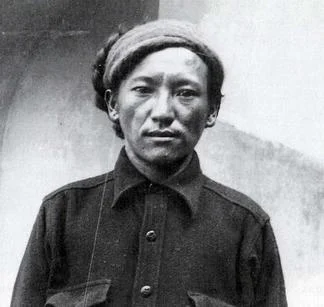
Ang Tharkay
Ang Tharkay was born in 1907 in the high mountain hamlet of Kundu near Thame in Nepal's Solukhumbu District. Migrating as a young man to Darjeeling in British India, which served as the operational recruitment depot for Himalayan expeditions, he quickly gained a reputation for exceptional physical toughness, joyful leadership, and razor-sharp mountain judgment. Diminutive in physical stature but immense in spirit, he was affectionately nicknamed 'The Little Giant' by European explorers. His legendary exploratory partnership with Eric Shipton and Bill Tilman began in 1934 during their audacious breakthrough into the long-impenetrable Nanda Devi Sanctuary via the treacherous Rishi Ganga gorge. Shipton revered Ang Tharkay as a peer and master navigator, employing him on the 1935 British Mount Everest Reconnaissance and the 1937 exploratory survey of the Karakoram glaciers. In 1938, Tilman appointed Ang Tharkay as sirdar on the British Everest expedition, during which he carried loads above 8,300 meters on the North Ridge without supplemental oxygen. His defining hour arrived during the 1950 French Annapurna Expedition. Appointed head sirdar by Maurice Herzog, Ang Tharkay organized the complex mountain logistics, managed hundreds of local porters through uncharted valleys, and established high camps on Annapurna's glaciated north face. Recognizing his extraordinary loyalty and strength, Herzog invited Ang Tharkay to accompany him on the final summit bid; Ang Tharkay graciously declined, choosing to preserve his energies to protect the overall team. When Herzog and Louis Lachenal descended half-blind and severely frostbitten from the summit, Ang Tharkay organized an heroic rescue operation, physically carrying Herzog on his back across treacherous landslides and raging rivers through monsoon downpours. In 1951, he rejoined Shipton and Edmund Hillary on the historic reconnaissance that discovered the southern route up the Khumbu Icefall. Later authoring his poignant autobiography Born in the Shadow of the Himalayas (Sherpa, Tenzing's Peer), Ang Tharkay stands immortal as the founding father of modern Sherpa sirdar leadership.
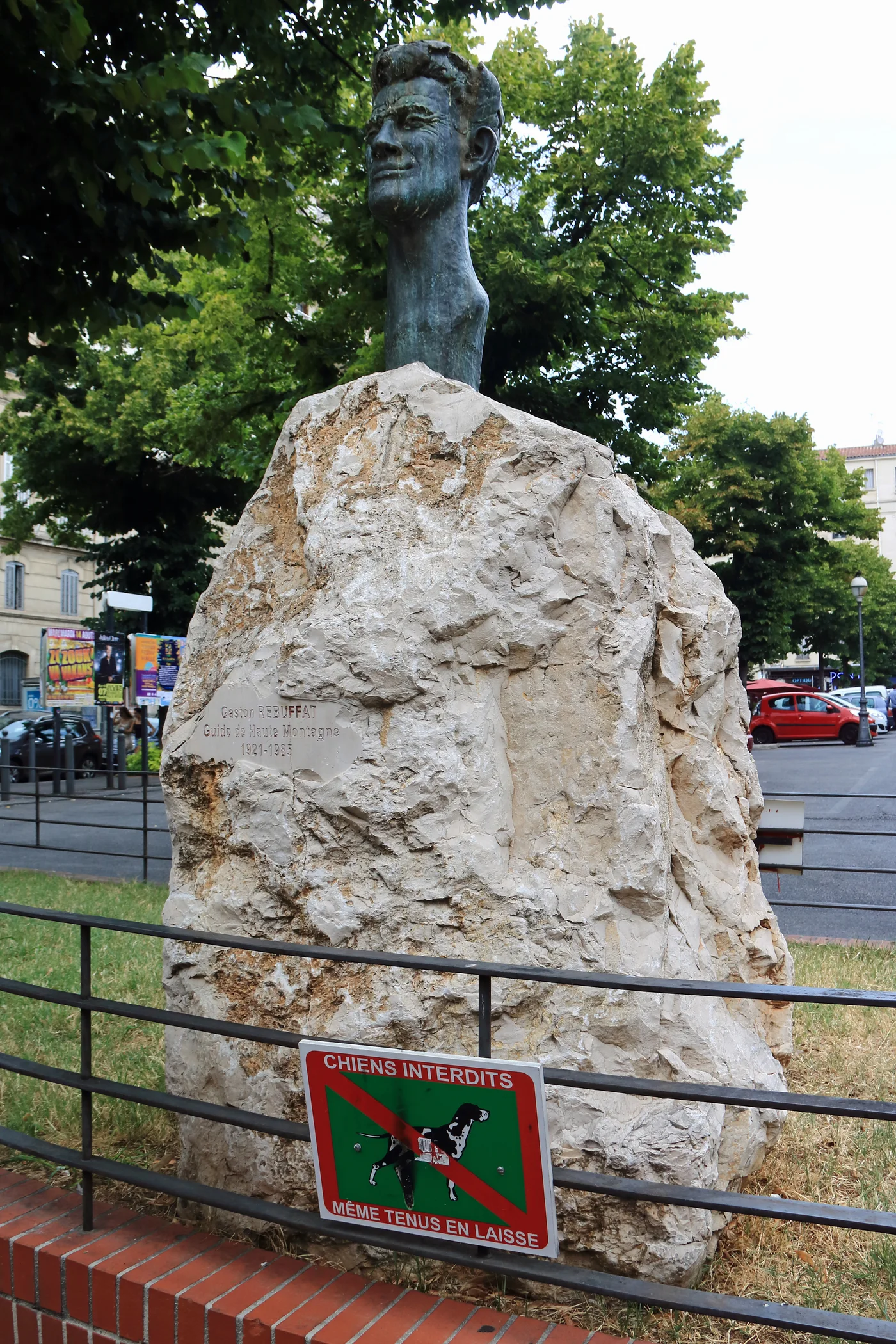
Gaston Rébuffat
Gaston Rébuffat was born on May 7, 1921, in Marseille, France. Discovering climbing as a youth on the limestone sea cliffs of the Calanques and the crags of Sainte-Victoire, Rébuffat was drawn inexorably to the high granitic spires of the Mont Blanc massif. Moving to Chamonix during World War II, he joined the elite Compagnie des Guides de Chamonix at just twenty-one years old, becoming one of the very few outsiders ever admitted to the ancient fraternity of local mountain guides. Possessed of extraordinary poise, balance, and lyrical appreciation for high alpine spaces, Rébuffat systematically tackled the most formidable challenges across Europe. Between 1945 and 1952, he achieved the unprecedented milestone of climbing all Six Great North Faces of the Alps: the Grandes Jorasses (Walker Spur), Piz Badile (Northeast Face), Petit Dru (North Face), Matterhorn (North Face), Cima Grande di Lavaredo (North Face), and the Eiger (North Face 1938 Heckmair Route). He chronicled these monumental ascents in his classic 1954 book 'Starlight and Storm' (Étoiles et Tempêtes), celebrated for treating the mountains with profound reverence rather than conquest. In 1950, Rébuffat served as one of the lead summit support climbers on the historic French expedition that conquered Annapurna I (8,091m), the first eight-thousander in history. When Maurice Herzog and Louis Lachenal descended from the summit blinded, delirious, and crippled by frostbite, Rébuffat and Lionel Terray guided them through blinding storms and shared an emergency bivouac inside a glacial crevasse, saving their companions' lives. Throughout his postwar life, Rébuffat produced beloved documentary films, wrote numerous foundational instructional manuals, and pioneered classics like the South Face of the Aiguille du Midi. He was awarded an Officer of the Legion of Honour for his contributions to French alpine culture. Gaston Rébuffat passed away in Paris on May 31, 1985, leaving an immortal legacy of sportsmanship and alpine literature.
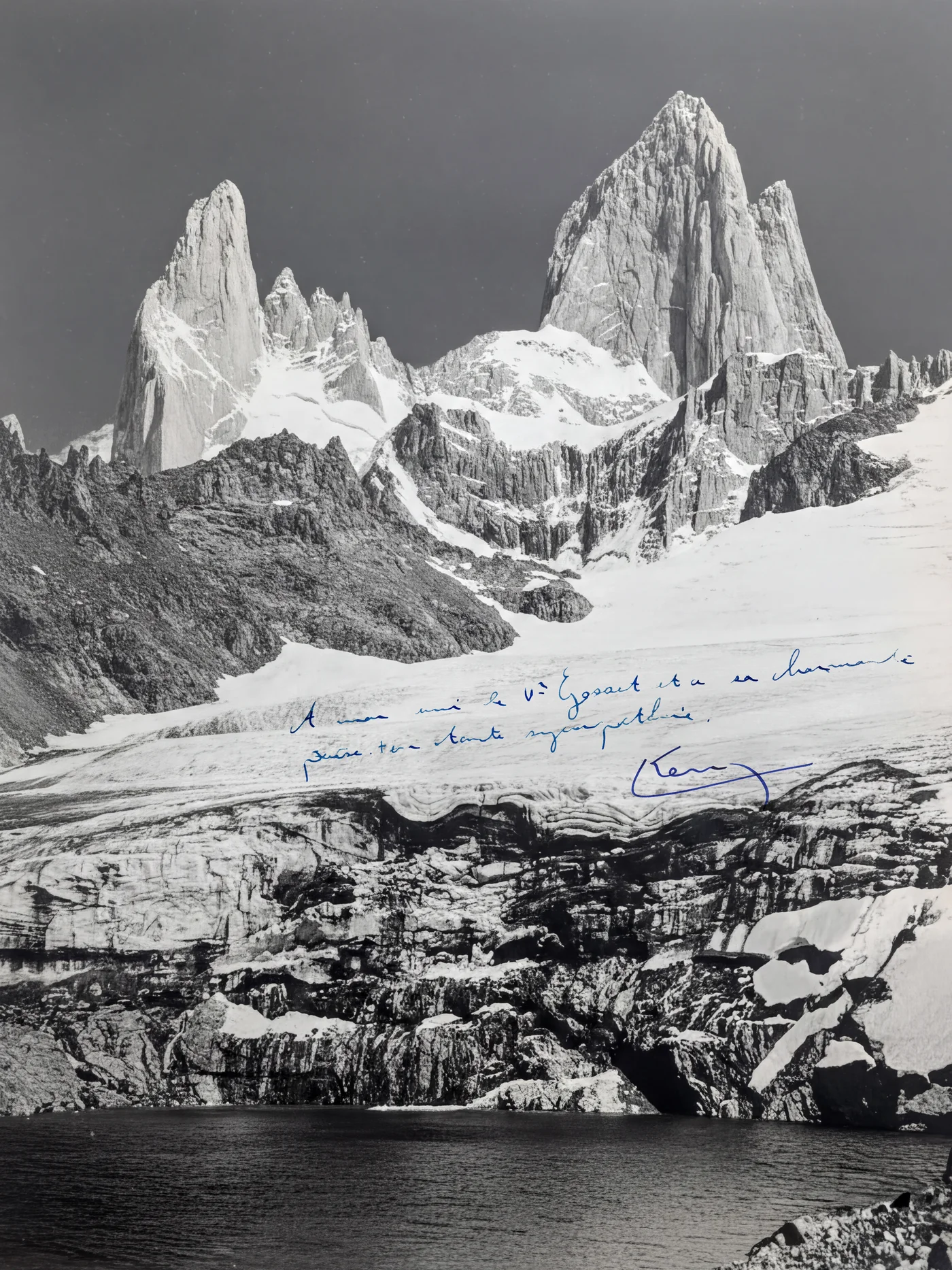
Lionel Terray
Lionel Terray was born on July 25, 1921, in Grenoble, France. Raised in the shadow of the French Alps, Terray developed an all-consuming passion for extreme skiing and high-angle alpinism from early childhood. During World War II, he fought heroically against Nazi occupation forces in the Battle of the Alps as part of the Compagnie Stéphane ski-troops, winning the Croix de Guerre. In Chamonix after the war, Terray formed an invincible climbing partnership with Louis Lachenal. In 1947, the duo made the celebrated second ascent (and first French ascent) of the dreaded Eiger North Face in Switzerland. In 1950, Terray was chosen as a lead climber for the French Annapurna Expedition. When Maurice Herzog and Louis Lachenal staggered down from the summit severely frostbitten and snow-blind, Terray and Gaston Rébuffat mounted a selfless rescue, sacrificing their own summit ambitions. Trapped in a 7,400-meter crevasse overnight in sub-zero blizzards, Terray gave up his gloves and warm clothing to nurse his comrades, later organizing the grueling jungle litter-carry that saved their lives. Over the following decade, Terray became the premier expedition alpinist of the 20th century. In 1952, he made the audacious first ascent of Patagonia's granite needle, Mount Fitz Roy, alongside Guido Magnone. In May 1955, on the French Makalu Expedition led by Jean Franco, Terray and Jean Couzy forged the normal route up the North Face and Makalu La, reaching the 8,485-meter summit on May 15—the fifth-highest peak on Earth. Terray's leadership was so flawless that all nine members of the expedition reached the summit over three consecutive days without injury. Terray continued his global conquests with the first ascents of Peru's terrifying Chacraraju (6,108m) and Taulliraju in 1956, Nepal's monstrous Jannu (7,710m) in 1962, and Alaska's Mount Huntington in 1964. In 1961, he penned Les Conquérants de l'inutile (Conquistadors of the Useless), universally acclaimed as the greatest philosophical mountaineering autobiography ever written. On September 19, 1965, Lionel Terray died tragically in a climbing fall on the Arêtes du Gerbier in the Vercors at age forty-four. He is buried in Chamonix, forever remembered as the soul of pure, noble alpinism.
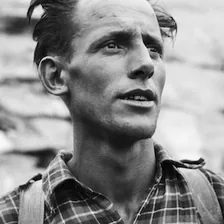
Louis Lachenal
Louis Lachenal was born on July 17, 1921, in Annecy, Haute-Savoie, France. Nicknamed 'Biscante' for his fiery, irreverent spirit and diminutive, agile frame, Lachenal began rock climbing as an adolescent in the limestone cliffs of the Semnoz. In 1942, he qualified as an official Chamonix mountain guide, quickly emerging as one of the fastest and most technically audacious alpinists of his generation. Teaming up with fellow guide Lionel Terray in the mid-1940s, Lachenal formed the most formidable climbing partnership in post-war European mountaineering. In 1946, the pair made the fourth ascent of the notoriously dangerous Walker Spur on the Grandes Jorasses. In July 1947, Lachenal and Terray completed the second ascent of the dreaded North Face of the Eiger (Eigerwand) in the Bernese Oberland, shaving hours off previous records during unpredictable storms and proving their peerless technical speed on mixed ground. In 1950, Lachenal was hired as a professional lead climbing member of the French Himalayan Expedition to Annapurna I (8,091m). While expedition leader Maurice Herzog climbed driven by national glory and patriotic symbolism, Lachenal was a pragmatic professional guide who understood the terrifying physiological stakes. On the morning of June 3, 1950, high on the North Face, Lachenal realized that his feet were freezing solid. Turning to Herzog, he asked the famous, poignant question: 'If I go back, what will you do?' Herzog replied that he would continue to the summit alone. Knowing that Herzog would die without him, Lachenal made the supreme professional sacrifice: 'Then I will follow you.' The pair stood on the summit of Annapurna at 2:00 PM, becoming the first humans to stand on top of an eight-thousander. Lachenal immediately began a frantic descent to save his extremities, enduring an unplanned crevasse bivouac at 7,400 meters with Herzog, Gaston Rébuffat, and Lionel Terray. Severe frostbite destroyed his feet, leading to the surgical amputation of all his toes during the monsoon retreat through Nepal. Lachenal documented the unvarnished realities of the expedition in his candid journal Carnets du Vertige (Notebooks of Vertigo), which challenged the romanticized national myth. Despite losing all his toes, Lachenal miraculously adapted his technique and returned to professional alpine guiding and competitive skiing in Chamonix. Tragic fate struck on November 25, 1955: while descending the Vallée Blanche on skis with companion Jean-Pierre Payot, a snow bridge collapsed and Lachenal plummeted 25 meters down a dark crevasse, dying instantly at age thirty-four. He remains revered as the pure, unselfish soul of the Annapurna triumph.
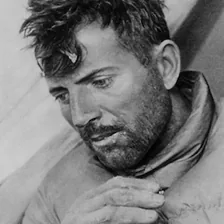
Maurice Herzog
Maurice Herzog was born on January 15, 1919, in Lyon, France. During World War II, he served with distinction as a captain in the French Resistance (5th Battalion of Chasseurs Alpins) fighting in the Alps. A passionate and disciplined amateur alpinist, Herzog honed his climbing craft in the Mont Blanc massif and the Dauphiné Alps, becoming a respected leader within the Club Alpin Français (CAF). In early 1950, the French Alpine Club selected the 31-year-old Herzog to lead the landmark French Himalayan Expedition to Nepal. The kingdom had only recently opened its borders to foreigners, and the team had no detailed maps of the region. Tasked with finding and climbing either Dhaulagiri I or Annapurna I, the team spent weeks conducting pioneering explorations in the Kali Gandaki valley. After finding Dhaulagiri hopelessly steep and complex, Herzog turned the expedition's focus toward Annapurna I (8,091m), discovering a viable line up the North Face via the sickle-shaped glacier. On June 3, 1950, accompanied by Chamonix mountain guide Louis Lachenal, Herzog launched the final summit push from Camp V without supplemental oxygen. Battling bitter winds, extreme altitude fatigue, and deteriorating weather, the two men stepped onto the 8,091-meter summit at 2:00 PM—the first humans to stand on the crest of an eight-thousander. In his summit euphoria, Herzog removed his heavy gloves to take photographs with the French flag, inadvertently dropping them down the mountain slopes. On the descent, severe hypoxia and deep snow caused them to lose their way, forcing a nightmare night in a crevasse bivouac alongside companions Gaston Rébuffat and Lionel Terray. Herzog suffered catastrophic frostbite in both hands and feet. During the monsoon retreat through the Nepalese jungle to India, expedition doctor Jacques Oudot performed field amputations of all Herzog's fingers and toes without modern anesthesia while porters carried him in wicker baskets. Herzog survived to write Annapurna, which sold over 11 million copies worldwide and inspired generations of climbers with its famous closing line: 'There are other Annapurnas in the lives of men.' Herzog later served as French Minister for Youth and Sports under President Charles de Gaulle (1958–1966), mayor of Chamonix (1968–1977), and an influential member of the International Olympic Committee (IOC) from 1970 to 1994. He was awarded the Grand Cross of the Legion of Honour. He passed away on December 13, 2012, at age ninety-three, forever celebrated as the man who opened the era of the eight-thousanders.
Associated Historical Chronicles & Stories
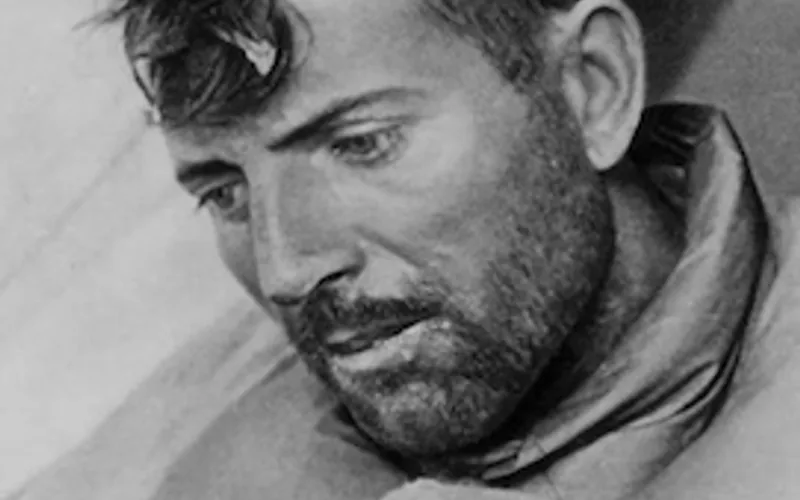
Annapurna 1950: The Agony and Glory of the First 8,000-Meter Summit
On June 3, 1950, Maurice Herzog and Louis Lachenal stood atop Annapurna I, conquering the first 8,000-meter peak in human history at the horrific cost of their fingers and toes.
Documented Sources & Archival Citations
- Annapurna: First Conquest of an 8,000-Meter Peak(Maurice Herzog / Jonathan Cape)
Supporting claim: Official expedition memoir documenting the exploratory approach and summit day
Accessed/Documented: 1951 - Carnets du Vertige(Louis Lachenal / Éditions Guérin)
Supporting claim: Candid firsthand journals of Louis Lachenal detailing the North Face climb and retreat
Accessed/Documented: 1956 - Conquistadors of the Useless(Lionel Terray / Victor Gollancz)
Supporting claim: Eyewitness account by support climber Lionel Terray of the rescue and evacuation
Accessed/Documented: 1963 - The Himalayan Database: 1950 Annapurna Expedition(Elizabeth Hawley Archive)
Supporting claim: Archival expedition record, verified altitudes, and summit dates
Accessed/Documented: 2026