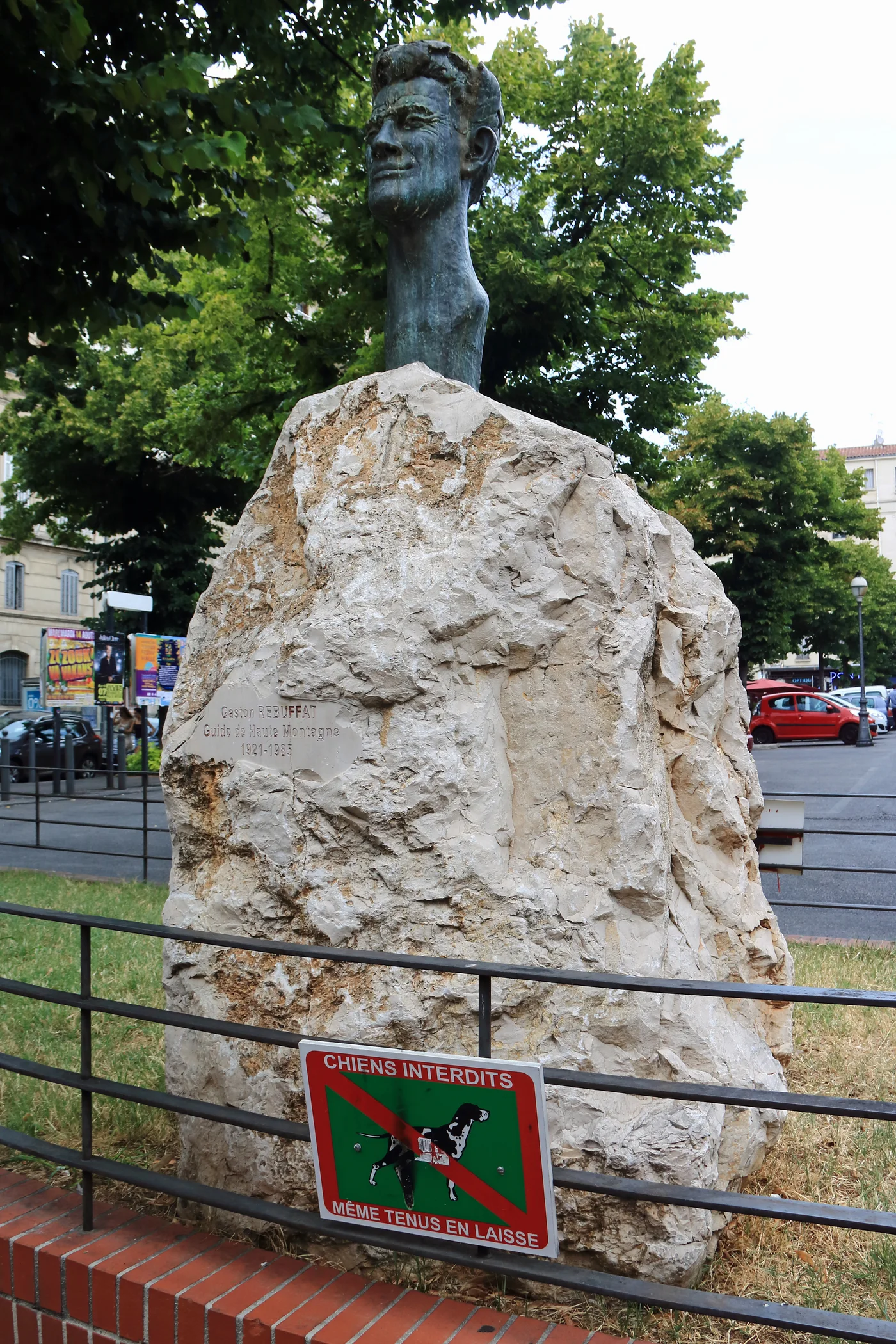
Gaston Rébuffat
Gaston Rébuffat (1921–1985) was an iconic French mountaineer, Chamonix mountain guide, and celebrated author who became the first person to climb all Six Great North Faces of the Alps. Renowned for his poetic philosophy and elegant climbing technique, he played an essential role in the 1950 French Annapurna Expedition. His masterwork Starlight and Storm inspired generations of climbers worldwide.
Mountain Safety & Conditions Disclaimer: High-altitude climbing, glacial travel, and technical ascents entail severe objective risks including avalanches, serac collapses, rapid weather collapse, and altitude illness. Historical route descriptions and summit claims on Mountanity reflect documented archival sources and must not be used as live operational safety assessments. Local regulations, permits, and physical glacial topography change continuously.
Peer Review: Senior Editorial Board & Historical Reviewers • Editorial Standards
Biographical Record & Archival Chronicle
Gaston Rébuffat was born on May 7, 1921, in Marseille, France. Discovering climbing as a youth on the limestone sea cliffs of the Calanques and the crags of Sainte-Victoire, Rébuffat was drawn inexorably to the high granitic spires of the Mont Blanc massif. Moving to Chamonix during World War II, he joined the elite Compagnie des Guides de Chamonix at just twenty-one years old, becoming one of the very few outsiders ever admitted to the ancient fraternity of local mountain guides.
Possessed of extraordinary poise, balance, and lyrical appreciation for high alpine spaces, Rébuffat systematically tackled the most formidable challenges across Europe. Between 1945 and 1952, he achieved the unprecedented milestone of climbing all Six Great North Faces of the Alps: the Grandes Jorasses (Walker Spur), Piz Badile (Northeast Face), Petit Dru (North Face), Matterhorn (North Face), Cima Grande di Lavaredo (North Face), and the Eiger (North Face 1938 Heckmair Route). He chronicled these monumental ascents in his classic 1954 book 'Starlight and Storm' (Étoiles et Tempêtes), celebrated for treating the mountains with profound reverence rather than conquest.
In 1950, Rébuffat served as one of the lead summit support climbers on the historic French expedition that conquered Annapurna I (8,091m), the first eight-thousander in history. When Maurice Herzog and Louis Lachenal descended from the summit blinded, delirious, and crippled by frostbite, Rébuffat and Lionel Terray guided them through blinding storms and shared an emergency bivouac inside a glacial crevasse, saving their companions' lives.
Throughout his postwar life, Rébuffat produced beloved documentary films, wrote numerous foundational instructional manuals, and pioneered classics like the South Face of the Aiguille du Midi. He was awarded an Officer of the Legion of Honour for his contributions to French alpine culture. Gaston Rébuffat passed away in Paris on May 31, 1985, leaving an immortal legacy of sportsmanship and alpine literature.
Notable Milestones & Ascents
- First mountaineer in history to climb all Six Great North Faces of the Alps
- Crucial rescuer and lead climber on the historic 1950 French Annapurna Expedition
- First ascent of the South Face of the Aiguille du Midi (Rébuffat-Baquet Route) in 1956
- Author of Étoiles et Tempêtes (Starlight and Storm) and acclaimed climbing films
- Admitted to the historic Compagnie des Guides de Chamonix in 1942 as a non-native guide
- Awarded Officer of the French Legion of Honour for lifetime service to alpinism
Key Statistics & Topographic Figures
- Archive Classification
- MOUNTAINEERS
Mountanity Knowledge Corpus
- Verification Status
- Editorially Verified
Archival Standards
- Citation Standard
- Primary Source Verified
Alpine Research Desk
Archival Primary Source Quotations
“Great things are done when men and mountains meet; this is not done by jostling in the street.”
Defined Alpine Terminology & Concepts
- Archival Integrity
- The standard of verifying historical mountain facts, summit claims, and altitudes using primary expeditions journals and geodetic measurements.
Frequently Asked Questions: Gaston Rébuffat
What historical significance does this mountaineer hold?
Gaston Rébuffat represents an essential chapter in global mountaineering heritage, verified through contemporary expedition journals and archival sources.
How are the facts and records for Gaston Rébuffat verified?
All records are checked against peer-reviewed journals, national alpine clubs, geodetic surveys, and the Mountanity Archival Integrity Policy.
Associated Summits (6)

Annapurna I
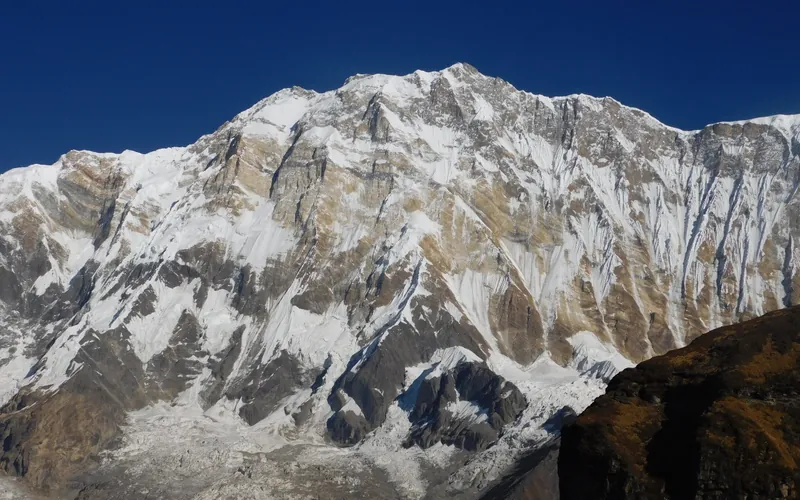
Annapurna I, at 8,091 meters (26,545 ft), is the tenth-highest mountain in the world and historically the first 8,000-meter peak ever summited (June 3, 1950 by Maurice Herzog and Louis Lachenal). Rising above the Annapurna Sanctuary, its north and south walls present extreme avalanche and serac fall hazards.


Mont Blanc
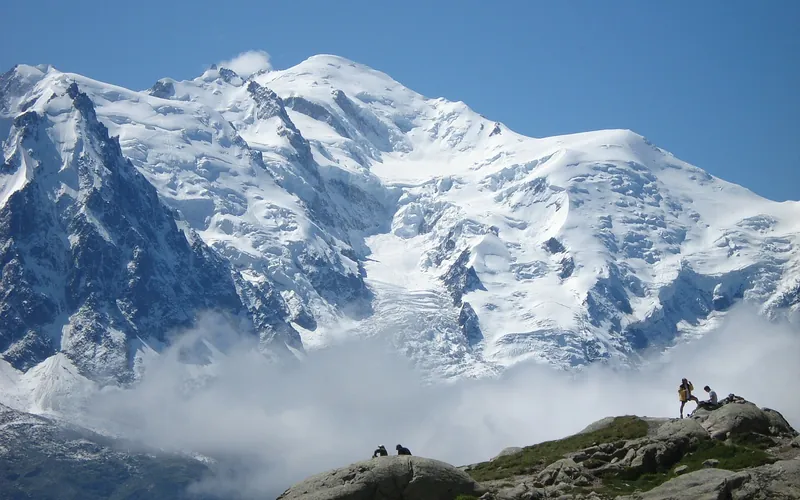
Mont Blanc (Monte Bianco), at 4,808 meters (15,774 ft), is the highest mountain in the Alps and Western Europe. Rising on the Franco-Italian watershed, this iconic glacier-draped granite massif is revered as the historic cradle of modern mountaineering following its celebrated first ascent in 1786. Featuring towering seracs, complex crevasse systems, and classic ridges like the Goûter and Bosses, it attracts climbers from around the globe.

Matterhorn
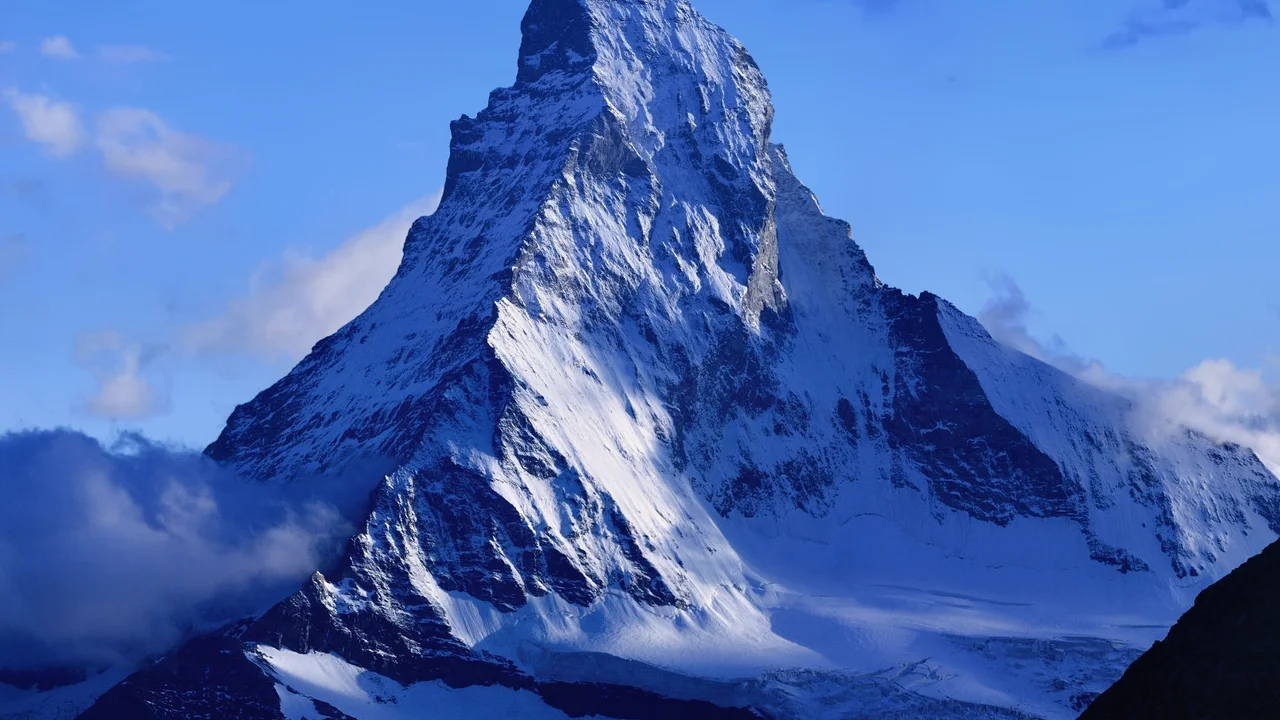
The Matterhorn (Monte Cervino), at 4,478 meters (14,692 ft), is one of the most recognizable and dramatic pyramidal peaks in the world. Straddling the border between Zermatt, Switzerland, and Breuil-Cervinia, Italy, its four triangular faces match the cardinal points of the compass. Its historic first ascent by Edward Whymper on July 14, 1865, and the tragic fall of four teammates on the descent marked the end of the Golden Age of Alpinism.
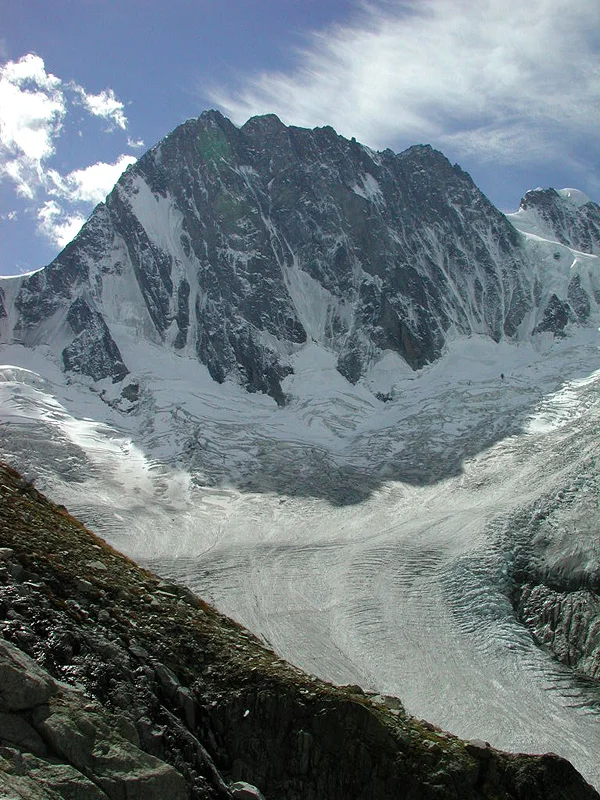
Grandes Jorasses
The Grandes Jorasses, crowning at Pointe Walker at 4,208 meters (13,806 ft), is one of the most celebrated mountain massifs in the European Alps, rising along the Franco-Italian border in the Mont Blanc massif. Its legendary 1,200-meter sheer North Face is revered as one of the Six Great North Faces of the Alps. First climbed directly up the central Walker Spur by Riccardo Cassin in 1938, it witnessed a historic modern milestone in March 2015 when British solo climber Tom Ballard completed his winter solo hexalogy of the Alps.
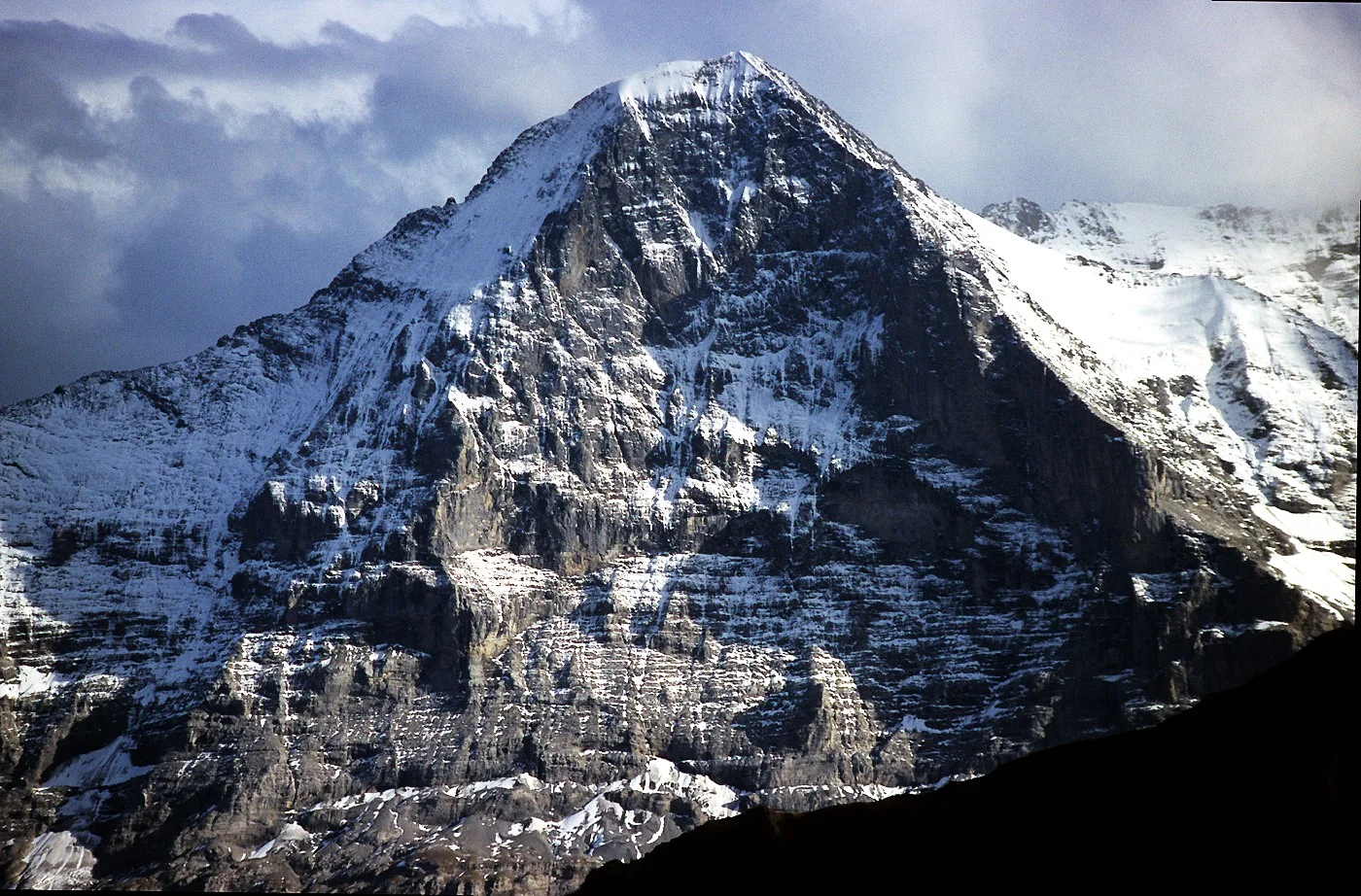
Eiger
The Eiger, standing at 3,967 meters (13,015 ft) in the Bernese Alps of Switzerland, is globally renowned for its monstrous 1,800-meter (5,900 ft) sheer vertical North Face (the *Eiger-Nordwand*). Feared as the *Mordwand* ('Murder Wall') following catastrophic climbing tragedies in the 1930s, it remained the last great problem of the Alps until conquered in July 1938 by Anderl Heckmair, Ludwig Vörg, Heinrich Harrer, and Fritz Kasparek.
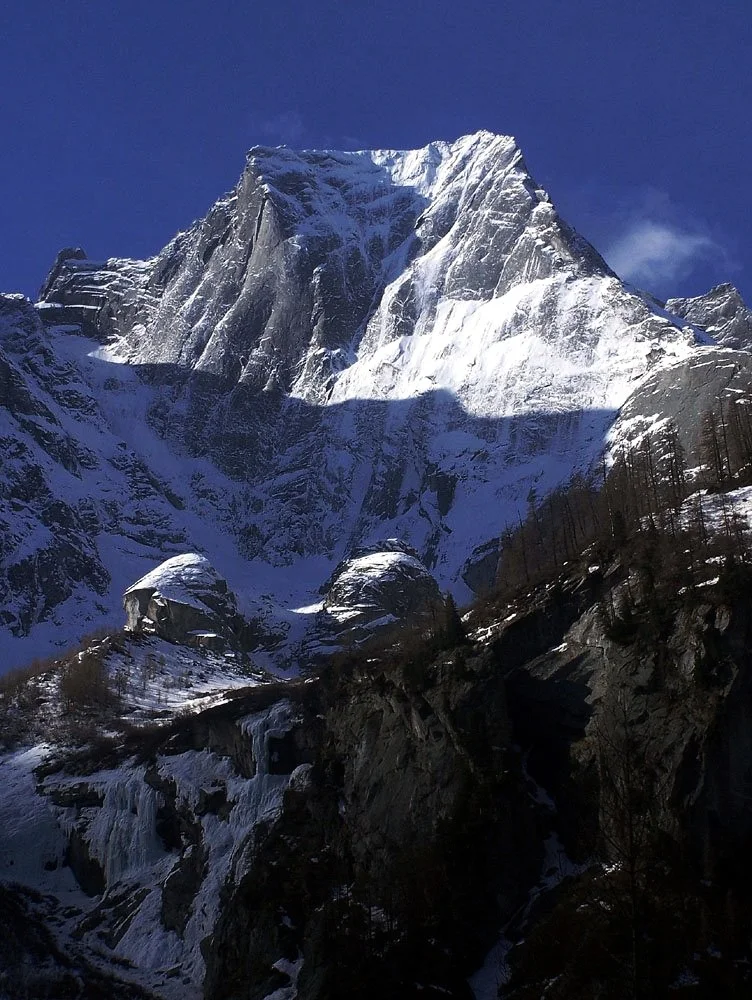
Piz Badile
Piz Badile is a celebrated 3,308-meter granite peak in the Bregaglia Alps on the border of Switzerland and Italy. Its name, derived from the Romansh word for shovel due to its distinctive shape from the north, is legendary for the colossal 800-meter smooth Northeast Face. This smooth sea of vertical granite slabs was first conquered in July 1937 by Italian master Riccardo Cassin with Vittorio Ratti and Gino Esposito, alongside Mario Molteni and Giuseppe Valsecchi, marking one of the Six Great North Faces of the Alps.
Pioneered & Associated Routes (8)
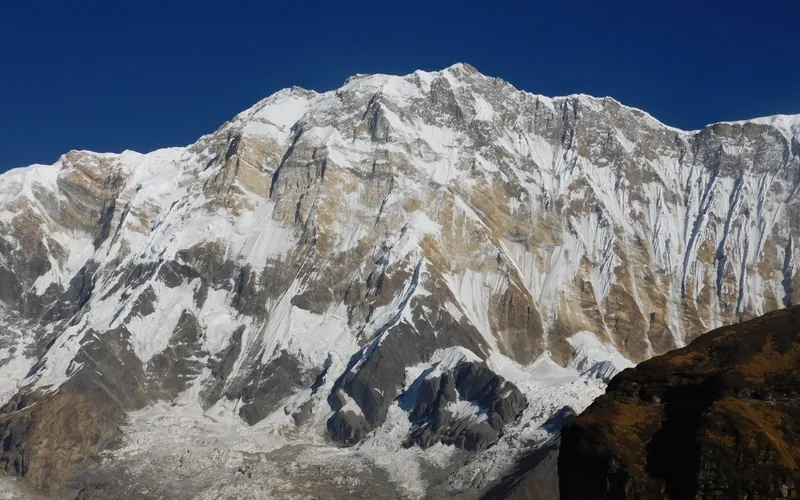
Annapurna I North Face (Herzog-Lachenal Route)
The North Face of Annapurna I is the historic first route ever climbed on an 8,000-meter peak, pioneered by French climbers Maurice Herzog and Louis Lachenal on June 3, 1950. Approached via the remote Miristi Khola valley, the route ascends the shattered North Annapurna Glacier, negotiates the terrifying avalanche-swept Sickle Glacier serac wall, and ascends steep snow gullies along the French Rib to gain the 8,091m summit.
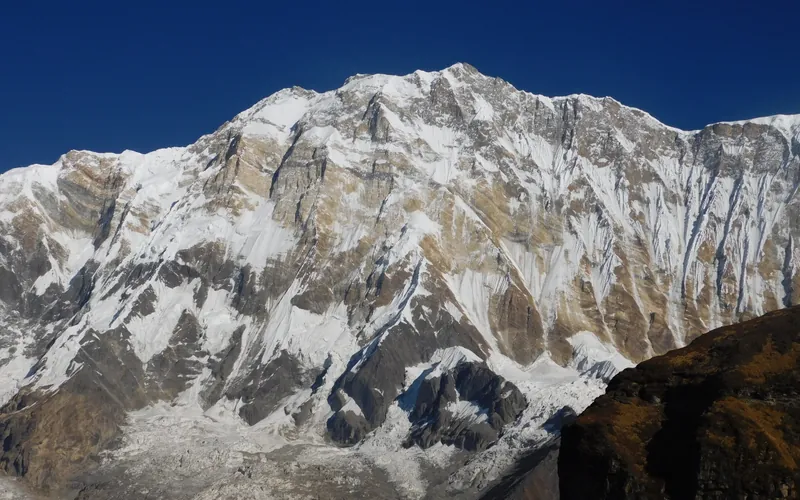
Annapurna I South Face (Bonington-Haston-Whillans Route)
The South Face of Annapurna I is one of the most formidable big-wall arenas in world mountaineering, rising 3,000 vertical metres of sheer rock, ice flutings, and overhanging bands directly from the Annapurna Sanctuary. First ascended via siege tactics by Dougal Haston and Don Whillans in 1970, it was later climbed in a revolutionary, lightweight solo push by Swiss alpinist Ueli Steck in October 2013 in just 28 hours round-trip.
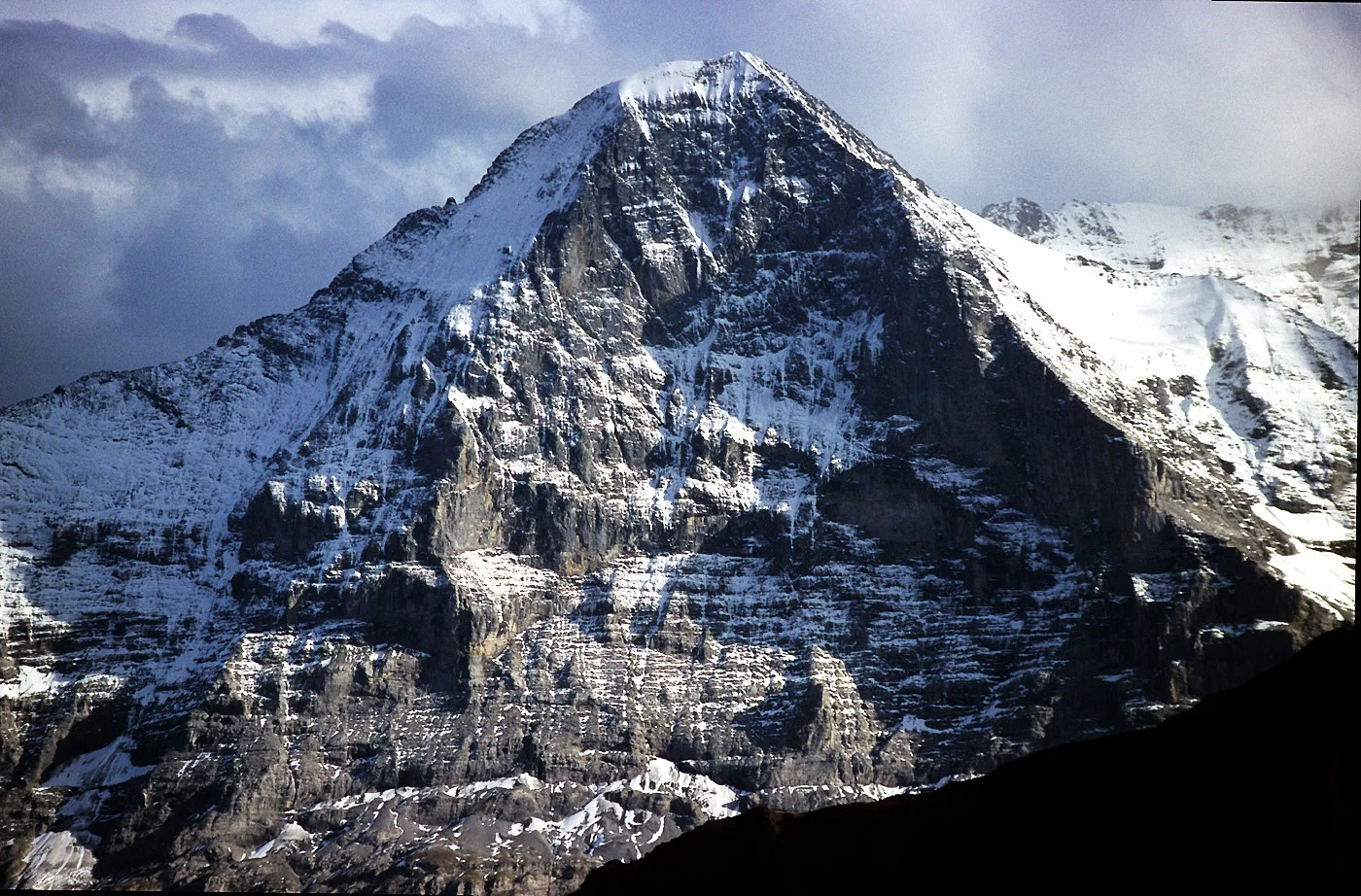
Eiger North Face (1938 Heckmair Route)
The legendary 1,800-meter original route up the Eiger North Face (3,967m), first climbed between July 21 and 24, 1938, by Anderl Heckmair, Ludwig Vörg, Heinrich Harrer, and Fritz Kasparek. Negotiating an intricate, terrifying labyrinth of down-sloping limestone ledges, friable verglas, and hanging icefields, the route traverses the notorious Hinterstoisser Traverse, Swallow's Nest, the First and Second Icefields, the Death Bivouac, the Ramp, the Traverse of the Gods, and the sinister snowfield known as the White Spider before conquering the Exit Cracks to reach the summit.
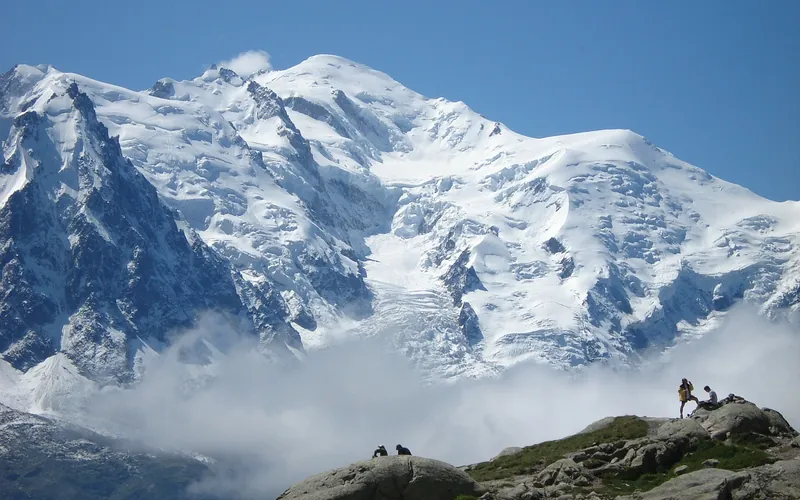
Goûter Route (Voie Royale / Normal Route)
The Goûter Route, often called the Voie Royale, is the most frequented and classic line to the summit of Mont Blanc (4,808 m). Starting from the Tramway du Mont-Blanc terminus at Nid d'Aigle (2,372 m), climbers ascend past the Tête Rousse Glacier, traverse the notorious Grand Couloir, scramble up the steep Aiguille du Goûter to the Goûter Refuge (3,835 m), and complete the dawn push across the Dôme du Goûter and the exposed knife-edge Arête des Bosses to the summit dome.
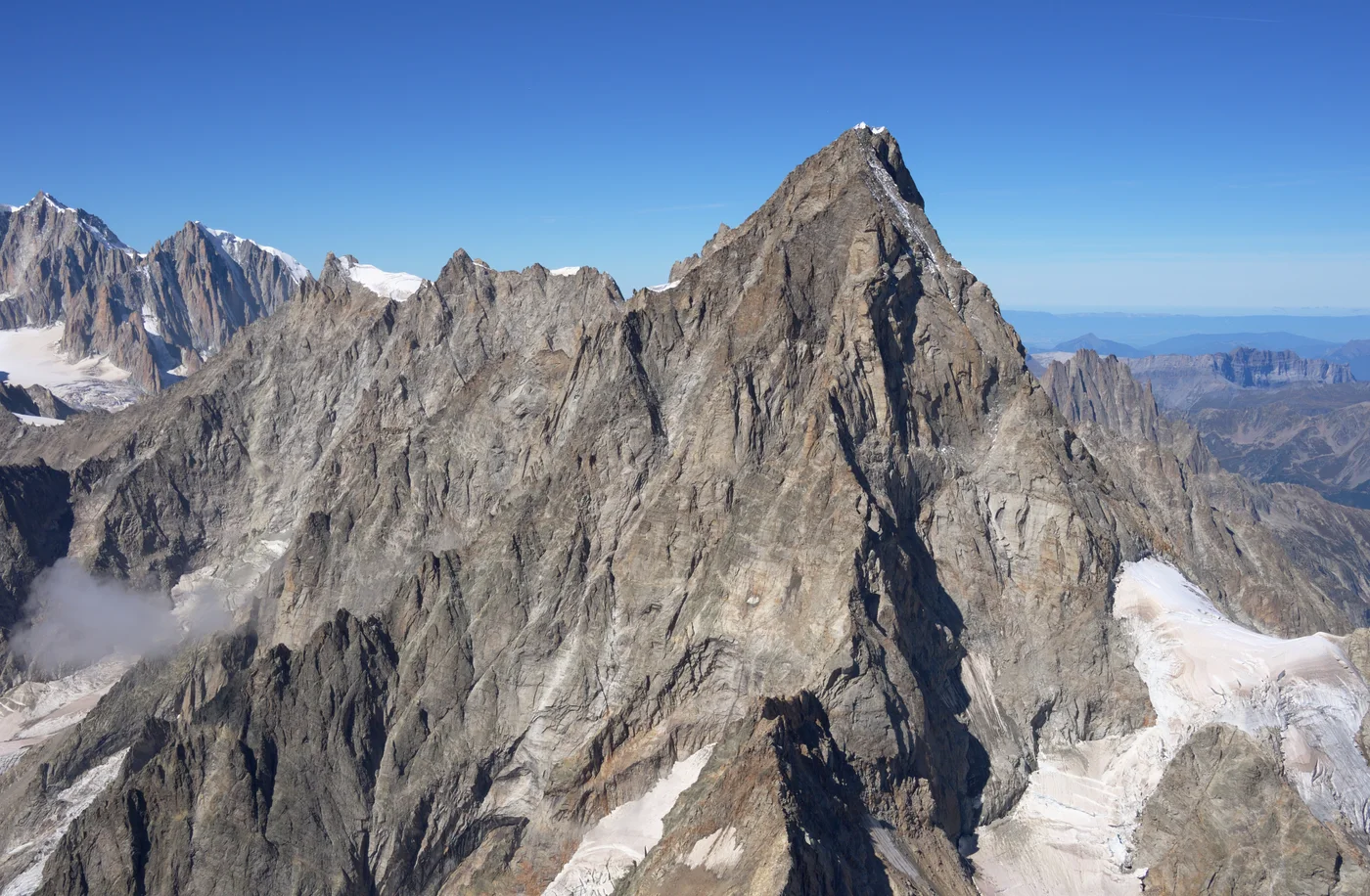
Walker Spur (North Face)
The Walker Spur on the North Face of the Grandes Jorasses is one of the supreme classic alpine mixed routes in the world. Ascending 1,200 metres directly to Pointe Walker (4,208m), it features sustained technical climbing across granite slabs, icy dihedrals, and exposed arêtes graded ED1, with difficulties up to UIAA VI / 5.10a. Conquered in August 1938 by Riccardo Cassin, Gino Esposito, and Ugo Tizzoni, it achieved modern acclaim when Tom Ballard made an astonishing solo winter ascent in March 2015.
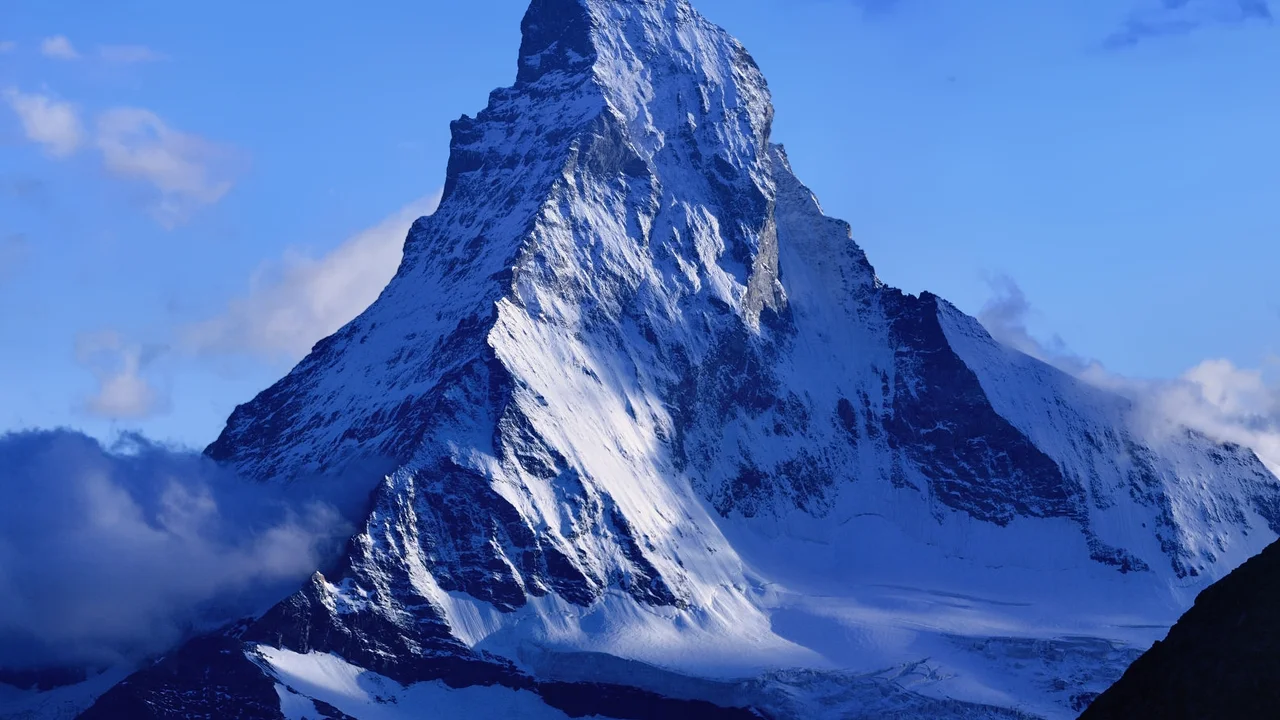
Hörnli Ridge (Normal Route)
The Hörnli Ridge (Hörnligrat) is the northeast ridge of the Matterhorn and the standard normal route from Zermatt. Starting from the Hörnli Hut (3,260m), the route follows the sharp, crumbling crystalline schist ridge, traversing steep rock steps, the Solvay emergency refuge (4,003m), and the steep upper Moseley Slabs. Fixed ropes assist climbers over the steep summit headwall (the Shoulder) before reaching the knife-edge Swiss summit crest at 4,478 meters. First climbed on July 14, 1865, by Edward Whymper's party.
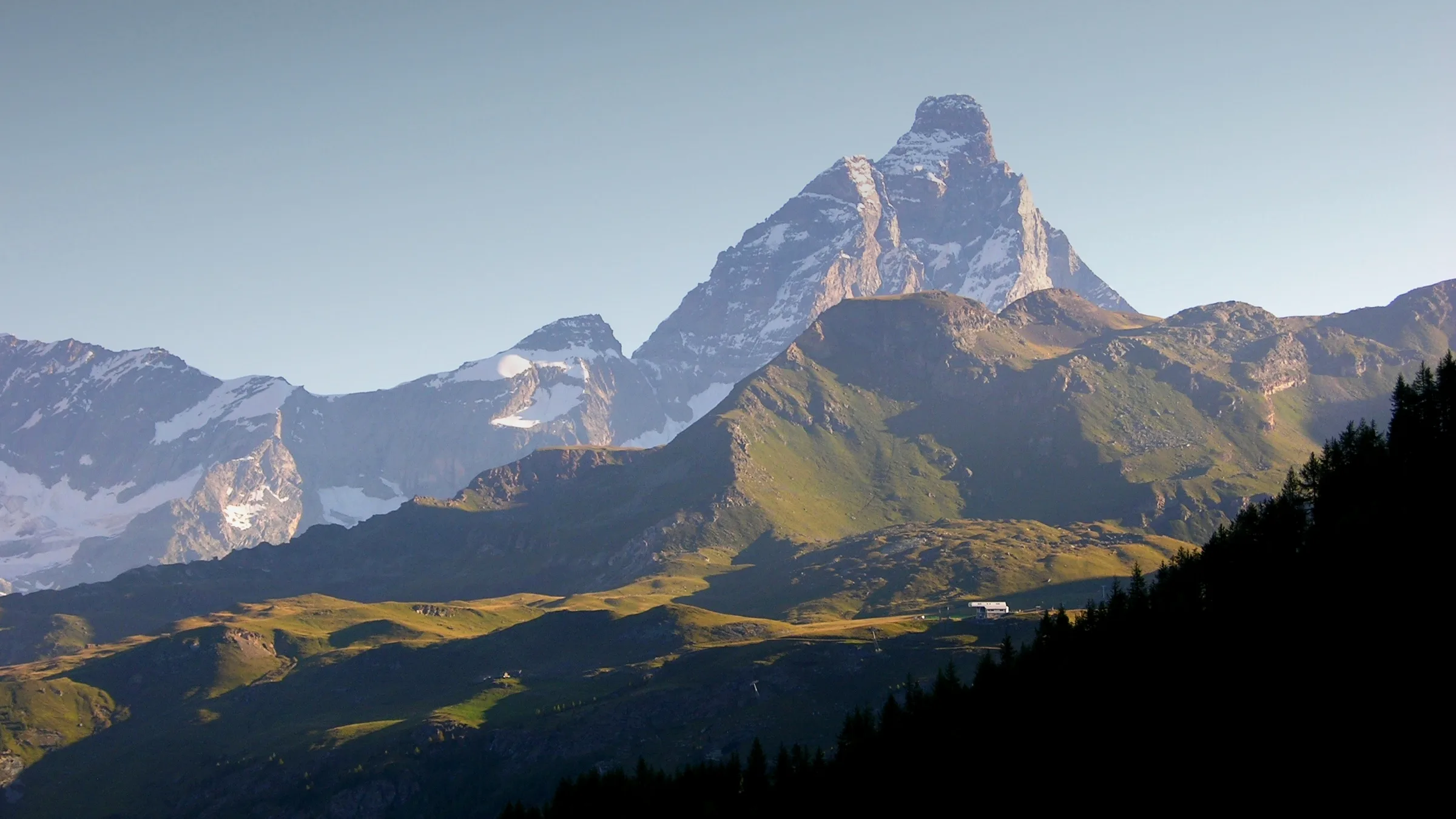
Matterhorn Lion Ridge (Cresta del Leone)
The Matterhorn Lion Ridge (Cresta del Leone / Italian Normal Route) is the historic Italian line to the Matterhorn summit, ascending from the Rifugio Theodul and Breuil-Cervinia on the Italian south-west face via the Col du Lion, the Tête du Lion, and the Great Tower. Pioneered by Jean-Antoine Carrel on July 17, 1865 — three days after Whymper's Hörnli ascent — the Lion Ridge remains the longer, more exposed, and more technically demanding of the two standard Matterhorn routes, graded AD+/D with sustained UIAA IV passages and dramatic 3,000-metre drops into the Valtournenche.
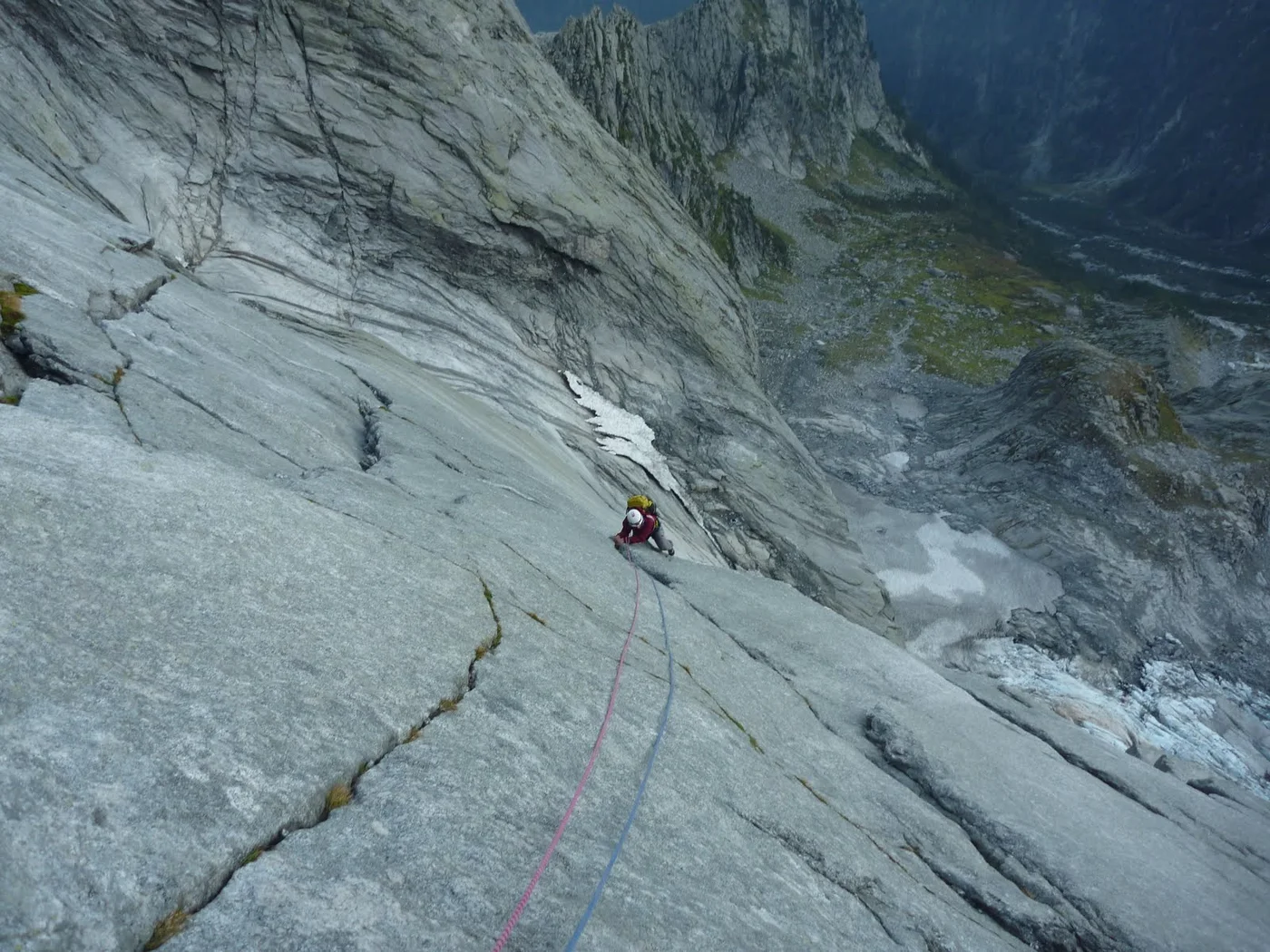
Northeast Face (Cassin Route)
The Northeast Face of Piz Badile, universally known as the Cassin Route, is one of the Six Great North Faces of the Alps. First climbed in July 1937 by Italian master Riccardo Cassin, Vittorio Ratti, and Gino Esposito, who joined forces on the face with Mario Molteni and Giuseppe Valsecchi, the route ascends an unbroken 800-meter vertical shield of pristine granite slabs and dihedrals.
Documented Expeditions (1)
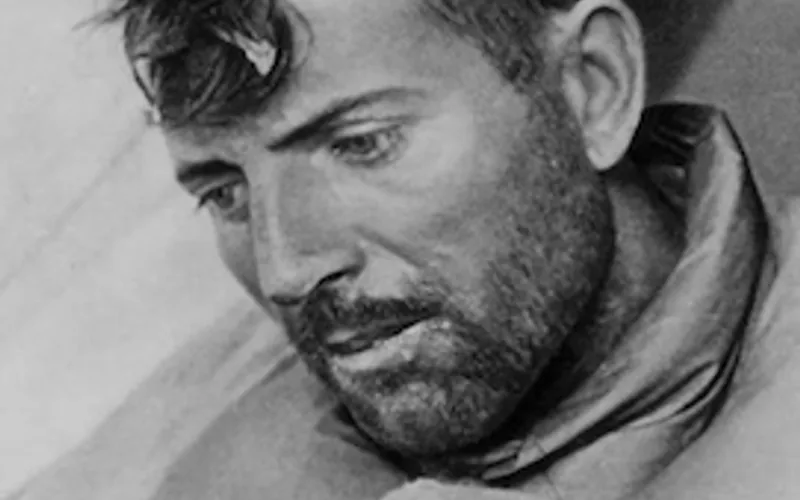
1950 French Annapurna Expedition
Led by Maurice Herzog, the 1950 French expedition made history by achieving the first summit of an 8,000-meter peak when Herzog and Louis Lachenal reached the top of Annapurna I (8,091m) on June 3, 1950, without supplemental oxygen.
Documented Sources & Archival Citations
- Starlight and Storm: The Ascent of Six Great North Faces of the Alps(Gaston Rébuffat / J. M. Dent & Sons)
Supporting claim: Rébuffat's definitive autobiographical accounts of climbing the Six Great North Faces
Accessed/Documented: 1954 - Annapurna: First Conquest of an 8,000-Meter Peak(Maurice Herzog / Jonathan Cape)
Supporting claim: Official expedition record documenting Rébuffat's heroism on the 1950 Annapurna climb
Accessed/Documented: 1951