1966 Nicholas Clinch American Antarctic Expedition Historic First Ascent of Mount Vinson
On December 18, 1966, an elite four-man summit party—Nicholas Clinch, Barry Corbet, John Evans, and Peter Anderson—achieved the maiden first ascent of Mount Vinson (4,892 m), the highest point in Antarctica. Supported by the American Alpine Club, National Geographic, and the US Navy, the expedition placed all ten team members atop Vinson over consecutive days before conquering Mount Tyree and Mount Shinn in complete polar safety.
Mountain Safety & Conditions Disclaimer: High-altitude climbing, glacial travel, and technical ascents entail severe objective risks including avalanches, serac collapses, rapid weather collapse, and altitude illness. Historical route descriptions and summit claims on Mountanity reflect documented archival sources and must not be used as live operational safety assessments. Local regulations, permits, and physical glacial topography change continuously.
Peer Review: Senior Editorial Board & Historical Reviewers • Editorial Standards
Official Expedition Narrative & Archival Record
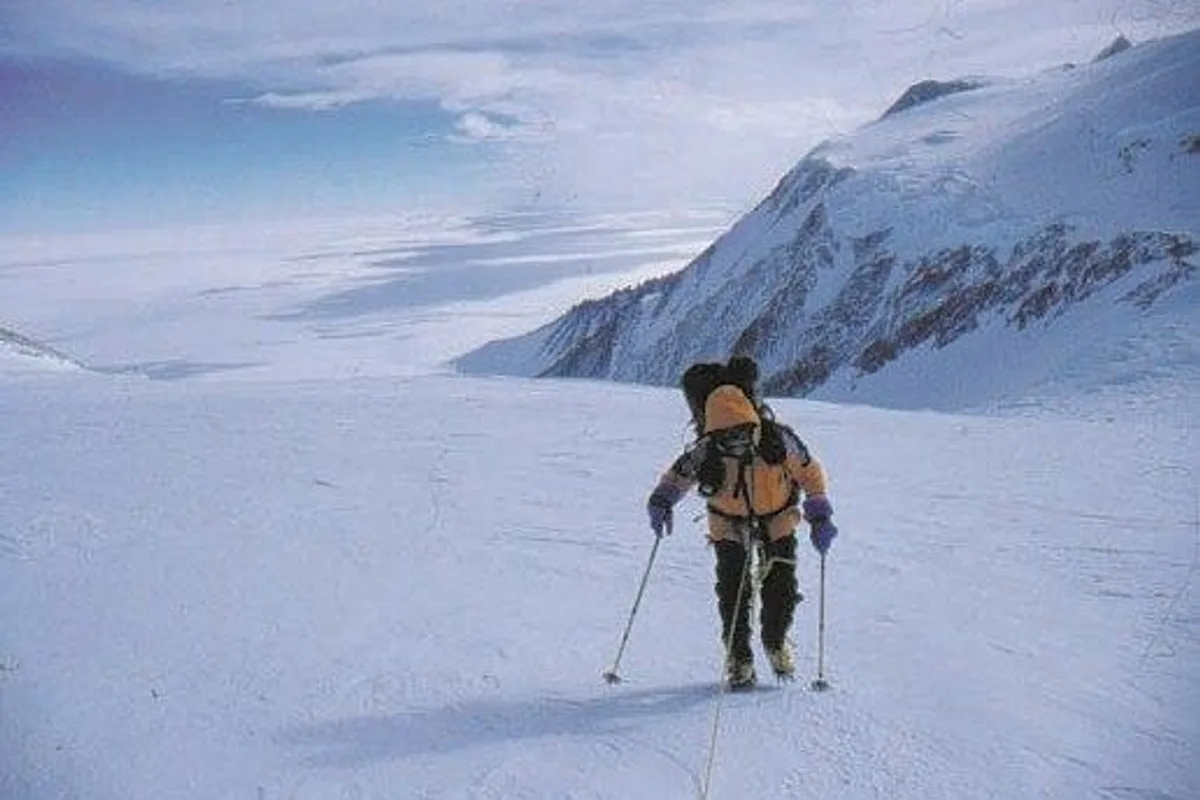
Mount Vinson, discovered by aerial reconnaissance in 1958 in the remote Sentinel Range, was the last continental apex on Earth to be climbed. In late 1966, American mountaineering diplomat Nicholas Clinch organized the American Antarctic Mountaineering Expedition, securing unprecedented air transport from the US Navy's Antarctic VX-6 squadron in ski-equipped C-130 Hercules aircraft. Landing on the frozen expanse of the Nimitz Glacier at -30°C, the ten-man expedition ferried supplies up the Branscomb Glacier to establish Camp 1 at 2,780 metres and Camp 2 on the high saddle at 3,770 metres. Navigating crevasse labyrinths under perpetual 24-hour polar daylight, the climbers faced biting katabatic winds rushing off the polar ice cap. On December 18, 1966, Clinch, Barry Corbet, John Evans, and glaciologist Peter Anderson made the decisive push across the Vinson Plateau and ascended the final snow arête to the 4,892-metre summit. On the apex of Antarctica, they raised the flags of the twelve signatory nations of the Antarctic Treaty. Over the following days, the remaining six members of the expedition reached the summit, achieving a flawless 100% summit success rate on Antarctica's supreme peak.
Documented Team Composition
- Nicholas Clinch (Expedition Leader, USA)
- Barry Corbet (Climber, USA)
- John Evans (Climber, USA)
- J. Peter Anderson (Glaciologist & Climber, USA)
- William Long (Geologist & Climber, USA)
- Brian Marts (Climber, USA)
- Richard Wahlstrom (Climber, USA)
- Samuel Silverstein (Medical Officer, USA)
- Eiichi Fukushima (Climber, USA)
- Charles Hollister (Climber, USA)
Key Statistics & Topographic Figures
- Official Elevation
- 4,892 metres (16,050 ft)
- Summit Date
- December 18, 1966
- Expedition Leader
- Nicholas Clinch
- Team Success Rate
- 100 percent (all 10 members summited)
- Route Type
- Branscomb Glacier & Headwall
Archival Primary Source Quotations
“Vinson was the final frontier. There were no maps, no established routes, and no hope of rescue. It was just ten men, our ropes, and the coldest continent on Earth.”
Defined Alpine Terminology & Concepts
- Katabatic Wind
- A high-velocity drainage wind carrying high-density cold air rushing down elevated polar ice sheets toward lower elevations.
- Sentinel Range
- A major glaciated mountain range forming the northern spine of the Ellsworth Mountains, containing Antarctica's highest peaks.
Frequently Asked Questions: 1966 Nicholas Clinch American Antarctic Expedition Historic First Ascent of Mount Vinson
Who led the first ascent of Mount Vinson in Antarctica?
American mountaineering leader Nicholas Clinch organized and led the American Antarctic Mountaineering Expedition that completed the maiden first ascent on December 18, 1966.
Who was on the summit rope for Mount Vinson's first ascent?
Nicholas Clinch, Barry Corbet, John Evans, and glaciologist Peter Anderson reached the summit together on December 18, 1966.
How high is Mount Vinson and where is it located?
Mount Vinson rises to 4,892 metres in the Sentinel Range of the Ellsworth Mountains, approximately 1,200 kilometres from the South Pole.
Ascent Route & Topography
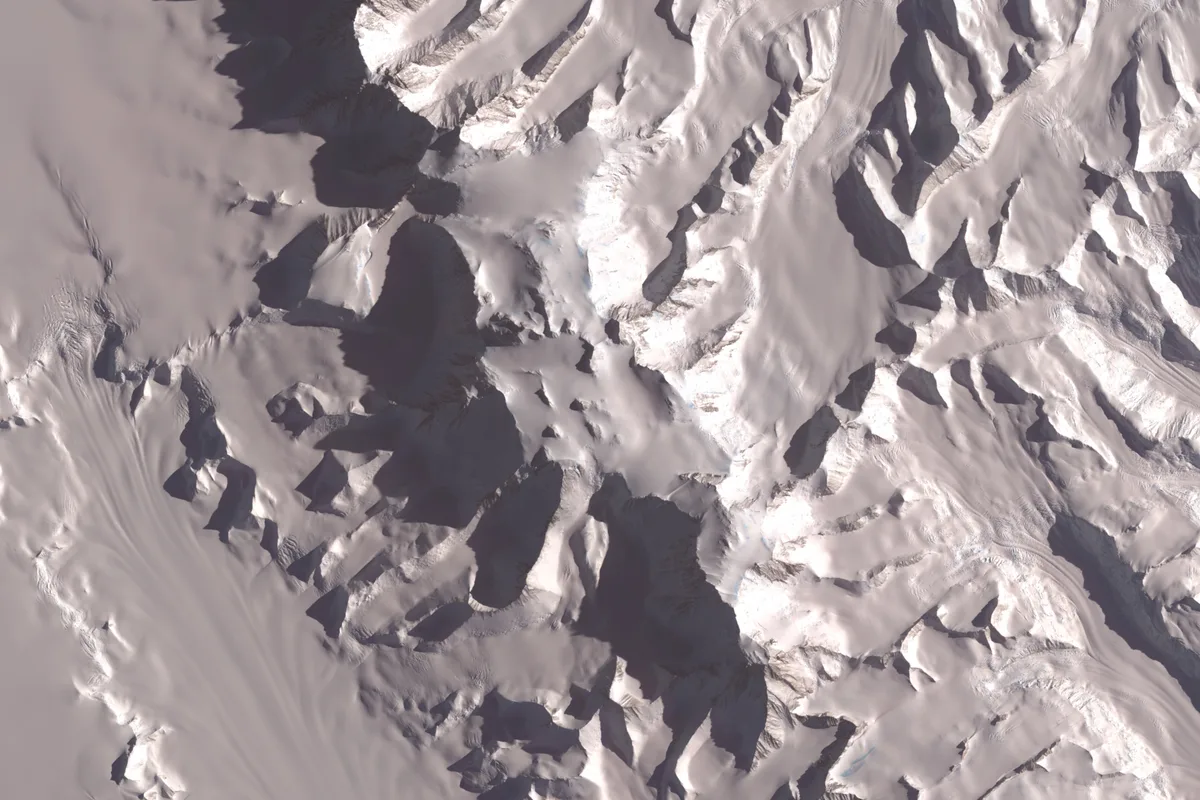
Normal Route of Mount Vinson (Branscomb Glacier Route)
The Normal Route on Mount Vinson ascends the gentle yet crevasse-riven Branscomb Glacier to gain the high saddle between Mount Shinn and Mount Vinson, continuing across the Vinson Plateau to the corniced rocky summit horn. First climbed in December 1966 by the American Antarctic Mountaineering Expedition led by Nicholas Clinch, it is the standard route for Seven Summits mountaineers. While technical climbing difficulty is moderate (Grade II alpine snow and 35° to 45° headwall ice), the objective is made profoundly serious by extreme polar cold (-40°C), ferocious katabatic gales, total geographic isolation, and the necessity of complete self-sufficiency.
Target Objective Peak
Mount Vinson / Vinson Massif
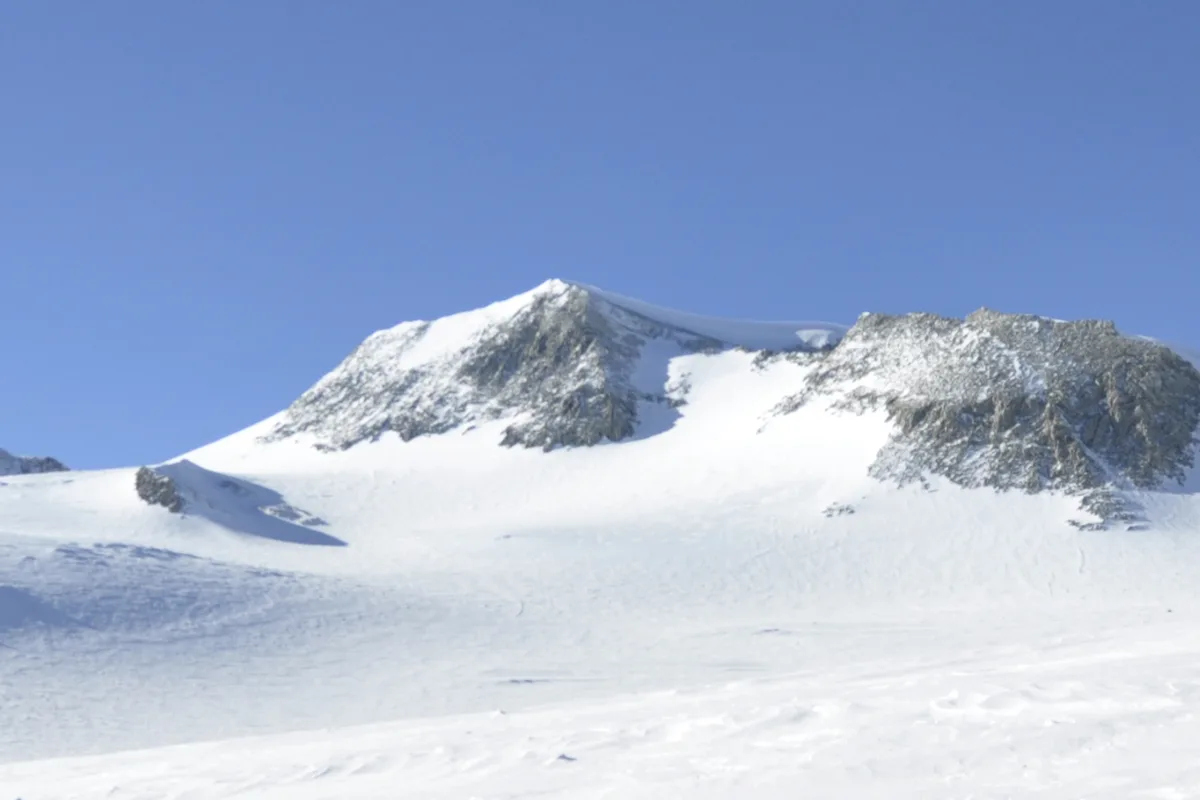
Mount Vinson is the highest peak in Antarctica at 4,892 metres (16,050 ft), situated in the Sentinel Range of the Ellsworth Mountains approximately 1,200 kilometres from the South Pole. As the summit of Antarctica, it forms one of the celebrated Seven Summits. First sighted by a US Navy aircraft in January 1958 and named after Georgia congressman Carl Vinson, the peak was conquered on December 18, 1966, by a team led by Nicholas Clinch and Barry Corbet during the historic American Antarctic Mountaineering Expedition. While technically moderate via the Branscomb Glacier, climbing Mount Vinson demands extreme endurance against temperatures plunging to -40°C and ferocious katabatic blizzards.
Featured Expedition Climbers
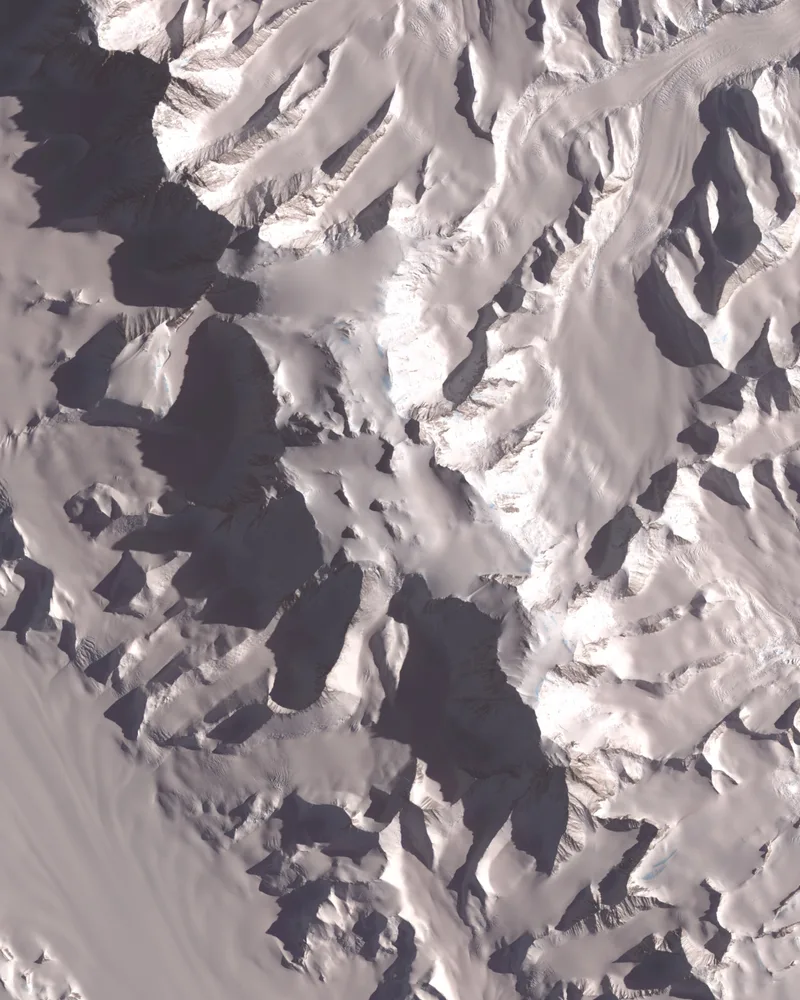
Barry Corbet
Barry Corbet was born on November 27, 1936, in Vancouver, British Columbia, and grew up in the Pacific Northwest before moving to Jackson Hole, Wyoming, where he became one of the star alpine guides for Exum Mountain Guides on the Grand Teton. Renowned for his extraordinary strength, humor, and technical rock and ice mastery, Corbet spotted a terrifying, near-vertical ski slot off the top of Rendezvous Mountain in 1960, remarking that someday someone would ski it—a run now internationally famous as *Corbet's Couloir*. In 1963, Corbet served as a key lead climber on the legendary American Mount Everest Expedition. On the unclimbed West Ridge, Corbet carried heavy loads and forged the technical route through the rock cruxes up to 8,300 metres, enabling Tom Hornbein and Willi Unsoeld to complete the historic first traverse of Everest. In late 1966, Corbet joined Nicholas Clinch's American Antarctic Mountaineering Expedition. On December 18, 1966, Corbet was on the four-man lead rope that reached the summit of Mount Vinson (4,892 m). Seeking a far greater technical challenge, Corbet teamed up with John Evans on January 6, 1967, to attempt the terrifying, unclimbed 2,000-metre Northwest Face of Mount Tyree (4,852 m). Climbing for 22 continuous hours in temperatures of -35°C, Corbet and Evans conquered the vertical rock pitches and blue ice gullies to stand upon Antarctica's most difficult summit. In 1968, Corbet survived a devastating helicopter crash in the Colorado Rockies that left him paralyzed from the waist down. Refusing to surrender his adventuring spirit, Corbet became a pioneering filmmaker, wheelchair athlete, and editor of *New Mobility* magazine, advocating passionately for disability rights. He passed away on December 18, 2004—exactly thirty-eight years to the day after summiting Mount Vinson.
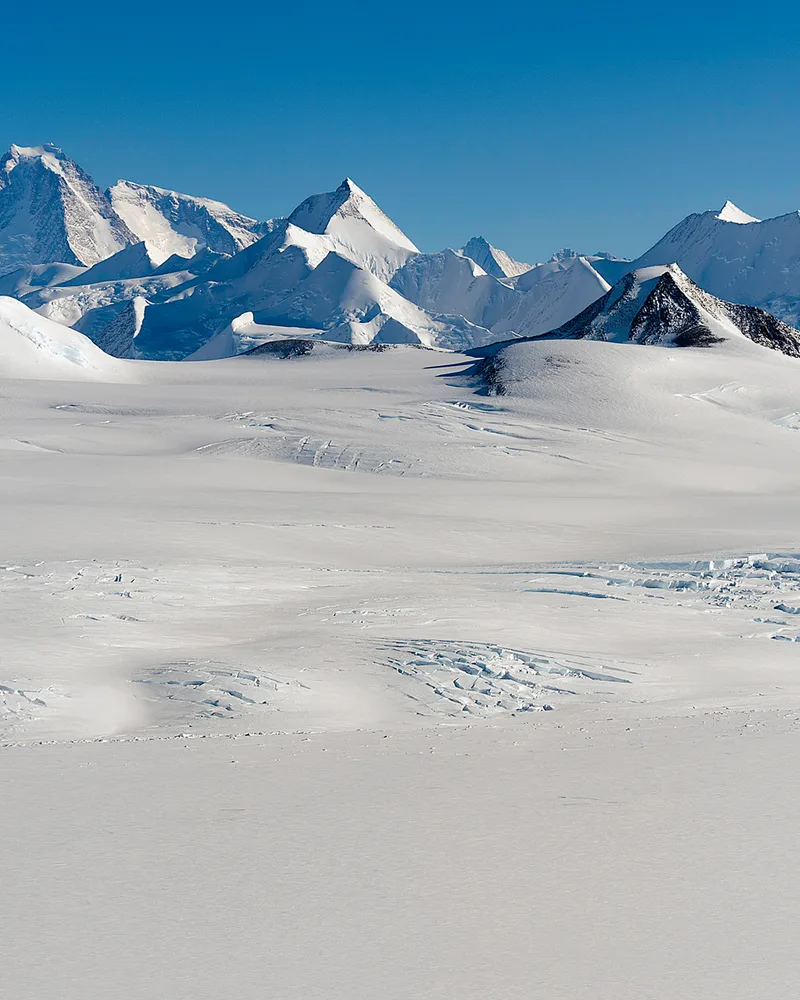
John Evans
John P. Evans was born in 1939 in Minnesota and developed into one of the most accomplished all-around technical climbers in North America during the 1960s. A standout member of the Dartmouth Mountaineering Club, Evans mastered extreme granite climbing in the Bugaboos and Canadian Rockies before joining the 1966–1967 American Antarctic Mountaineering Expedition organized by Nicholas Clinch. On December 18, 1966, Evans roped up with Clinch, Barry Corbet, and Peter Anderson to make the maiden first ascent of Mount Vinson (4,892 m), the continental roof of Antarctica. Not content with climbing the glaciated ramps of Vinson, Evans and Corbet fixed their sights on the terrifying, dark granite obelisk of Mount Tyree (4,852 m). On January 6, 1967, starting from an advance camp on the Patton Glacier, Evans and Corbet tackled the 2,000-metre Northwest Face in alpine style. Evans led severe technical rock pitches (5.8) wearing heavy gloves and plastic boots on frozen, brittle granite, overcoming vertical chimneys choked with blue ice. After twenty-two continuous hours of non-stop climbing in -35°C polar cold, the pair safely reached the summit and descended without fixed ropes. In recognition of his legendary contributions, the US Advisory Committee on Antarctic Names named Evans Peak (3,950 m) in the Sentinel Range in his honour.
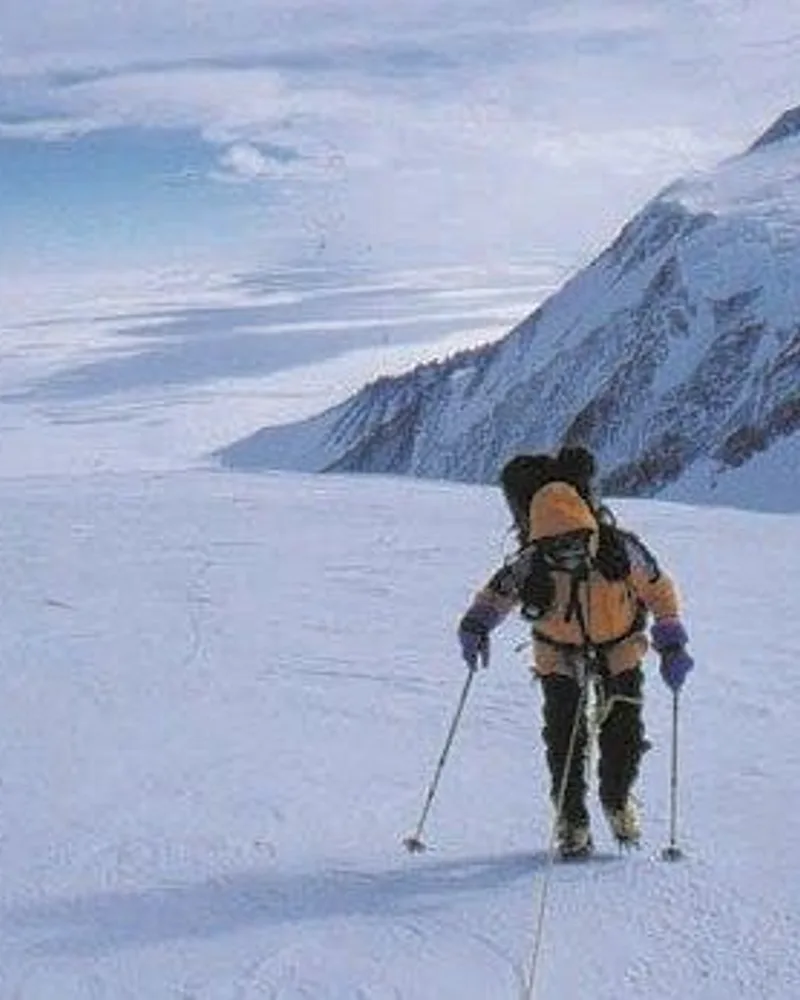
Nicholas Clinch
Nicholas Bayard Clinch III was born on November 9, 1930, in Evanston, Illinois. Raised in Dallas, Texas, Clinch attended the New Mexico Military Institute before graduating from Stanford University in 1951, where he earned a law degree and discovered high-angle rock climbing with the Stanford Alpine Club in Yosemite and the Sierra Nevada. Possessing a rare genius for expedition diplomacy, fundraising, and organizational logistics, Clinch resolved in the late 1950s to organize an all-American assault in the high Karakoram. In 1958, Clinch organized and led the historic American Karakoram Expedition that placed Pete Schoening and Andy Kauffman atop Gasherbrum I (Hidden Peak, 8,080 m) on July 5, 1958—the only maiden first ascent of an 8,000-metre peak ever achieved by an American team. In 1960, Clinch returned to Pakistan to lead the first ascent of Masherbrum (7,821 m). In late 1966, Clinch spearheaded his greatest logistical masterpiece: the joint American Alpine Club, National Geographic Society, and US Navy American Antarctic Mountaineering Expedition. Transported into the unexplored Sentinel Range of the Ellsworth Mountains via ski-equipped LC-130 Hercules aircraft, Clinch led a ten-man team in sub-zero polar temperatures. On December 18, 1966, Clinch, Barry Corbet, John Evans, and Peter Anderson summited Mount Vinson (4,892 m), claiming the summit of Antarctica. Over the ensuing weeks, his expedition conquered Mount Tyree (4,852 m), Mount Shinn (4,660 m), and Mount Gardner (4,587 m) without a single serious injury. Clinch served as President of the American Alpine Club (1968–1970) and executive director of the Sierra Club Foundation (1970–1981). In 2006, the US Advisory Committee on Antarctic Names designated Clinch Peak near Mount Vinson in his honour. He passed away on June 15, 2016, at age 85, revered as one of the towering statesmen of 20th-century world exploration.
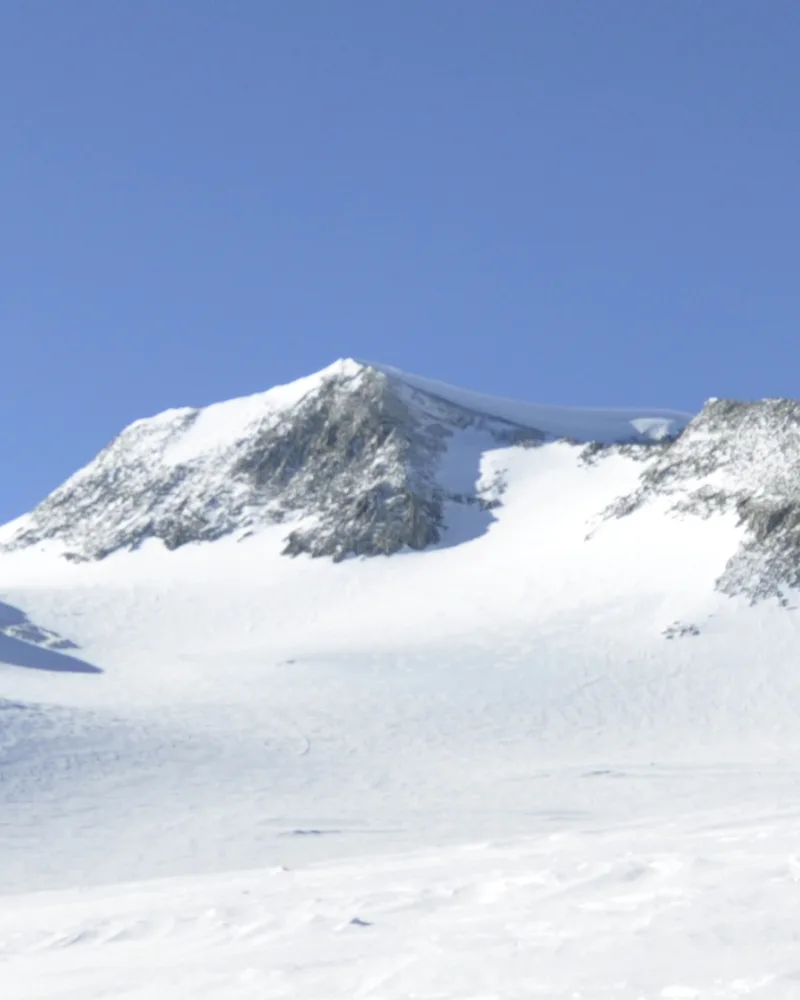
Peter Anderson
J. Peter Anderson was born in the United States and educated in geology and polar glaciology. Working with the Institute of Polar Studies at Ohio State University and the United States Antarctic Research Program (USARP), Anderson conducted extensive seismic and ice-coring research across Queen Maud Land and Marie Byrd Land in the early 1960s. Recognizing that an Antarctic mountaineering expedition required rigorous polar scientific capabilities to secure US Navy logistical flight support, expedition leader Nicholas Clinch invited Anderson to serve as chief scientist on the 1966–1967 American Antarctic Mountaineering Expedition. Anderson proved to be as robust an alpine climber as he was a meticulous scientist. On December 18, 1966, Anderson stood atop Mount Vinson (4,892 m) alongside Clinch, Corbet, and Evans, helping plant the flags of the twelve Antarctic Treaty nations on the continental summit. Over the following weeks, Anderson recorded barometric elevations, studied ice temperatures, and participated in the first ascent of Mount Shinn (4,660 m). In recognition of his polar scientific and exploratory achievements, the US Board on Geographic Names named Anderson Peak (4,254 m) in the Sentinel Range in his honour.
Associated Historical Chronicles & Stories
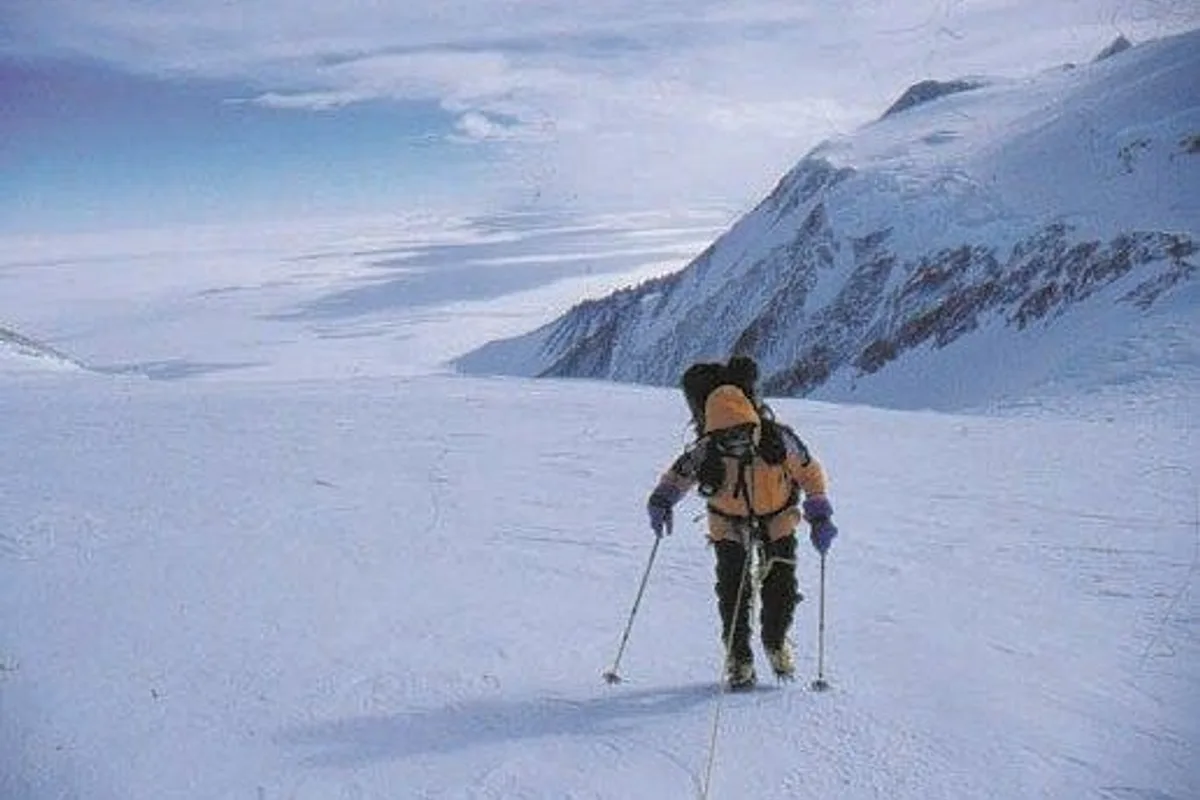
The Frozen Apex: The 1966 First Ascent of Mount Vinson
Nicholas Clinch and his ten-man American team conquer the continental roof of Antarctica in sub-zero polar storms.
Documented Sources & Archival Citations
- First Ascent of Mount Vinson, Antarctica(Nicholas Clinch / National Geographic)
Supporting claim: Firsthand official report of the 1966 maiden first ascent
Accessed/Documented: 1967 - American Antarctic Mountaineering Expedition(American Alpine Journal)
Supporting claim: Complete technical and cartographic expedition chronicle
Accessed/Documented: 1967