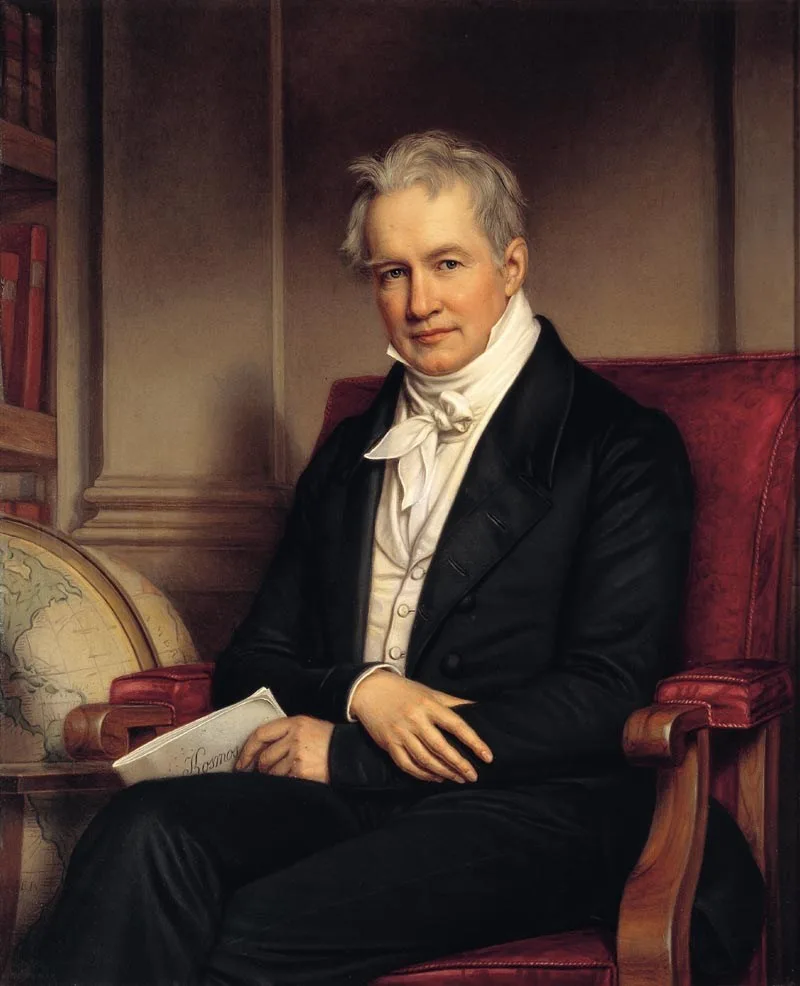
Alexander von Humboldt
Alexander von Humboldt was a visionary German polymath, naturalist, and explorer whose 1802 expedition up Chimborazo set a world altitude record of 5,878 metres that stood for decades. His ascent helped establish physical geography and ecological science. His holistic vision of nature reshaped scientific understanding of high mountain ecosystems.
Mountain Safety & Conditions Disclaimer: High-altitude climbing, glacial travel, and technical ascents entail severe objective risks including avalanches, serac collapses, rapid weather collapse, and altitude illness. Historical route descriptions and summit claims on Mountanity reflect documented archival sources and must not be used as live operational safety assessments. Local regulations, permits, and physical glacial topography change continuously.
Peer Review: Senior Editorial Board & Historical Reviewers • Editorial Standards
Biographical Record & Archival Chronicle
Born on September 14, 1769, in Berlin, Prussia, Alexander von Humboldt grew into one of the most celebrated scientific minds in world history. Between 1799 and 1804, Humboldt undertook a monumental scientific expedition across the Americas accompanied by French botanist Aimé Bonpland and Ecuadorian nobleman Carlos Montúfar. Arriving in the Viceroyalty of New Granada (modern Ecuador) in 1802, Humboldt became mesmerized by the majestic volcanic massifs of the northern Andes, which he termed the 'Avenue of the Volcanoes'.
On June 23, 1802, Humboldt, Bonpland, and Montúfar launched an audacious attempt to climb Chimborazo (6,263 m), which European geographers then believed to be the highest mountain on Earth. Equipped only with woollen coats, ordinary boots, and fragile mercury barometers, the party navigated sheer volcanic precipices, knife-edge rock ribs, and deep snowdrifts. Despite suffering from severe hypoxia, bleeding gums, freezing blizzards, and vertigo, they pressed on until halted by an impassable 400-foot chasm at an astonishing elevation of 5,878 metres (19,286 feet).
Although they did not stand on the ultimate summit, Humboldt's achievement stood as the highest recorded altitude attained by humans in recorded history for more than three decades. More importantly, Humboldt used his observations to formulate his revolutionary concept of 'Naturgemälde' (painting of nature), showing how plant life, temperature, and atmospheric pressure vary systematically with altitude. This insight founded modern physical geography, climatology, and biogeography. Humboldt returned to Europe as an international icon, inspiring figures from Charles Darwin to Simón Bolívar, and lived in Berlin until his death on May 6, 1859.
Notable Milestones & Ascents
- Reached 5,878 m (19,286 ft) on Chimborazo without mountaineering equipment on June 23, 1802
- Established the world altitude record in 1802 that stood unbeaten for over thirty years
- Formulated the foundational principles of physical geography and ecological zonation
- Conducted pioneering high-altitude physiological measurements on hypoxia and mountain sickness
- Authored the monumental five-volume scientific masterpiece 'Cosmos'
Key Statistics & Topographic Figures
- World Altitude Record
- 5,878 m (19,286 ft, 1802)
- Lifespan
- 1769–1859 (Berlin, Prussia)
- Masterpiece Publication
- Cosmos & Tableau Physique des Andes
- Key Disciplines
- Physical Geography, Biogeography, Climatology
Archival Primary Source Quotations
“Nature everywhere speaks to man in a voice that is familiar to his soul, especially from the serene heights of the great cordilleras.”
Defined Alpine Terminology & Concepts
- Naturgemälde
- Humboldt's philosophical and scientific concept of nature as a single, interconnected, living whole governed by universal physical laws.
Frequently Asked Questions: Alexander von Humboldt
What did Alexander von Humboldt achieve on Chimborazo?
On June 23, 1802, Humboldt reached 5,878 m on Chimborazo, setting a world altitude record that stood for thirty years and pioneering modern biogeography.
Who accompanied Humboldt on his Chimborazo ascent?
He was accompanied by French botanist Aimé Bonpland and Ecuadorian explorer Carlos Montúfar.
What scientific concept did Humboldt develop from his climb?
He developed the concept of altitudinal ecological zonation (Naturgemälde), demonstrating how altitude dictates vegetation and climate globally.
Associated Summits (1)
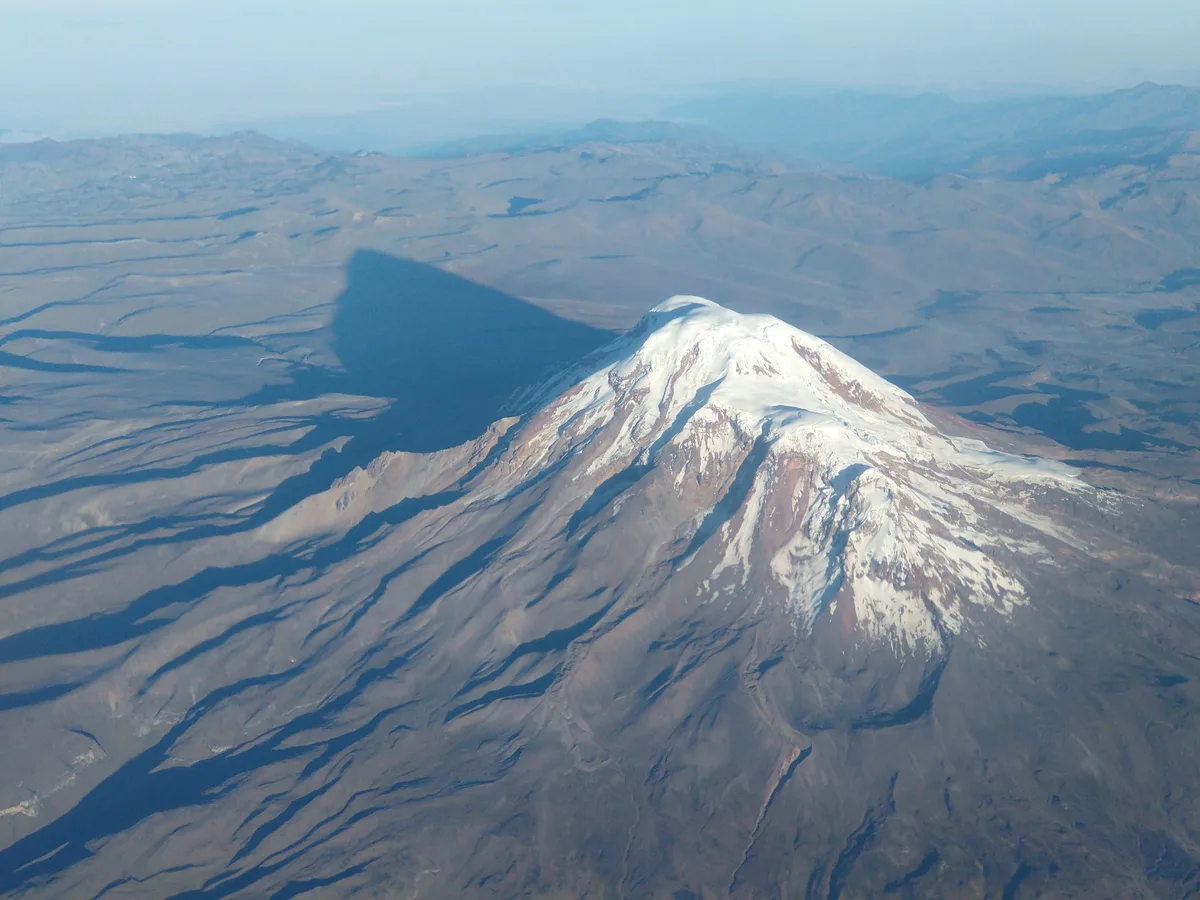
Chimborazo
Nevado Chimborazo is a colossal 6,263-metre glaciated stratovolcano in the Cordillera Occidental of Ecuador. Because Earth is an oblate spheroid with an equatorial bulge, Chimborazo's summit is the furthest terrestrial point from the center of the Earth (6,384.4 km), making it the closest place on the planet's surface to the Sun. Renowned in exploration history, it was attempted by Alexander von Humboldt in 1802 and finally summited on January 4, 1880, by Edward Whymper alongside Val Tournanche alpine guides Louis Carrel and Jean-Antoine Carrel.
Pioneered & Associated Routes (1)
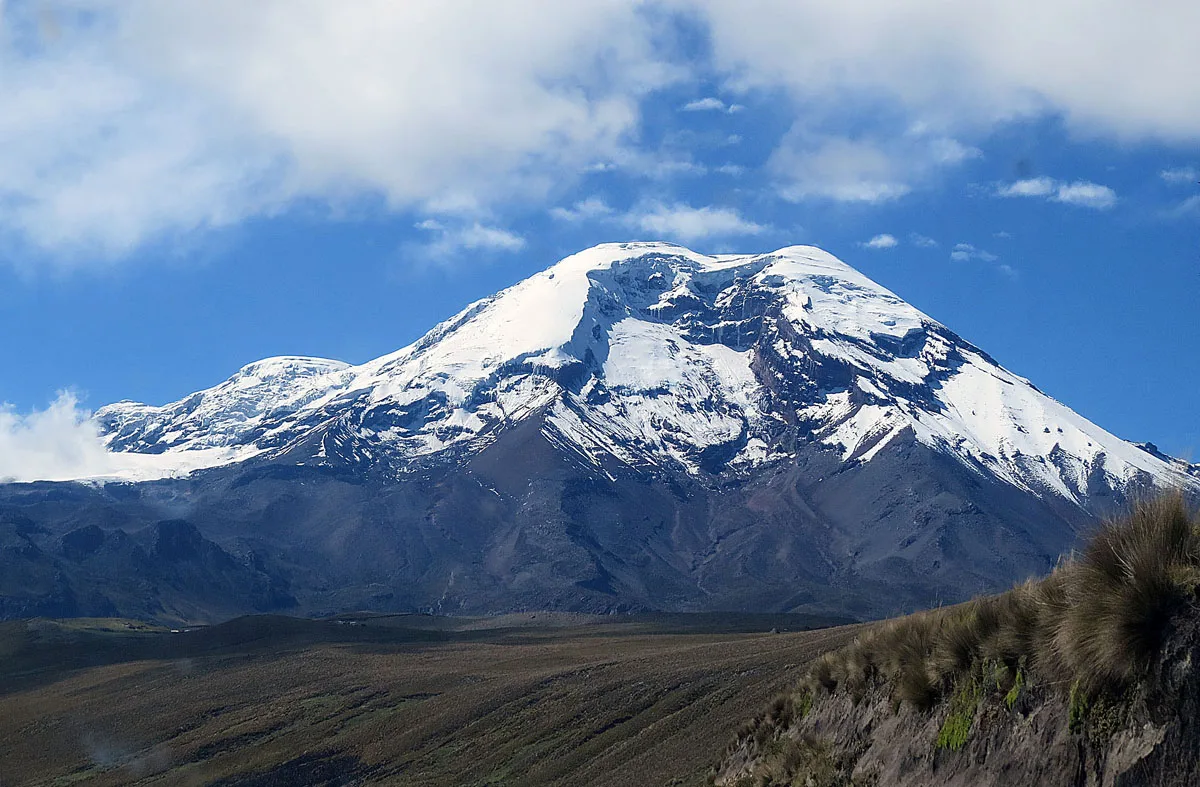
Chimborazo Normal Route (Whymper Route)
The Whymper Route follows the western ridges and glacier flanks of Chimborazo past the landmark rock buttress of El Castillo. Climbers ascend steep 40°-50° firn and penitentes before traversing expansive upper ice fields to reach Cumbre Veintimilla (6,230 m) and finally Cumbre Whymper at 6,263 metres.
Documented Expeditions (1)
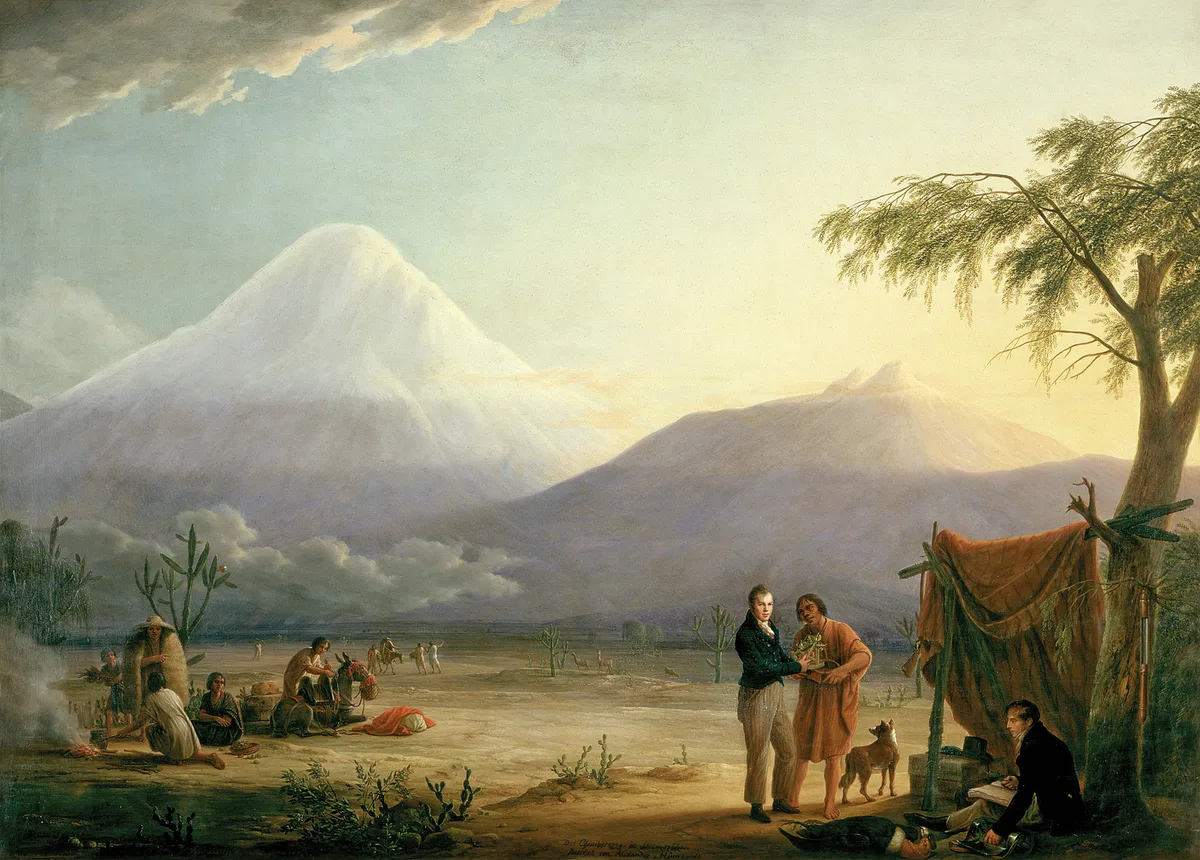
1802 Alexander von Humboldt Chimborazo World Altitude Record Expedition
On June 23, 1802, Prussian naturalist Alexander von Humboldt, French botanist Aimé Bonpland, and Ecuadorian nobleman Carlos Montúfar reached 5,878 metres on Chimborazo. Overcoming altitude sickness, freezing gales, and sheer rock precipices without modern alpine gear, they set a world altitude record that stood for thirty years.
Associated Chronicles & Stories (1)
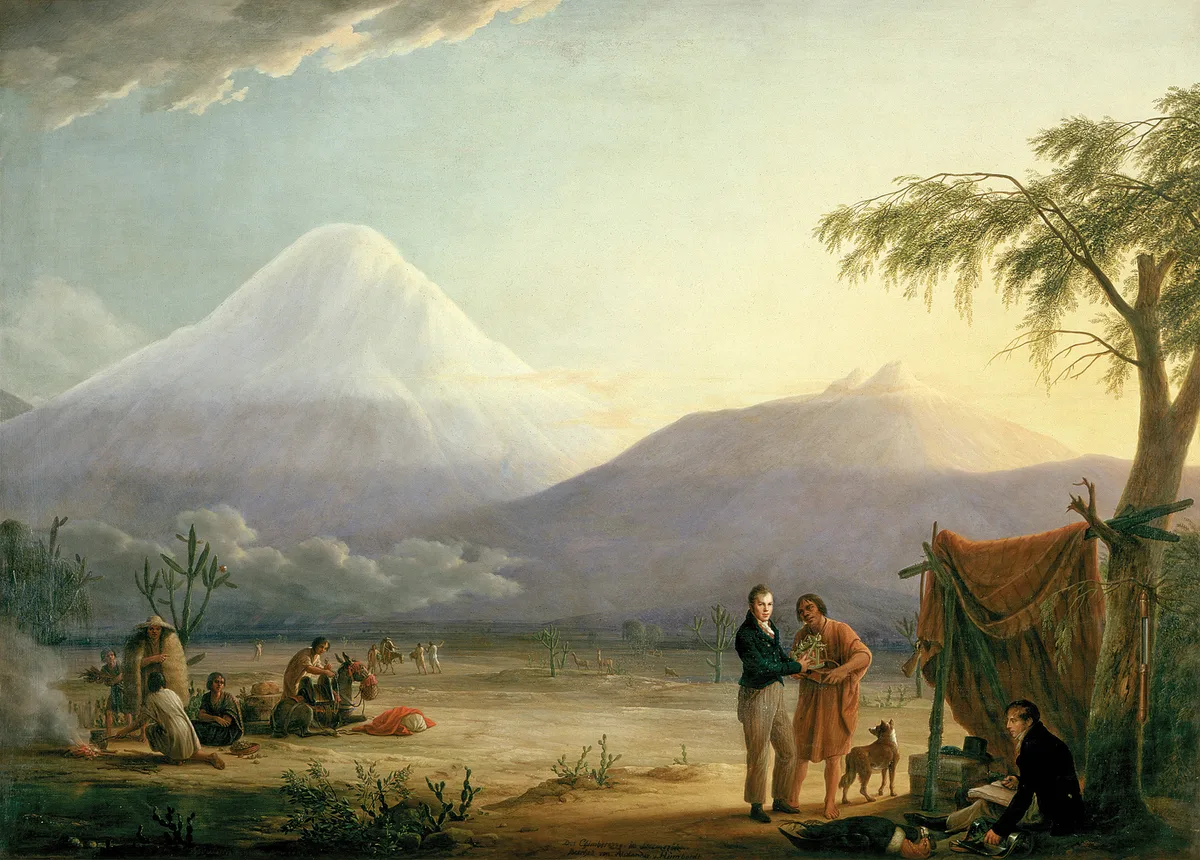
To the Edge of the Sky: Humboldt's 1802 Chimborazo Altitude Record
On June 23, 1802, Prussian polymath Alexander von Humboldt, botanist Aimé Bonpland, and Carlos Montúfar climbed to 5,878 metres on Chimborazo, setting a 30-year world altitude record and founding modern ecological science.
Documented Sources & Archival Citations
- Personal Narrative of Travels to the Equinoctial Regions of America(Alexander von Humboldt / Longman, Hurst, Rees, Orme & Brown)
Supporting claim: Firsthand autobiographical narrative of the 1802 exploration and ascent of Chimborazo
Accessed/Documented: 1814 - The Invention of Nature: Alexander von Humboldt's New World(Andrea Wulf / Alfred A. Knopf)
Supporting claim: Comprehensive modern biography examining Humboldt's mountaineering and scientific legacy
Accessed/Documented: 2015