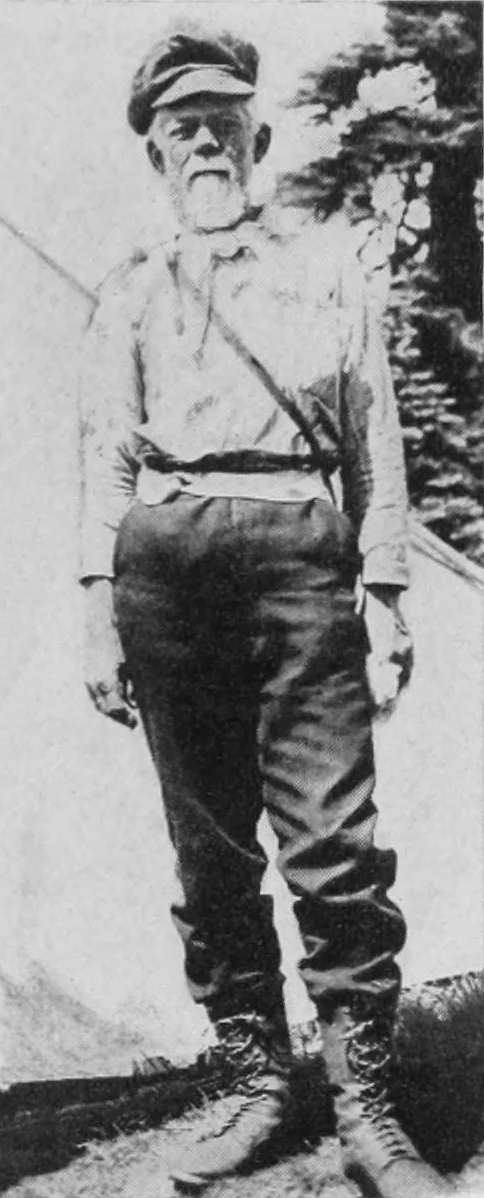
Hazard Stevens
Hazard Stevens was an American military general and frontier explorer who co-led the first documented ascent of Mount Rainier on August 17, 1870. Alongside Philemon Van Trump, he scaled the treacherous volcanic cliffs of Gibraltar Rock to reach the summit caldera. Trapped by nightfall, the pair survived a blizzard inside the mountain's geothermal steam vents.
Mountain Safety & Conditions Disclaimer: High-altitude climbing, glacial travel, and technical ascents entail severe objective risks including avalanches, serac collapses, rapid weather collapse, and altitude illness. Historical route descriptions and summit claims on Mountanity reflect documented archival sources and must not be used as live operational safety assessments. Local regulations, permits, and physical glacial topography change continuously.
Peer Review: Senior Editorial Board & Historical Reviewers • Editorial Standards
Biographical Record & Archival Chronicle
Born on June 9, 1842, in Newport, Rhode Island, Hazard Stevens was the son of Isaac Stevens, the first governor of the Washington Territory. Hazard Stevens attended Harvard University before joining the Union Army during the American Civil War, rising to the rank of brigadier general and receiving the Medal of Honor for gallantry at the Battle of Fort Huger. Moving westward to Olympia, Washington, in 1867, Stevens was entranced by the volcanic monolith of Mount Rainier, then called Tahoma or Takhoma by local indigenous tribes. In August 1870, Stevens joined forces with Philemon Beecher Van Trump and contracted Sluiskin, a skilled Yakama hunter, as guide to the snowline. Sluiskin warned them that an evil spirit dwelt on the summit and pleaded with them not to ascend. Departing their base camp on August 17, Stevens and Van Trump ascended the steep icy slopes of the Nisqually and Paradise glaciers, carefully traversing the sheer, crumbly rock band of Gibraltar Rock with alpenstocks and rope. Reaching the rim of the summit crater at five in the afternoon, Stevens named the southern volcanic point Point Success. Cut off from descent by freezing gale-force winds and nightfall, Stevens and Van Trump dug into the snow adjacent to boiling sulfurous steam vents inside the crater, surviving eleven hours in the subterranean caverns before descending safely. Stevens published a famous account of the ascent, The Ascent of Takhoma, in The Atlantic Monthly in 1876. He passed away in Goldendale, Washington, in October 1918.
Notable Milestones & Ascents
- Co-led the first documented ascent of Mount Rainier (4,392 m) on August 17, 1870, with Philemon Van Trump
- Pioneered the historic route up Gibraltar Rock and the upper volcanic slopes
- Discovered and named Point Success on the southern crest of Mount Rainier's crater rim
- Survived the first recorded summit bivouac on Mount Rainier inside volcanic steam caves during a freezing storm
- Received the United States Medal of Honor for bravery during the Civil War in 1863
- Authored The Ascent of Takhoma, introducing Pacific Northwest mountaineering to national audiences
Key Statistics & Topographic Figures
- Historic First Ascent
- August 17, 1870
- Peak Summited
- Mount Rainier (4,392 m / 14,411 ft)
- Military Honor
- United States Medal of Honor (1863)
- Summit Feature Named
- Point Success (4,315 m)
- Seminal Publication
- The Ascent of Takhoma (1876)
Archival Primary Source Quotations
“We were the first of human race to scale that mighty peak and look down from its summit upon the vast domain outspread around it.”
Defined Alpine Terminology & Concepts
- Alpenstock
- A long, stout wooden staff tipped with a sharp iron spike, used by nineteenth-century mountaineers for balance and probing ice.
- Caldera
- A large volcanic crater, formed by a major eruption leading to the collapse of the central volcanic cone.
Frequently Asked Questions: Hazard Stevens
Who was Hazard Stevens and what was his major mountaineering achievement?
Hazard Stevens was an American Civil War general, Medal of Honor hero, and explorer who co-led the first documented ascent of Mount Rainier on August 17, 1870.
Who accompanied Hazard Stevens on the 1870 first ascent of Mount Rainier?
He climbed with Philemon Beecher Van Trump, assisted to timberline by Yakama hunter and wilderness scout Sluiskin.
What route did Stevens and Van Trump pioneer on Mount Rainier in 1870?
They ascended the Nisqually Glacier and negotiated the narrow, rockfall-threatened ledge around Gibraltar Rock to reach the summit rim.
How did Stevens and Van Trump survive the freezing night on the summit in 1870?
Cut off by darkness and severe cold, they hollowed out shelter inside the geothermal steam vents beneath the summit ice pack, surviving an 11-hour bivouac.
What point on Mount Rainier's crater rim was named by Hazard Stevens?
Stevens named Point Success, the southern high crest of the volcanic crater rim at 4,315 metres.
What did Hazard Stevens do during the American Civil War?
Stevens served as a Union Army officer, was wounded multiple times, rose to brigadier general, and was awarded the Medal of Honor for heroism at Fort Huger.
What famous article did Hazard Stevens write about Mount Rainier?
He authored The Ascent of Takhoma, published in The Atlantic Monthly in November 1876, the first published first-hand chronicle of the mountain.
Where is Hazard Stevens buried and remembered today?
He is commemorated throughout Mount Rainier National Park, with Stevens Canyon, Stevens Creek, and Stevens Ridge named in his honor.
Associated Summits (1)
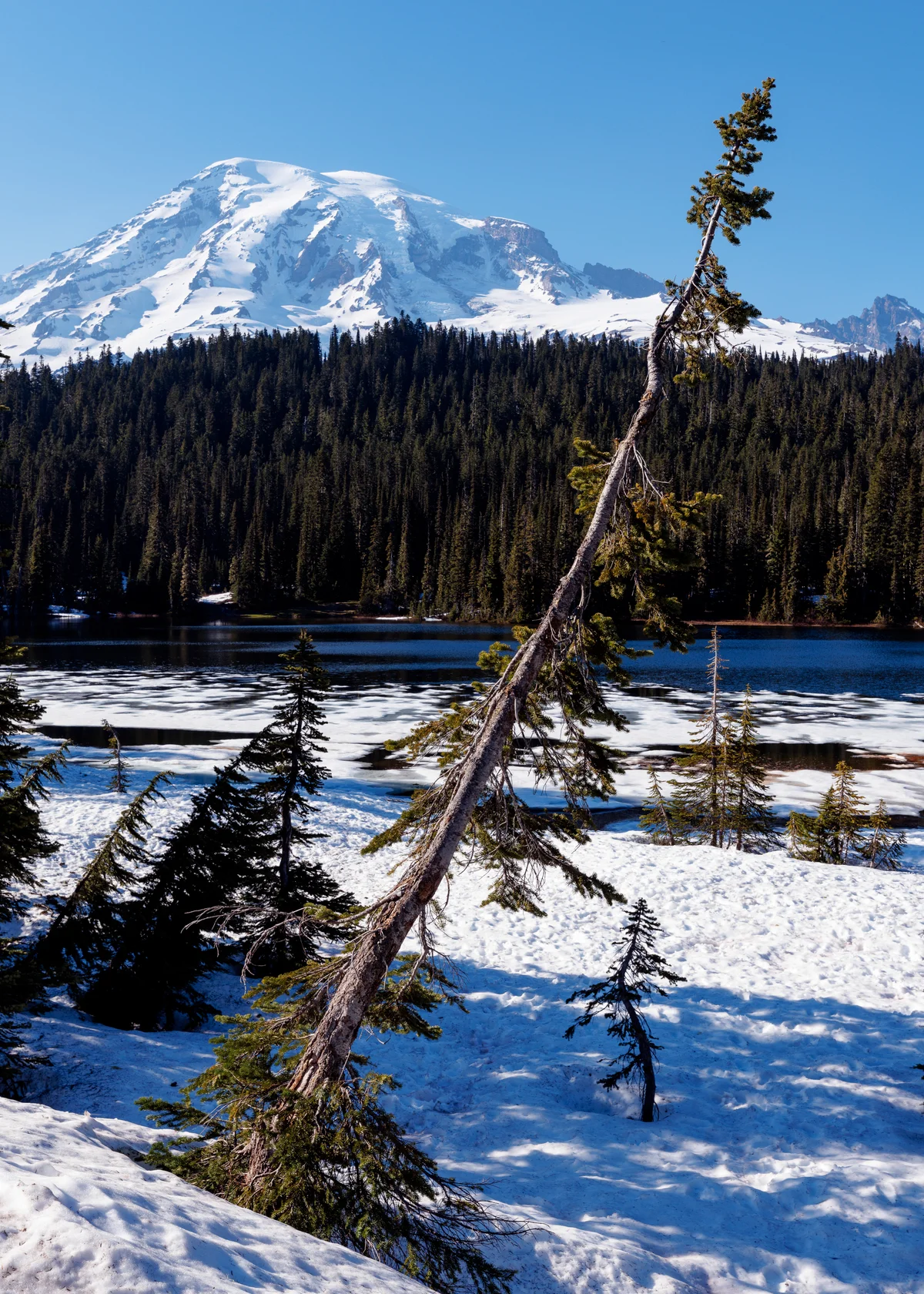

Mount Rainier
Mount Rainier is an episodic active stratovolcano in the Cascade Range of Washington, rising to an elevation of 4,392 metres as the highest peak in Washington and the Cascade Volcanic Arc. Enveloped by twenty-five major named glaciers spanning over thirty-five square miles of perpetual snow and ice, it is the most heavily glaciated peak in the contiguous United States, serving as the proving ground for American high-altitude mountaineering.
Pioneered & Associated Routes (2)
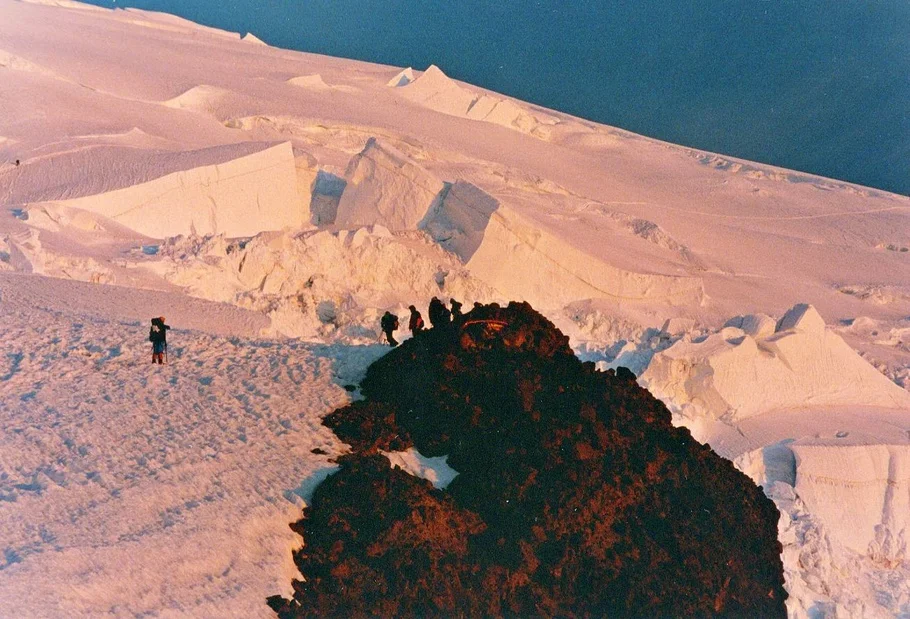
Disappointment Cleaver Route (Mount Rainier)
The Disappointment Cleaver route is the standard and most celebrated climbing route on Mount Rainier, ascending the glaciated south flank of the stratovolcano via the Muir Snowfield, the Cowlitz and Ingraham glaciers, and the rocky buttress of the Cleaver. Graded French F to PD with 2,750 metres of elevation gain from Paradise, it is North America's premier high-altitude mountaineering proving ground, presenting steep crevasse route-finding, serac fall hazards, and rapid maritime storm cycles.
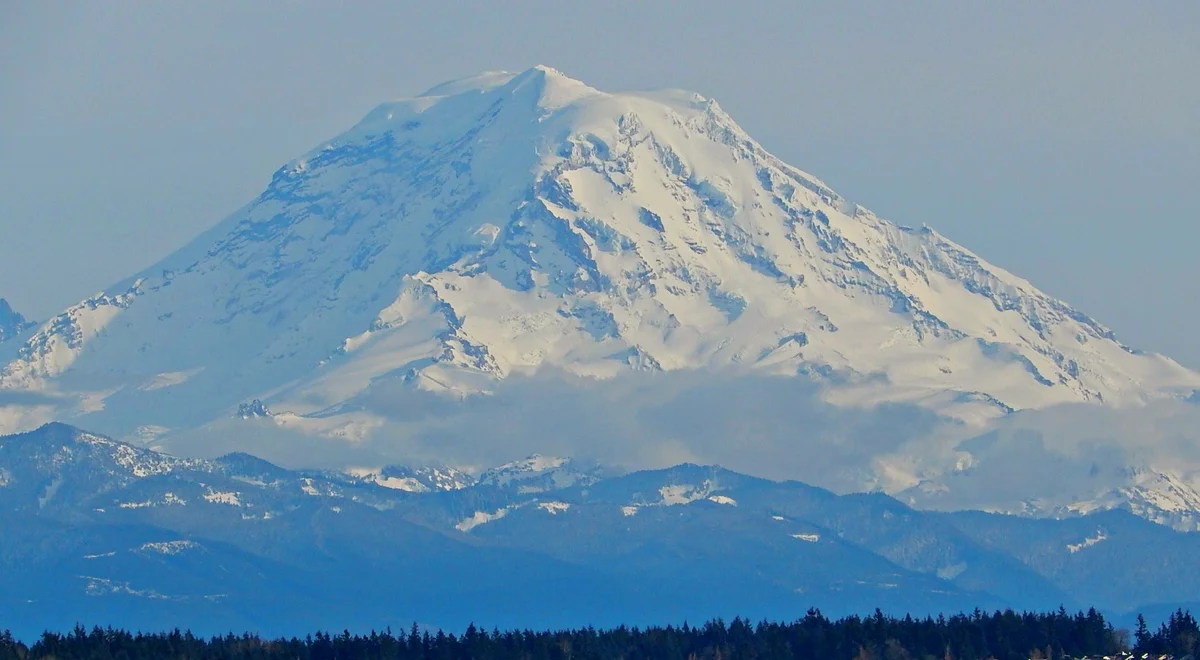
Liberty Ridge (Mount Rainier)
Liberty Ridge is the premier technical alpine classic of Mount Rainier and one of North America's Fifty Classic Climbs, rising dramatically on the mountain's north face between the Carbon and Winthrop glaciers. Ascending 1,200 vertical metres directly up a knife-edge snow, ice, and rock spine bounded by the sheer avalanche-swept walls of the Willis Wall, it is graded French D with sustained 50° to 55° ice and high objective hazards.
Documented Expeditions (1)
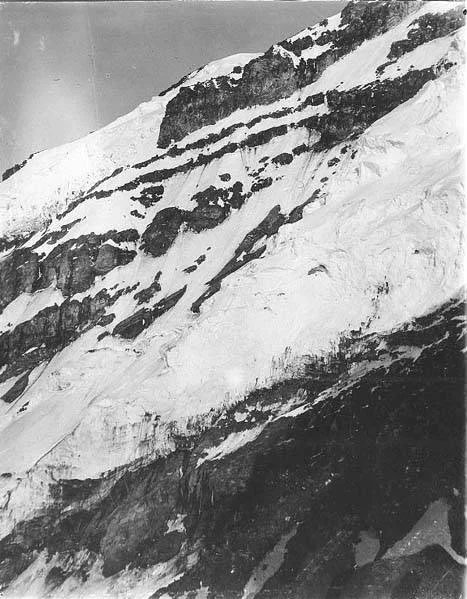
1870 Historic First Ascent of Mount Rainier by Stevens and Van Trump
On August 17, 1870, Hazard Stevens and Philemon Beecher Van Trump made the first documented ascent of Mount Rainier, climbing past Gibraltar Rock and surviving an overnight gale in summit steam vents.
Associated Chronicles & Stories (1)
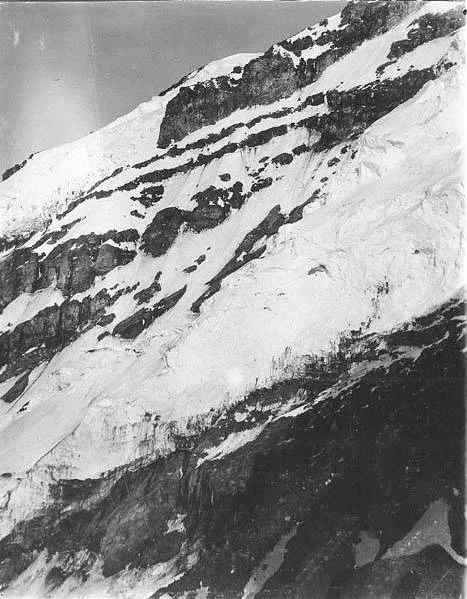
Caverns in the Clouds: The 1870 First Ascent of Mount Rainier
On August 17, 1870, Hazard Stevens and Philemon Beecher Van Trump achieved the first documented ascent of Mount Rainier. Scaling the crumbling volcanic precipice of Gibraltar Rock, they reached the summit crater at dusk and survived a freezing night inside boiling geothermal steam vents.
Documented Sources & Archival Citations
- The Ascent of Takhoma (The Atlantic Monthly, 1876)(Hazard Stevens)
Supporting claim: Primary first-hand published record of the 1870 first ascent of Mount Rainier
Accessed/Documented: 2026 - The Challenge of Rainier(Dee Molenaar / The Mountaineers Books)
Supporting claim: Comprehensive historical analysis of the Stevens-Van Trump pioneering expedition
Accessed/Documented: 2026