1964 First Ascent of the North America Wall on El Capitan
In late October 1964, Royal Robbins, Tom Frost, Chuck Pratt, and Yvon Chouinard made the historic first ascent of the terrifying North America Wall on El Capitan, spending ten continuous days on the overhanging face without descending.
Mountain Safety & Conditions Disclaimer: High-altitude climbing, glacial travel, and technical ascents entail severe objective risks including avalanches, serac collapses, rapid weather collapse, and altitude illness. Historical route descriptions and summit claims on Mountanity reflect documented archival sources and must not be used as live operational safety assessments. Local regulations, permits, and physical glacial topography change continuously.
Peer Review: Senior Editorial Board & Historical Reviewers • Editorial Standards
Official Expedition Narrative & Archival Record
In October 1964, four of Yosemite's greatest legends—Royal Robbins, Tom Frost, Chuck Pratt, and Yvon Chouinard—joined forces to tackle the most intimidating, sheer, and overhanging feature on El Capitan: the dark Southeast Face, known as the North America Wall because of a massive map-shaped intrusion of black diorite rock. Determined to avoid the fixed ropes and siege tactics of earlier eras, the four men launched a continuous capsule-style assault with no retreat lines to the ground. Carrying ten days of food and water in heavy haul bags, they negotiated rotten diorite rock, terrifying expanding flakes, and the dizzying roof of the Great Yawning Chimney. Forced to sleep in early hammocks suspended from piton anchors in space, they endured freezing rain, snow showers, and severe physical exhaustion. Chouinard's newly forged chrome-molybdenum pitons and the team's peerless aid efficiency carried them through 28 technical pitches of unrelenting difficulty. On October 31, 1964, after ten continuous days on the wall, the four climbers pulled onto the summit rim. The North America Wall was hailed across the globe as the most difficult multi-day rock climb ever achieved in human history.
Documented Team Composition
- Royal Robbins (Climber, USA)
- Tom Frost (Climber & Photographer, USA)
- Chuck Pratt (Climber, USA)
- Yvon Chouinard (Climber & Blacksmith, USA)
Key Statistics & Topographic Figures
- Summit Date
- October 31, 1964
- Duration on Wall
- 10 continuous days
- Pitches Climbed
- 28 technical pitches
- Climbing Style
- Continuous Capsule Push (No fixed ropes to ground)
- Ascent Team
- Royal Robbins, Tom Frost, Chuck Pratt, Yvon Chouinard
Archival Primary Source Quotations
“We were four men living in space. On the North America Wall, retreat was unthinkable, and success required absolute trust.”
Defined Alpine Terminology & Concepts
- Two-Point Hammock
- An early fabric bivy suspended from two anchor points in space before the invention of rigid-frame portaledges.
- Diorite Intrusion
- A dark, coarse-grained igneous rock that intrudes into lighter granite, often more brittle and fractured than host rock.
Frequently Asked Questions: 1964 First Ascent of the North America Wall on El Capitan
What was the 1964 North America Wall Expedition on El Capitan?
It was the first continuous ten-day capsule push on El Capitan's dark Southeast Face by Robbins, Frost, Pratt, and Chouinard.
Why is the route called the North America Wall?
Because a massive intrusion of dark black diorite rock on the pale granite face closely resembles the shape of North America.
How long did the four climbers spend continuously on the wall in 1964?
They spent ten continuous days on the overhanging face between October 22 and October 31, 1964, without descending.
What made retreat practically impossible on the North America Wall?
The wall overhung so continuously that once the party climbed into the upper dihedrals, rappelling back to anchors was impossible.
What weather did the team endure near the summit of El Capitan?
They endured a bitter autumn storm featuring freezing rain, sleet, and snow while suspended in early two-point canvas hammocks.
What equipment played a vital role in conquering the diorite rock?
Yvon Chouinard's hand-forged chrome-molybdenum RURPs and knifeblade pitons provided secure holds in crumbly, fractured seams.
Who led the cavernous Great Yawning Chimney pitch?
Chuck Pratt led the terrifying chimney and the flared Borderline crack with extraordinary mental discipline.
Why was the North America Wall hailed internationally?
It was recognized as the most difficult multi-day rock climb in the world, demonstrating absolute commitment to capsule style.
Ascent Route & Topography
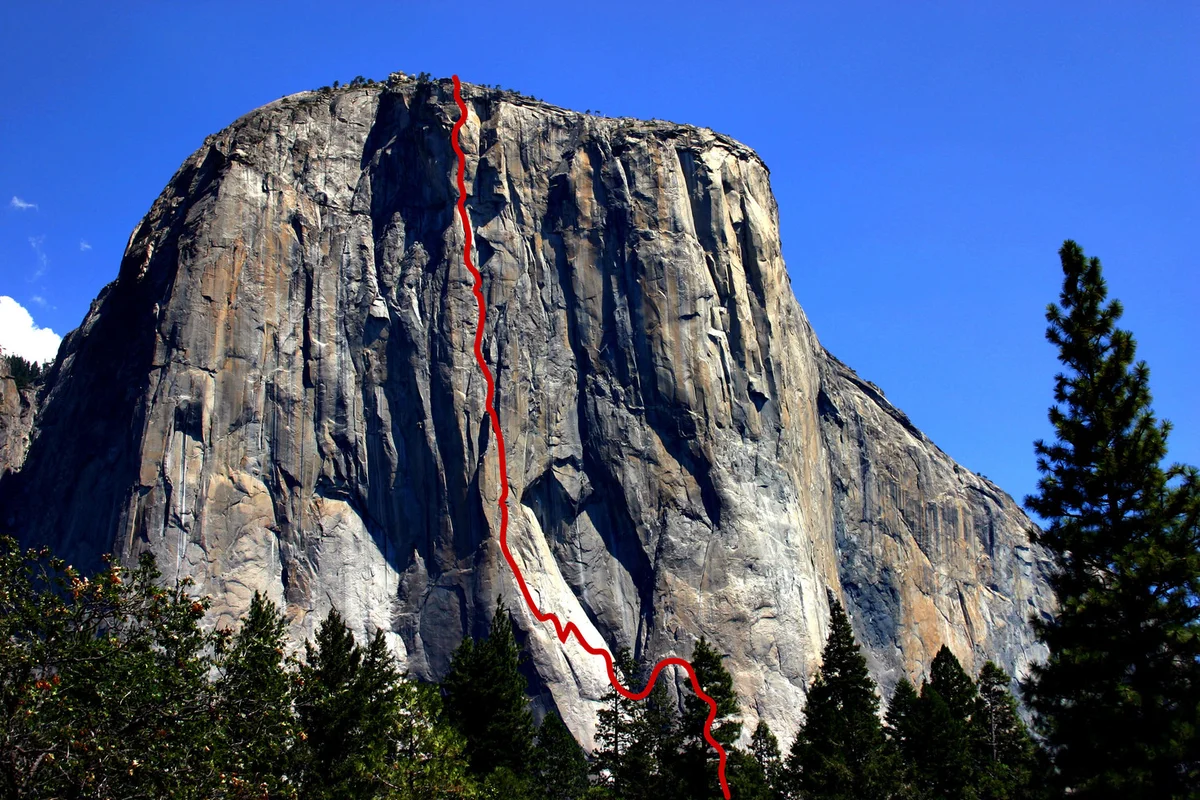
Salathé Wall (El Capitan)
The Salathé Wall is universally revered as the greatest natural big-wall route in the world, ascending the sweeping Southwest Face of El Capitan over 35 pitches. Characterized by continuous crack systems, soaring dihedrals, and the heart-stopping exposure of the Roof and Headwall pitches, it set the global gold standard for alpine big-wall ethics.
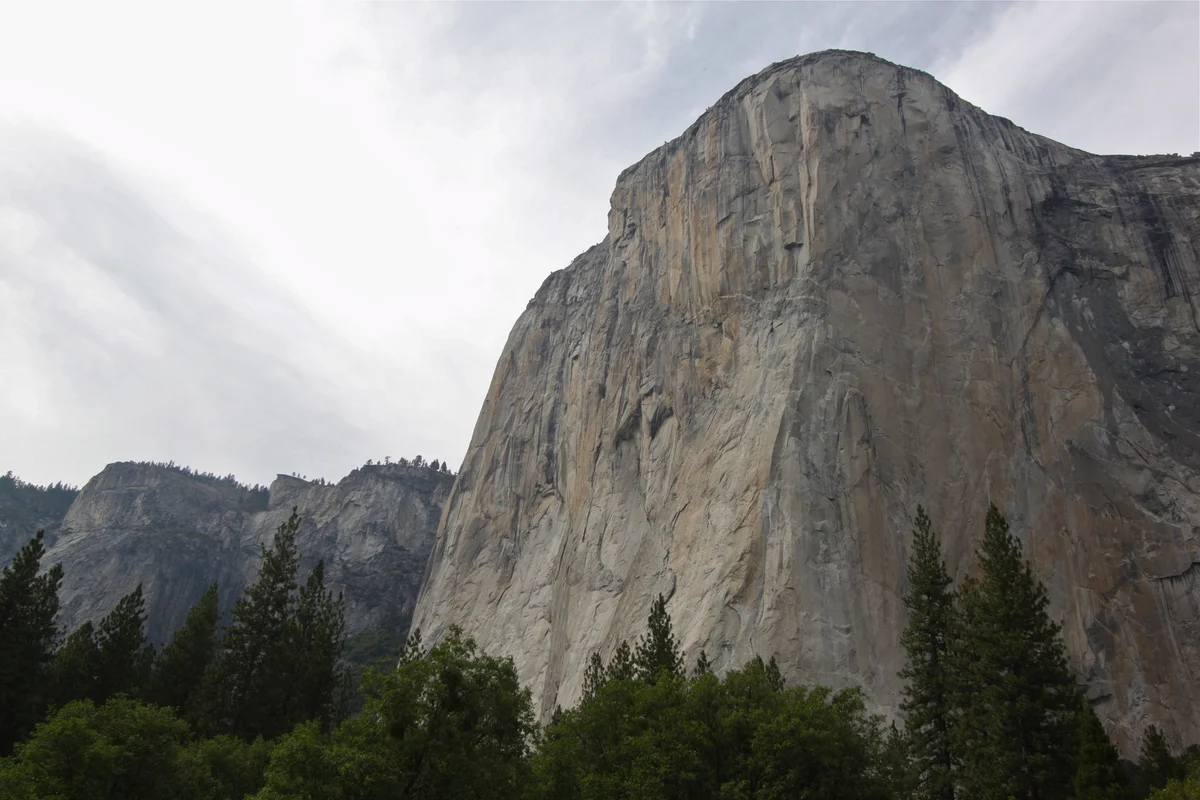
The Nose (El Capitan)
The Nose is the definitive big-wall rock climb on Earth, tracing the proud, protruding central prow of El Capitan for 31 technical pitches over 884 vertical metres. From the Boot Flake and the King Swing to the Great Roof and the sweeping summit headwall, it is the most coveted and historic multi-day climbing route in the world.
Target Objective Peak
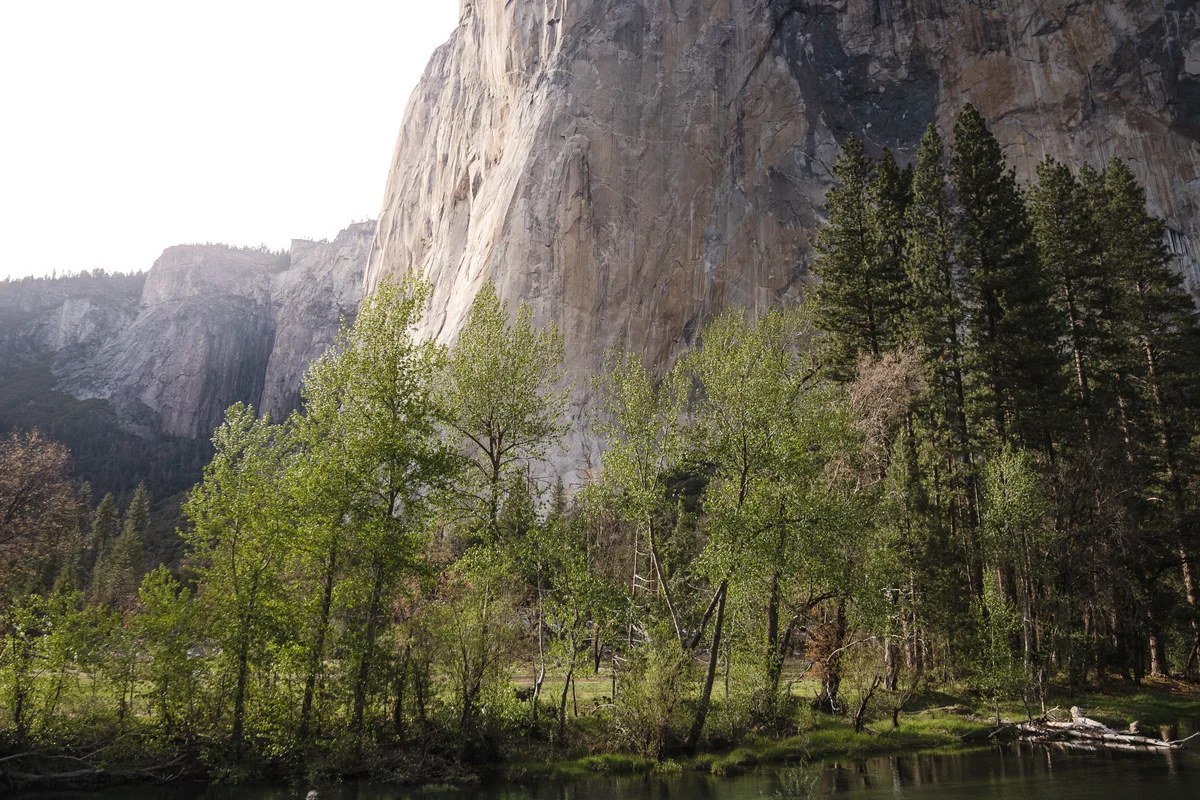
El Capitan
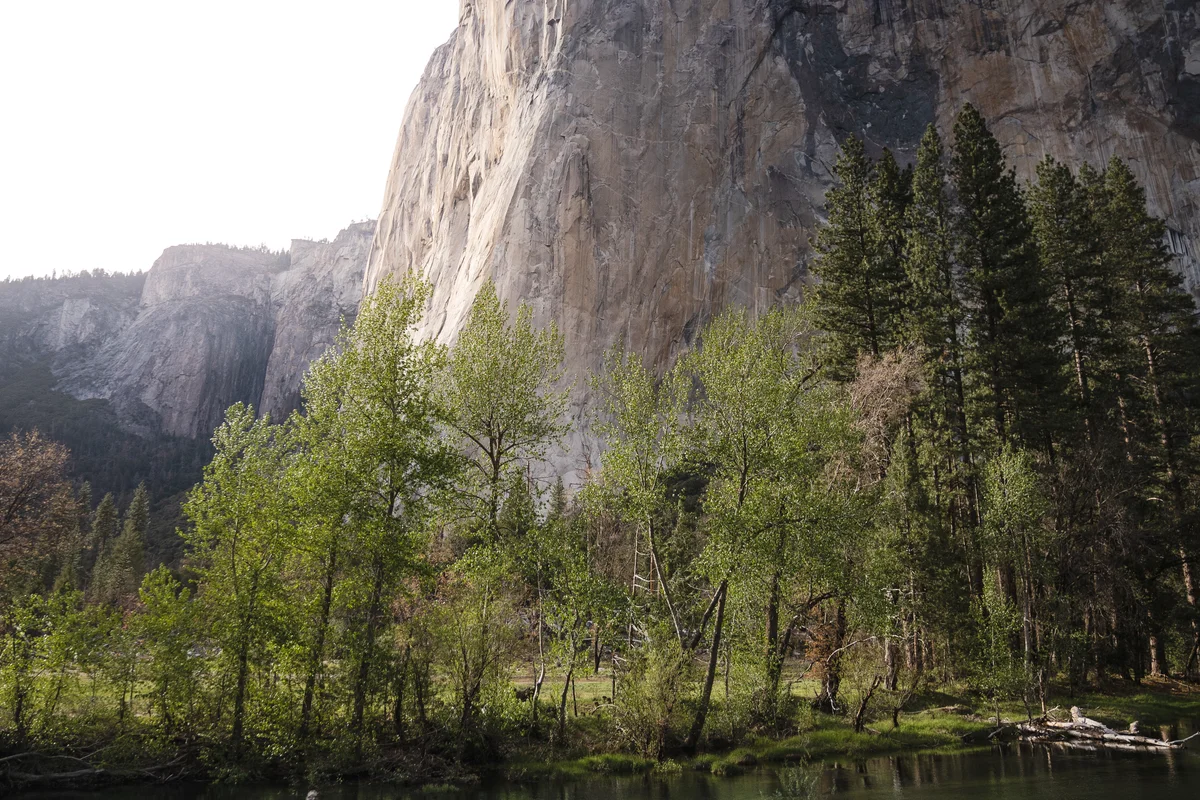
El Capitan is a monumental 914-metre vertical granite monolith rising above the western end of Yosemite Valley in California's Sierra Nevada. Globally renowned as the ultimate proving ground of modern big-wall rock climbing, it features legendary routes including The Nose, Salathé Wall, North America Wall, and the Dawn Wall.
Featured Expedition Climbers
Chuck Pratt
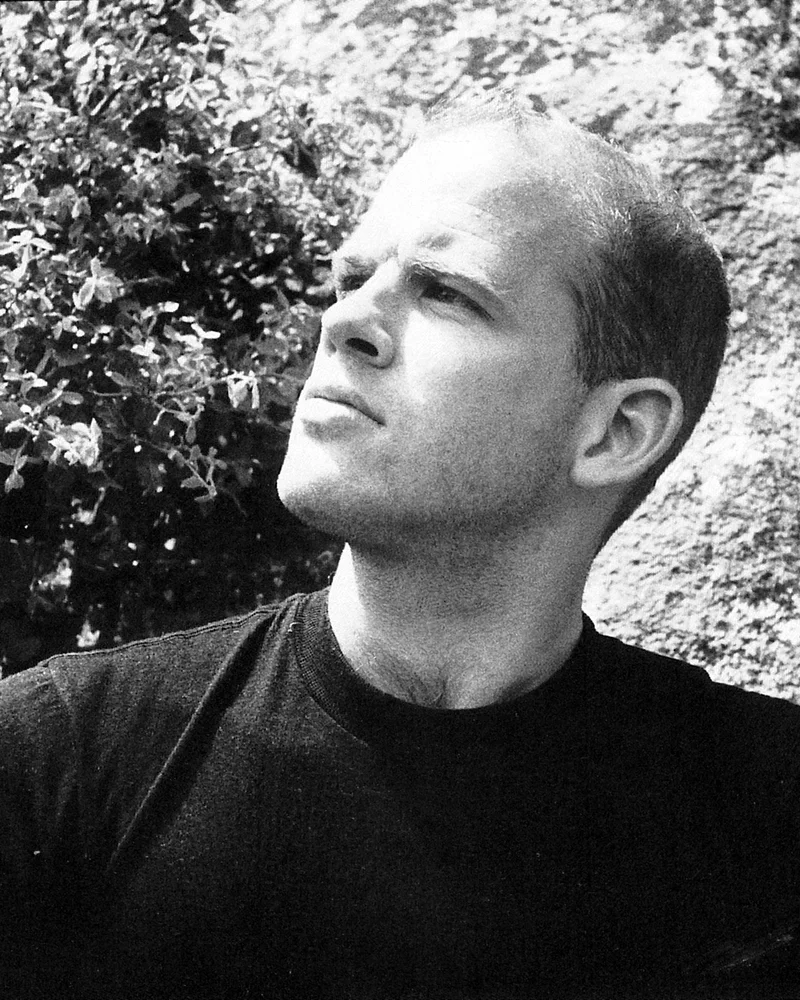
Born on March 5, 1939, in California, Charles Raymond Pratt began climbing in the late 1950s, rapidly distinguishing himself through supernatural technical intuition and calmness in terrifying positions. While many of his peers in Camp 4 were intensely competitive and vocal about ethics, Pratt was notoriously shy, gentle, and indifferent to personal fame, rarely speaking about his accomplishments. Yet on the rock, he was unmatched: whenever Royal Robbins, Tom Frost, or Warren Harding encountered a horrifyingly wide, unprotectable crack, a suffocating chimney, or a vertical off-width that seemed humanly impossible, they handed the lead rope to Chuck Pratt. In 1961, Pratt led the most grueling squeeze chimneys on the first ascent of the Salathé Wall on El Capitan, including the legendary Ear and the Teflon Chimney. In 1964, Pratt joined Robbins, Frost, and Yvon Chouinard to conquer the dark, overhanging diorite dioramas of the North America Wall. That same year, alongside Robbins and Joe Fitschen, Pratt completed the first ascent of the sheer 800-metre South Face of Mount Watkins, completing Yosemite's mythical big-wall trilogy (Half Dome, El Capitan, Mount Watkins). Later in life, Pratt worked as an instructor and senior mountain guide in the Grand Teton National Park, spending his winters traveling peacefully in Thailand, where he passed away in Bangkok on December 16, 2000.
Royal Robbins
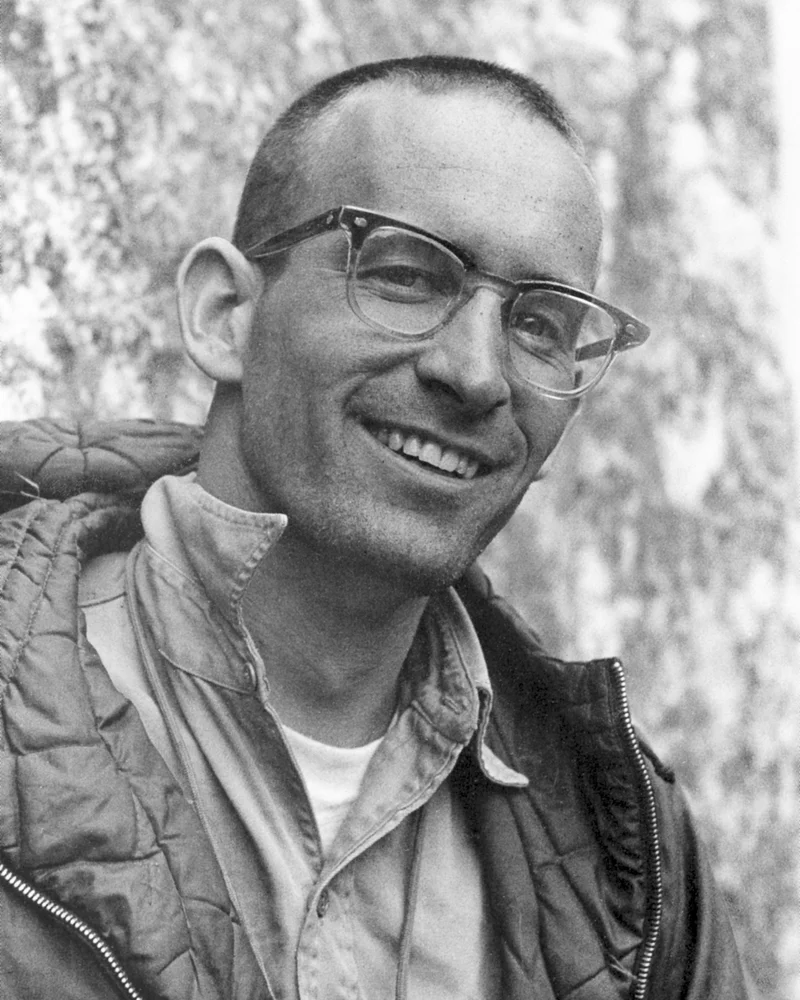
Born on February 3, 1935, in Point Pleasant, West Virginia, Royal Robbins moved to southern California as a child, discovering rock climbing in the San Jacinto Mountains at Tahquitz Rock. By the mid-1950s, Robbins had migrated north to Yosemite Valley, where Camp 4 was emerging as the crucible of North American rock climbing. In June 1957, alongside Mike Sherrick and Jerry Gallwas, Robbins achieved the historic first ascent of the sheer 600-metre Northwest Face of Half Dome, establishing the first Grade VI climb in the United States over five grueling days. Rejecting the siege tactics and excessive bolting popularized by rival Warren Harding, Robbins championed a purist philosophy centered on continuous pushes, athletic free climbing, and minimal reliance on expansion bolts. In September 1961, Robbins, Tom Frost, and Chuck Pratt made the historic first ascent of the Salathé Wall on El Capitan, placing only thirteen lead bolts on a 35-pitch natural crack line. Three years later, in October 1964, Robbins led the legendary first ascent of the North America Wall on El Capitan with Frost, Pratt, and Yvon Chouinard, conquering terrifying diorite overhangs in continuous capsule style over ten days. In the 1970s, Robbins authored foundational instruction manuals on rock climbing and co-founded the Royal Robbins outdoor apparel company with his wife Liz, leaving an enduring legacy of environmental responsibility and alpine purity.
Tom Frost
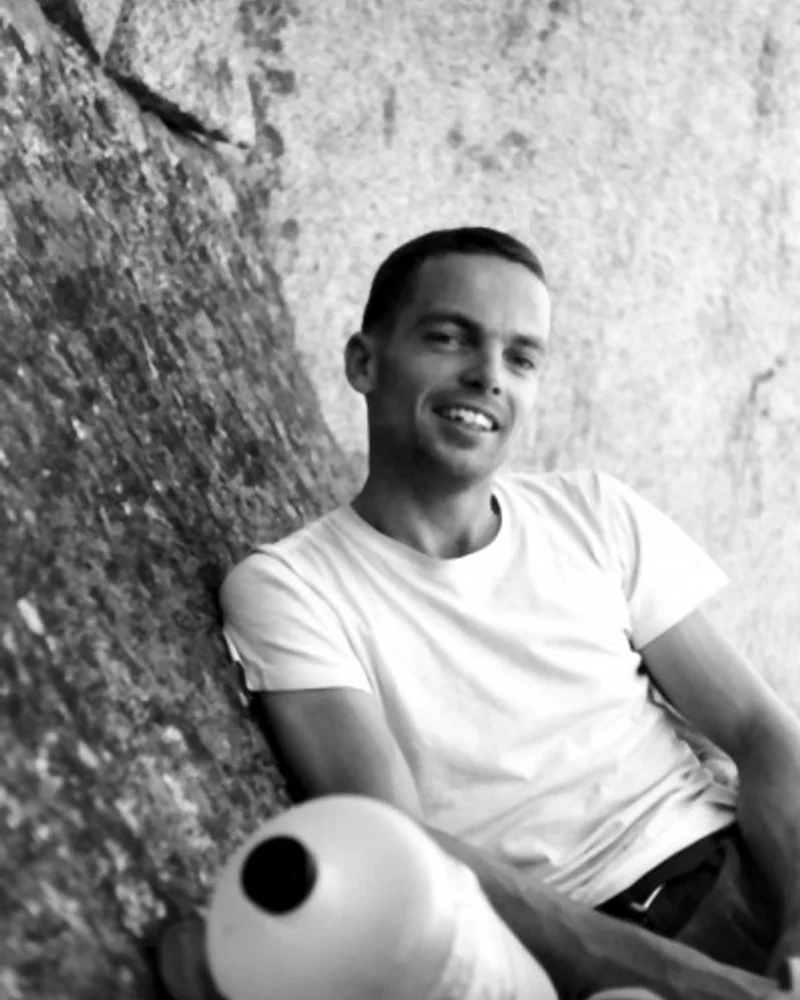
Born on June 30, 1936, in Hollywood, California, Tom Frost graduated from Stanford University in 1958 with a degree in mechanical engineering, where he was also an accomplished collegiate swimmer. Moving into aerospace engineering, Frost was introduced to rock climbing in the late 1950s, bringing rigorous engineering precision, meticulous safety discipline, and extraordinary physical stamina to Yosemite Valley. Forming an unbeatable partnership with Royal Robbins and Chuck Pratt, Frost became a cornerstone of Yosemite's finest big-wall achievements. In September 1961, the trio opened the Salathé Wall on El Capitan, hailed as the finest natural big-wall line in the world. In October 1964, joined by Yvon Chouinard, they conquered the North America Wall in continuous capsule style over ten days. Frost's engineering background was vital to the development of modern climbing equipment: partnering with Chouinard in 1965, he co-designed the revolutionary RURP (Real Realised Ultimate Reality Piton), the curved-pick alpine ice axe that enabled modern steep ice climbing, and lightweight aluminum carabiners and chocks. Carrying heavy Leica and Hasselblad film cameras up multi-day vertical walls, Frost captured the iconic, museum-grade black-and-white photographs that documented the soul and aesthetic beauty of Yosemite's Camp 4 era for all time.
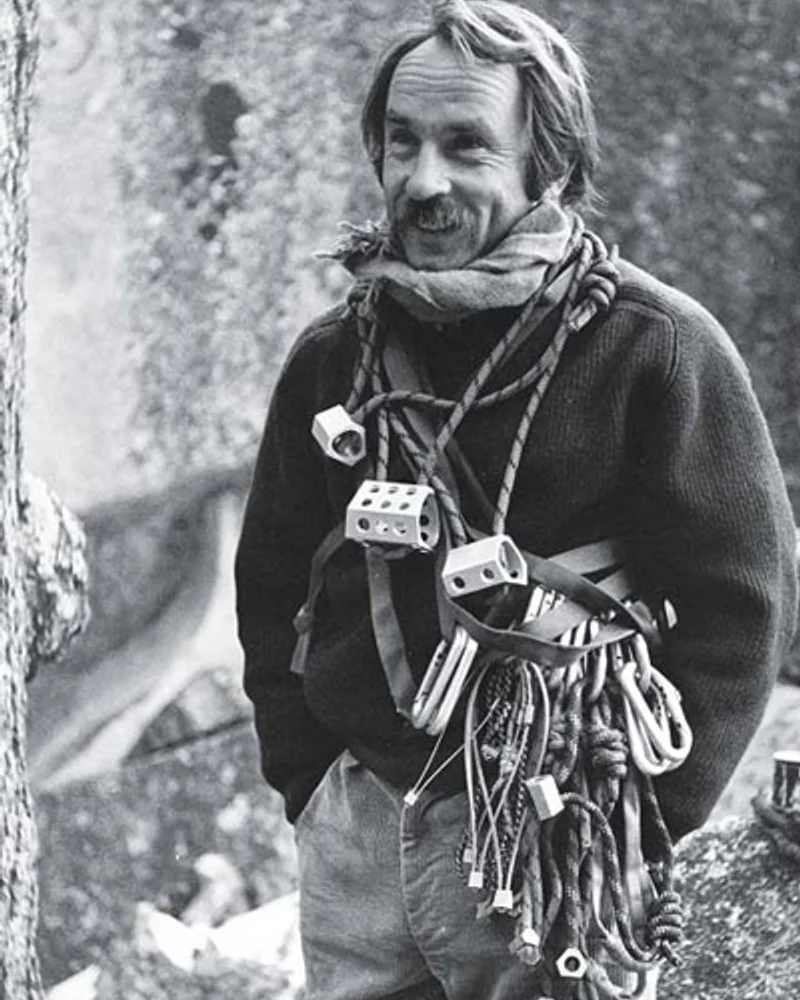
Yvon Chouinard
Born on November 9, 1938, in Lewiston, Maine, to a French-Canadian family, Yvon Chouinard moved to Burbank, California, at age eight. A keen falconer, he learned to rappel down steep cliffs to reach hawk aeries, which ignited a lifelong passion for rock climbing. Realizing that European soft-iron pitons deformed and ruined Yosemite's hard granite, Chouinard taught himself blacksmithing in 1957, forging reusable chrome-molybdenum steel pitons from old harvester blades in a backyard chicken coop. Selling his gear from the trunk of his car in Yosemite's Camp 4, Chouinard Equipment soon became the premier climbing hardware company in North America. As a climber, Chouinard was an elite vanguard. In October 1964, he teamed with Royal Robbins, Tom Frost, and Chuck Pratt to make the historic first ascent of the terrifying North America Wall on El Capitan. In 1968, he embarked on a legendary road trip to Patagonia in a secondhand van with Doug Tompkins and Dick Dorworth, establishing the California Route on Cerro Fitz Roy. When Chouinard realized in the early 1970s that repeated piton placement was destroying rock cracks, he made the courageous business decision to phase out pitons in favor of aluminum chocks and hexes, publishing the historic 1972 Clean Climbing catalog essay that revolutionized mountaineering ethics worldwide. He subsequently founded the global apparel company Patagonia, dedicating its corporate profits to global wilderness protection.
Associated Historical Chronicles & Stories
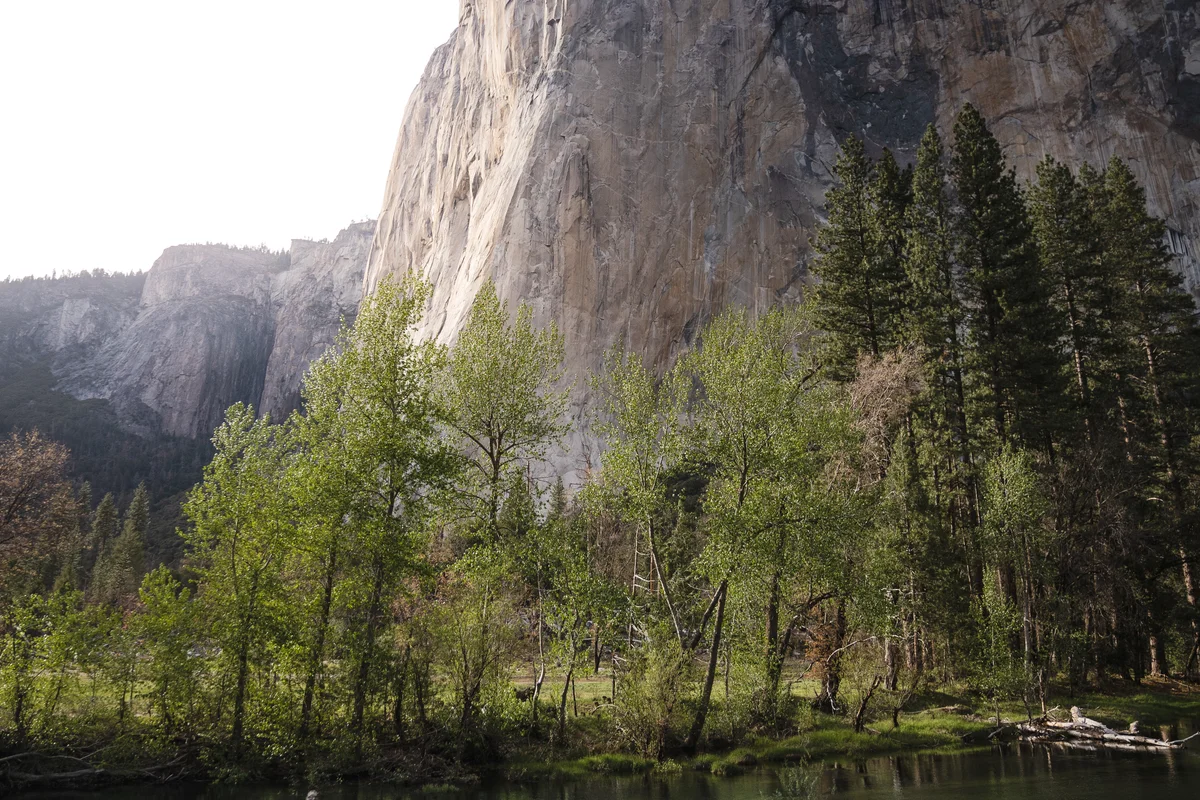
Ten Days in the Void: The 1964 North America Wall Expedition
In October 1964, Royal Robbins, Tom Frost, Chuck Pratt, and Yvon Chouinard achieved the first ascent of the terrifying North America Wall on El Capitan, spending ten continuous days on the overhanging face in North America's first true capsule push.
Documented Sources & Archival Citations
- American Alpine Journal: North America Wall (1965)(American Alpine Club)
Supporting claim: Official expedition journal by Royal Robbins documenting the ten-day capsule ascent
Accessed/Documented: 2026 - Camp 4: Recollections of a Yosemite Rockclimber(Steve Roper / The Mountaineers Books)
Supporting claim: Historical analysis of the 1964 North America Wall as the peak of Yosemite's Golden Age
Accessed/Documented: 2026