West Buttress (Denali)
The West Buttress is the premier classic mountaineering route on Denali, ascending 4,000 vertical metres from the Kahiltna Glacier to the highest point in North America at 6,190 metres. Pioneered in 1951 by Bradford Washburn, Barbara Washburn, and their team, it negotiates massive crevasse systems, the steep fixed-line ice of the Headwall, and the knife-edge granite crest above 16,000 feet amidst severe Arctic gales.
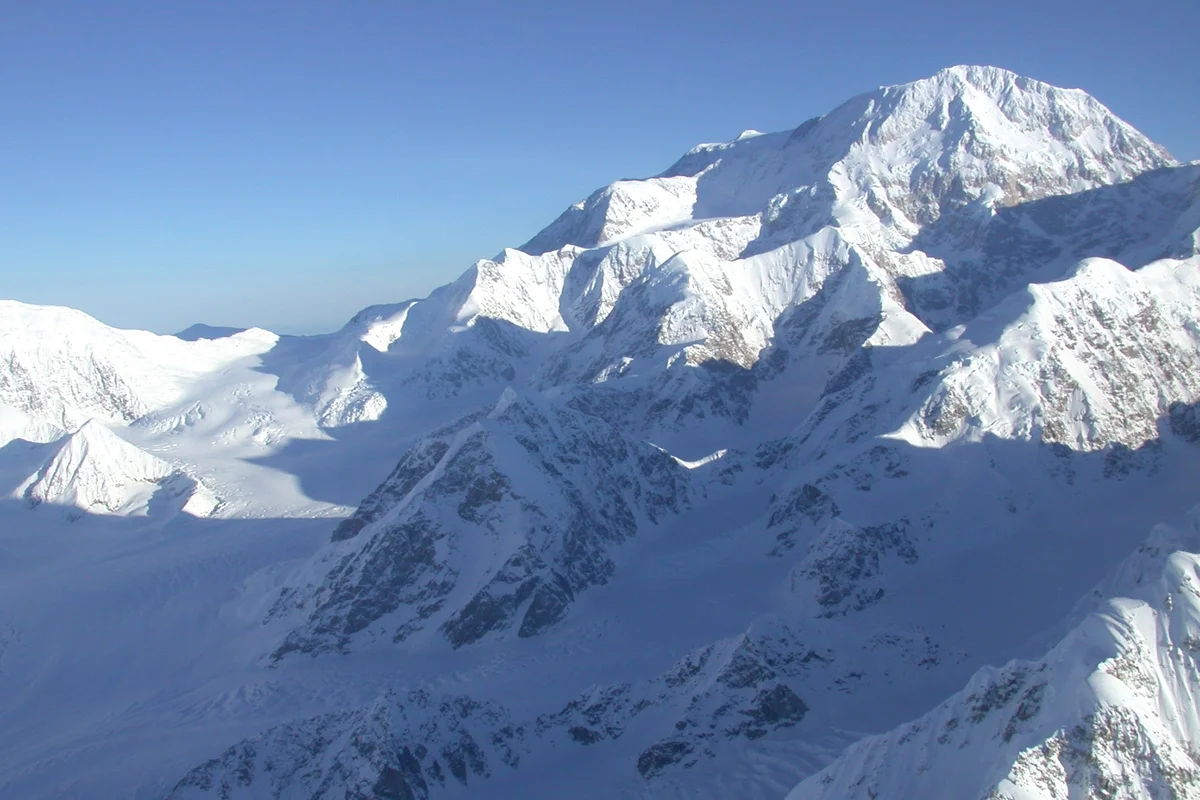
Ascent line, technical cruxes & camp topography profile for West Buttress (Denali)
Mountain Safety & Conditions Disclaimer: High-altitude climbing, glacial travel, and technical ascents entail severe objective risks including avalanches, serac collapses, rapid weather collapse, and altitude illness. Historical route descriptions and summit claims on Mountanity reflect documented archival sources and must not be used as live operational safety assessments. Local regulations, permits, and physical glacial topography change continuously.
Peer Review: Senior Editorial Board & Historical Reviewers • Editorial Standards
Tactical & Camp Notes
First climbed in June–July 1951 following Bradford Washburn's visionary aerial mapping and glacier landing strategy with pilot Don Sheldon. The climb requires heavy expedition sled-hauling up the Kahiltna Glacier, establishing intermediate fortified camps against hurricane-force storms, and technical ropework along the exposed ridge between 16,200 feet and the 17,200-foot High Camp.
Interactive Elevation Profile
Vertical profile, technical cruxes, and camp staging progression for West Buttress (Denali) on Denali.
Staging base camp on the Southeast Fork of the Kahiltna Glacier where ski-equipped bush planes land.
Camp-by-Camp Topography
Key staging altitudes, technical cruxes, and terrain transitions for West Buttress (Denali).
Kahiltna Base Camp
Staging base camp on the Southeast Fork of the Kahiltna Glacier where ski-equipped bush planes land.
Camp 1 (7,800 ft)
Initial glacier camp situated at the base of Ski Hill on the main Kahiltna Glacier trunk.
Camp 2 / 11k Camp
Substantial intermediate glacier camp below Kahiltna Pass and Motorcycle Hill.
Camp 3 / 14k Basin Camp
Primary high-altitude acclimatization basin featuring medical ranger tents beneath the Headwall fixed lines.
Camp 4 / High Camp (17,200 ft)
Extreme high wind-scoured camp perched on the saddle above the Washburn Thumb, staging the summit push.
Denali Summit
The highest point in North America, reached via the Football Field and the airy Kahiltna Horn ridge.
Topographic Location & Terrain Map
Cartographic datum, massif coordinates, and terrain context for West Buttress (Denali) on Denali.
Interactive Topographic Terrain Map
Click below to load live cartographic contours, glacier approaches, and geographic markers for Denali (63°04′09″ N, 151°00′25″ W).
Key Statistics & Topographic Figures
- Route Vertical Relief
- 4,000 vertical metres (13,000+ feet)
- Technical Difficulty
- Alaskan Grade 2 / 55° Snow and Ice
- First Ascent Date
- July 10, 1951
- Pioneering Leaders
- Bradford and Barbara Washburn
- Standard Route Percentage
- Over 90% of all Denali climbers
Archival Primary Source Quotations
“The West Buttress opened Denali to the world, turning a nightmare trek into an architectural alpine masterpiece.”
Defined Alpine Terminology & Concepts
- Fixed Lines
- Ropes anchored securely along steep snow and ice pitches that climbers clip into with mechanical ascenders for protection.
- High Camp (17.2k)
- The final staging bivouac site on the West Buttress, nestled in a wind-scoured snow saddle beneath Denali Pass.
Frequently Asked Questions: West Buttress (Denali)
What is the West Buttress route on Denali?
The West Buttress is the classic and most popular climbing route up Denali, ascending 4,000 vertical metres from the Kahiltna Glacier to the 6,190-metre summit.
Who pioneered the West Buttress route and when?
The route was pioneered in June–July 1951 by Bradford Washburn, Barbara Washburn, Jim Gale, Bill Hackett, and Henry Buchtel.
What technical climbing grade is the West Buttress?
It is graded Alaskan Grade 2, demanding glacier crevasse rescue proficiency, 55-degree fixed-line ice ascending, and exposed knife-edge ridge traversing.
What are the primary camps on the West Buttress?
Key camps include Kahiltna Base (7,200 ft), 7.8k Camp, 11k Camp, 14k Basin Camp, and 17.2k High Camp.
What is the Headwall on the West Buttress?
The Headwall is a steep 1,000-foot slope of hard blue ice between 15,000 and 16,200 feet equipped with fixed ropes leading to the ridge crest.
What is the Washburn Thumb?
A prominent granite spire along the exposed knife-edge arête of the West Buttress around 16,600 feet, named in honor of route pioneer Bradford Washburn.
How long does a typical West Buttress expedition take?
Most expeditions take between 18 and 22 days to allow for sled freighting, acclimatization carries, and storm weather contingencies.
What role did bush aviation play in the route's history?
Visionary bush pilot Don Sheldon perfected ski-plane landings on the Kahiltna Glacier, allowing climbers to bypass weeks of lowland tundra trekking.
Mountain Ascended
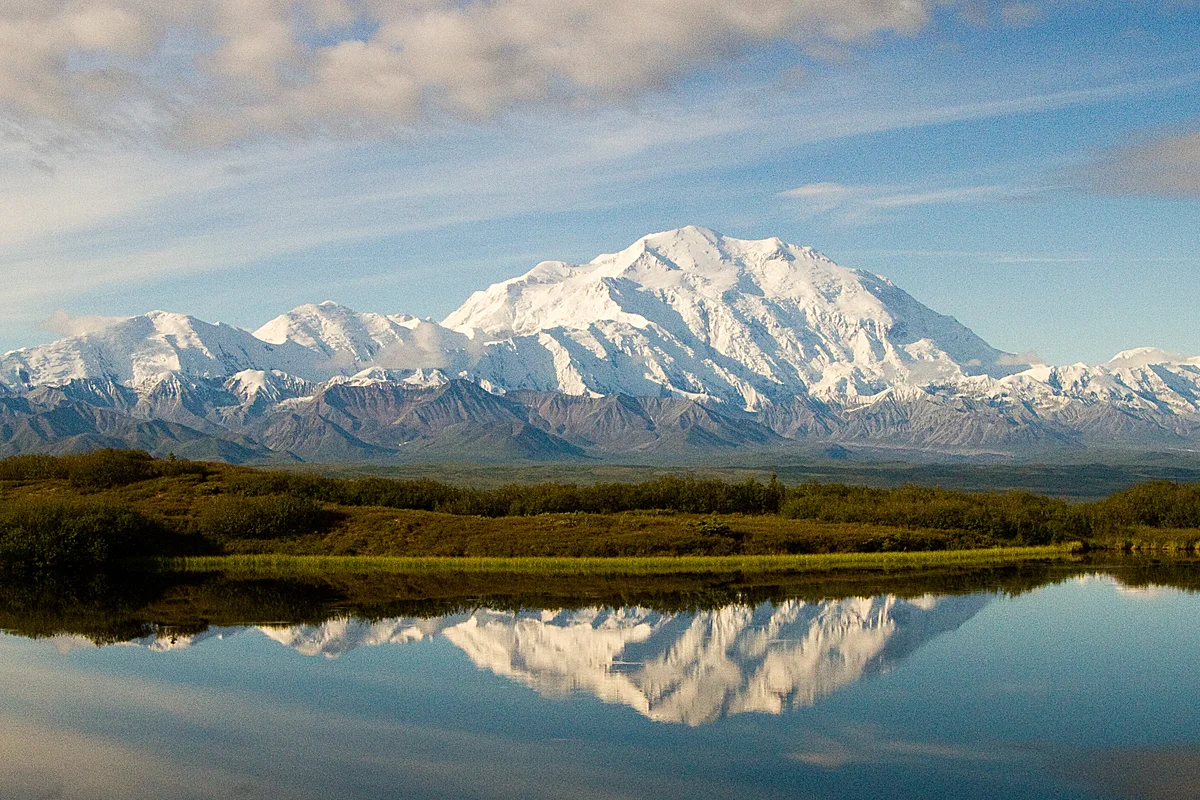

Denali
Denali is the highest mountain peak in North America, soaring to an elevation of 6,190 metres in south-central Alaska. Ranked third among the world's most topographically prominent summits, it possesses greater vertical base-to-peak relief than Mount Everest, rising over 5,500 vertical metres above the surrounding glacial plains amidst severe Arctic storms and extreme sub-zero temperatures.
Documented Expeditions on this Route (2)
Verified historical summits, siege campaigns, and pioneer attempts recorded on West Buttress (Denali).
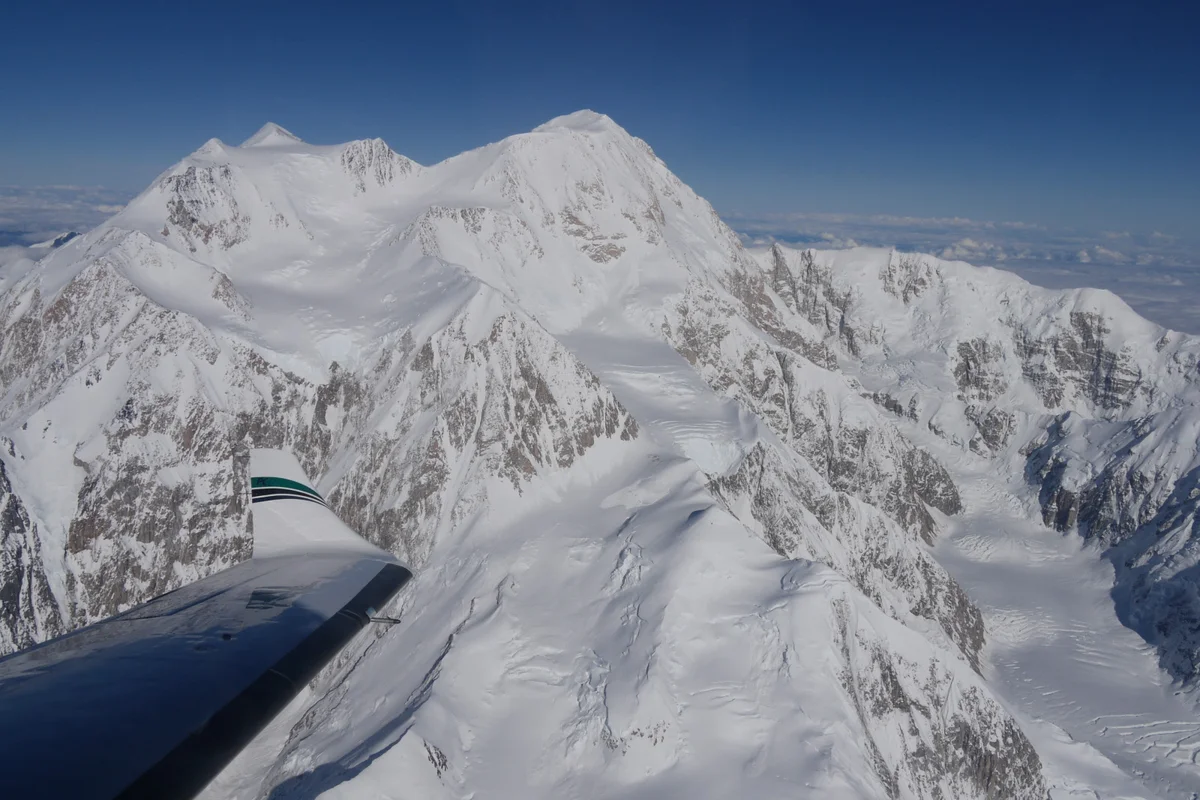
1951 Pioneering of Denali's West Buttress by Bradford and Barbara Washburn
In June–July 1951, Bradford and Barbara Washburn led a joint scientific expedition that revolutionized Alaskan mountaineering by landing on the Kahiltna Glacier and pioneering the West Buttress route to Denali's 6,190-metre summit.
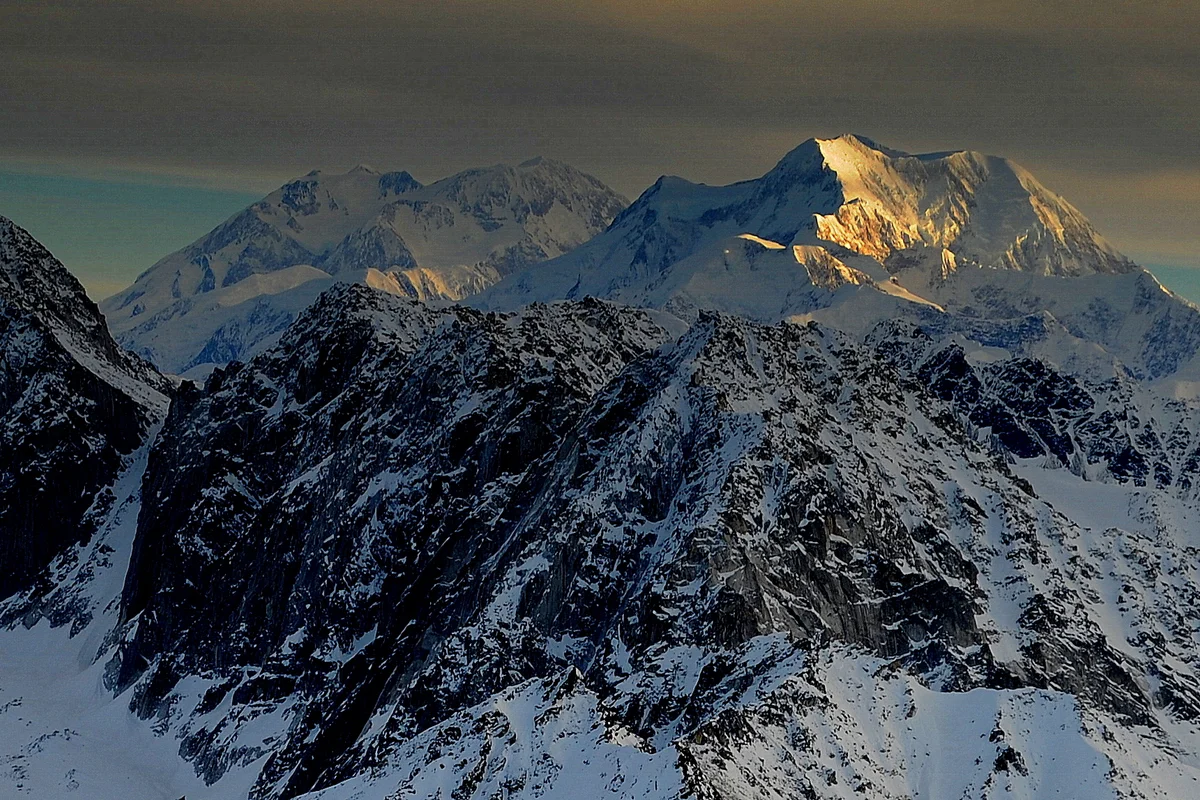
1967 First Winter Ascent of Denali and Minus 148° Survival Epic
On February 28, 1967, Art Davidson, Dave Johnston, and Ray Genet completed the first winter ascent of Denali, surviving a terrifying six-day storm trapped in an 18,200-foot snow cave in windchills below minus 148 degrees Fahrenheit.
Archival Chronicles & Stories on this Route (2)
In-depth longform historical narratives, harrowing survival accounts, and firsthand alpine journals on West Buttress (Denali).
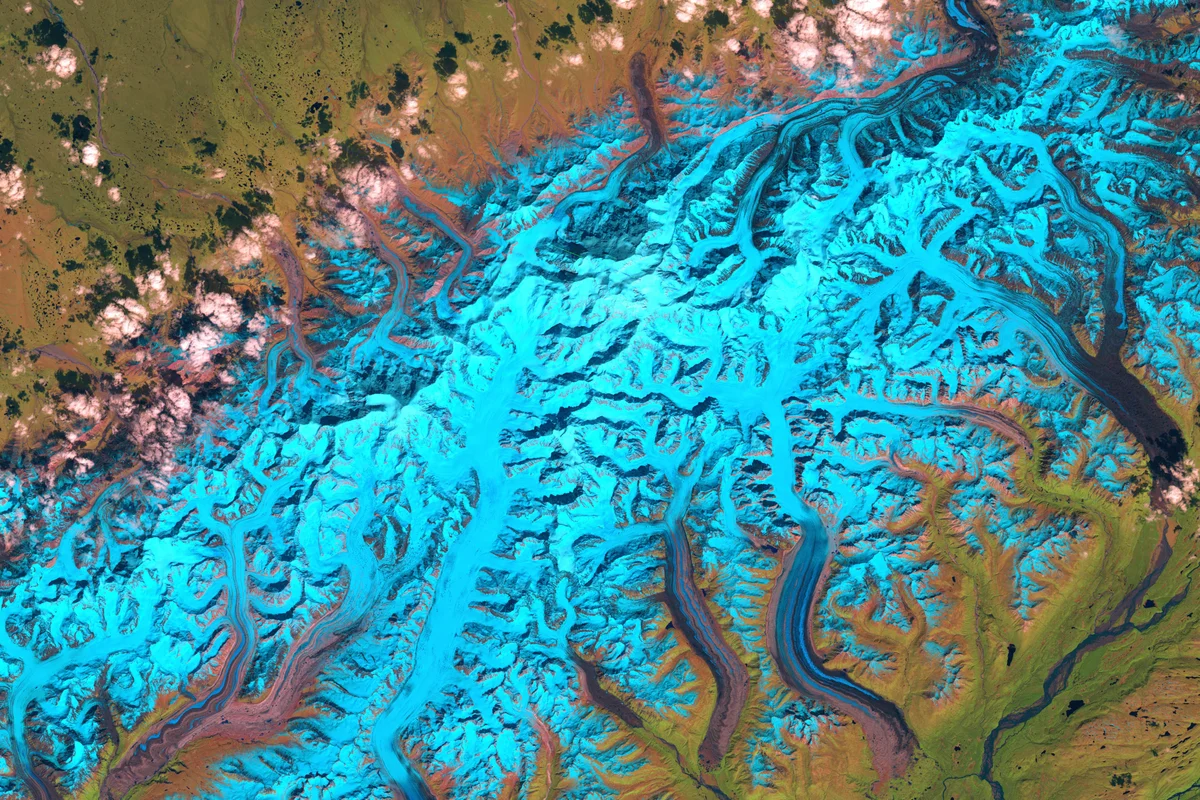
The Arctic Highway: Bradford and Barbara Washburn's West Buttress Revolution on Denali
In June 1951, Bradford and Barbara Washburn revolutionized high-altitude exploration by landing on the Kahiltna Glacier with bush pilot Don Sheldon and pioneering Denali's classic West Buttress route.
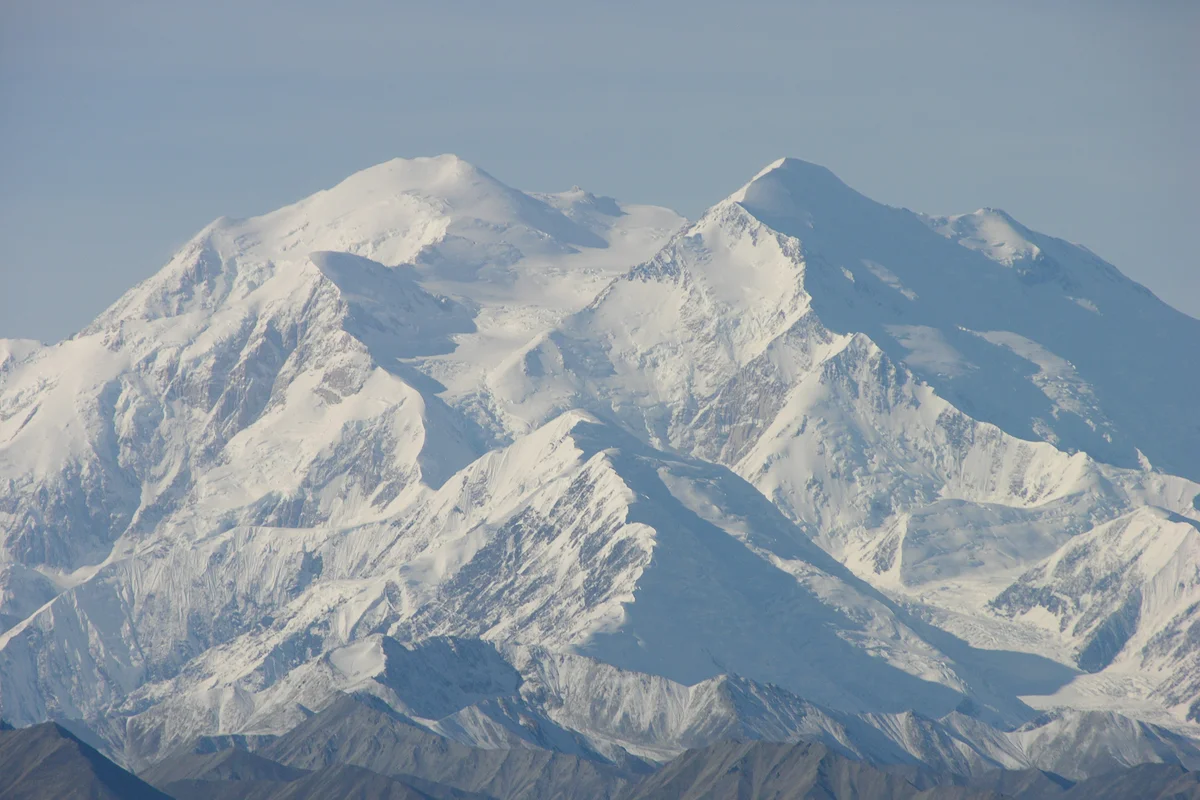
Minus 148: Art Davidson and the Six-Day Survival Cave at 18,200 Feet on Denali
On February 28, 1967, Art Davidson, Dave Johnston, and Ray Genet completed the first winter ascent of Denali, only to become trapped in an 18,200-foot snow cave in windchills below minus 148 degrees.
Documented Sources & Archival Citations
- Mount McKinley: The Conquest of Denali(Bradford Washburn and David Roberts / Harry N. Abrams)
Supporting claim: Official historical account of the 1951 pioneering of the West Buttress
Accessed/Documented: 2026 - Denali's West Buttress: A Climber's Guide to Mount McKinley's Classic Route(Colby Coombs / The Mountaineers Books)
Supporting claim: Detailed route topography, logistics, and camp elevations
Accessed/Documented: 2026