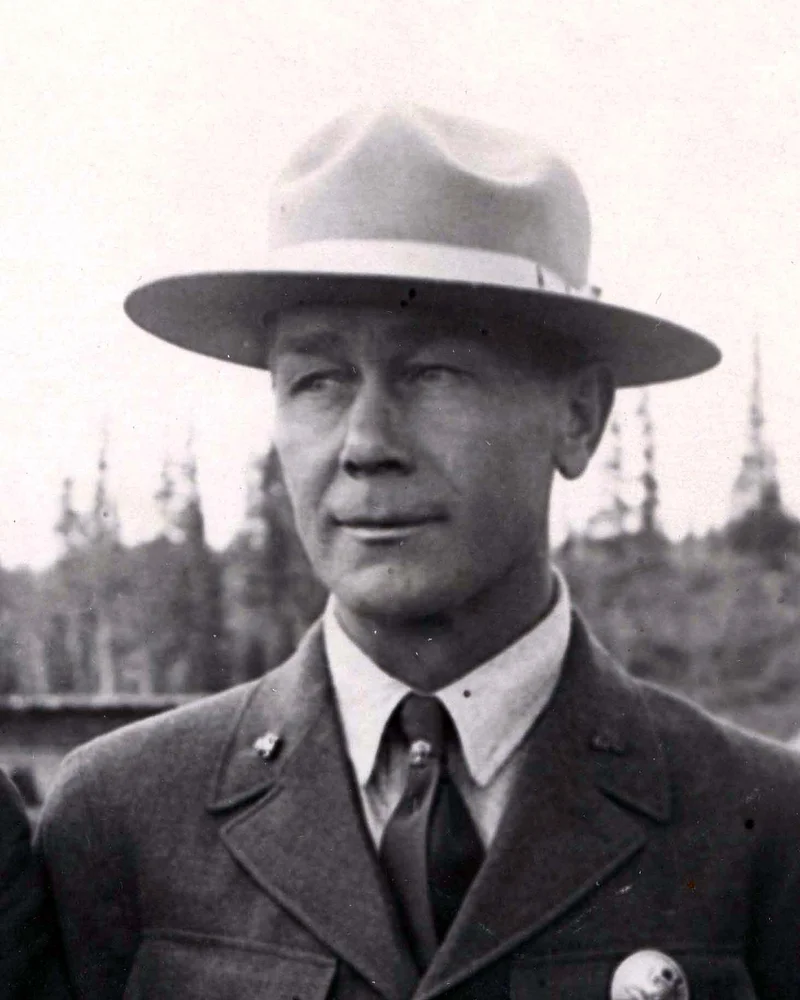
Harry Karstens
Harry Karstens was a legendary American frontier explorer, dog-musher, and mountaineer known as The General. In 1913, he served as climbing leader and route architect for the historic first ascent of Denali, engineering the safe passage up the shattered ice of Karstens Ridge. He later served as the first superintendent of Mount McKinley National Park.
Mountain Safety & Conditions Disclaimer: High-altitude climbing, glacial travel, and technical ascents entail severe objective risks including avalanches, serac collapses, rapid weather collapse, and altitude illness. Historical route descriptions and summit claims on Mountanity reflect documented archival sources and must not be used as live operational safety assessments. Local regulations, permits, and physical glacial topography change continuously.
Peer Review: Senior Editorial Board & Historical Reviewers • Editorial Standards
Biographical Record & Archival Chronicle
Born on September 9, 1878, in Chicago, Illinois, Harry Karstens moved to the Yukon Territory during the Klondike Gold Rush of 1897 at age nineteen. Hardy, disciplined, and possessing extraordinary northern wilderness survival skills, Karstens quickly earned the nickname The General for his iron resolution and exceptional competence as a freight hauler, dog-musher, and trail blazer. In 1906, he guided naturalist Charles Sheldon into the wilderness of the Alaska Range to study Dall sheep, an expedition that sparked the creation of Mount McKinley National Park. In 1913, Archdeacon Hudson Stuck enlisted Karstens as climbing leader and co-commander for the historic attempt on Denali. When the expedition arrived at the northeast approach to find the Muldrow Glacier ridge violently shattered into a chaotic maze of yawning crevasses and razor-edged ice pinnacles by the 1912 Katmai earthquake, Karstens spent three grueling weeks chopping thousands of steps by hand to construct a safe pathway up what became permanently immortalized as Karstens Ridge. On June 7, 1913, Karstens stepped onto the summit of Denali alongside Walter Harper, Robert Tatum, and Stuck. In 1921, Karstens was appointed the first superintendent of Mount McKinley National Park, establishing ranger patrols, enforcing wildlife protection against poachers, and laying the groundwork for modern Alaskan wilderness conservation.
Notable Milestones & Ascents
- Climbing leader and route architect of the historic first ascent of Denali (6,190 m) on June 7, 1913
- Engineered and hand-carved the route through the earthquake-shattered blocks of Karstens Ridge on Denali
- First Superintendent of Mount McKinley National Park (1921–1928), establishing wildlife protection and boundary patrols
- Guided naturalist Charles Sheldon on the 1906–1908 Alaska Range expedition that led to the creation of the national park
- Legendary Klondike and Tanana mail-carrier and dog-musher during the Alaskan gold rush era
Key Statistics & Topographic Figures
- Key Milestone
- Climbing Leader, 1913 Denali First Ascent
- Historic Ridge
- Karstens Ridge on Denali (Named in his honor)
- Park Service Role
- First Superintendent, Mount McKinley National Park (1921–1928)
- Lifespan
- 1878 – 1955
- Nationality
- United States
Archival Primary Source Quotations
“Karstens was a powerhouse of endurance; without his step-chopping on the ridge, no man would have stood on Denali in 1913.”
Defined Alpine Terminology & Concepts
- Trail Musher
- A pioneer traveler in northern wilderness regions skilled in driving dog teams, navigating unmarked rivers, and hauling expedition freight.
- Step Cutting
- The manual technique of carving foot notches into steep glacial ice using an ice axe pick, essential prior to modern crampons.
Frequently Asked Questions: Harry Karstens
Who was Harry Karstens?
Harry Karstens was a legendary American frontier explorer, dog-musher, climbing leader of the 1913 Denali first ascent, and the first superintendent of Mount McKinley National Park.
Why was Harry Karstens nicknamed The General?
He earned the nickname during his gold rush dog-mushing and trail-freighting days for his strict discipline, physical toughness, and formidable command of expeditions.
What was Harry Karstens's crucial climbing contribution in 1913?
He engineered and hand-chopped thousands of ice steps to create a safe route up the earthquake-shattered blocks of Karstens Ridge on Denali.
What ridge on Denali is named in honor of Harry Karstens?
Karstens Ridge, the dramatic knife-edge ice crest connecting the upper Muldrow Glacier to the Grand Basin at 17,500 feet.
When did Harry Karstens arrive in Alaska?
He arrived in the Yukon during the Klondike Gold Rush of 1897 as a nineteen-year-old youth and spent decades pioneering wilderness trails.
What national park leadership role did Harry Karstens hold?
From 1921 to 1928, he served as the founding superintendent of Mount McKinley National Park, establishing boundary patrols to protect Dall sheep from market hunters.
How was Karstens connected to naturalist Charles Sheldon?
Karstens guided Charles Sheldon on his 1906–1908 biological surveys in the Alaska Range, which directly inspired the creation of the national park.
Did Harry Karstens reach the summit of Denali in 1913?
Yes, Karstens stepped onto the summit on June 7, 1913, alongside Walter Harper, Robert Tatum, and Hudson Stuck.
Associated Summits (1)
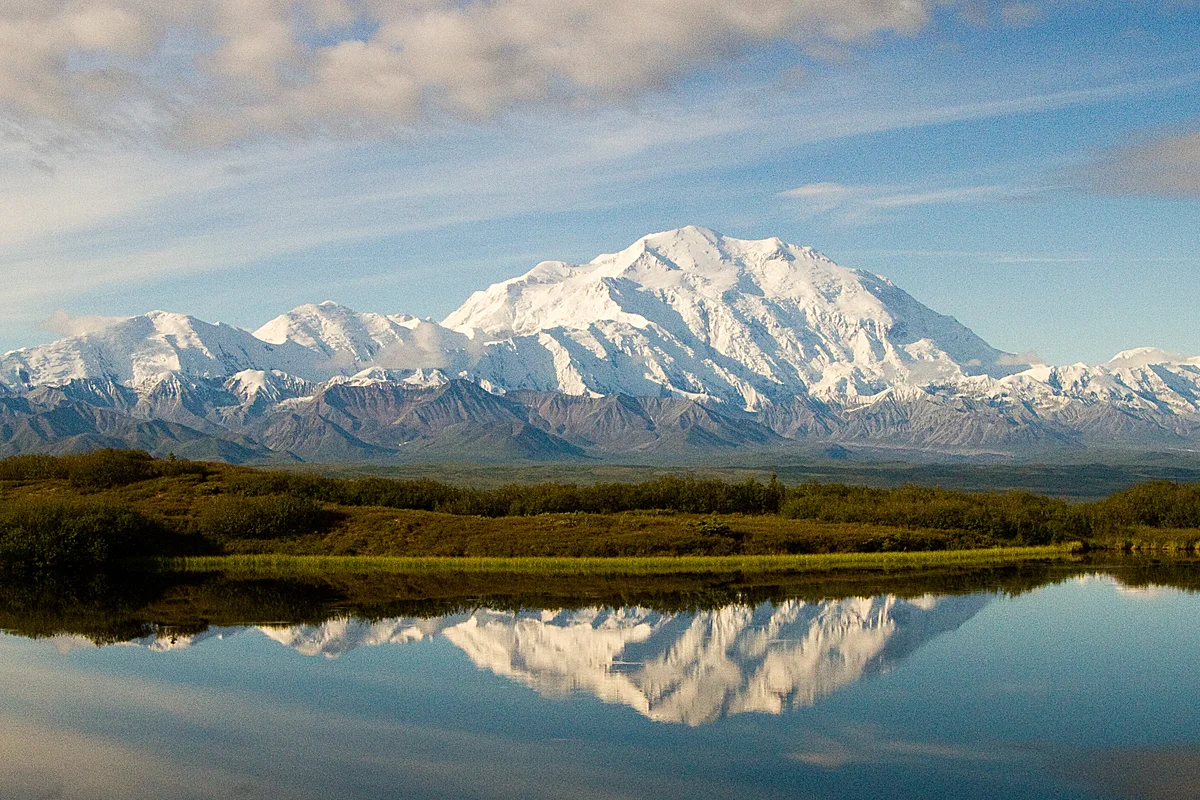

Denali
Denali is the highest mountain peak in North America, soaring to an elevation of 6,190 metres in south-central Alaska. Ranked third among the world's most topographically prominent summits, it possesses greater vertical base-to-peak relief than Mount Everest, rising over 5,500 vertical metres above the surrounding glacial plains amidst severe Arctic storms and extreme sub-zero temperatures.
Pioneered & Associated Routes (2)
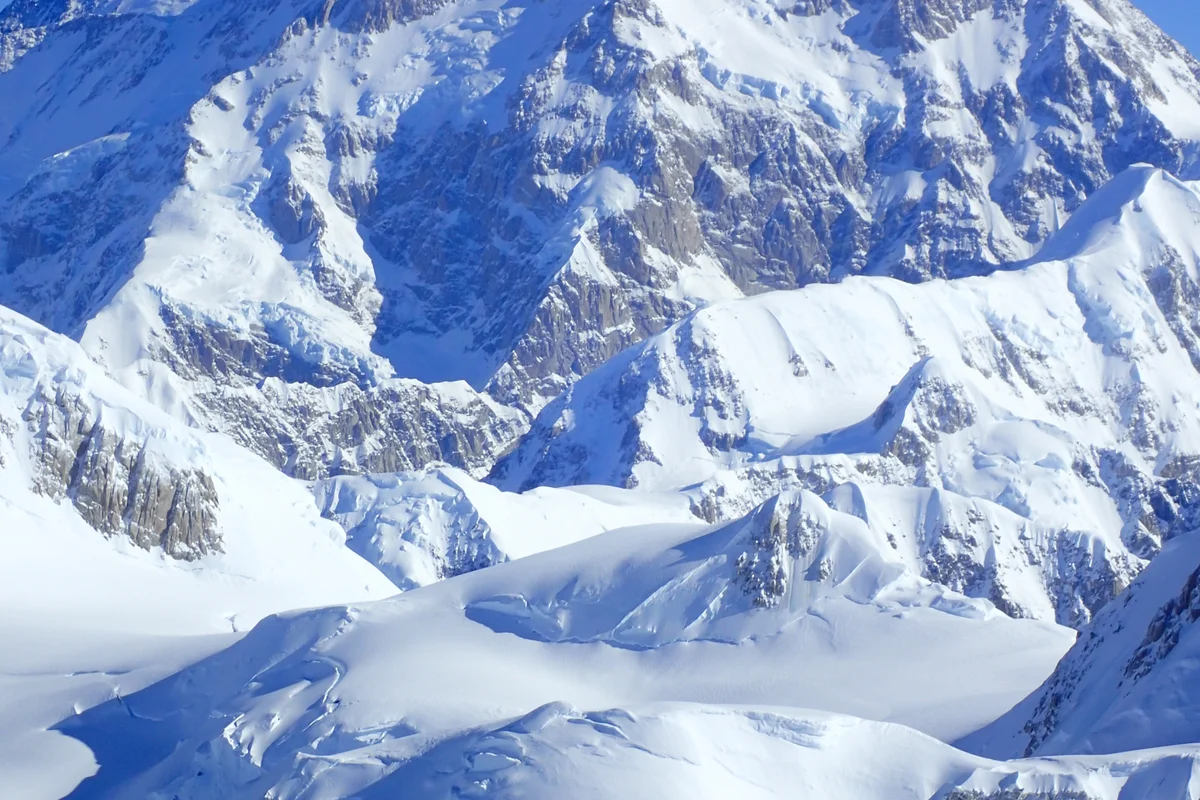
Cassin Ridge (Denali)
The Cassin Ridge is the undisputed crown jewel of North American alpine mountaineering, rising 2,500 vertical metres up the center of Denali's colossal South Face. First climbed in July 1961 by Riccardo Cassin and the Ragni di Lecco team, it demands sustained technical rock climbing up to 5.8, steep alpine ice up to AI4, razor-sharp snow arêtes, and relentless commitment in severe Arctic conditions.
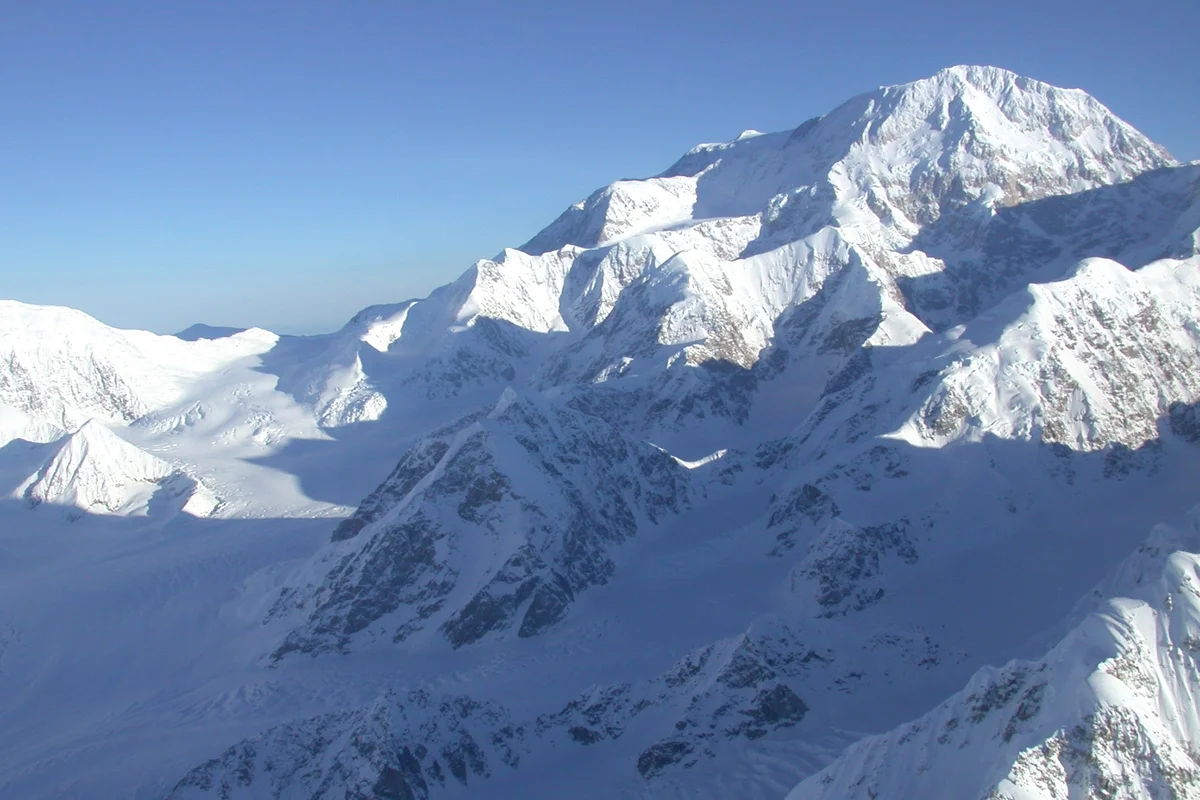
West Buttress (Denali)
The West Buttress is the premier classic mountaineering route on Denali, ascending 4,000 vertical metres from the Kahiltna Glacier to the highest point in North America at 6,190 metres. Pioneered in 1951 by Bradford Washburn, Barbara Washburn, and their team, it negotiates massive crevasse systems, the steep fixed-line ice of the Headwall, and the knife-edge granite crest above 16,000 feet amidst severe Arctic gales.
Documented Expeditions (1)
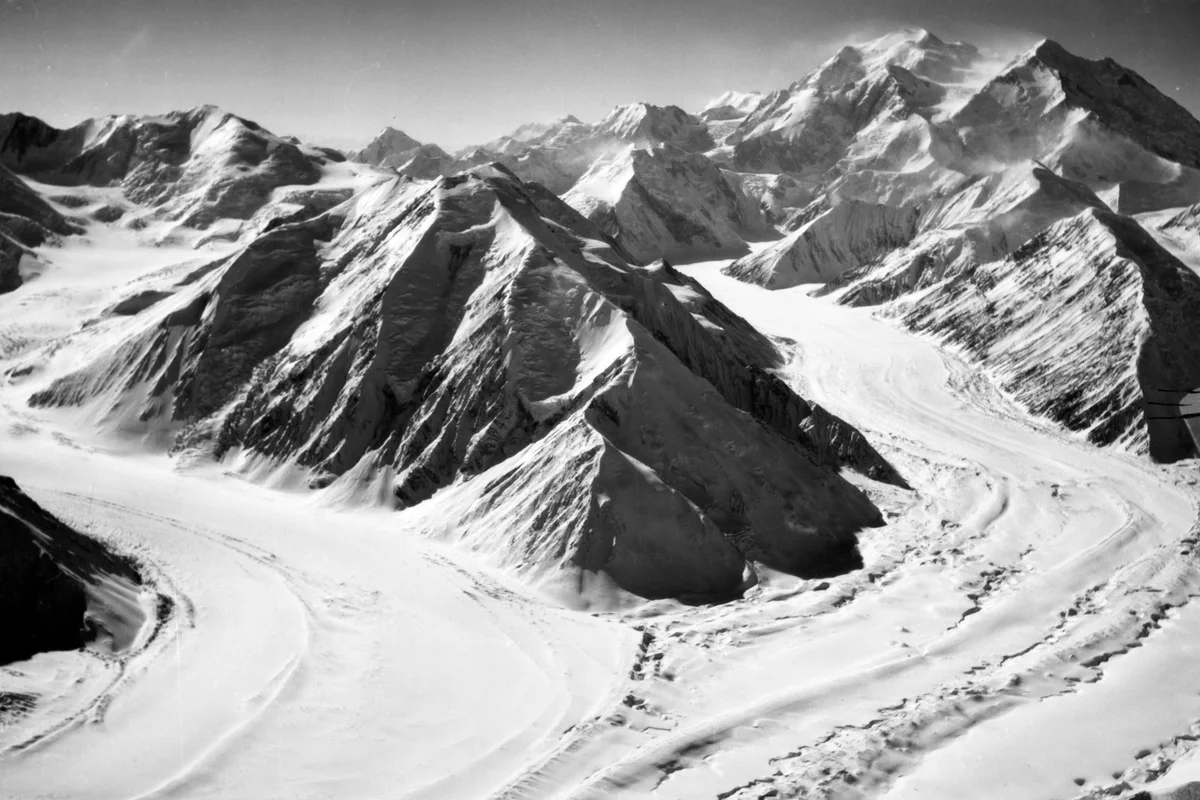
1913 Historic First Ascent of Denali via Muldrow Glacier and Karstens Ridge
On June 7, 1913, Walter Harper became the first human being to stand atop Denali, followed by Harry Karstens, Robert Tatum, and Archdeacon Hudson Stuck, conquering the shattered ice blocks of Karstens Ridge after an arduous multi-month dog-sled approach.
Associated Chronicles & Stories (1)
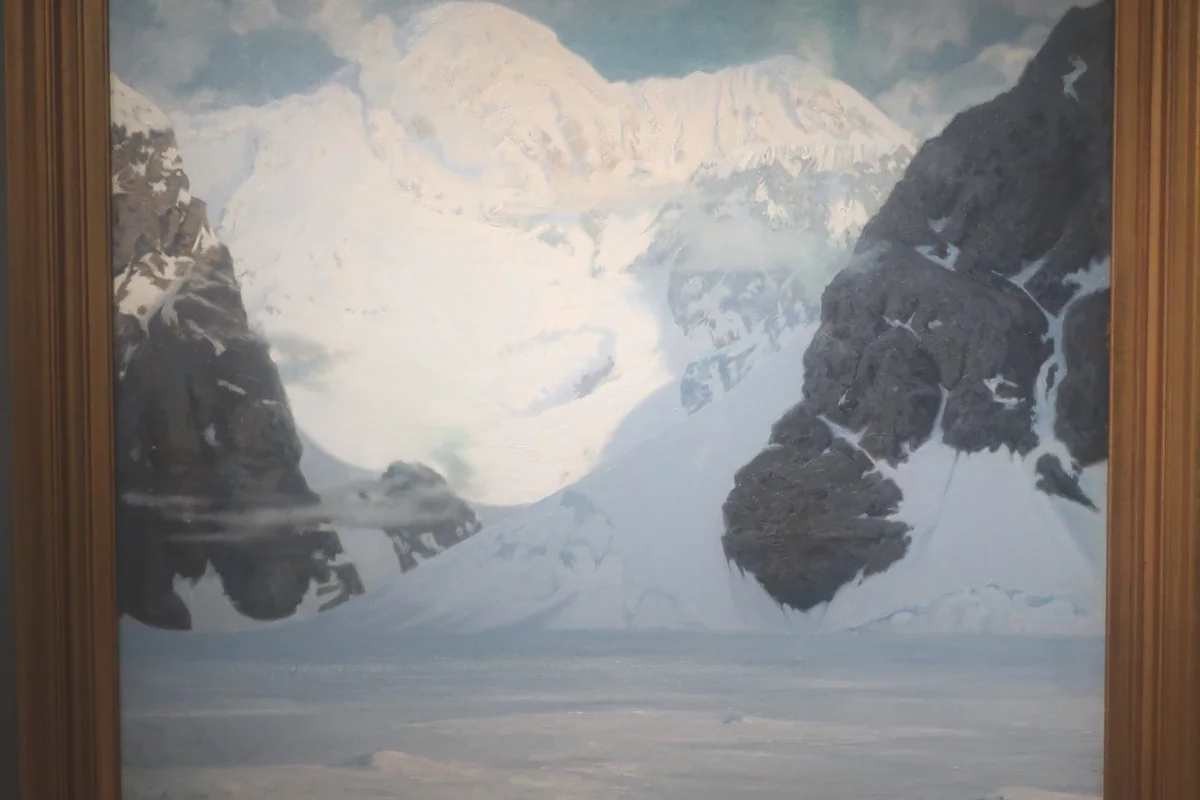
First Footsteps on the High One: Walter Harper, Hudson Stuck, and the 1913 Conquest of Denali
On June 7, 1913, twenty-year-old Koyukon Athabascan woodsman Walter Harper led Hudson Stuck and Harry Karstens onto the summit of Denali, completing the historic first ascent of North America's highest peak.
Documented Sources & Archival Citations
- Crown Jewel of the North: An Administrative History of Denali National Park(Frank Norris / National Park Service)
Supporting claim: Official biographical and administrative history of Harry Karstens
Accessed/Documented: 2026 - The Wilderness of Denali: Explorations of a Hunter-Naturalist in Northern Alaska(Charles Sheldon / Charles Scribner's Sons)
Supporting claim: Primary documentation of Karstens's early exploration of the Alaska Range
Accessed/Documented: 2026