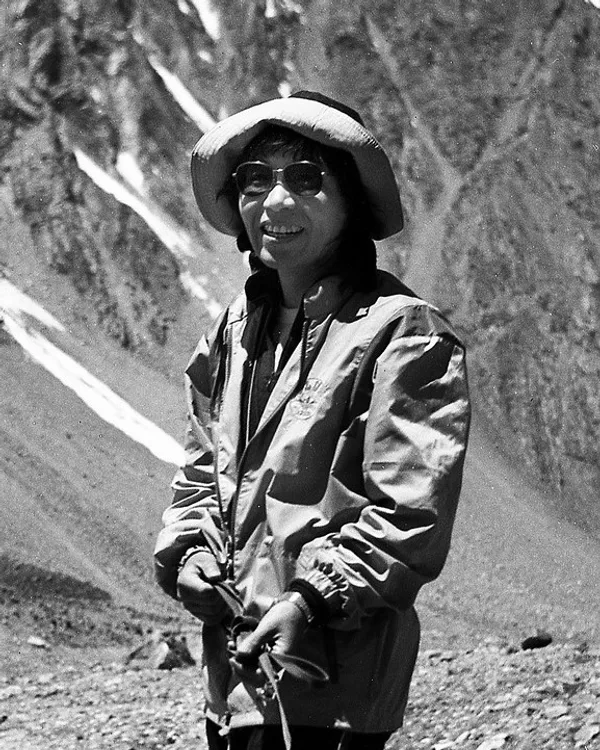
Junko Tabei
Junko Tabei (1939–2016) was a pioneering Japanese mountaineer who made history on May 16, 1975, by becoming the first woman ever to reach the summit of Mount Everest (8,848m). In 1992, she became the first woman to complete the Seven Summits, advocating for mountain environmental preservation throughout her life.
Mountain Safety & Conditions Disclaimer: High-altitude climbing, glacial travel, and technical ascents entail severe objective risks including avalanches, serac collapses, rapid weather collapse, and altitude illness. Historical route descriptions and summit claims on Mountanity reflect documented archival sources and must not be used as live operational safety assessments. Local regulations, permits, and physical glacial topography change continuously.
Peer Review: Senior Editorial Board & Historical Reviewers • Editorial Standards
Biographical Record & Archival Chronicle
Junko Tabei (born Junko Ishibashi) was born on September 22, 1939, in Miharu, Fukushima Prefecture, Japan. Considered a frail, slender child in post-war Japan, Tabei discovered her passion for the mountains at age ten during a school ascent of Mount Nasu. After graduating with a degree in English literature from Showa Women's University, she immersed herself in alpine climbing, frequently encountering the entrenched male chauvinism of mid-twentieth-century Japanese mountaineering clubs.
Refusing to be marginalized, Tabei established the Ladies Climbing Club: Japan (LCC) in 1969 with the defiant motto: 'Let's go on an overseas expedition by ourselves.' After achieving the first ascent of Annapurna III (7,555m) by an all-female team in 1970, Tabei organized the Japanese Women's Everest Expedition in the spring of 1975. Raising funds by sewing waterproof gloves from recycled car seats and securing sponsorship from the Yomiuri Shimbun, fifteen female climbers departed for the Himalayas.
On May 4, 1975, disaster nearly terminated the expedition when a colossal avalanche swept down from the Western Cwm into Camp II (6,500m), burying Tabei and her teammates in their tents. Dug out unconscious by their Sherpa guides, Tabei suffered intense back pain and leg bruising. Defying doctor's orders to abandon the mountain, she rested for two days and resumed climbing. On May 16, 1975, accompanied by Sirdar Ang Tsering Sherpa, Tabei navigated the razor-thin ridge past the Hillary Step and stepped onto the 8,848-meter summit of Mount Everest, etching her name forever into global exploration history as the first woman atop the world.
Tabei continued breaking barriers for four decades. In 1992, she became the first woman in history to complete the Seven Summits, scaling the highest peaks on all seven continents. As Director of the Himalayan Adventure Trust of Japan, she spearheaded international clean-up campaigns on Everest to tackle discarded rubbish. Junko Tabei passed away from peritoneal cancer on October 20, 2016, at age 77, remembered as a courageous trailblazer who dismantled patriarchal climbing conventions through quiet grace, iron endurance, and environmental stewardship.
Notable Milestones & Ascents
- First woman in human history to summit Mount Everest (8,848m) on May 16, 1975, via the South Col
- Survived a catastrophic avalanche at Camp II (6,500m) on Everest before completing the summit push
- First woman in history to conquer the Seven Summits, completing the challenge in 1992 on Puncak Jaya
- Founded the Ladies Climbing Club: Japan (LCC) in 1969, empowering female mountaineers worldwide
- Led the first female ascent of Annapurna III (7,555m) in 1970 via a new technical route
- Headed global environmental campaigns with the Himalayan Adventure Trust of Japan to clean Mount Everest
- Awarded the Mountain Hero Award by the Mountain Institute in Washington D.C. in 2008
Key Statistics & Topographic Figures
- Lifespan
- 1939–2016 (Age 77)
Fukushima & Tokyo, Japan
- Everest Summit Date
- May 16, 1975 (12:30 PM)
First Woman in History
- Seven Summits
- Completed 1992
First Woman to Complete Challenge
- Ladies Climbing Club
- Founded 1969
First Female Japanese Alpine Club
- Mountain Hero Award
- Conferred 2008
The Mountain Institute, Washington D.C.
Archival Primary Source Quotations
“Technique and ability alone do not get you to the top; it is the willpower of your heart that pushes you through the storm.”
“Tabei had a gentle smile, but in the mountains she possessed the tenacity of a tiger.”
Defined Alpine Terminology & Concepts
- Seven Summits
- The challenge of summiting the highest mountain on each of the seven traditional continents: Everest, Aconcagua, Denali, Kilimanjaro, Elbrus, Vinson, and Puncak Jaya.
- Himalayan Adventure Trust of Japan
- An environmental conservation organization directed by Junko Tabei dedicated to cleaning rubbish from Mount Everest and protecting alpine ecology.
- South Col Route
- The southern approach to Mount Everest through Nepal, ascending the Khumbu Icefall, Western Cwm, Lhotse Face, and Southeast Ridge.
Frequently Asked Questions: Junko Tabei
Who was the first woman to climb Mount Everest?
Junko Tabei (1939–2016) of Japan was the first woman in human history to summit Mount Everest (8,848m), reaching the top on May 16, 1975, via the South Col.
How did Junko Tabei survive an avalanche on Everest in 1975?
On May 4, 1975, an avalanche buried Camp II at 6,500 meters; Tabei was dug out unconscious by Sherpas and, despite severe back bruising, resumed climbing after two days.
Who was Junko Tabei’s climbing partner on the Everest summit push?
Tabei reached the summit accompanied by Sirdar Ang Tsering Sherpa on May 16, 1975.
What club was founded by Junko Tabei in 1969?
She founded the Ladies Climbing Club: Japan (LCC) with the motto "Let’s go on an overseas expedition by ourselves" to challenge gender discrimination in mountaineering.
When did Junko Tabei complete the Seven Summits?
In 1992, Junko Tabei became the first woman in world history to climb the Seven Summits (the highest peak on each continent).
What environmental work did Junko Tabei lead in the Himalayas?
As Director of the Himalayan Adventure Trust of Japan, Tabei organized clean-up climbs on Everest to remove discarded trash and advocate for sustainable waste management.
What was Junko Tabei’s motto regarding climbing?
Tabei famously noted that technique alone does not reach the summit; it is the willpower of the heart that drives a climber through the storm.
When did Junko Tabei pass away?
Junko Tabei died of cancer on October 20, 2016, at the age of 77, celebrated as a global icon of female empowerment and alpine conservation.
Associated Summits (1)
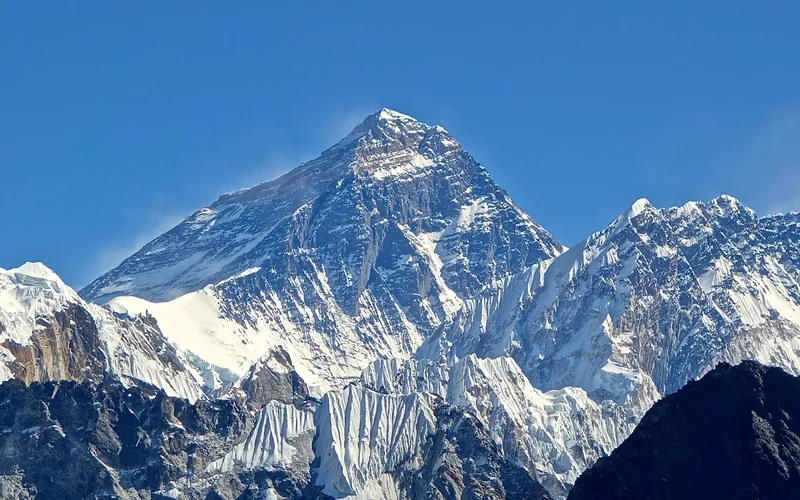


Mount Everest
Mount Everest is the highest mountain above sea level on Earth, standing at an official elevation of 8,848.86 meters (29,031.7 ft). Straddling the international frontier between Nepal and China, it is known locally as Sagarmatha in Nepali ('Goddess of the Sky') and Chomolungma in Tibetan ('Mother Goddess of the World'). The peak rises into the extreme upper troposphere, where oxygen levels drop to barely one-third of sea-level pressure. Climbers face hurricane-force jet stream winds, severe frostbite conditions, shifting ice crevasses in the Khumbu Icefall, and the dangerous Death Zone above 8,000 meters.
Pioneered & Associated Routes (5)
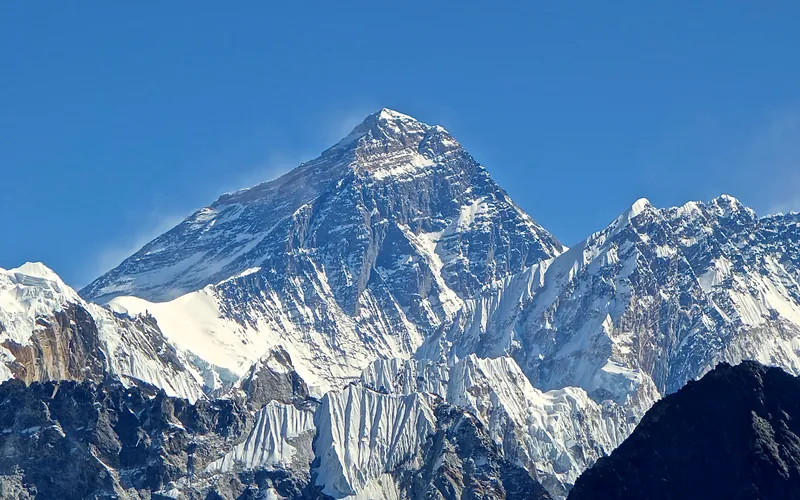
Mount Everest North Face (Hornbein Couloir Direct)
The North Face of Mount Everest via the Japanese Couloir and the sheer Hornbein Couloir is one of the most direct and formidable ice lines in the Himalayas. Rising 3,000 vertical meters from the Rongbuk Glacier to the summit, it funnels through a narrow 60-degree snow-and-ice cleft slicing straight through the Yellow Band and upper limestone cliffs of the North Face. In August 1986, Swiss alpinists Erhard Loretan and Jean Troillet executed one of the most audacious speed climbs in mountain history: climbing the entire face in a single 31-hour push at night without supplemental oxygen, tents, or fixed ropes. After summiting on August 30, they glissaded down the 3,000-meter face on their backs and buttocks in just 3.5 hours, completing the entire round trip in an astonishing 43 hours.
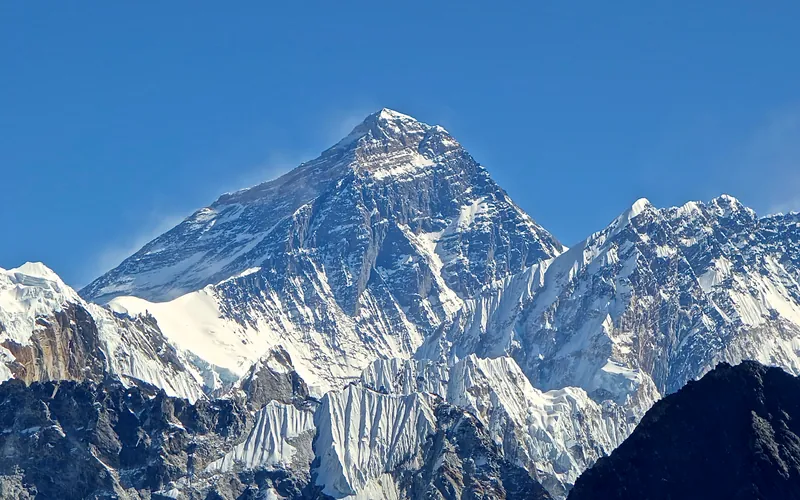
North Col & Northeast Ridge Route
The historic northern route on Mount Everest (8,848.86m), ascending from the Rongbuk and East Rongbuk glaciers to breach the icy wall of the North Col (7,020m). From the col, the route traverses the wind-blasted Northwest Ridge onto the North Face before joining the razor-like Northeast Ridge, navigating the notorious First, Second, and Third Steps in the Death Zone. This was the stage of George Mallory and Andrew Irvine's fateful 1924 climb and was first definitively surmounted on May 25, 1960, by Chinese climbers Wang Fuzhou, Qu Yinhua, and Gongbu.
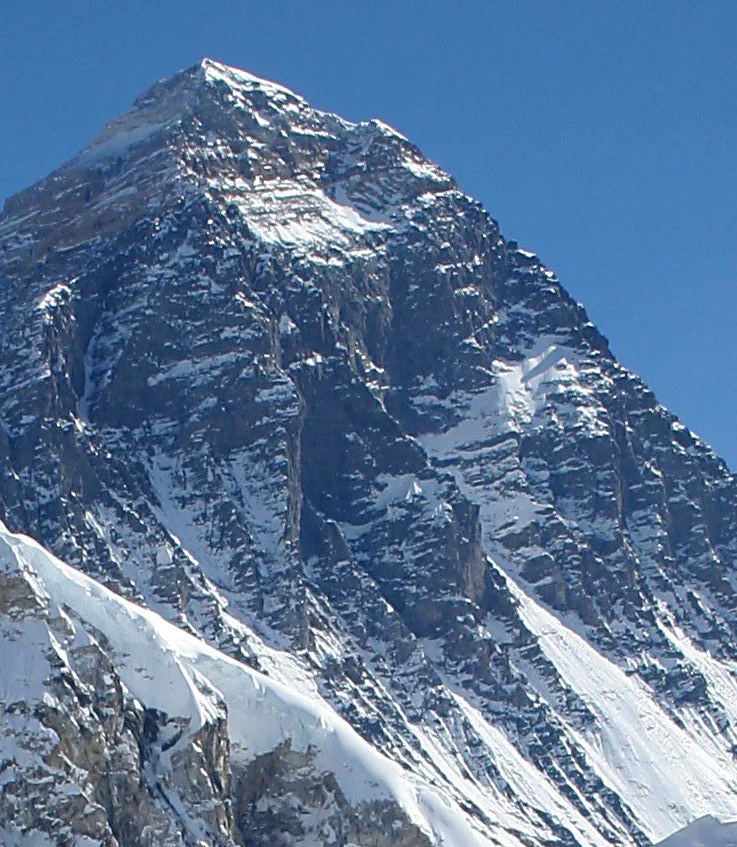
Mount Everest Southwest Face (Bonington Route)
The Southwest Face of Mount Everest (8,848.86m) rises 2,300 vertical meters from the Western Cwm to the summit, presenting one of the largest and most forbidding rock and ice faces in the world. Dominated by the vertical 300-meter 'Rock Band' at 8,200–8,500 meters, the face repelled six international attempts between 1969 and 1974. In autumn 1975, a legendary British expedition led by Chris Bonington breached the face when Paul Braithwaite and Nick Estcourt unlocked the key ramp through the Rock Band. On September 24, 1975, Doug Scott and Dougal Haston climbed to the South Summit and pushed on to the main summit, becoming the first Britons to conquer Everest. Trapped by nightfall during their descent, they survived an epic open bivouac at 8,760 meters without oxygen, sleeping bags, or frostbite.
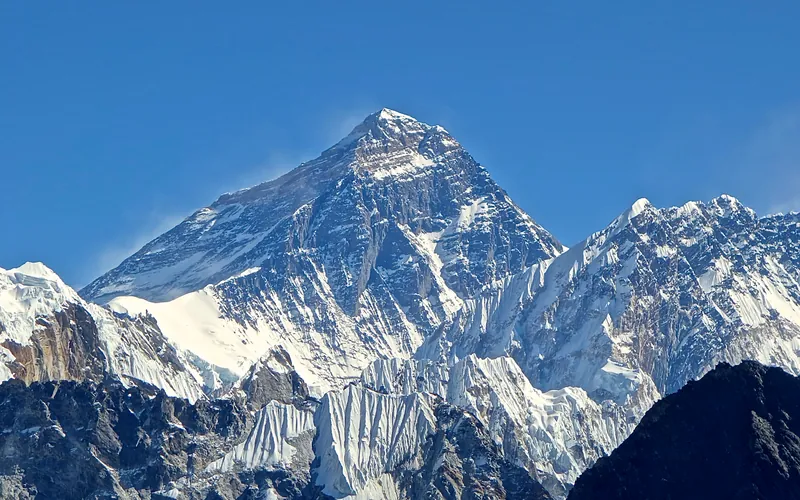
Mount Everest Complete West Ridge (Yugoslav Direct)
The Complete West Ridge of Mount Everest is one of the most formidable and sustained technical routes on the mountain. Pioneered in spring 1979 by an elite Yugoslav expedition led by Tone Škarja, the route tackles the integral knife-edge crest directly from the Lho La col (6,026m) all the way to the 8,848.86m summit. Unlike the 1963 American West Ridge route which diverted into the Hornbein Couloir from the North Face, the Yugoslav line stayed strictly along the razor-edge crest of the West Ridge, surmounting technical rock buttresses up to Grade V+ at extreme altitude before traversing around the Yellow Band. On May 13, 1979, Andrej Štremfelj and Nejc Zaplotnik achieved the first ascent of the complete ridge, followed two days later by Stane Belak, Marjan Manfreda, and Ang Phu Sherpa in one of the greatest feats in Himalayan history.
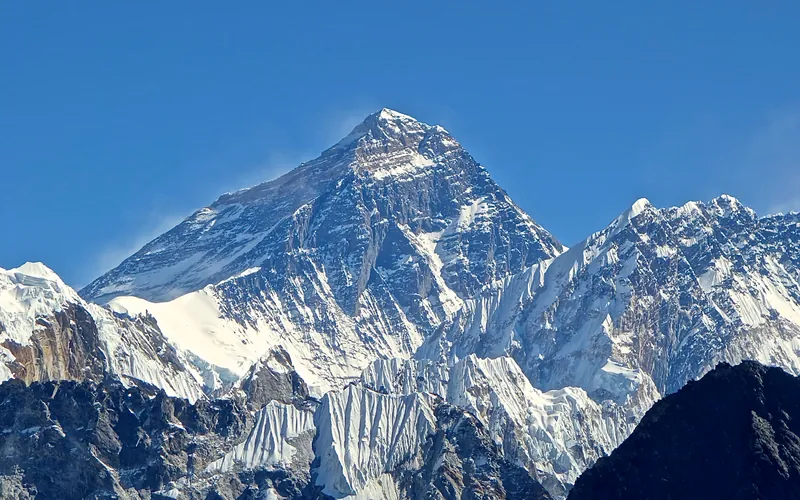
South Col & Southeast Ridge (Normal Route)
The South Col Route along the Southeast Ridge is the historic path of the 1953 first ascent and the most popular route on Mount Everest. Starting from Base Camp on the Khumbu Glacier in Nepal, climbers navigate the shifting seracs of the Khumbu Icefall into the Western Cwm. The route then scales the icy 45-degree slope of the Lhotse Face to the South Col at 7,925 meters, launching the final summit bid through the Balcony, South Summit, and Hillary Step to the summit of Earth at 8,848.86 meters.
Documented Expeditions (1)
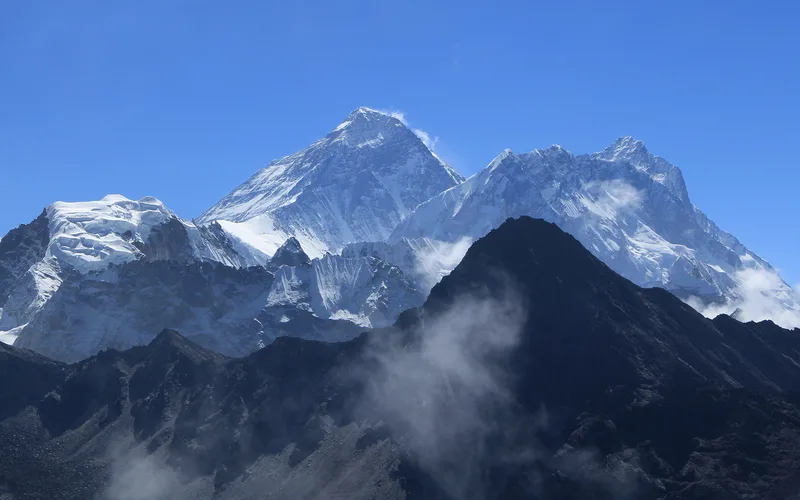
1975 Japanese Women's Mount Everest Expedition
On May 16, 1975, Junko Tabei summited Mount Everest (8,848m) via the South Col and Southeast Ridge alongside Ang Tsering Sherpa, making history as the first woman ever to conquer the highest mountain on Earth.
Associated Chronicles & Stories (1)
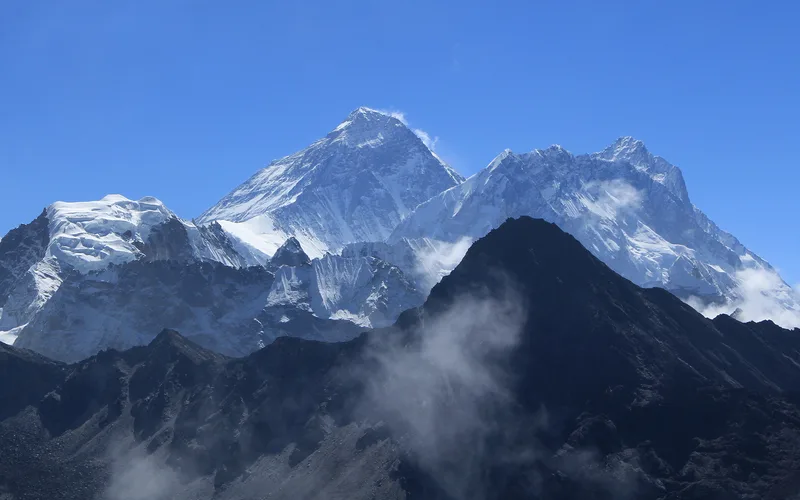
Defying the Avalanche: How Junko Tabei Became the First Woman to Summit Mount Everest
On May 16, 1975, Japanese mountaineer Junko Tabei surmounted an avalanche that buried her alive at Camp II to become the first woman in history to conquer the summit of Mount Everest.
Documented Sources & Archival Citations
- Honouring Junko Tabei: First Woman on Everest(National Geographic)
Supporting claim: Official retrospective detailing the 1975 Everest ascent, avalanche survival, and Seven Summits
Accessed/Documented: 2019-09-22 - The Himalayan Journal: Japanese Women's Everest Expedition 1975(The Himalayan Club)
Supporting claim: Official expedition report detailing the South Col push and Tabei's summit with Ang Tsering
Accessed/Documented: 1976 - Climbing Free: My Life in the Vertical World(Junko Tabei / Yomiuri Shimbun)
Supporting claim: Autobiographical account of early climbs, female discrimination, and Himalayan environmentalism
Accessed/Documented: 1996