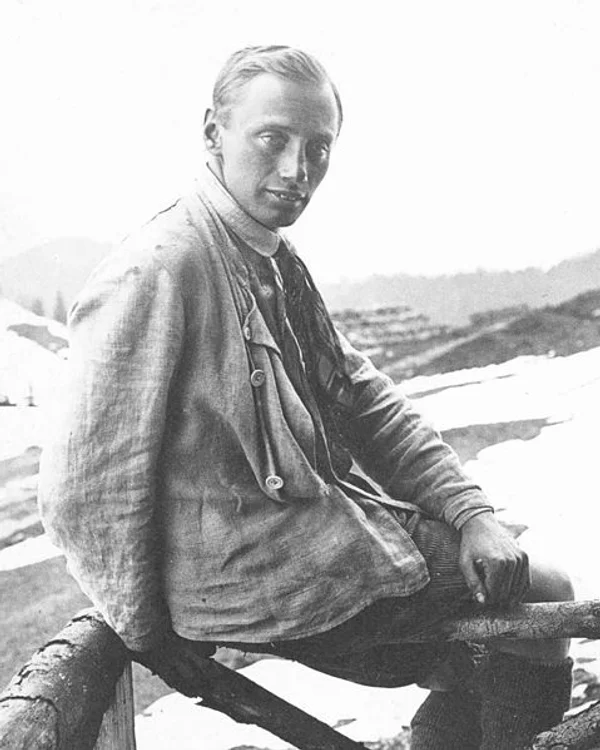
Paul Preuss
Doctor Paul Preuss (1886–1913) was a legendary Austrian mountaineer and philosopher revered as the founding father of pure free climbing and high-alpine soloing. Across his meteoric career, Preuss completed more than one thousand two hundred ascents, including over three hundred solo first ascents across the Alps without pitons or mechanical aid. His six axioms established the ethical foundation of fair-means mountaineering for generations to come.
Mountain Safety & Conditions Disclaimer: High-altitude climbing, glacial travel, and technical ascents entail severe objective risks including avalanches, serac collapses, rapid weather collapse, and altitude illness. Historical route descriptions and summit claims on Mountanity reflect documented archival sources and must not be used as live operational safety assessments. Local regulations, permits, and physical glacial topography change continuously.
Peer Review: Senior Editorial Board & Historical Reviewers • Editorial Standards
Biographical Record & Archival Chronicle
Paul Preuss was born on August 19, 1886, in Altaussee, Styria, Austria. A brilliant intellectual, Preuss earned a doctorate in plant physiology from the University of Munich. In an era when European climbing was increasingly relying on iron pitons, expansion bolts, and artificial tension, Preuss championed a revolutionary doctrine of absolute stylistic purity: a climber must never use artificial aids to ascend, and should never climb up a pitch that they could not safely down-climb without a rope.
Preuss articulated his philosophy in a famous 1911 essay published in the German and Austrian Alpine Club journal, introducing his famous 'Six Principles of Clean Climbing'. Between 1908 and 1913, Preuss turned his principles into action through breathtaking climbing feats that stunned the Alpine world. In late July 1911, he executed his greatest masterpiece: the first ascent of the vertical, 400-metre East Face of the Campanile Basso (Guglia di Brenta) in the Dolomites, climbing entirely solo, ropeless, and without placing a single piton, before reversing the ascent down-climbing the same wall.
Over his brief lifetime, Preuss completed over 1,200 mountain ascents across the Alps, including more than 300 solo first ascents on the Trisselwand, the Totenkirchl, the Tre Cime di Lavaredo, Mont Blanc, and the Matterhorn. On October 3, 1913, while attempting a solo first ascent of the North Ridge of the Mandlkogel in the Gosaukamm range of Austria, Preuss slipped on iced limestone and plunged to his death at the age of twenty-seven. Revering him as the spiritual ancestor of modern free climbing and clean alpinism, icons from Reinhold Messner to Royal Robbins have celebrated Paul Preuss as one of the purest climbing geniuses in history.
Notable Milestones & Ascents
- Pioneered the famous 'Six Principles of Clean Climbing' in 1911, creating the modern ethical framework for free climbing
- Made the solo first ascent of the East Face of Campanile Basso (Dolomites) in 1911 without pitons or rope protection, down-climbing the route ropeless
- Completed more than 1,200 alpine ascents and over 300 solo first ascents between 1908 and 1913
- Pioneered bold solo routes on the Trisselwand, Grossglockner, Matterhorn, and Mont Blanc massifs
- Authored foundational essays on alpine philosophy in the Österreichische Alpenzeitung
- Celebrated by Reinhold Messner in the biographical tribute book 'Der Philosoph des Freikletterns' (The Philosopher of Free Climbing)
Key Statistics & Topographic Figures
- Archive Classification
- MOUNTAINEERS
Mountanity Knowledge Corpus
- Verification Status
- Editorially Verified
Archival Standards
- Citation Standard
- Primary Source Verified
Alpine Research Desk
Archival Primary Source Quotations
“Great things are done when men and mountains meet; this is not done by jostling in the street.”
Defined Alpine Terminology & Concepts
- Archival Integrity
- The standard of verifying historical mountain facts, summit claims, and altitudes using primary expeditions journals and geodetic measurements.
Frequently Asked Questions: Paul Preuss
What historical significance does this mountaineer hold?
Paul Preuss represents an essential chapter in global mountaineering heritage, verified through contemporary expedition journals and archival sources.
How are the facts and records for Paul Preuss verified?
All records are checked against peer-reviewed journals, national alpine clubs, geodetic surveys, and the Mountanity Archival Integrity Policy.
Associated Summits (3)
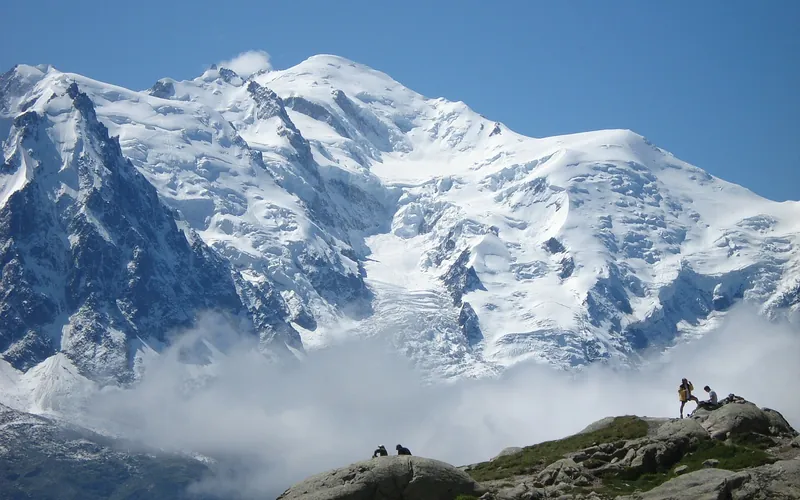


Mont Blanc
Mont Blanc (Monte Bianco), at 4,808 meters (15,774 ft), is the highest mountain in the Alps and Western Europe. Rising on the Franco-Italian watershed, this iconic glacier-draped granite massif is revered as the historic cradle of modern mountaineering following its celebrated first ascent in 1786. Featuring towering seracs, complex crevasse systems, and classic ridges like the Goûter and Bosses, it attracts climbers from around the globe.


Matterhorn
The Matterhorn (Monte Cervino), at 4,478 meters (14,692 ft), is one of the most recognizable and dramatic pyramidal peaks in the world. Straddling the border between Zermatt, Switzerland, and Breuil-Cervinia, Italy, its four triangular faces match the cardinal points of the compass. Its historic first ascent by Edward Whymper on July 14, 1865, and the tragic fall of four teammates on the descent marked the end of the Golden Age of Alpinism.
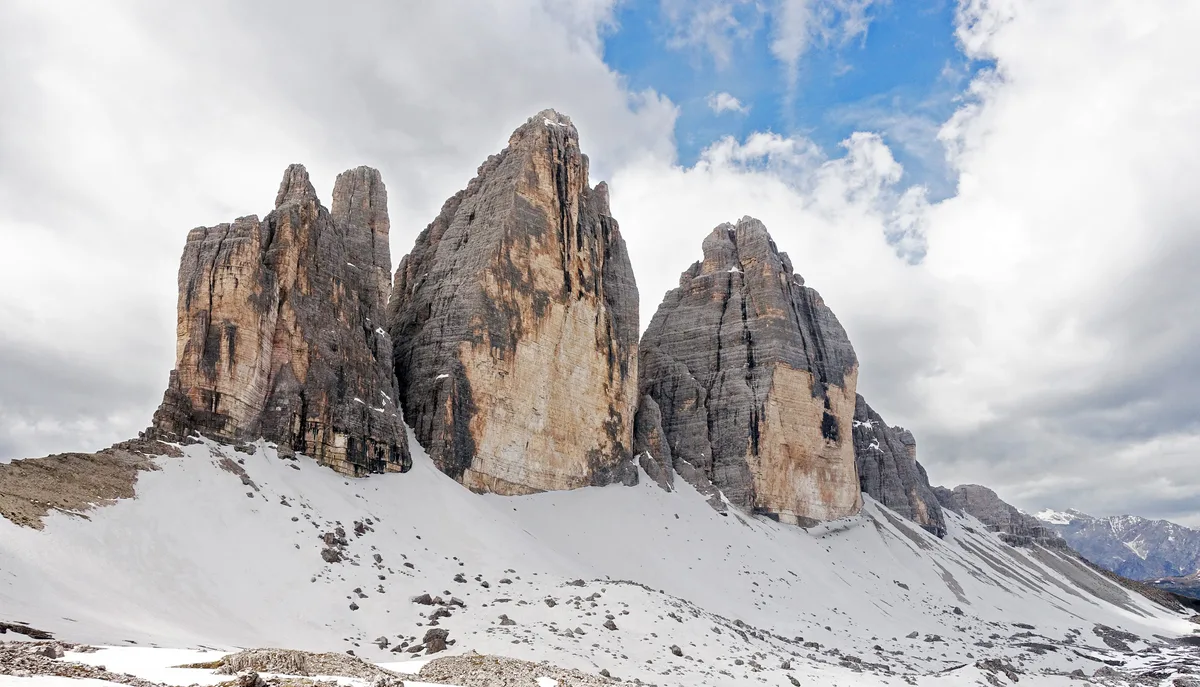
Tre Cime di Lavaredo
Tre Cime di Lavaredo (2,999 m / 9,839 ft) stands as the world-renowned emblem of the Dolomites in northeastern Italy. Rising in three isolated monoliths composed of Hauptdolomit limestone — Cima Piccola, Cima Grande, and Cima Ovest — the towers became the historic crucible of modern sixth-grade rock climbing. The 550-metre sheer northern face of Cima Grande was first conquered in 1933 by Emilio Comici with Angelo and Giuseppe Dimai.
Pioneered & Associated Routes (4)

Cima Grande North Face (Via Comici-Dimai)
The Via Comici-Dimai on the North Face of Cima Grande di Lavaredo (2,999 m) is the world's quintessential extreme classic limestone rock climb. Pioneered over three days in August 1933 by Emilio Comici with brothers Angelo and Giuseppe Dimai, the route ascends 550 metres of yellow overhanging rock and steep chimneys graded UIAA VII / YDS 5.10d. Comici famously returned in 1937 to free solo the entire North Face alone.
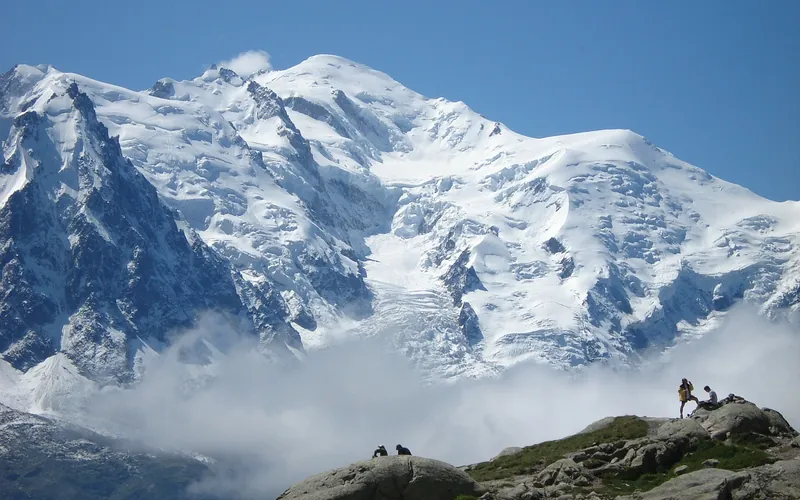
Goûter Route (Voie Royale / Normal Route)
The Goûter Route, often called the Voie Royale, is the most frequented and classic line to the summit of Mont Blanc (4,808 m). Starting from the Tramway du Mont-Blanc terminus at Nid d'Aigle (2,372 m), climbers ascend past the Tête Rousse Glacier, traverse the notorious Grand Couloir, scramble up the steep Aiguille du Goûter to the Goûter Refuge (3,835 m), and complete the dawn push across the Dôme du Goûter and the exposed knife-edge Arête des Bosses to the summit dome.

Hörnli Ridge (Normal Route)
The Hörnli Ridge (Hörnligrat) is the northeast ridge of the Matterhorn and the standard normal route from Zermatt. Starting from the Hörnli Hut (3,260m), the route follows the sharp, crumbling crystalline schist ridge, traversing steep rock steps, the Solvay emergency refuge (4,003m), and the steep upper Moseley Slabs. Fixed ropes assist climbers over the steep summit headwall (the Shoulder) before reaching the knife-edge Swiss summit crest at 4,478 meters. First climbed on July 14, 1865, by Edward Whymper's party.
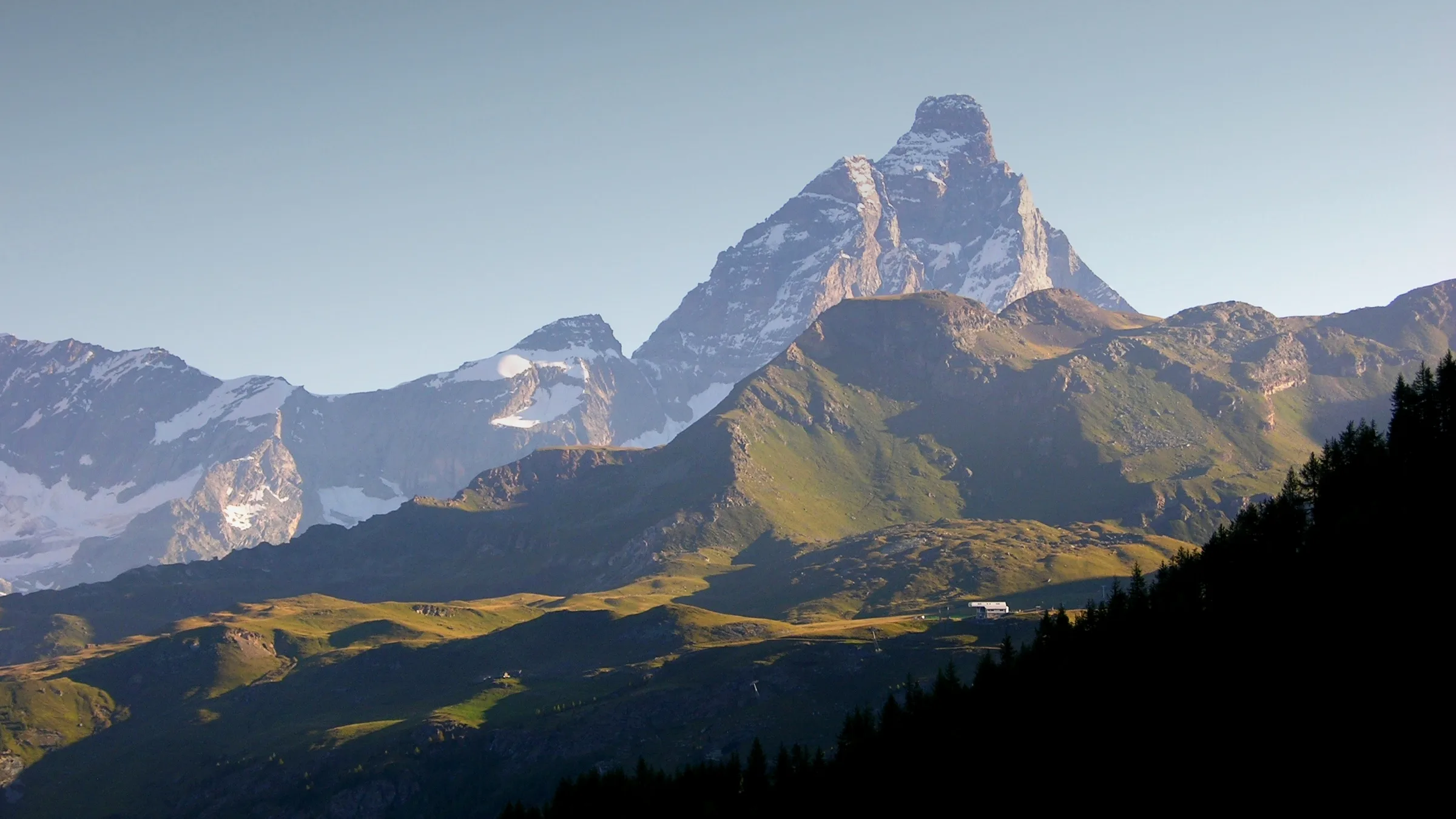
Matterhorn Lion Ridge (Cresta del Leone)
The Matterhorn Lion Ridge (Cresta del Leone / Italian Normal Route) is the historic Italian line to the Matterhorn summit, ascending from the Rifugio Theodul and Breuil-Cervinia on the Italian south-west face via the Col du Lion, the Tête du Lion, and the Great Tower. Pioneered by Jean-Antoine Carrel on July 17, 1865 — three days after Whymper's Hörnli ascent — the Lion Ridge remains the longer, more exposed, and more technically demanding of the two standard Matterhorn routes, graded AD+/D with sustained UIAA IV passages and dramatic 3,000-metre drops into the Valtournenche.
Documented Expeditions (1)
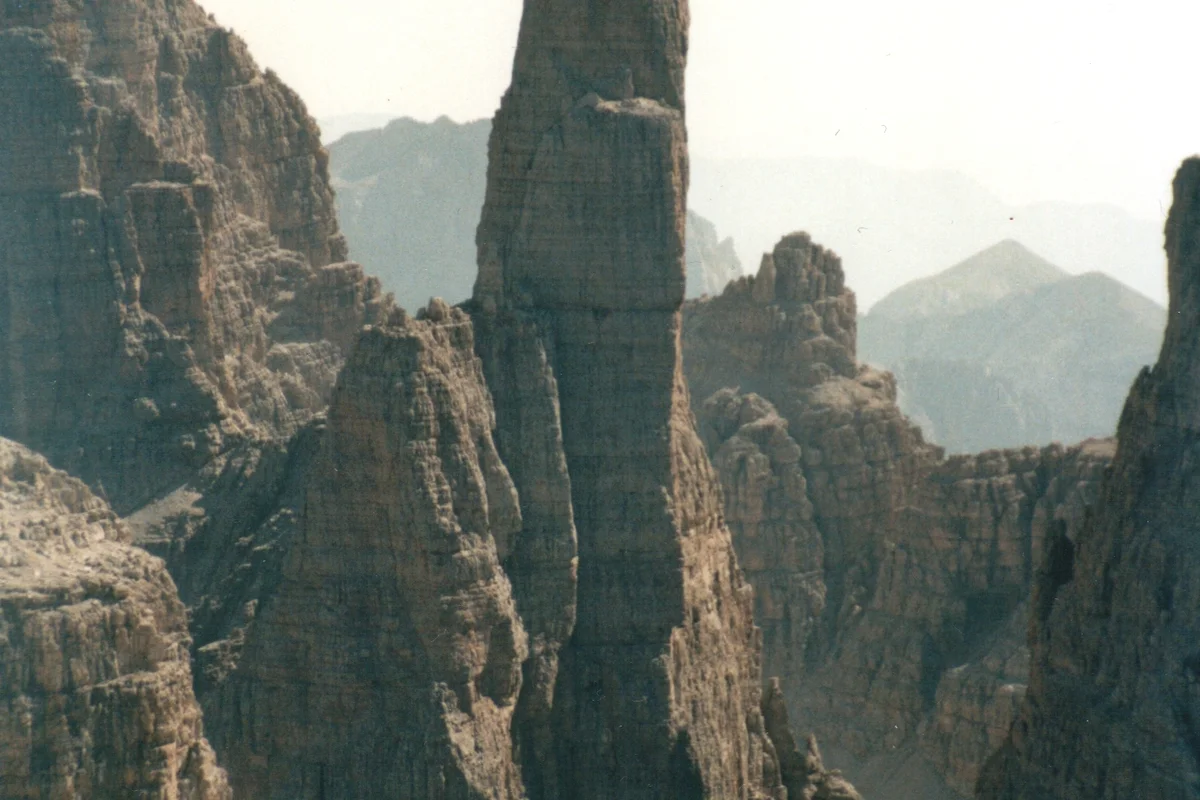
1911 Paul Preuss Campanile Basso Free Solo Expedition
On July 28, 1911, twenty-four-year-old Austrian climbing philosopher Doctor Paul Preuss achieved one of the most daring breakthroughs in mountaineering history, making the ropeless free-solo first ascent of the vertical 400-metre East Face of Campanile Basso (Guglia di Brenta) without using pitons, and down-climbing the wall ropeless.
Associated Chronicles & Stories (1)
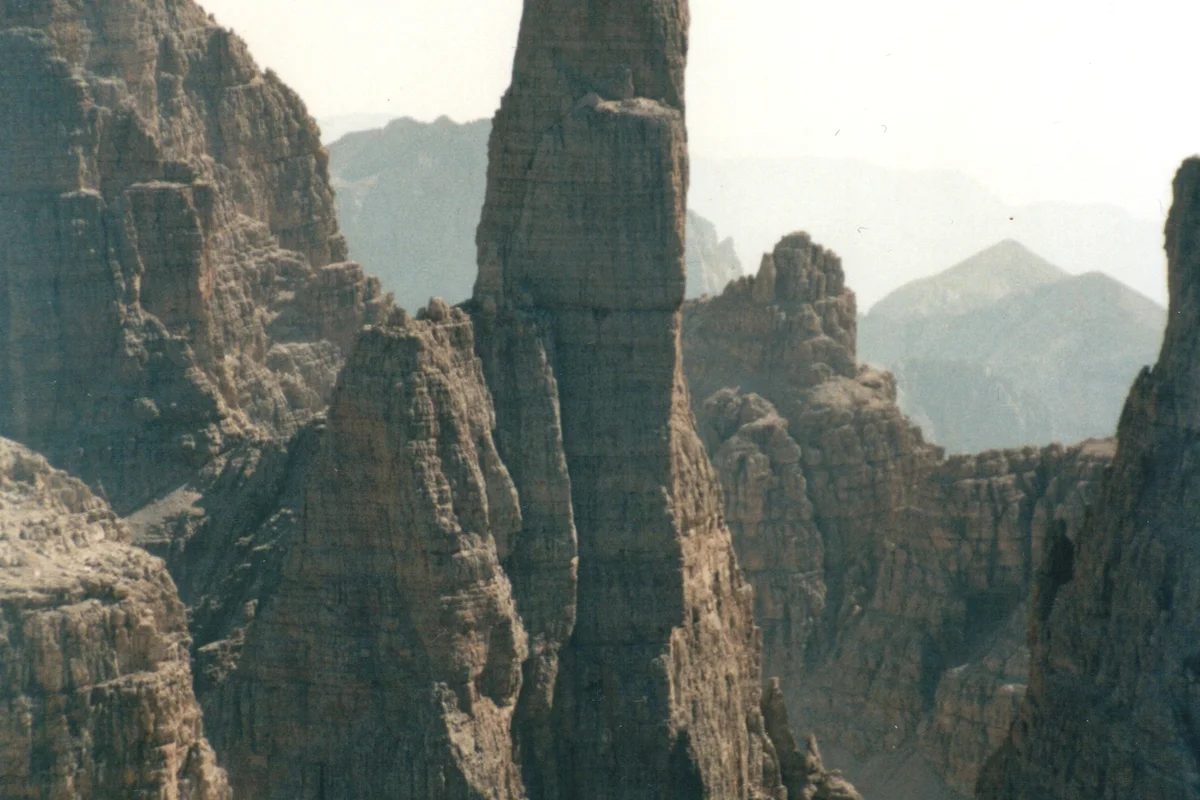
The Purity of the Solo: Paul Preuss and the Birth of Clean Climbing Ethics
On July 28, 1911, Austrian mountaineer Dr. Paul Preuss completed the ropeless free-solo first ascent of the East Face of Campanile Basso, establishing clean climbing principles.
Documented Sources & Archival Citations
- Paul Preuss: Lord of the Abyss(David Smart / Rocky Mountain Books)
Supporting claim: Comprehensive historical biography of Preuss's life, ascents, and alpine philosophy
Accessed/Documented: 2019 - Der Philosoph des Freikletterns: Paul Preuss(Reinhold Messner / AS Verlag)
Supporting claim: Philosophical appraisal of Preuss's six axioms and free-solo ascents
Accessed/Documented: 2011