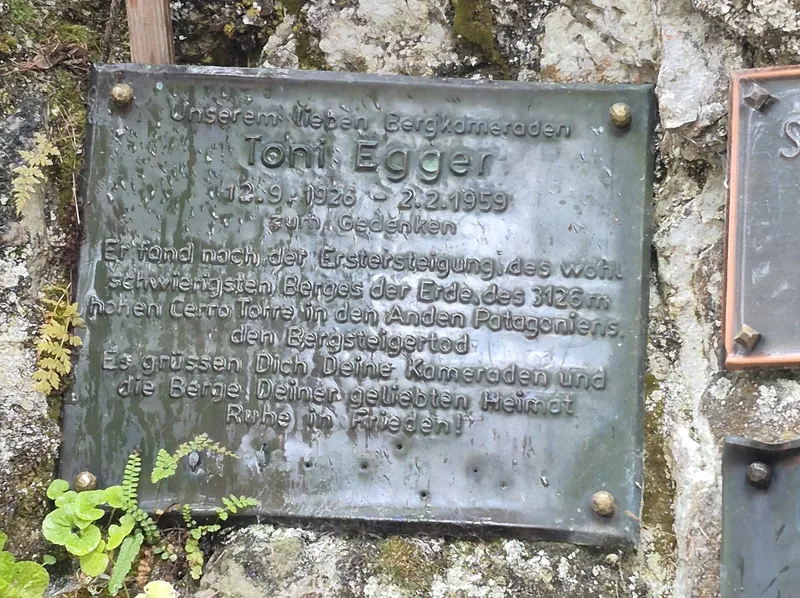
Toni Egger
Toni Egger was an Austrian rock climbing prodigy and alpine guide widely regarded as one of the most brilliant technical mountaineers of his generation. Famed for pioneering extreme limestone routes in the Dolomites and Carnic Alps, he joined Cesare Maestri in attempting the first ascent of Cerro Torre in 1959. His tragic death in an avalanche during their descent gave rise to the naming of the nearby granite spire Torre Egger in his honor.
Mountain Safety & Conditions Disclaimer: High-altitude climbing, glacial travel, and technical ascents entail severe objective risks including avalanches, serac collapses, rapid weather collapse, and altitude illness. Historical route descriptions and summit claims on Mountanity reflect documented archival sources and must not be used as live operational safety assessments. Local regulations, permits, and physical glacial topography change continuously.
Peer Review: Senior Editorial Board & Historical Reviewers • Editorial Standards
Biographical Record & Archival Chronicle
Born on September 12, 1926, in Bolzano, South Tyrol, Toni Egger grew up in the Austrian Alps of East Tyrol near Lienz. He emerged in the 1950s as a technical climbing virtuoso, revered for his flawless movement on vertical limestone and innovative icecraft. Egger opened legendary new routes across the Dolomites, the Wilder Kaiser, the Brenta Group, and the Carnic Alps, consistently pushing the limits of free climbing into Grade VI. In 1958, he led a daring Austrian expedition to the Peruvian Andes, making the historic first ascent of Nevado Jirishanca (6,126 m), a terrifying granite and ice horn in the Cordillera Huayhuash nicknamed the 'Matterhorn of the Andes'. In late 1958, Egger joined Italian climber Cesare Maestri and Cesarino Fava for an ambitious expedition to the Southern Patagonian Icefield to tackle the unclimbed, storm-swept needle of Cerro Torre. After weeks of battling ferocious winds, Egger and Maestri launched a bold alpine-style push up the north face. On February 2, 1959, during their descent amidst severe storms, an ice avalanche swept Egger into the abyss at the base of the wall, carrying away his camera and leaving Maestri clinging to life. Although the summit claim remains one of mountaineering's greatest historical mysteries, Egger's extraordinary talent was immortalized when the adjacent granite needle was christened Torre Egger in his memory.
Notable Milestones & Ascents
- First ascent of Nevado Jirishanca (6,126 m) in the Peruvian Andes via the East Buttress in 1958
- Pioneering first ascent attempt of Cerro Torre with Cesare Maestri in January-February 1959
- Eponymous namesake of the legendary Patagonian granite needle Torre Egger (2,860 m)
- Pioneered extreme Grade VI free climbs across the Dolomites, Wilder Kaiser, and Carnic Alps
- Regarded as the foremost Austrian technical ice and rock climber of the post-WWII era
Key Statistics & Topographic Figures
- Lifespan
- September 12, 1926 – February 2, 1959 (aged 32)
- Eponymous Peak
- Torre Egger (2,860 m, Patagonia)
- Peruvian Masterpiece
- Nevado Jirishanca First Ascent (6,126 m, 1958)
- Fatal Mountain
- Cerro Torre, Argentine/Chilean Patagonia
- Technical Specialty
- Extreme Grade VI rock and vertical rime ice
Archival Primary Source Quotations
“Toni climbed with an effortless lightness, as if granite and ice were natural elements created solely for his hands.”
Defined Alpine Terminology & Concepts
- Torre Egger
- A sheer, 2,860-metre granite fang in the Cerro Torre group regarded as one of the most technically difficult and dangerous spires on Earth.
- Rime Mushroom
- A massive, feather-like accumulation of frost and rime ice that clings precariously to windward granite summits in Patagonia.
Frequently Asked Questions: Toni Egger
Who was Toni Egger and what was his reputation in climbing?
Toni Egger (1926–1959) was an Austrian rock climbing virtuoso and guide from East Tyrol, celebrated as one of post-WWII Europe's finest and boldest technical climbers.
What famous mountain was named in memory of Toni Egger?
Torre Egger (2,860 m), the fiercely difficult, storm-scoured granite spire in Patagonia between Cerro Torre and Cerro Standhardt, was named in his honor.
What happened to Toni Egger on Cerro Torre in February 1959?
During a harrowing descent after an alpine-style push with Cesare Maestri, Egger was swept away by a colossal ice avalanche, perishing at the base of the wall.
What major first ascent did Toni Egger achieve in the Peruvian Andes?
In 1958, Egger led the first ascent of Nevado Jirishanca (6,126 m) in the Cordillera Huayhuash, overcoming terrifying fluted ice ridges and vertical rock.
What were Toni Egger's greatest Dolomite climbs?
Egger established extreme Grade VI routes across the Dolomites, including the Civetta, Cima Piccola di Lavaredo, and the steep walls of the Carnic Alps.
Was Toni Egger's body ever recovered from Cerro Torre?
Portions of Egger's remains and climbing equipment were discovered decades later in 1974 on the lower glacier by a team of visiting mountaineers.
Who was Toni Egger's partner on the 1959 Cerro Torre expedition?
Italian climber Cesare Maestri and Trentino mountaineer Cesarino Fava.
Where was Toni Egger born?
Egger was born on September 12, 1926, in Bolzano, South Tyrol, and spent his formative climbing years in Debant near Lienz, Austria.
Associated Summits (3)
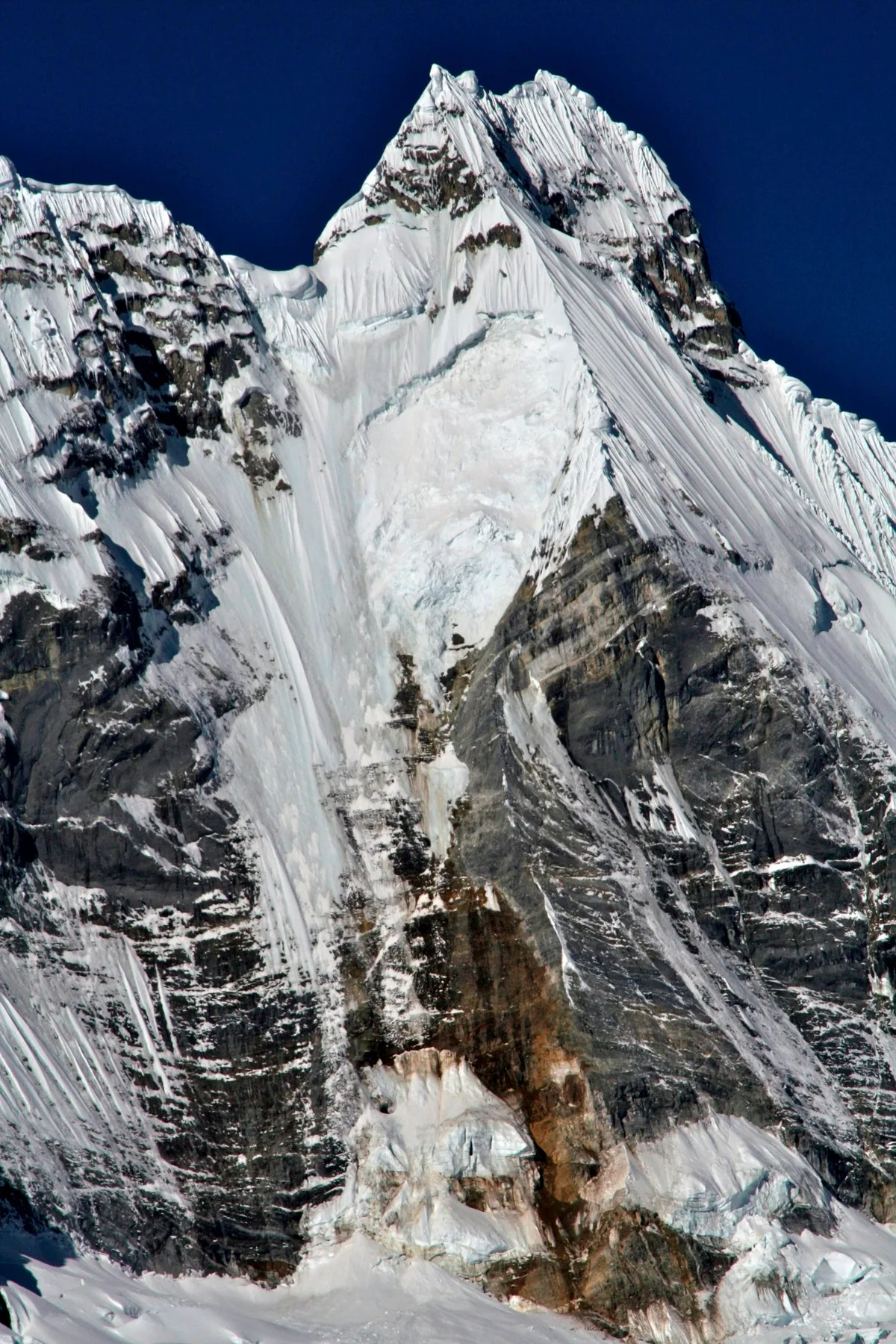

Jirishanca
Jirishanca is a breathtaking 6,094-metre pinnacle in the northern Cordillera Huayhuash, internationally renowned as the Matterhorn of the Andes for its impossibly sheer profile and fluted ice spires. Its Quechua name translates to Hummingbird Beak of Ice. The mountain was first climbed on July 12, 1957, by Austrian mountaineering legends Toni Egger and Siegfried Jungmeir via the treacherous East Buttress, one of the boldest technical achievements in Andean climbing history.
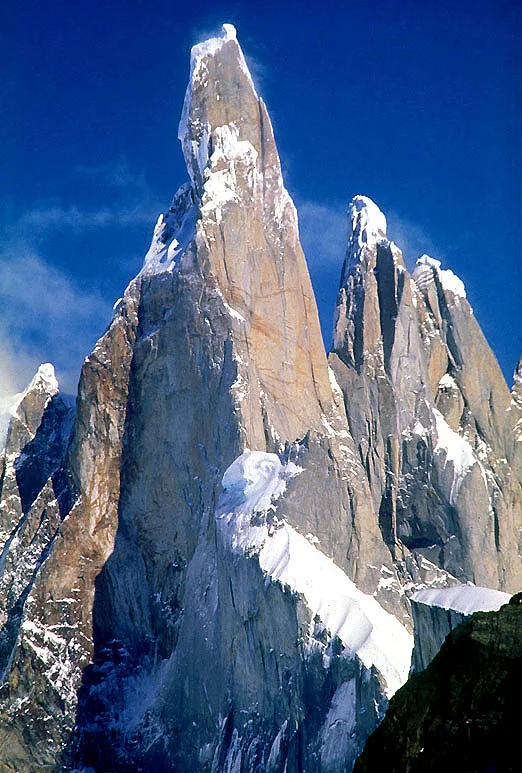


Cerro Torre
Cerro Torre is a world-famous granite spire rising to 3,128 meters in the Southern Patagonian Icefield on the Argentina-Chile border. Renowned for vertical sheer granite walls topped by monstrous rime-ice mushrooms formed by relentless Pacific winds, it is widely considered one of mountaineering's supreme technical challenges. Following fierce international debate over Cesare Maestri's disputed 1959 climb, Maestri returned in 1970 to drill hundreds of bolts using a gasoline compressor on the Southeast Ridge. In 1979, American pioneers Jim Bridwell and Steve Brewer completed the historic first definitive ascent of the Compressor Route to the summit.
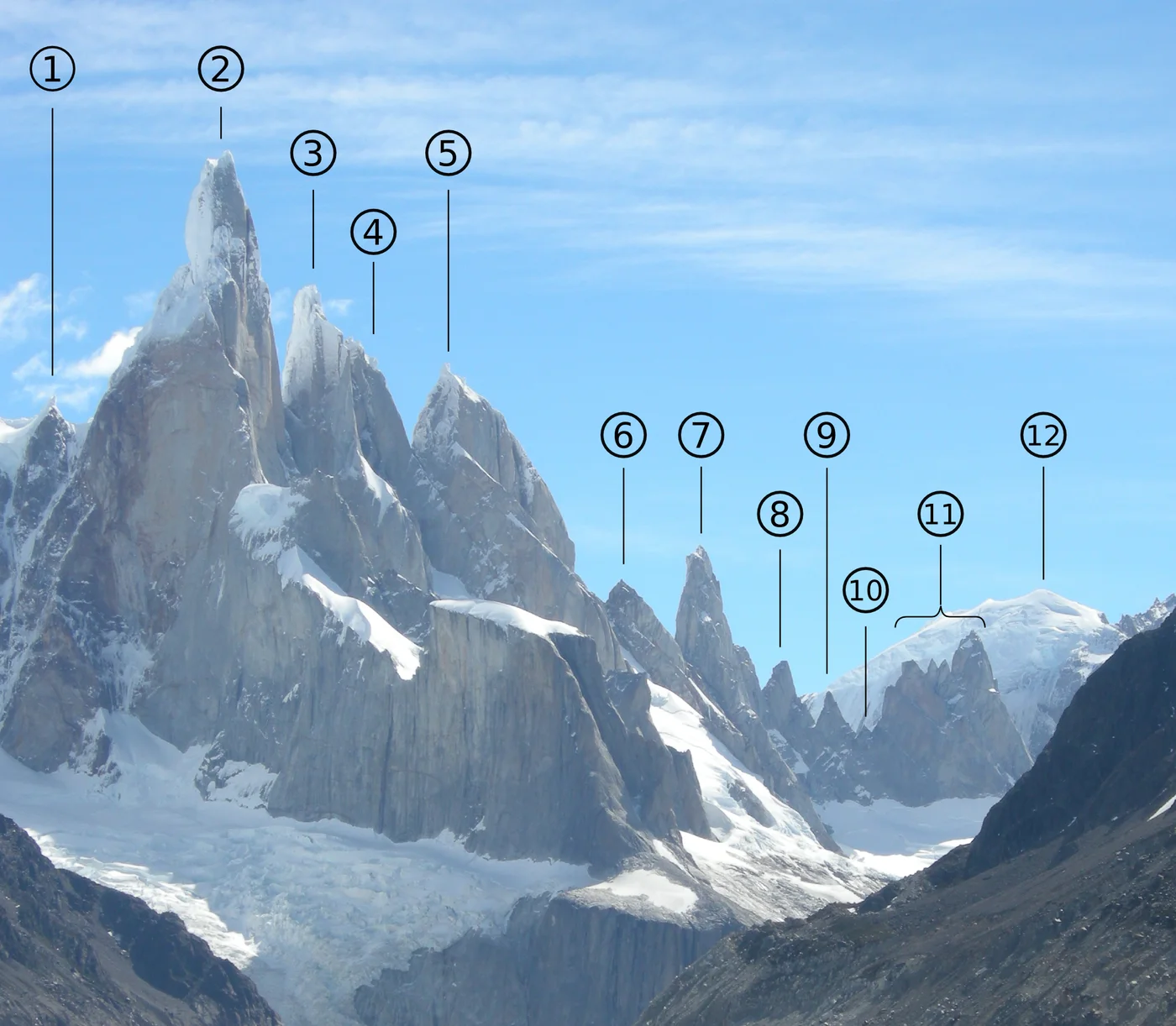
Torre Egger
Torre Egger is an extraordinarily steep granite needle rising to 2,685 meters in the Cerro Torre group of Patagonia, situated between Cerro Torre and Aguja Standhardt. Named in memory of Austrian climber Toni Egger who perished on Cerro Torre in 1959, the spire is widely considered by elite alpinists to be technically harder than Cerro Torre itself due to unbroken vertical granite walls, hanging ice daggers, and brutal weather. It was first climbed in December 1976 by Americans Jim Donini, John Bragg, and Michael de la Yane, and achieved international fame when Canadian solo sensation Marc-André Leclerc completed the historic first solo winter ascent in September 2016.
Pioneered & Associated Routes (5)
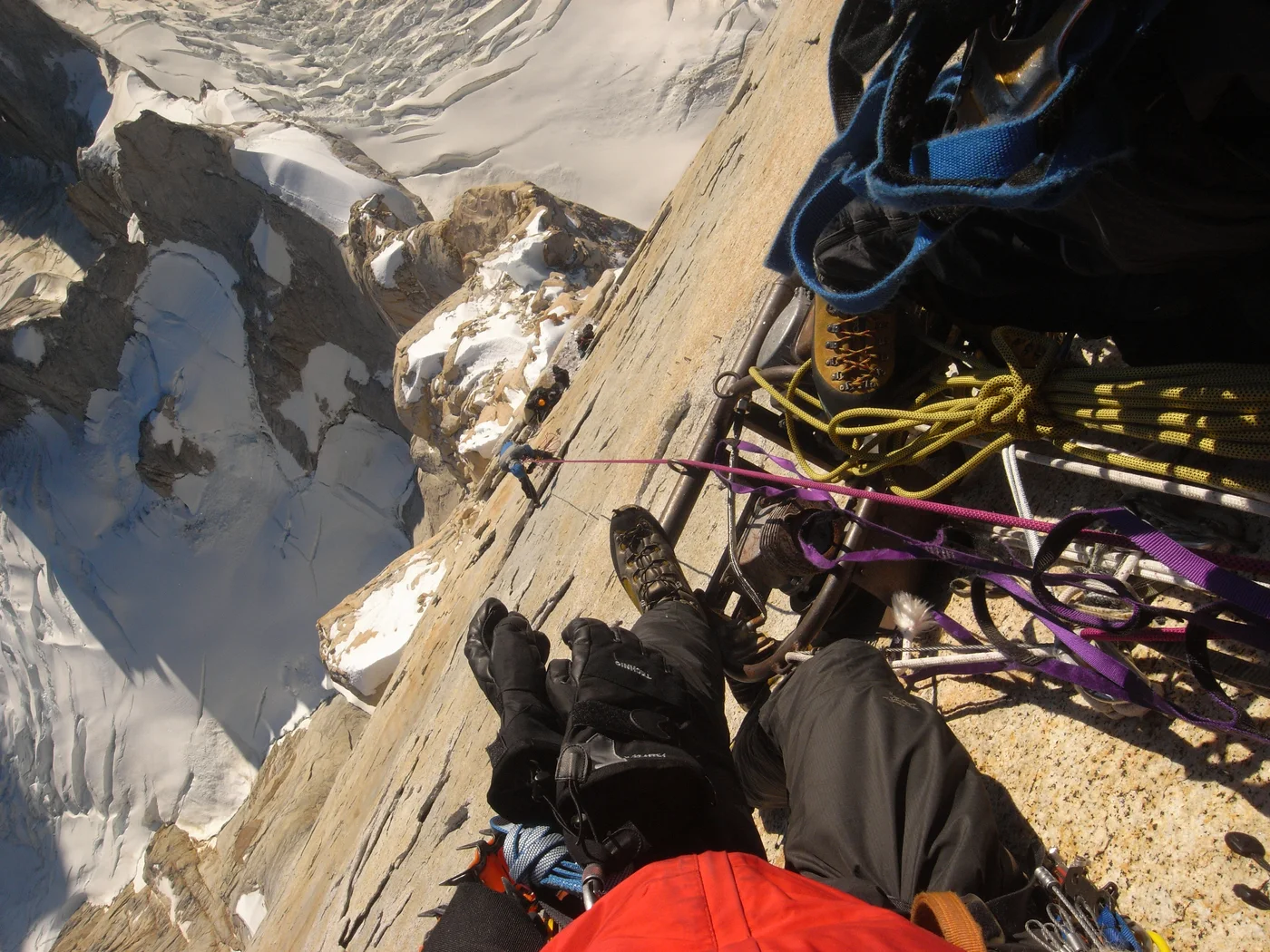
Compressor Route (Southeast Ridge)
The Compressor Route along the Southeast Ridge of Cerro Torre is one of mountaineering history's most renowned and debated lines. Initiated in 1970 by Italian climber Cesare Maestri using an Atlas Copco gas-powered air compressor to install roughly 400 expansion bolts up blank headwalls, the route was completed to the true summit in January 1979 by American climbers Jim Bridwell and Steve Brewer in an audacious alpine-style push.
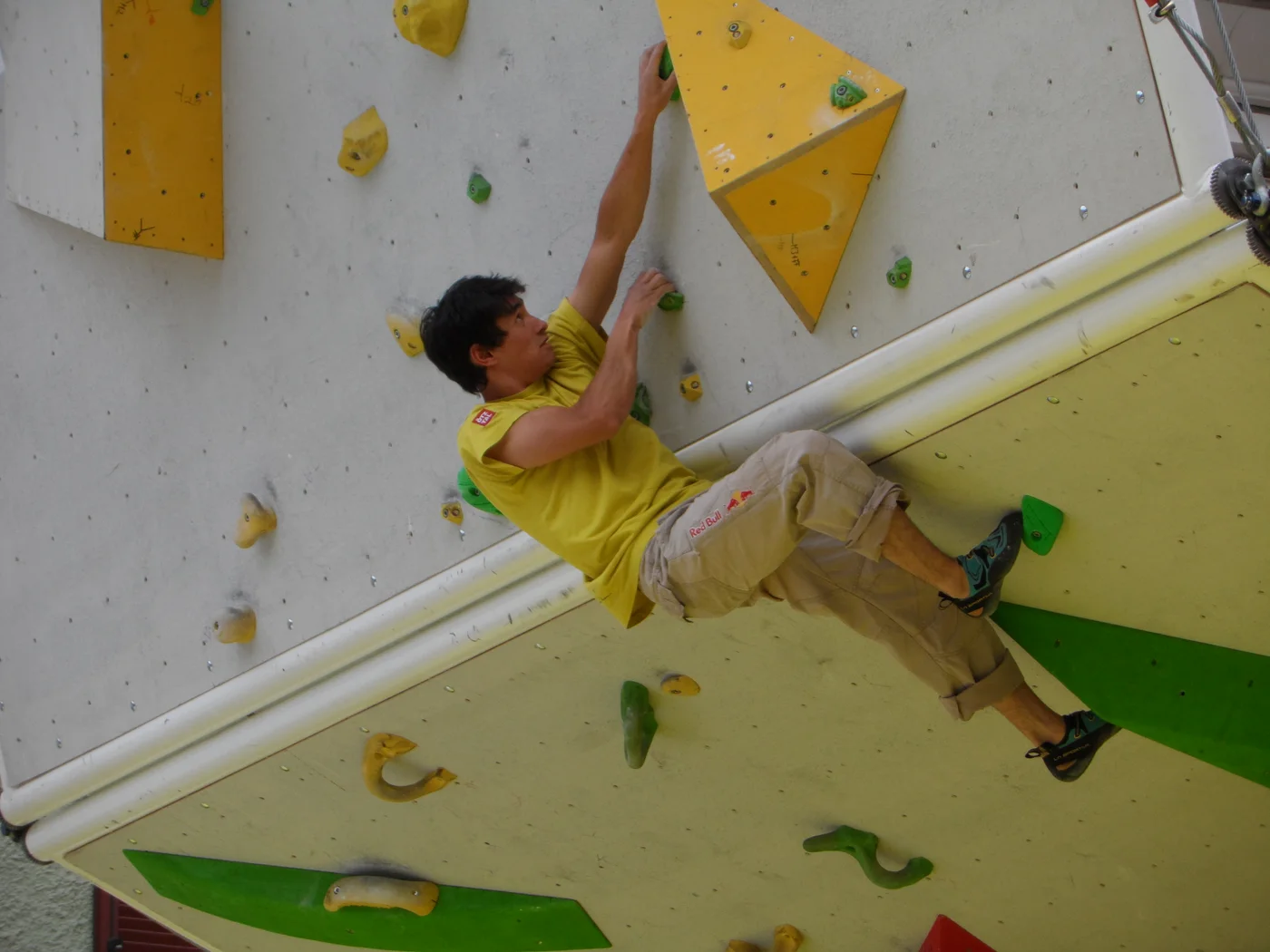
Southeast Ridge Free Line (Lama Route)
The Southeast Ridge Free Line on Cerro Torre is one of the crowning triumphs of modern free climbing. First envisioned and freed in January 2012 by Austrian prodigy David Lama, alongside Peter Ortner, the route free-climbs the sheer, exposed granite of the Southeast Ridge without using Cesare Maestri's artificial bolt ladders, establishing a pure line rated 5.13b (8a) up to the summit rime mushroom.
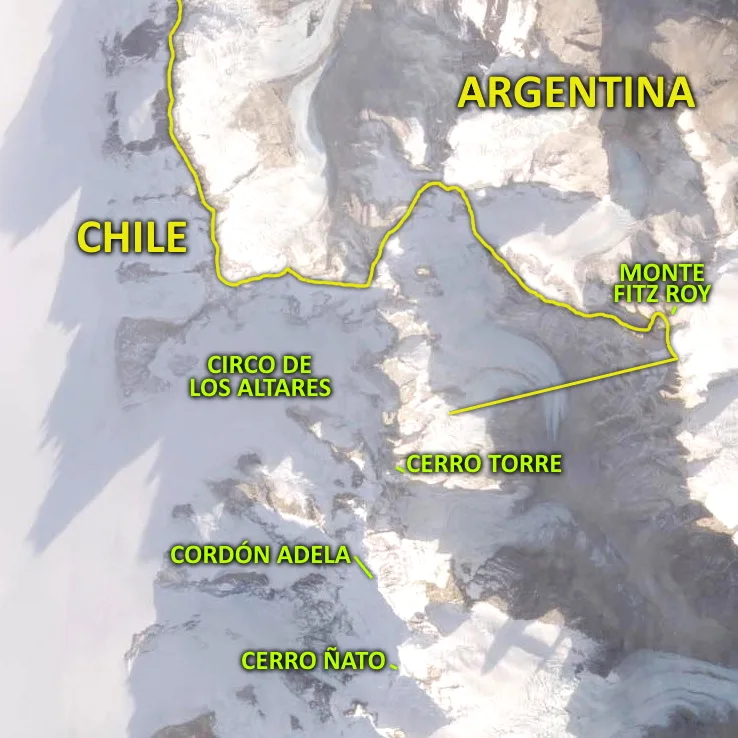
Cerro Torre West Face (Via dei Ragni)
The Via dei Ragni (Ragni Route) on the West Face of Cerro Torre is widely regarded as one of the world's most aesthetic, difficult, and prestigious mixed alpine ice climbs. Pioneered in January 1974 by Casimiro Ferrari, Daniele Chiappa, Mario Conti, and Pino Negri of the Ragni di Lecco, the route ascends 600 metres of vertical granite, sheer mixed gullies, and towering vertical rime-ice mushrooms (graded AI5+ M4). It represents the first undisputed, definitive route to the summit of Cerro Torre.
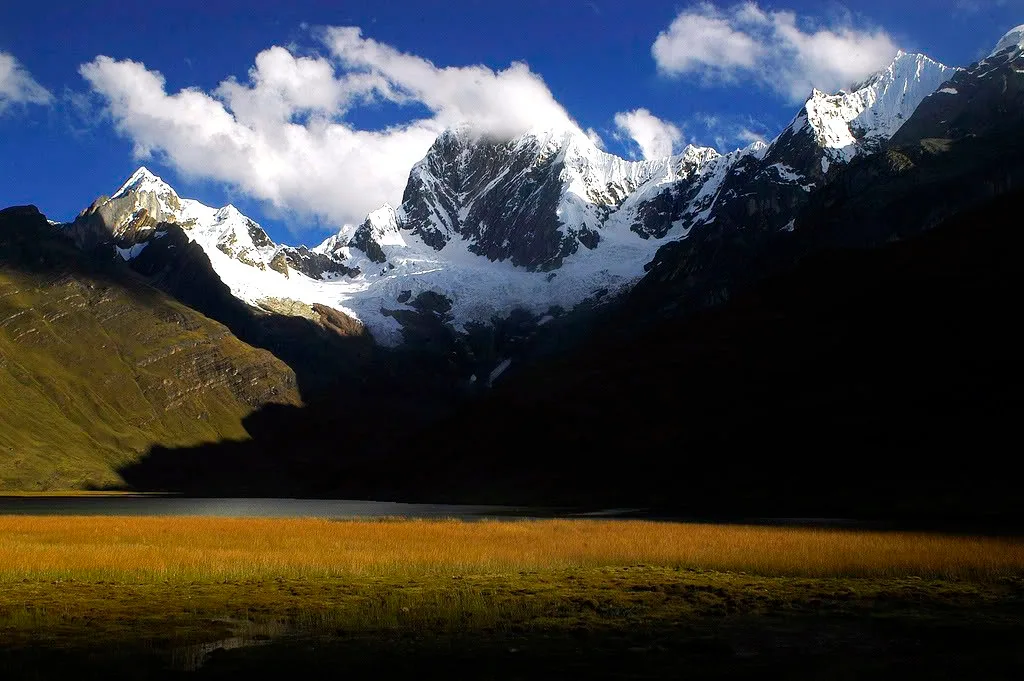
Jirishanca East Buttress
The East Buttress of Jirishanca is one of the most audacious and revered milestones in Andean mountaineering. Ascending the monolithic quartzite prow of the Matterhorn of the Andes to 6,094 metres, this route confronts 70-degree Andean ice corridors, overhanging serac mushrooms, and Grade VI rock climbing on friable quartzite. Masterminded in July 1957 by Austrian legends Toni Egger and Siegfried Jungmeir, it set a new global benchmark for high-altitude technical difficulty.
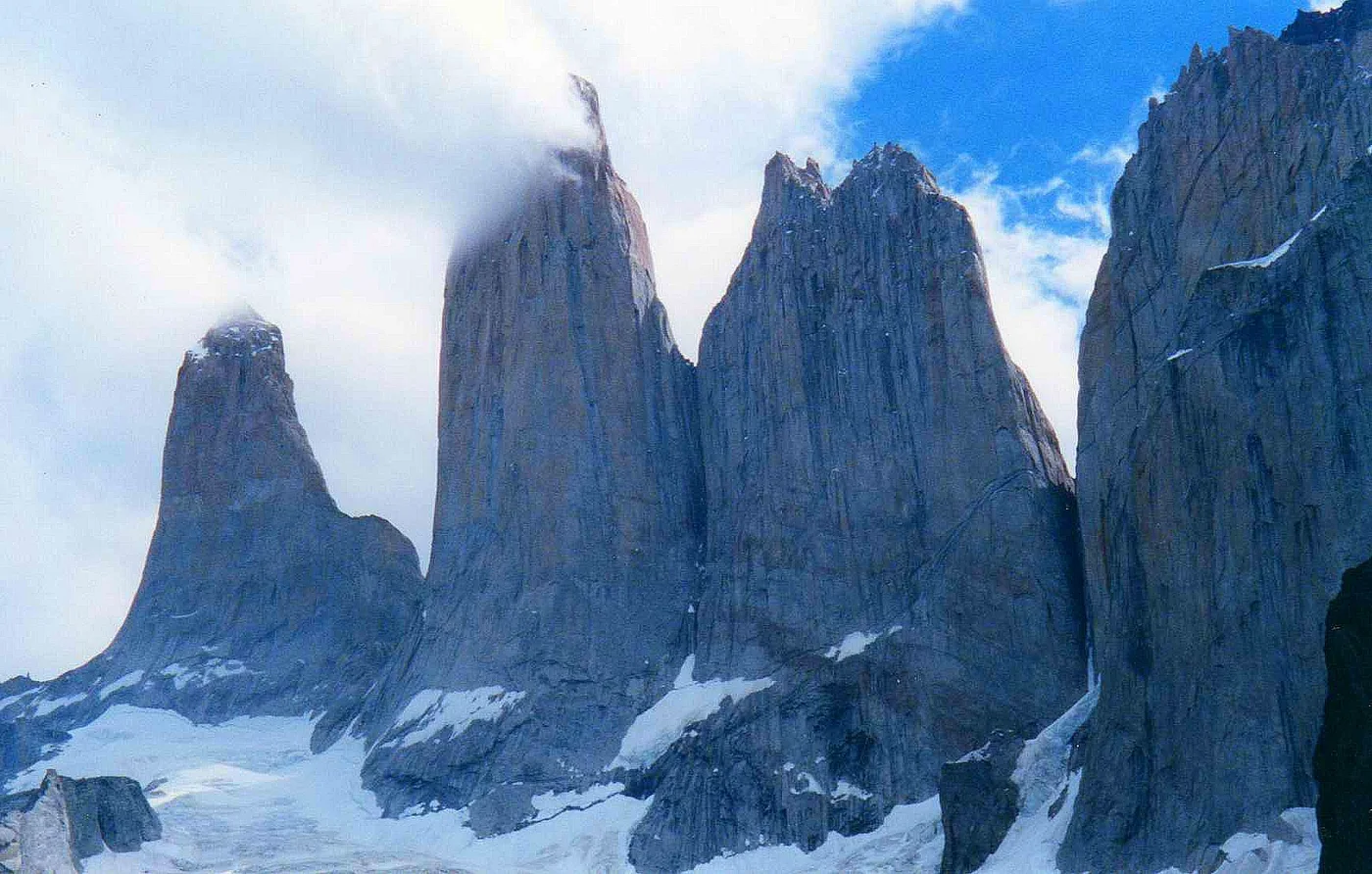
Titanic (East Pillar)
Titanic on the East Pillar of Torre Egger is one of Patagonia's most celebrated and demanding big-wall granite routes. Established in 1987 by Italian masters Maurizio Giarolli and Elio Orlandi, the route ascends 950 meters of vertical to overhanging crystalline granite directly up the proud eastern prow, tackling sustained 5.10 and 5.11 free climbing, technical A2 aid, and icy rime chimneys guarding the summit.
Documented Expeditions (2)
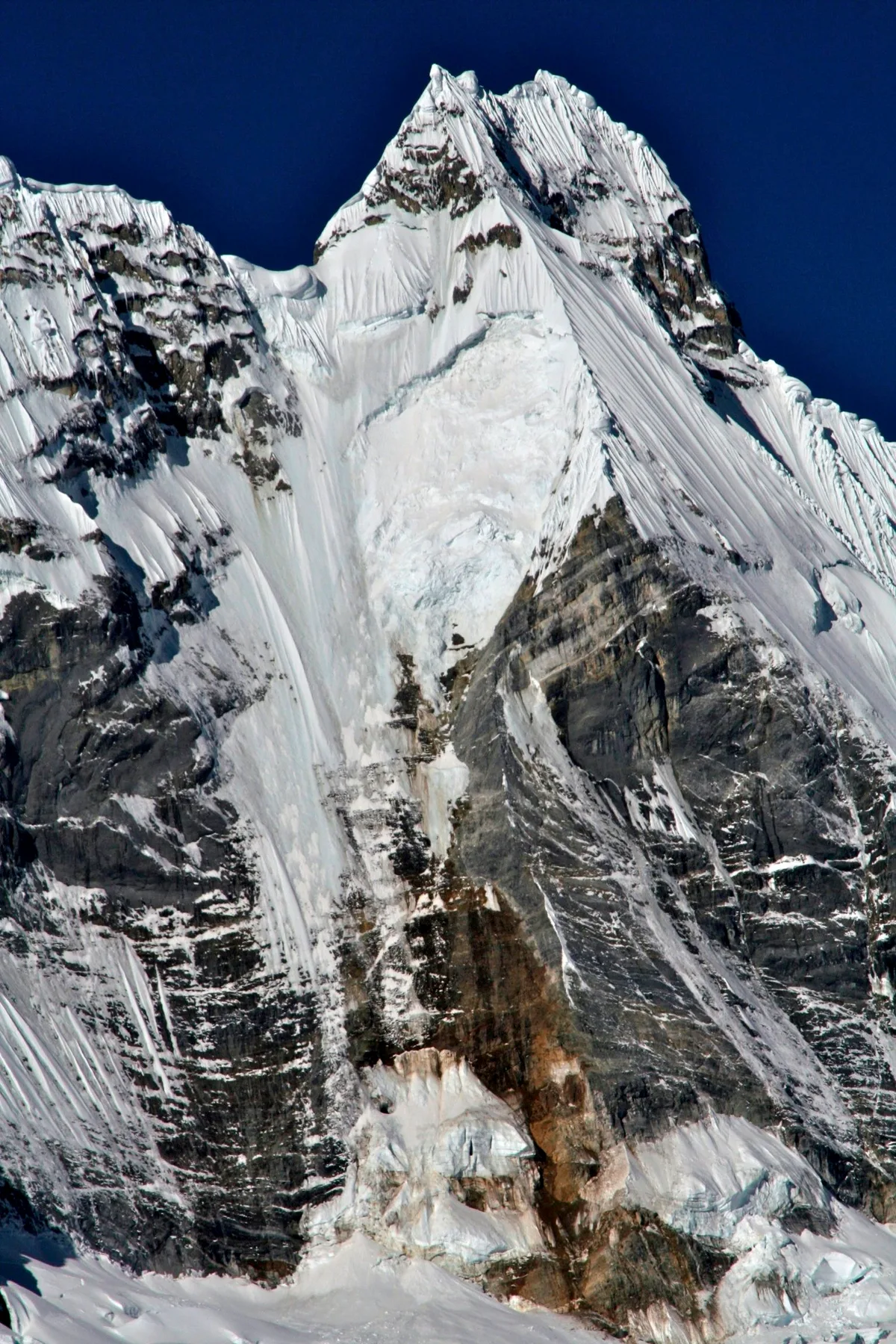
1957 Austrian Jirishanca Historic First Ascent Expedition
On July 12, 1957, Austrian climbing virtuosos Toni Egger and Siegfried Jungmeir accomplished the historic first ascent of Nevado Jirishanca (6,094 m) via its treacherous East Buttress. Tackling Grade VI rock pitches, 70-degree fluted tropical ice, and overhanging snow mushrooms, their triumph established a new pinnacle of technical difficulty in Andean mountaineering.
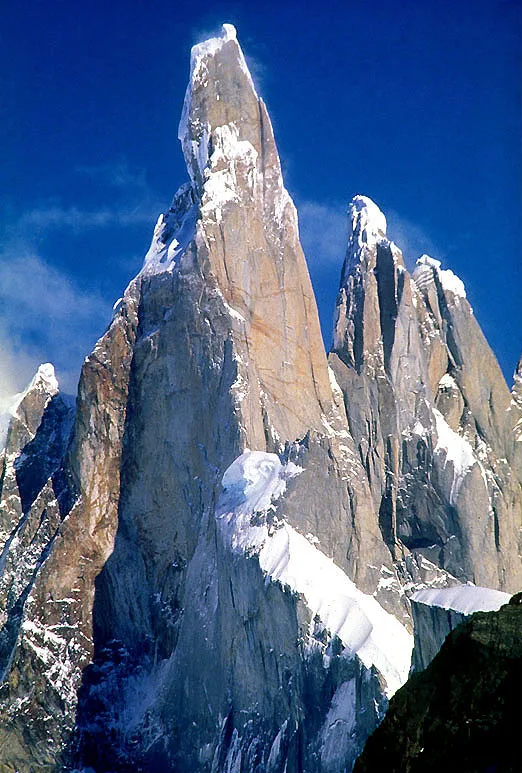
1959 Cesare Maestri and Toni Egger Cerro Torre Expedition
In January–February 1959, Italian climber Cesare Maestri and Austrian prodigy Toni Egger mounted a daring alpine-style bid on the unclimbed granite spire of Cerro Torre. The expedition ended in profound tragedy when an avalanche swept Egger away during their descent.
Associated Chronicles & Stories (2)
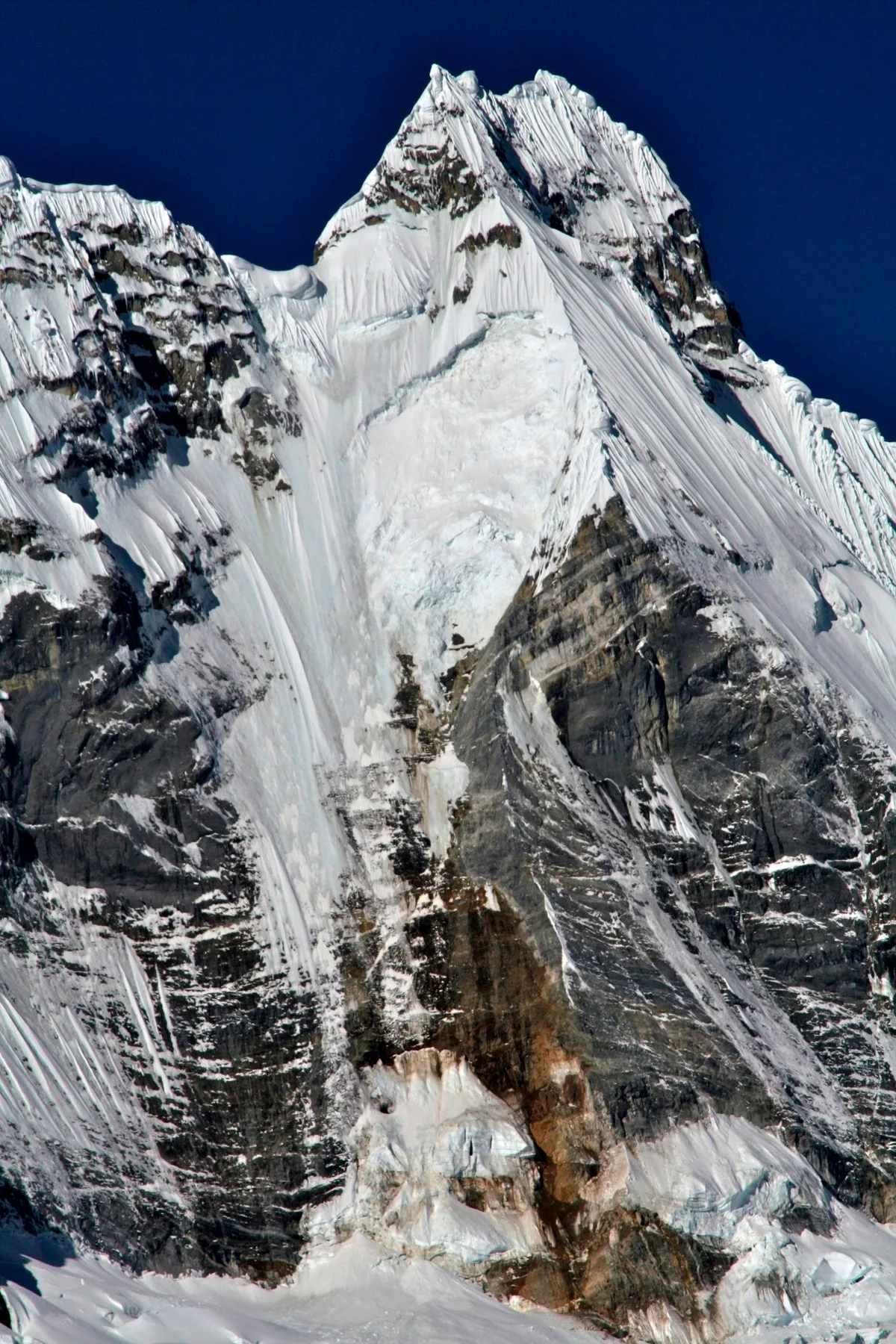
The Matterhorn of the Andes: Egger & Jungmeir on Jirishanca
On July 12, 1957, Austrian climbing virtuosos Toni Egger and Siegfried Jungmeir conquered Nevado Jirishanca (6,094 m) via its fearsome East Buttress.
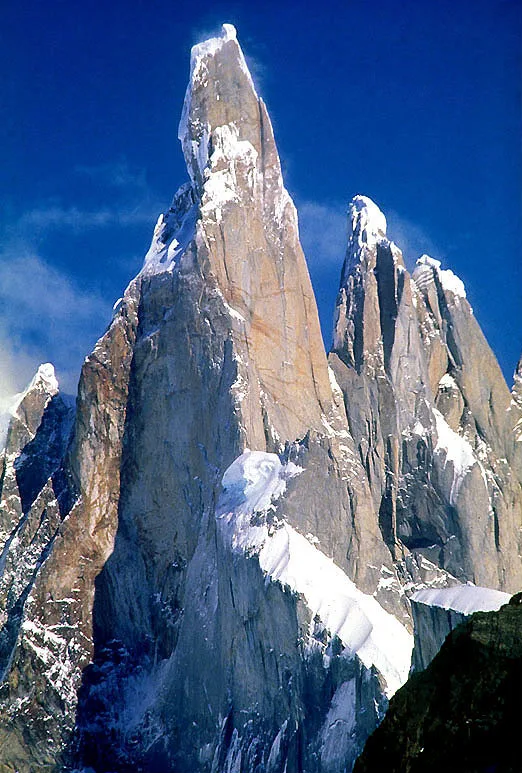
The Cry in the Tempest: Cesare Maestri and Toni Egger's Fateful 1959 Cerro Torre Epic
In January 1959, Cesare Maestri and Austrian prodigy Toni Egger mounted a daring alpine-style push on the unclimbed needle of Cerro Torre, culminating in triumph, tragedy, and the loss of Egger to an avalanche during their retreat.
Documented Sources & Archival Citations
- The Tower: A Chronicle of Climbing and Controversy on Cerro Torre(Kelly Cordes / Patagonia Books)
Supporting claim: Comprehensive historical investigation of Toni Egger's life, climbing genius, and the 1959 Cerro Torre expedition
Accessed/Documented: 2014 - American Alpine Journal: Jirishanca and the Ascents of Toni Egger(American Alpine Club)
Supporting claim: Official expedition record of Egger's 1958 triumph on Jirishanca in the Cordillera Huayhuash
Accessed/Documented: 1959