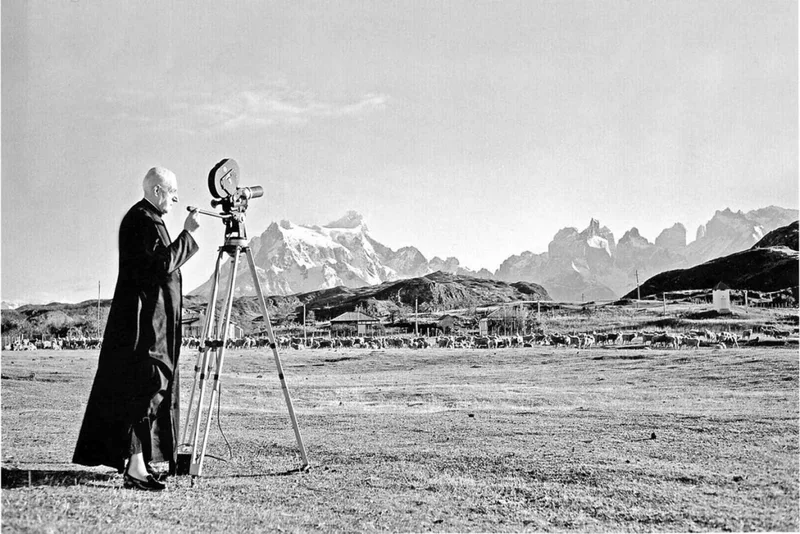
Alberto María De Agostini
Father Alberto María De Agostini was an Italian Salesian missionary, mountaineer, cartographer, and documentary photographer who dedicated five decades to exploring the uncharted peaks and icefields of Patagonia and Tierra del Fuego. He completed the first ascent of Cerro San Lorenzo in 1943 at age sixty. His pioneering maps and photographs opened the Cordillera Darwin and Patagonian Icefields to the modern world.
Mountain Safety & Conditions Disclaimer: High-altitude climbing, glacial travel, and technical ascents entail severe objective risks including avalanches, serac collapses, rapid weather collapse, and altitude illness. Historical route descriptions and summit claims on Mountanity reflect documented archival sources and must not be used as live operational safety assessments. Local regulations, permits, and physical glacial topography change continuously.
Peer Review: Senior Editorial Board & Historical Reviewers • Editorial Standards
Biographical Record & Archival Chronicle
Born on December 3, 1883, in Pollone, Piedmont, Italy, Alberto María De Agostini was ordained as a Salesian priest in 1909 and immediately departed for the southernmost tip of South America. Stationed in Punta Arenas, Chile, he combined pastoral ministry to indigenous Selk'nam and Yághan peoples with audacious geographical exploration. Over fifty years, De Agostini mounted dozens of arduous expeditions into unexplored fjords, glaciated mountain ranges, and continental icefields across Chile and Argentina. In 1931, he made the first aerial photographic survey and complete geographic reconnaissance of the Fitz Roy and Cerro Torre massifs, publishing the first definitive maps of the region. On December 17, 1943, at sixty years of age, De Agostini achieved his supreme mountaineering triumph by making the first ascent of Cerro San Lorenzo (3,706 m), Patagonia's second highest peak, accompanied by alpine guides Alejandro Hemmi and Heriberto Schmoll. His books, including 'I Miei Viaggi nella Terra del Fuoco' and 'Andes Patagónicos', along with thousands of glass-plate photographs, remain the foundational treasures of Patagonian exploration. De Agostini died in Turin on December 25, 1960; Chile honored his immense legacy by establishing the Alberto de Agostini National Park across the glaciated fjords of Tierra del Fuego.
Notable Milestones & Ascents
- First ascent of Cerro San Lorenzo (3,706 m) on December 17, 1943, at age sixty
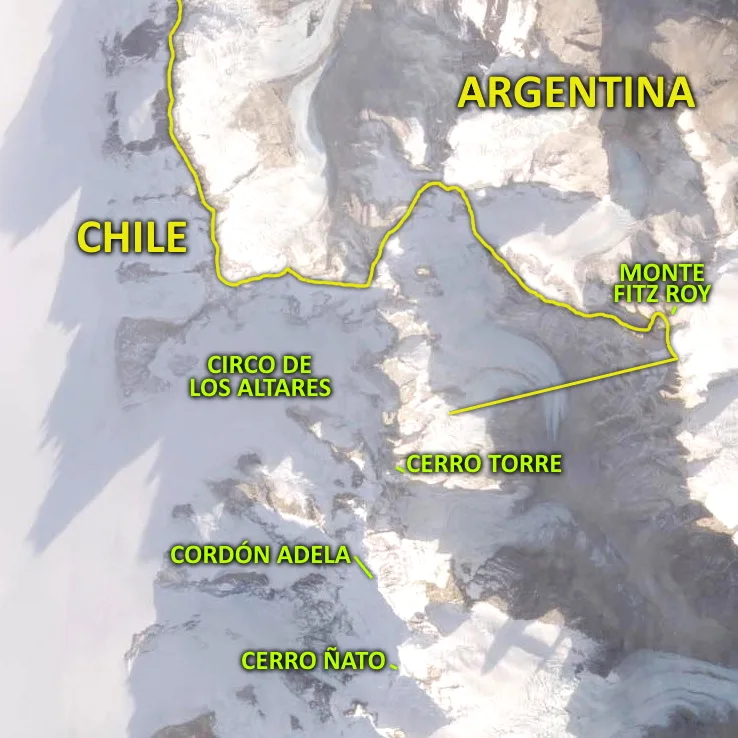
- Produced the first comprehensive topographical maps and photographic surveys of the Fitz Roy and Cerro Torre massifs in 1931
- Extensive exploratory expeditions across the Cordillera Darwin and Tierra del Fuego between 1913 and 1956
- Author of foundational geographic works including 'Andes Patagónicos' and 'I Miei Viaggi nella Terra del Fuoco'
- Eponymous namesake of Alberto de Agostini National Park in southern Chile
Key Statistics & Topographic Figures
- Lifespan
- December 3, 1883 – December 25, 1960 (aged 77)
- Key First Ascent
- Cerro San Lorenzo (3,706 m) in 1943 at age 60
- Exploration Span
- Over 50 years exploring Patagonia & Tierra del Fuego
- Eponymous National Park
- Alberto de Agostini National Park (Chile)
- Key Regions
- Cordillera Darwin, Patagonian Icefield, San Lorenzo
Archival Primary Source Quotations
“In the vast silence of the Patagonian ice, God speaks not in whispers, but in the thunder of avalanches and the majesty of untouched granite.”
Defined Alpine Terminology & Concepts
- Salesian Mission
- Catholic religious congregation dedicated to missionary education and exploration that established foundational outposts in southernmost Patagonia.
- Cordillera Darwin
- An extensive glaciated mountain range forming the southwestern spine of Isla Grande de Tierra del Fuego in Chile.
Frequently Asked Questions: Alberto María De Agostini
Who was Father Alberto María De Agostini?
Father Alberto María De Agostini (1883–1960) was an Italian Salesian missionary, mountaineer, cartographer, and photographer who explored Patagonia and Tierra del Fuego for over fifty years.
What was Father De Agostini's greatest mountaineering first ascent?
On December 17, 1943, at age sixty, De Agostini led the first ascent of Cerro San Lorenzo (3,706 m), the second highest mountain in Patagonia, with guides Alejandro Hemmi and Heriberto Schmoll.
What geographical surveys did Father De Agostini conduct around Fitz Roy and Cerro Torre?
In 1931, De Agostini conducted the first comprehensive aerial and terrestrial photographic reconnaissance of the Fitz Roy and Cerro Torre massifs, publishing the earliest detailed maps of the Chaltén region.
Which national park in Chile is named after Father De Agostini?
Alberto de Agostini National Park in southern Tierra del Fuego, encompassing the glaciated peaks and fjords of the Cordillera Darwin, was named in his honor.
What famous books did Father De Agostini write about Patagonia?
He authored foundational works including 'I Miei Viaggi nella Terra del Fuoco' (1923) and 'Andes Patagónicos' (1949), illustrated with his own glass-plate photographs.
What humanitarian work did Father De Agostini perform alongside climbing?
De Agostini served as a compassionate advocate and ethnographer for the indigenous Selk'nam, Yághan, and Kawésqar peoples during decades of devastating colonization.
Where was Father De Agostini born and where did he die?
He was born in Pollone, Italy, on December 3, 1883, and passed away in Turin on December 25, 1960, at age seventy-seven.
What equipment did De Agostini use during his 1943 ascent of San Lorenzo?
De Agostini and his team used traditional wooden-shafted ice axes, crampons, hemp ropes, and hand-cut steps across heavily crevassed glacier walls.
Associated Summits (4)

Monte San Valentín
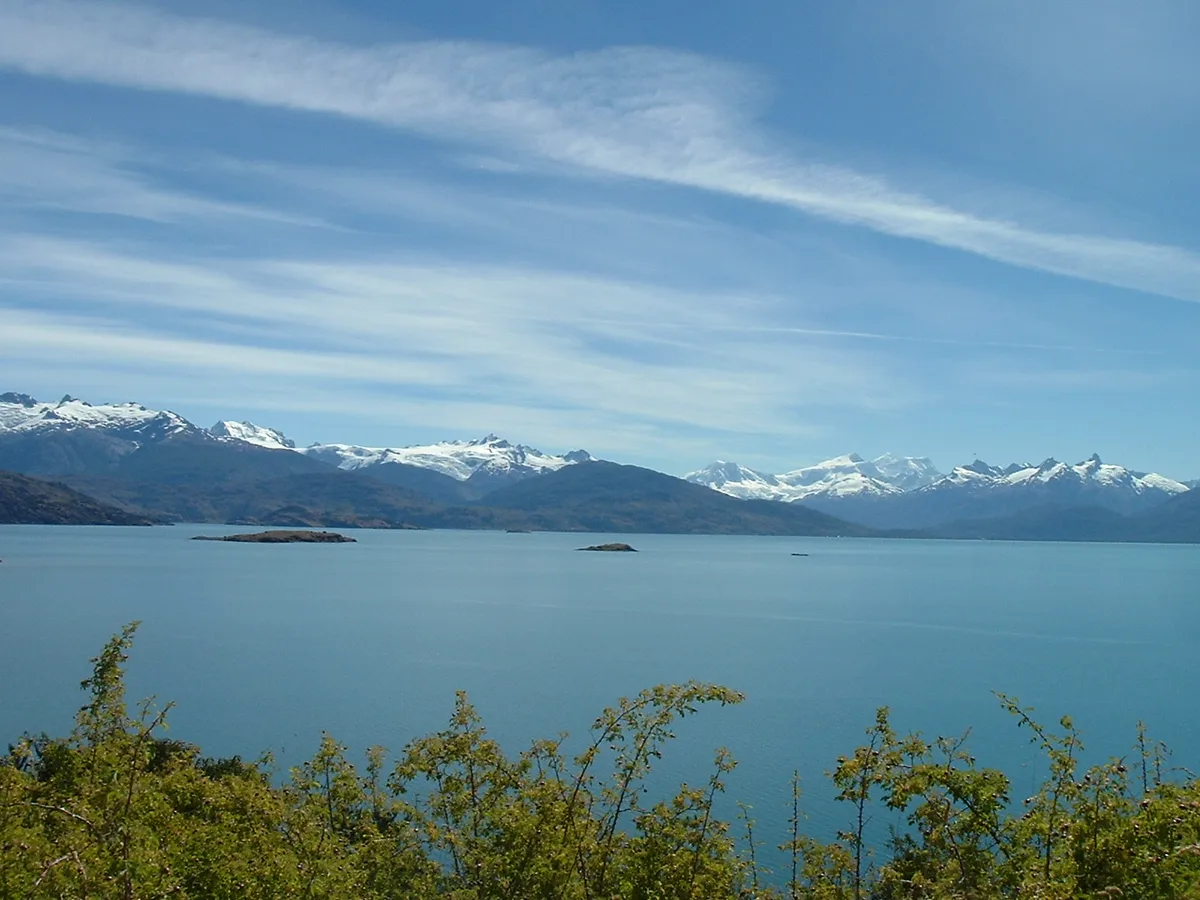
Monte San Valentín is the highest peak in Patagonia, rising to an official surveyed elevation of 4,058 metres (13,314 ft) at the head of the Northern Patagonian Icefield in Chile. Bounded by colossal hanging glaciers, severe icefalls, and ferocious Pacific storms, it commands an immense topographic prominence of 3,696 metres, making it one of the most prominent mountains on Earth. Although explored by Father Alberto María De Agostini in 1921, the summit was first reached in December 1952 by an Argentine-French expedition led by Jorge Peterek.

Cerro San Lorenzo
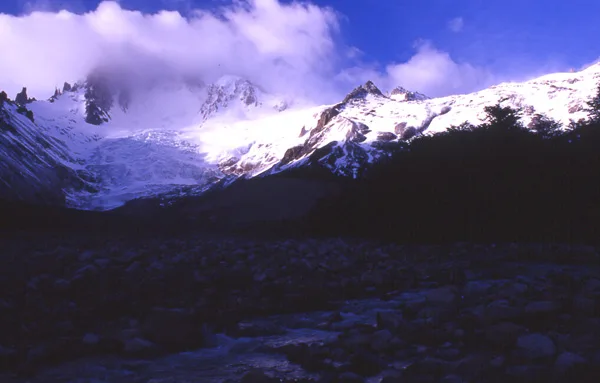
Cerro San Lorenzo, also known as Monte San Lorenzo or Mount Cochrane at 3,706 metres (12,159 ft), is the second highest peak in Patagonia, straddling the border between Chile and Argentina. Towering above the Patagonian steppes with a massive topographic prominence of 3,319 metres, it is an isolated giant surrounded by four heavily crevassed glaciers. In December 1943, sixty-year-old Salesian missionary and explorer Father Alberto María De Agostini led the historic first ascent with mountain guides Alejandro Hemmi and Heriberto Schmoll, overcoming brutal gales and treacherous sérac falls.
Cerro Fitz Roy
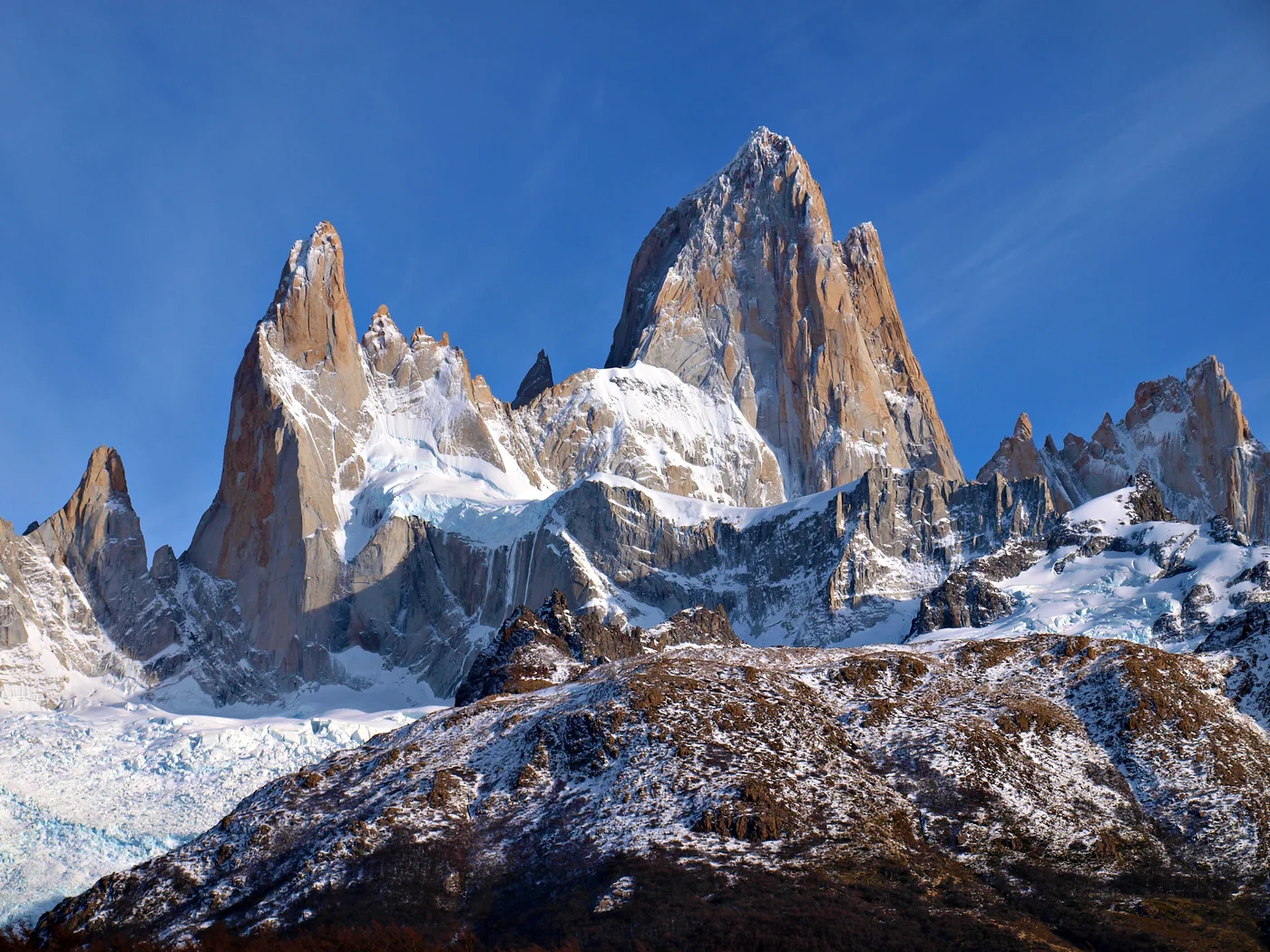
Cerro Fitz Roy, also known as Monte Fitz Roy or Cerro Chaltén at 3,405 meters (11,171 ft), is a world-renowned granite monolith situated in the Southern Patagonian Icefield near El Chaltén, Argentina. Revered for its vertical granite walls and notorious hurricane-force Patagonian storms, it is considered one of the most technically demanding alpine summits on Earth. French climbers Lionel Terray and Guido Magnone completed the legendary first ascent on February 2, 1952, establishing the historic Franco-Argentine Route.
Cerro Torre
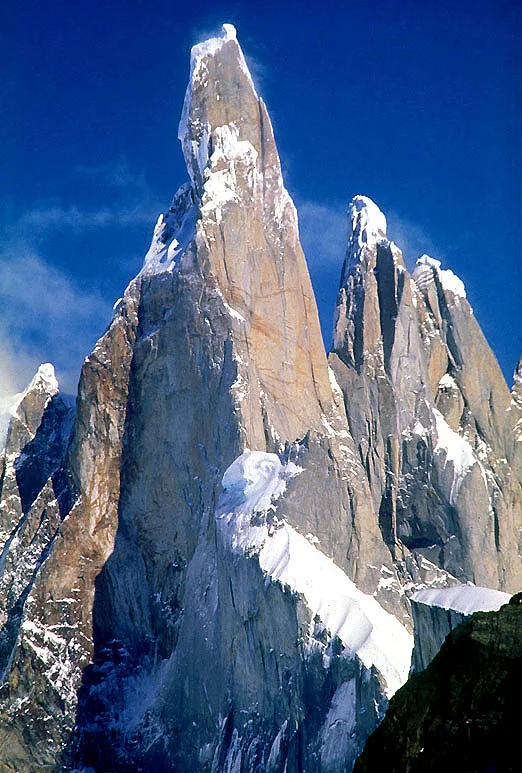
Cerro Torre is a world-famous granite spire rising to 3,128 meters in the Southern Patagonian Icefield on the Argentina-Chile border. Renowned for vertical sheer granite walls topped by monstrous rime-ice mushrooms formed by relentless Pacific winds, it is widely considered one of mountaineering's supreme technical challenges. Following fierce international debate over Cesare Maestri's disputed 1959 climb, Maestri returned in 1970 to drill hundreds of bolts using a gasoline compressor on the Southeast Ridge. In 1979, American pioneers Jim Bridwell and Steve Brewer completed the historic first definitive ascent of the Compressor Route to the summit.
Pioneered & Associated Routes (5)
Compressor Route (Southeast Ridge)
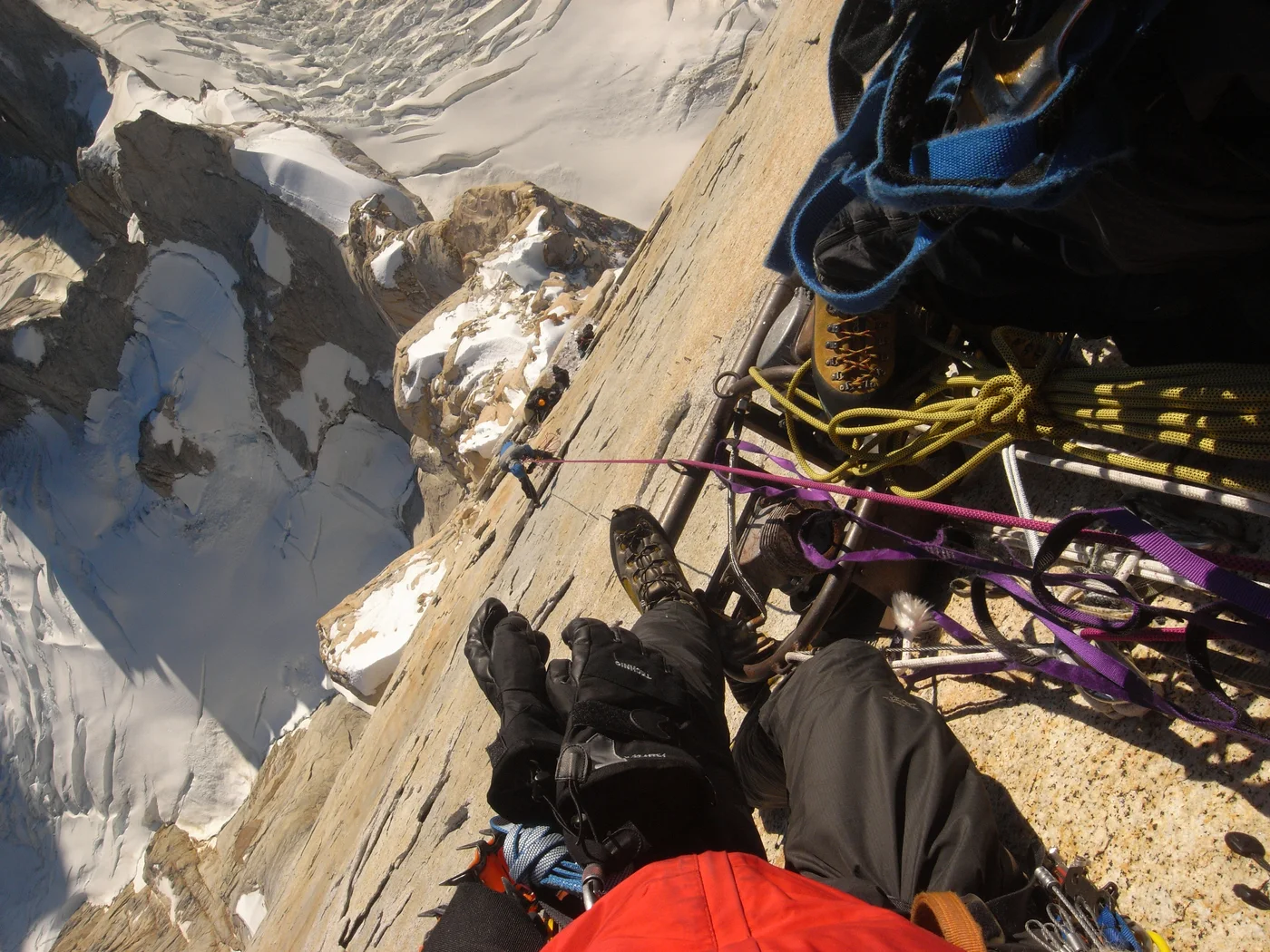
The Compressor Route along the Southeast Ridge of Cerro Torre is one of mountaineering history's most renowned and debated lines. Initiated in 1970 by Italian climber Cesare Maestri using an Atlas Copco gas-powered air compressor to install roughly 400 expansion bolts up blank headwalls, the route was completed to the true summit in January 1979 by American climbers Jim Bridwell and Steve Brewer in an audacious alpine-style push.
Southeast Ridge Free Line (Lama Route)
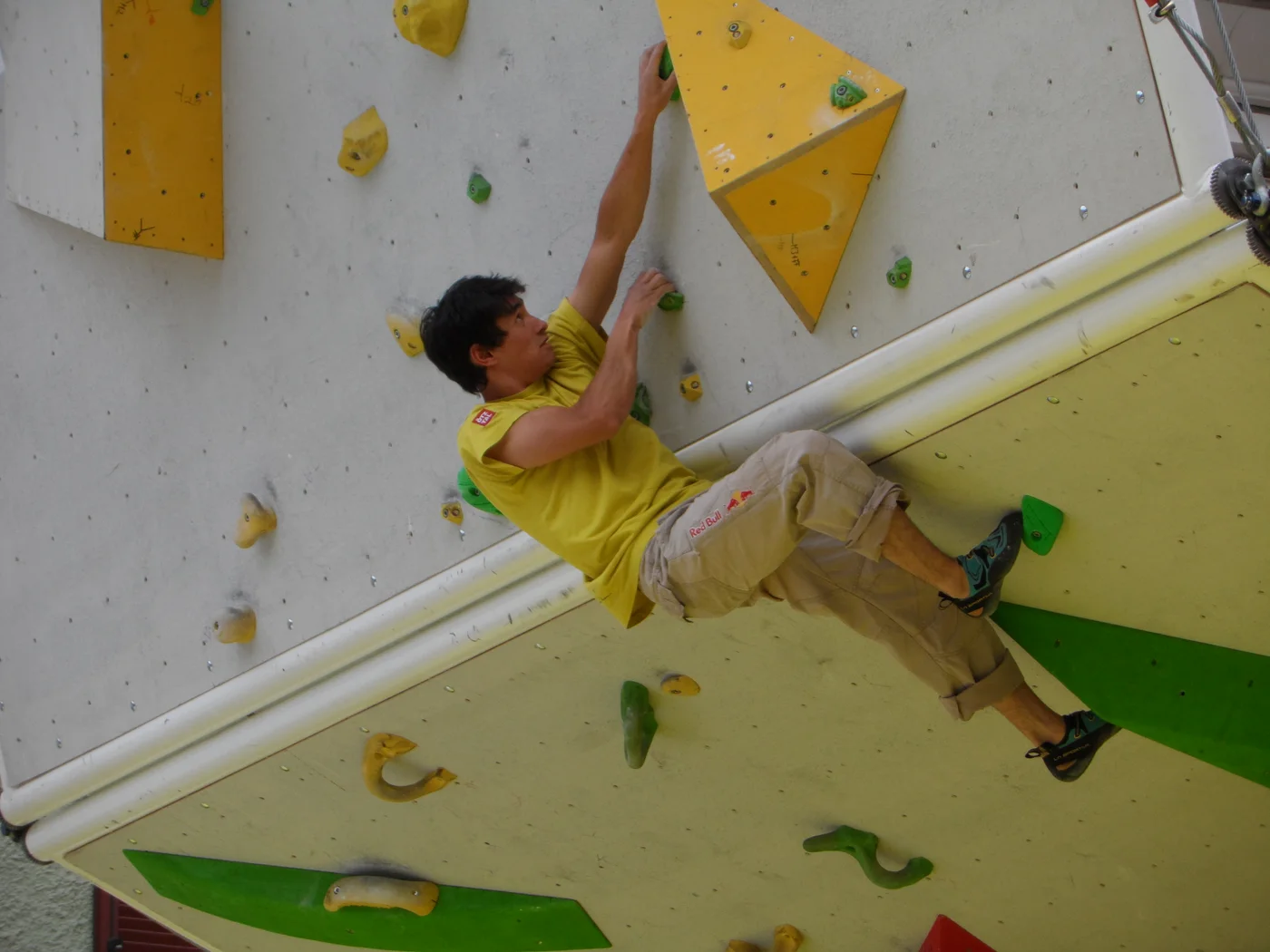
The Southeast Ridge Free Line on Cerro Torre is one of the crowning triumphs of modern free climbing. First envisioned and freed in January 2012 by Austrian prodigy David Lama, alongside Peter Ortner, the route free-climbs the sheer, exposed granite of the Southeast Ridge without using Cesare Maestri's artificial bolt ladders, establishing a pure line rated 5.13b (8a) up to the summit rime mushroom.
Cerro Torre West Face (Via dei Ragni)
The Via dei Ragni (Ragni Route) on the West Face of Cerro Torre is widely regarded as one of the world's most aesthetic, difficult, and prestigious mixed alpine ice climbs. Pioneered in January 1974 by Casimiro Ferrari, Daniele Chiappa, Mario Conti, and Pino Negri of the Ragni di Lecco, the route ascends 600 metres of vertical granite, sheer mixed gullies, and towering vertical rime-ice mushrooms (graded AI5+ M4). It represents the first undisputed, definitive route to the summit of Cerro Torre.
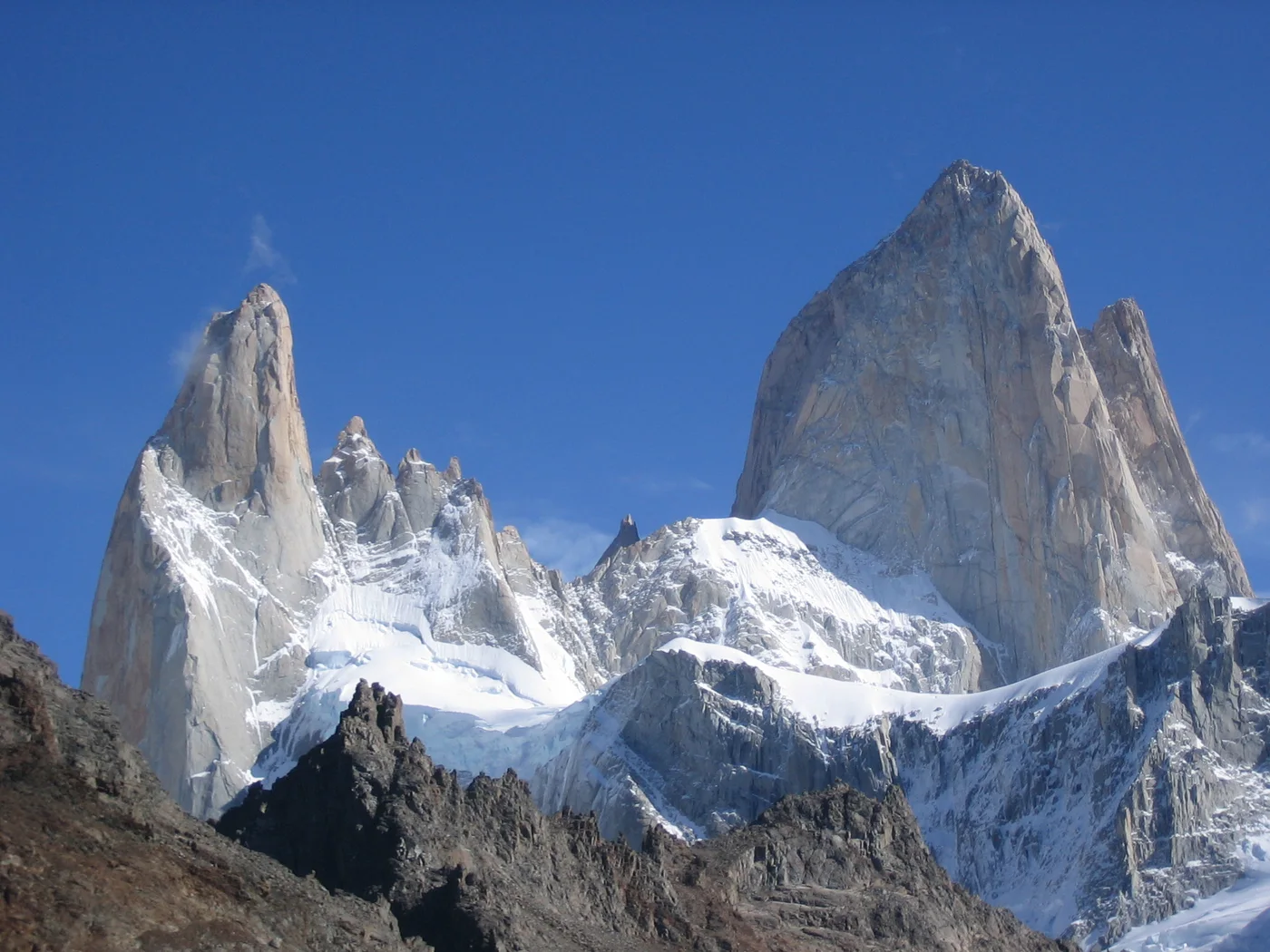
Franco-Argentine Route
The Franco-Argentine Route on Cerro Fitz Roy is the historic first ascent line on Patagonia's most iconic granite monolith. Pioneered in February 1952 by French climbers Lionel Terray and Guido Magnone, the route ascends the Brecha de los Italianos, traverses the south shoulder, and tackles sustained vertical granite cracks up to French 6c (5.11a) and A2 aid amid ferocious Patagonian winds.
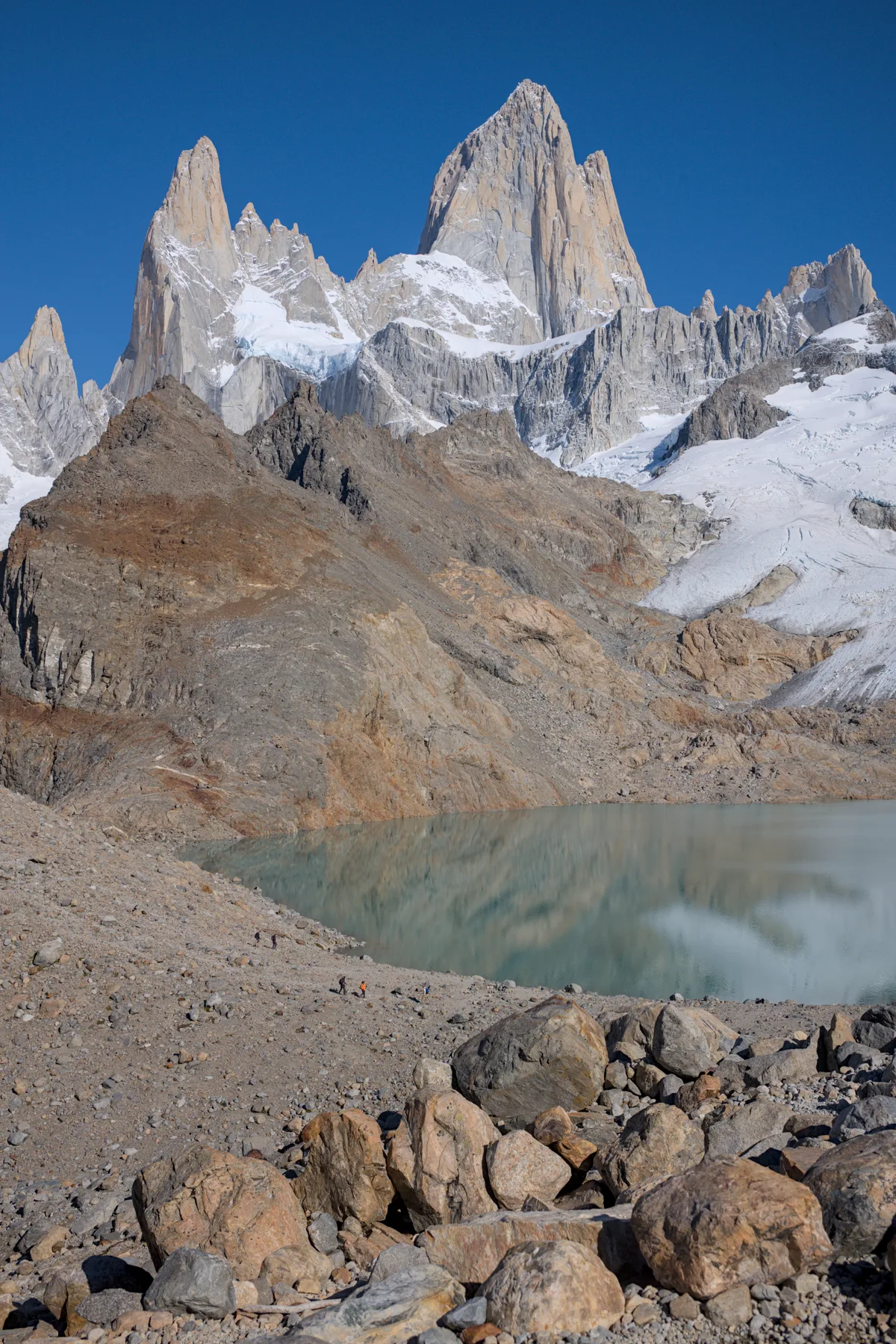
Fitz Roy Supercanaleta
The Supercanaleta on the Southwest Face of Cerro Fitz Roy (3,405 m) is one of the most legendary, direct, and imposing alpine ice lines in the world. Ascending an unbroken 1,600-metre vertical couloir of ice, snow, and mixed granite chimneys, it was first conquered in January 1965 in pure alpine style by Argentine mountaineering prodigies José Luis Fonrouge and Carlos Comesaña over two and a half days.
Documented Expeditions (1)
1943 Father De Agostini First Ascent of Cerro San Lorenzo
On December 17, 1943, sixty-year-old Salesian missionary Father Alberto María De Agostini led guides Alejandro Hemmi and Heriberto Schmoll to make the first ascent of Cerro San Lorenzo, overcoming ferocious Patagonian gales and giant crevasses.
Associated Chronicles & Stories (2)
The Missionary's Fortress: Father Alberto De Agostini's 1943 Conquest of Cerro San Lorenzo
In December 1943, sixty-year-old Salesian missionary Father Alberto María De Agostini led guides Alejandro Hemmi and Heriberto Schmoll to achieve the historic first ascent of Cerro San Lorenzo (3,706 m), Patagonia's second highest peak.
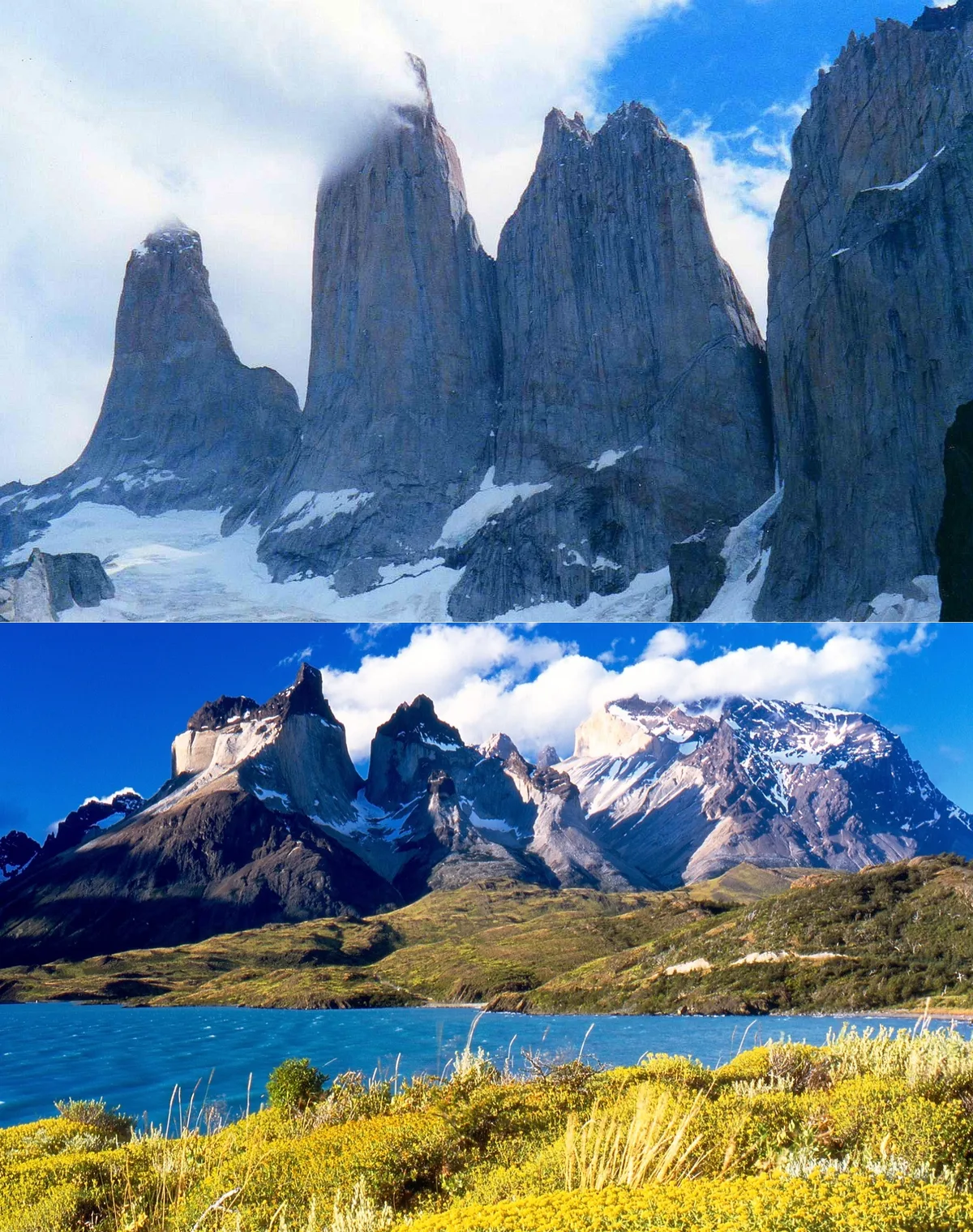
The Battle for the Needles: Bonington and Whillans on the Central Tower of Paine
In January 1963, British mountaineers Chris Bonington and Don Whillans won an extraordinary international climbing race against an Italian team, completing the first ascent of the vertical 800-metre Central Tower of Paine.
Documented Sources & Archival Citations
- Andes Patagónicos: Viaggi d'esplorazione alla cordigliera patagonica australe(Alberto María De Agostini / Viglongo)
Supporting claim: Comprehensive firsthand chronicle of De Agostini's 1943 first ascent of Cerro San Lorenzo and Patagonian expeditions
Accessed/Documented: 1949 - American Alpine Journal: Father Alberto De Agostini's Patagonian Surveys(American Alpine Club)
Supporting claim: Historical evaluation of De Agostini's exploratory ascents and cartographic documentation
Accessed/Documented: 2026