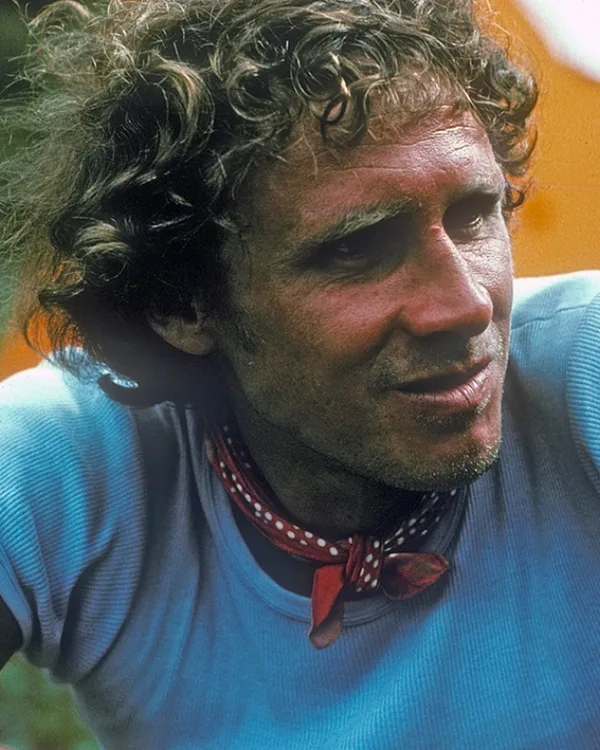
Dougal Haston
Dougal Haston (1940–1977) was a legendary Scottish high-altitude mountaineer who completed the first ascent of Mount Everest's Southwest Face on September 24, 1975, alongside Doug Scott. Renowned for climbing the Annapurna South Face in 1970, he survived the highest open bivouac in history at 8,760 meters.
Mountain Safety & Conditions Disclaimer: High-altitude climbing, glacial travel, and technical ascents entail severe objective risks including avalanches, serac collapses, rapid weather collapse, and altitude illness. Historical route descriptions and summit claims on Mountanity reflect documented archival sources and must not be used as live operational safety assessments. Local regulations, permits, and physical glacial topography change continuously.
Peer Review: Senior Editorial Board & Historical Reviewers • Editorial Standards
Biographical Record & Archival Chronicle
Dougal Haston was born on April 19, 1940, in Currie, a village southwest of Edinburgh, Scotland. Beginning his climbing career on the volcanic crags of Arthur's Seat and the sheer schist of the Scottish Highlands, Haston quickly emerged as one of the most technically gifted and cool-headed ice climbers of his generation. Possessing an icy psychological reserve and effortless balance on vertical rock and ice, he was nicknamed 'The White Spider' by European alpine peers.
In March 1966, Haston achieved international fame by completing the brutal first winter direct ascent of the Eiger North Face via the John Harlin Route, spending a month in sub-zero blizzards on the wall alongside German climbers after expedition leader John Harlin was killed when a fixed rope snapped. Following this, Haston was appointed Director of the International School of Mountaineering in Leysin, Switzerland.
In spring 1970, Haston joined Chris Bonington's historic British expedition to the 3,000-meter vertical South Face of Annapurna I (8,091m)—the first technical big-wall ever attempted on an 8,000-meter giant. On May 27, 1970, Haston and climbing partner Don Whillans forced their way through the extreme ice couloirs and stepped onto the summit of Annapurna, heralding the birth of modern high-altitude big-wall climbing.
Five years later, on September 24, 1975, Haston partnered with Doug Scott on the 1975 British Mount Everest Southwest Face expedition. Overcoming the treacherous 300-meter vertical 'Rock Band' at 8,300 meters, Haston and Scott stood atop Mount Everest (8,848m) at 6:00 PM, becoming the first British climbers in history to conquer the mountain. Running out of supplemental oxygen during descent in pitch darkness, the pair carved a shallow snow hole at 8,760 meters on the South Summit. Enduring temperatures below -35°C without sleeping bags, tents, or gas stoves, they survived the highest open-air bivouac in mountaineering history without suffering frostbite.
Tragically, Dougal Haston was killed on January 17, 1977, at age 36, when he was caught in an avalanche while skiing alone on the slopes of the Pointe de la Palette above Leysin, Switzerland. He remains venerated as one of the fiercest, most visionary alpine masters Scotland ever produced.
Notable Milestones & Ascents
- Completed the first ascent of Mount Everest's 2,300m Southwest Face on September 24, 1975, with Doug Scott
- First British mountaineer (alongside Doug Scott) in history to summit Mount Everest (8,848m)
- Survived an emergency open bivouac at 8,760 meters on Everest's South Summit without supplemental oxygen or sleeping bags
- Completed the monumental first ascent of the Annapurna South Face (8,091m) with Don Whillans on May 27, 1970
- Completed the first winter direct ascent of the Eiger North Face (John Harlin Route) in March 1966
- Served as Director of the International School of Mountaineering (ISM) in Leysin, training a generation of elite alpinists
- Authored the classic climbing memoir 'In High Places' (1972)
Key Statistics & Topographic Figures
- Lifespan
- 1940–1977 (Age 36)
Currie, Scotland & Leysin, Switzerland
- Everest SW Face Summit
- September 24, 1975 (6:00 PM)
First British Ascent with Doug Scott
- Highest Open Bivouac
- 8,760 meters (South Summit)
Survived without sleeping bags or O2
- Annapurna South Face
- May 27, 1970
First Ascent with Don Whillans
- Eiger Direct Winter
- March 1966
John Harlin Route
Archival Primary Source Quotations
“The bivouac at 8,760 meters was a realm beyond fear. You either keep your mind clear and your toes moving, or you freeze into stone.”
“Dougal Haston was the coolest, most formidable ice climber I ever tied into a rope with.”
Defined Alpine Terminology & Concepts
- Annapurna South Face
- A vertical 3,000-meter wall of ice and shattered rock in Nepal, regarded as the breakthrough milestone of modern Himalayan big-wall climbing.
- South Summit Bivouac (8,760m)
- The highest emergency bivouac in mountaineering history at the time, survived without frostbite by Scott and Haston on September 24, 1975.
- International School of Mountaineering (ISM)
- A world-renowned alpine climbing academy in Leysin, Switzerland, directed by Dougal Haston from 1967 until his death in 1977.
Frequently Asked Questions: Dougal Haston
Who was Dougal Haston and what were his greatest climbing achievements?
Dougal Haston (1940–1977) was a legendary Scottish alpinist who completed the first ascent of the Everest Southwest Face in 1975 and the first ascent of the Annapurna South Face in 1970.
Who was the first British climber to summit Mount Everest?
Dougal Haston and Doug Scott reached the summit of Mount Everest together at 6:00 PM on September 24, 1975, becoming the first British mountaineers to conquer Everest.
How did Dougal Haston and Doug Scott survive their bivouac on Everest?
After running out of oxygen during their descent from the summit, they carved a shallow snow trench at 8,760m on the South Summit and survived without sleeping bags or stoves at -35°C.
What route did Dougal Haston climb on Annapurna in 1970?
Haston and Don Whillans made the historic first ascent of the vertical 3,000m Annapurna South Face on May 27, 1970, on Chris Bonington’s expedition.
What was Dougal Haston’s role at the International School of Mountaineering?
Haston served as Director of the International School of Mountaineering (ISM) in Leysin, Switzerland, teaching extreme technical climbing to international alpinists.
What direct winter ascent did Dougal Haston complete on the Eiger?
In March 1966, Haston completed the first winter direct ascent of the Eiger North Face via the John Harlin Route after a month of extreme sub-zero siege.
Why was Dougal Haston nicknamed "The White Spider"?
He was nicknamed "The White Spider" by European climbers due to his cold, calm composure, pale features, and effortless mobility across vertical ice.
How did Dougal Haston die?
Haston died in an avalanche on January 17, 1977, at age 36, while skiing alone on the slopes of the Pointe de la Palette above Leysin, Switzerland.
Associated Summits (3)
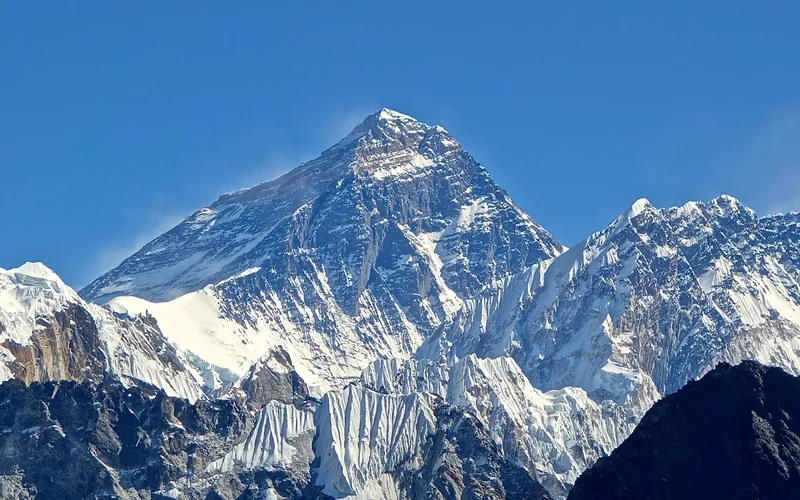


Mount Everest
Mount Everest is the highest mountain above sea level on Earth, standing at an official elevation of 8,848.86 meters (29,031.7 ft). Straddling the international frontier between Nepal and China, it is known locally as Sagarmatha in Nepali ('Goddess of the Sky') and Chomolungma in Tibetan ('Mother Goddess of the World'). The peak rises into the extreme upper troposphere, where oxygen levels drop to barely one-third of sea-level pressure. Climbers face hurricane-force jet stream winds, severe frostbite conditions, shifting ice crevasses in the Khumbu Icefall, and the dangerous Death Zone above 8,000 meters.
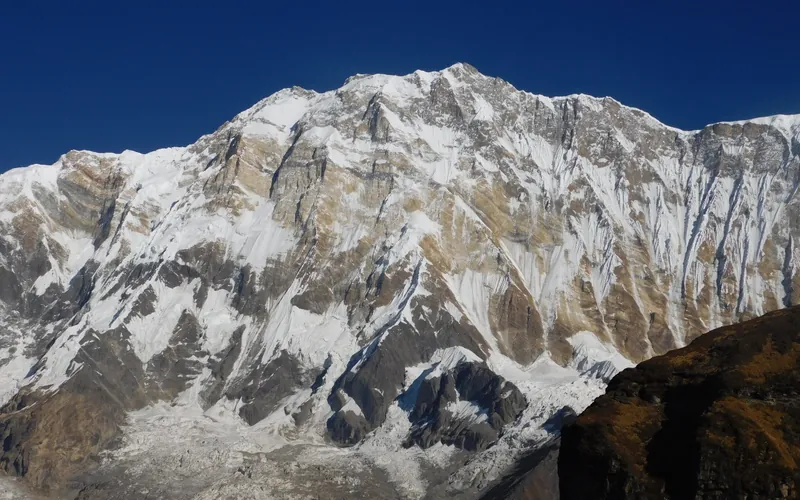
Annapurna I
Annapurna I, at 8,091 meters (26,545 ft), is the tenth-highest mountain in the world and historically the first 8,000-meter peak ever summited (June 3, 1950 by Maurice Herzog and Louis Lachenal). Rising above the Annapurna Sanctuary, its north and south walls present extreme avalanche and serac fall hazards.
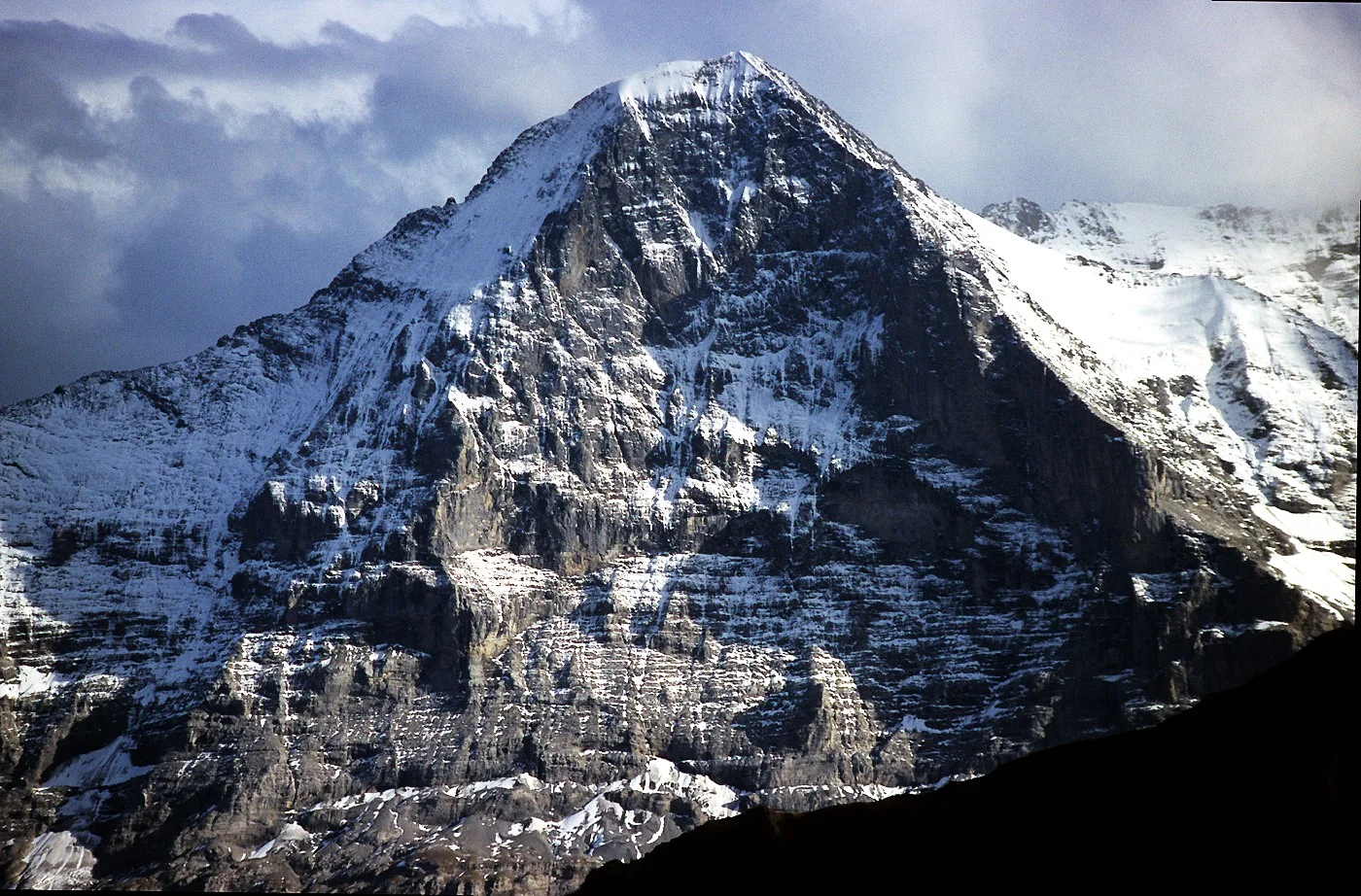

Eiger
The Eiger, standing at 3,967 meters (13,015 ft) in the Bernese Alps of Switzerland, is globally renowned for its monstrous 1,800-meter (5,900 ft) sheer vertical North Face (the *Eiger-Nordwand*). Feared as the *Mordwand* ('Murder Wall') following catastrophic climbing tragedies in the 1930s, it remained the last great problem of the Alps until conquered in July 1938 by Anderl Heckmair, Ludwig Vörg, Heinrich Harrer, and Fritz Kasparek.
Pioneered & Associated Routes (8)
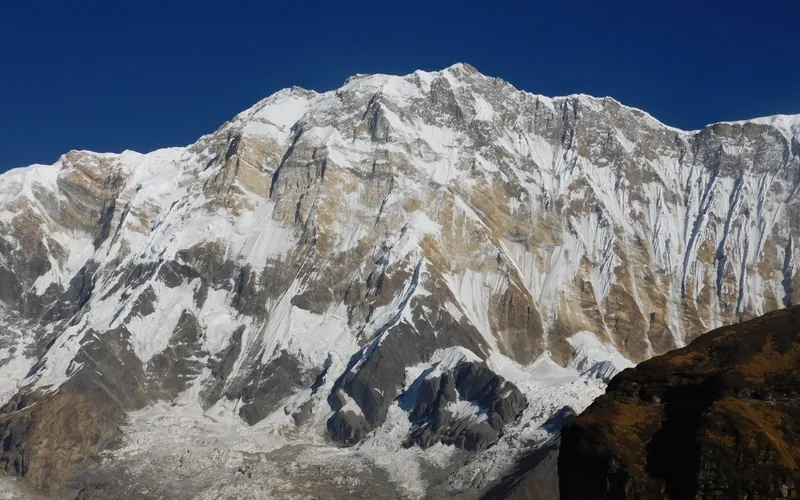
Annapurna I North Face (Herzog-Lachenal Route)
The North Face of Annapurna I is the historic first route ever climbed on an 8,000-meter peak, pioneered by French climbers Maurice Herzog and Louis Lachenal on June 3, 1950. Approached via the remote Miristi Khola valley, the route ascends the shattered North Annapurna Glacier, negotiates the terrifying avalanche-swept Sickle Glacier serac wall, and ascends steep snow gullies along the French Rib to gain the 8,091m summit.
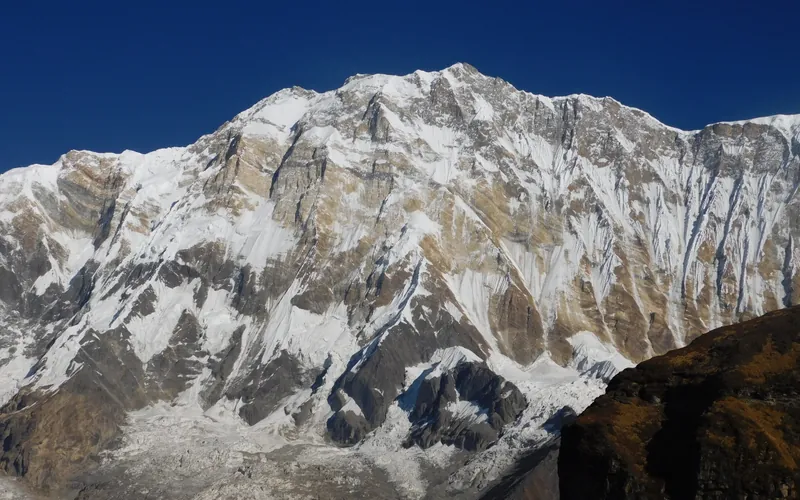
Annapurna I South Face (Bonington-Haston-Whillans Route)
The South Face of Annapurna I is one of the most formidable big-wall arenas in world mountaineering, rising 3,000 vertical metres of sheer rock, ice flutings, and overhanging bands directly from the Annapurna Sanctuary. First ascended via siege tactics by Dougal Haston and Don Whillans in 1970, it was later climbed in a revolutionary, lightweight solo push by Swiss alpinist Ueli Steck in October 2013 in just 28 hours round-trip.
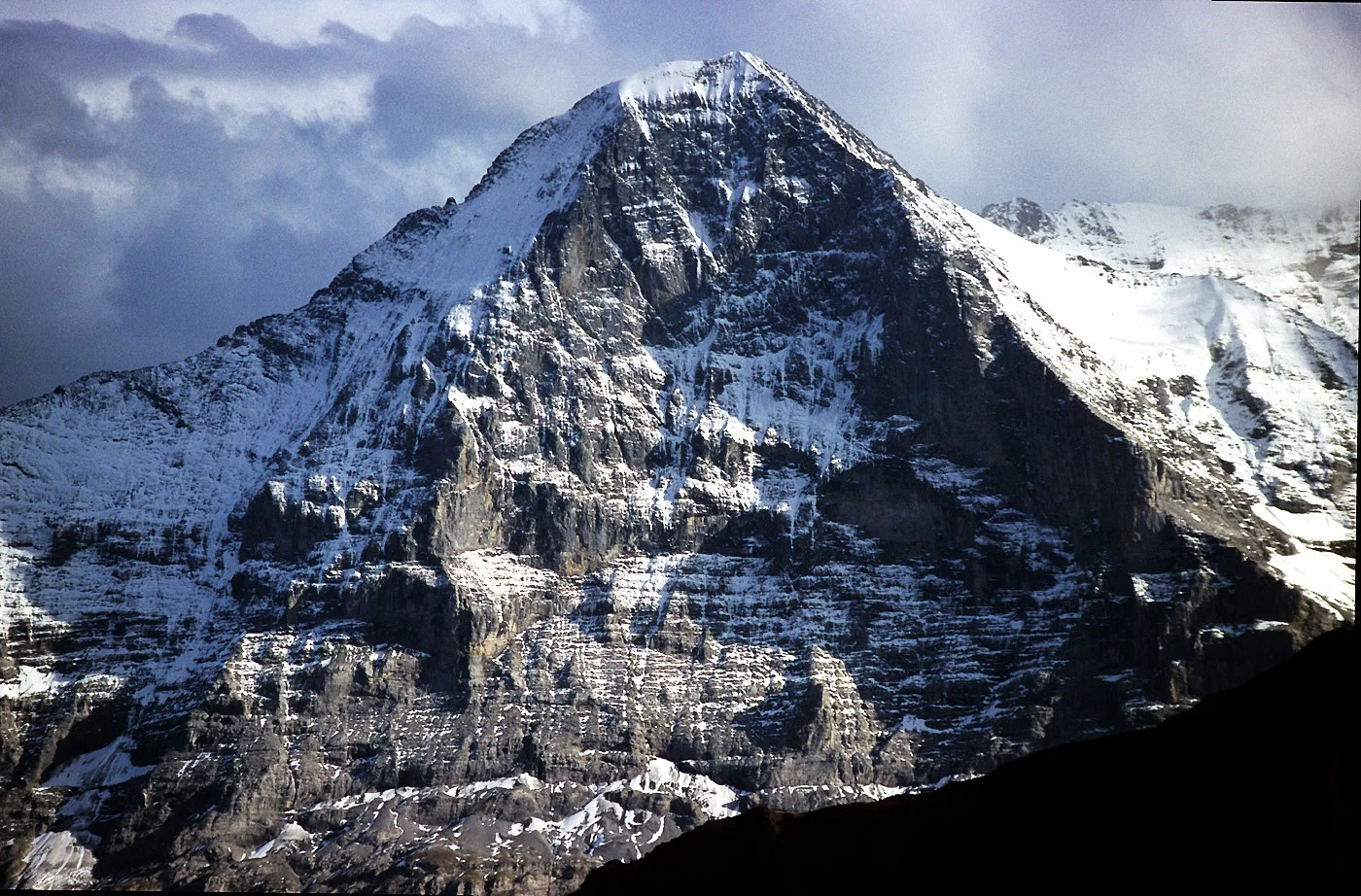
Eiger North Face (1938 Heckmair Route)
The legendary 1,800-meter original route up the Eiger North Face (3,967m), first climbed between July 21 and 24, 1938, by Anderl Heckmair, Ludwig Vörg, Heinrich Harrer, and Fritz Kasparek. Negotiating an intricate, terrifying labyrinth of down-sloping limestone ledges, friable verglas, and hanging icefields, the route traverses the notorious Hinterstoisser Traverse, Swallow's Nest, the First and Second Icefields, the Death Bivouac, the Ramp, the Traverse of the Gods, and the sinister snowfield known as the White Spider before conquering the Exit Cracks to reach the summit.
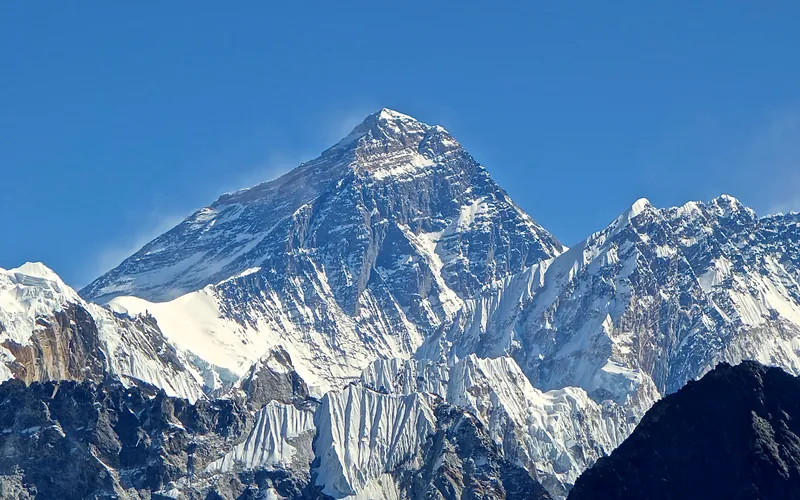
Mount Everest North Face (Hornbein Couloir Direct)
The North Face of Mount Everest via the Japanese Couloir and the sheer Hornbein Couloir is one of the most direct and formidable ice lines in the Himalayas. Rising 3,000 vertical meters from the Rongbuk Glacier to the summit, it funnels through a narrow 60-degree snow-and-ice cleft slicing straight through the Yellow Band and upper limestone cliffs of the North Face. In August 1986, Swiss alpinists Erhard Loretan and Jean Troillet executed one of the most audacious speed climbs in mountain history: climbing the entire face in a single 31-hour push at night without supplemental oxygen, tents, or fixed ropes. After summiting on August 30, they glissaded down the 3,000-meter face on their backs and buttocks in just 3.5 hours, completing the entire round trip in an astonishing 43 hours.
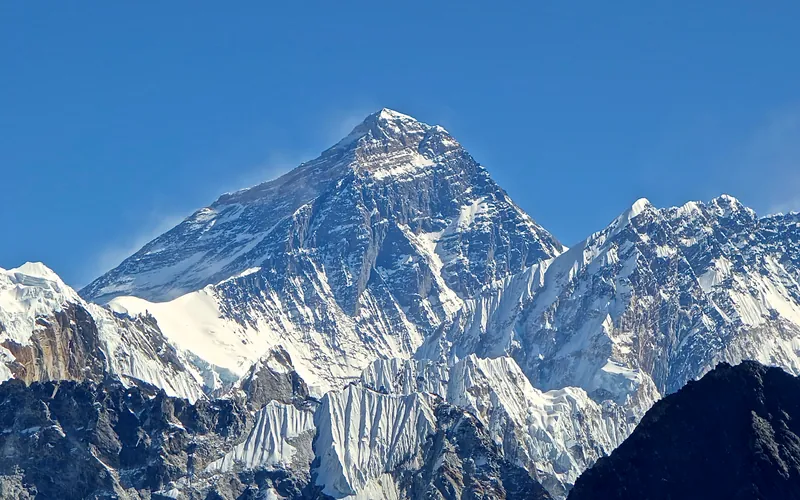
North Col & Northeast Ridge Route
The historic northern route on Mount Everest (8,848.86m), ascending from the Rongbuk and East Rongbuk glaciers to breach the icy wall of the North Col (7,020m). From the col, the route traverses the wind-blasted Northwest Ridge onto the North Face before joining the razor-like Northeast Ridge, navigating the notorious First, Second, and Third Steps in the Death Zone. This was the stage of George Mallory and Andrew Irvine's fateful 1924 climb and was first definitively surmounted on May 25, 1960, by Chinese climbers Wang Fuzhou, Qu Yinhua, and Gongbu.
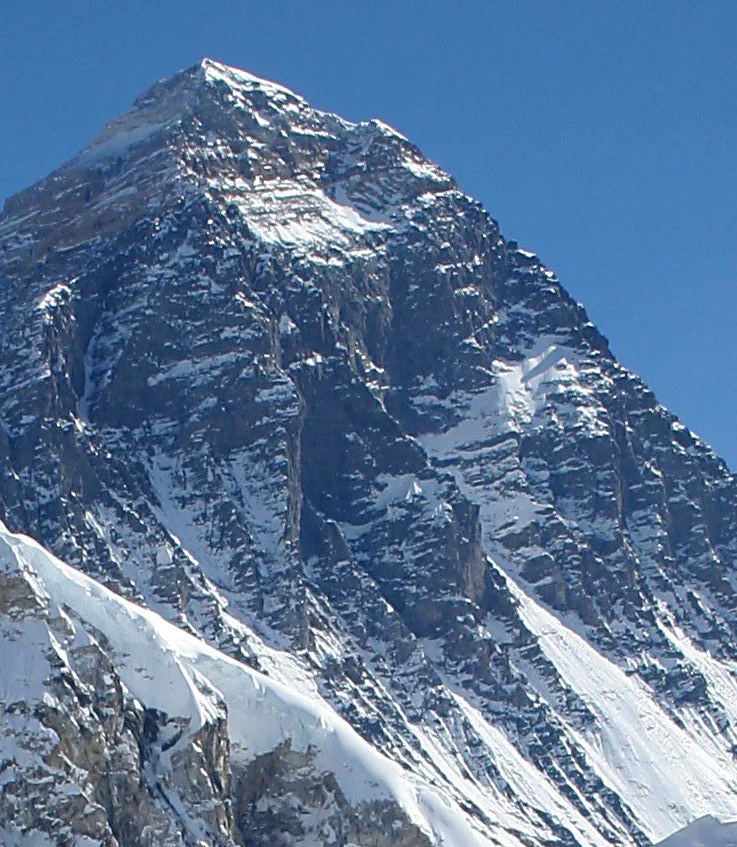
Mount Everest Southwest Face (Bonington Route)
The Southwest Face of Mount Everest (8,848.86m) rises 2,300 vertical meters from the Western Cwm to the summit, presenting one of the largest and most forbidding rock and ice faces in the world. Dominated by the vertical 300-meter 'Rock Band' at 8,200–8,500 meters, the face repelled six international attempts between 1969 and 1974. In autumn 1975, a legendary British expedition led by Chris Bonington breached the face when Paul Braithwaite and Nick Estcourt unlocked the key ramp through the Rock Band. On September 24, 1975, Doug Scott and Dougal Haston climbed to the South Summit and pushed on to the main summit, becoming the first Britons to conquer Everest. Trapped by nightfall during their descent, they survived an epic open bivouac at 8,760 meters without oxygen, sleeping bags, or frostbite.
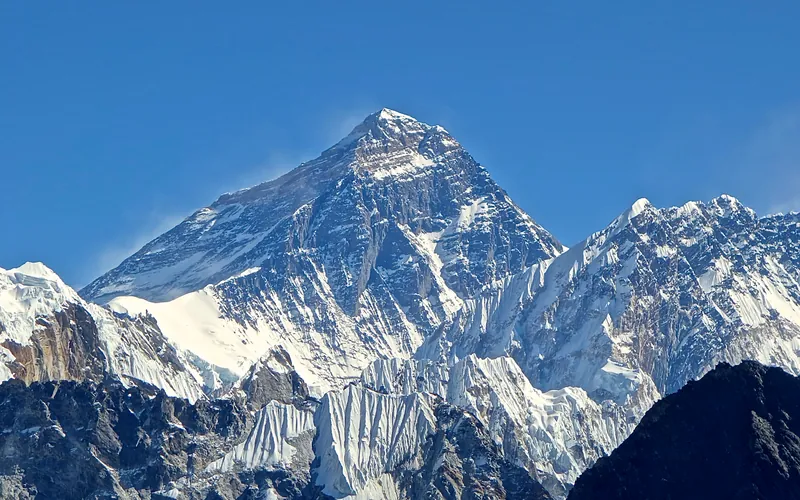
Mount Everest Complete West Ridge (Yugoslav Direct)
The Complete West Ridge of Mount Everest is one of the most formidable and sustained technical routes on the mountain. Pioneered in spring 1979 by an elite Yugoslav expedition led by Tone Škarja, the route tackles the integral knife-edge crest directly from the Lho La col (6,026m) all the way to the 8,848.86m summit. Unlike the 1963 American West Ridge route which diverted into the Hornbein Couloir from the North Face, the Yugoslav line stayed strictly along the razor-edge crest of the West Ridge, surmounting technical rock buttresses up to Grade V+ at extreme altitude before traversing around the Yellow Band. On May 13, 1979, Andrej Štremfelj and Nejc Zaplotnik achieved the first ascent of the complete ridge, followed two days later by Stane Belak, Marjan Manfreda, and Ang Phu Sherpa in one of the greatest feats in Himalayan history.
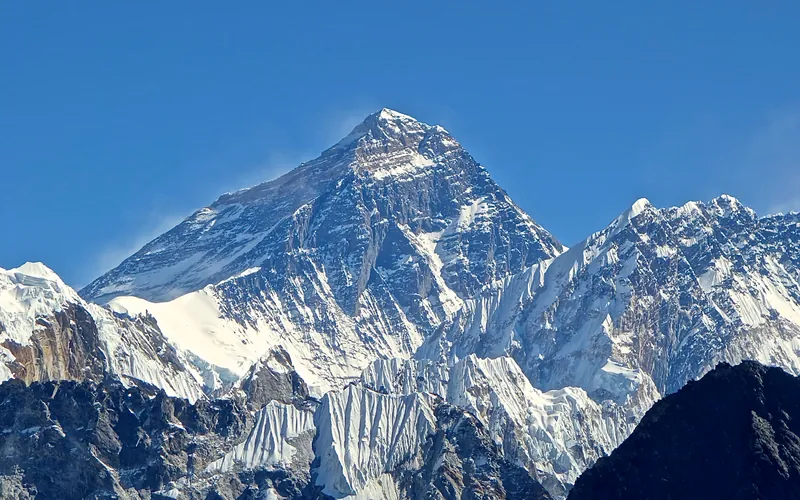
South Col & Southeast Ridge (Normal Route)
The South Col Route along the Southeast Ridge is the historic path of the 1953 first ascent and the most popular route on Mount Everest. Starting from Base Camp on the Khumbu Glacier in Nepal, climbers navigate the shifting seracs of the Khumbu Icefall into the Western Cwm. The route then scales the icy 45-degree slope of the Lhotse Face to the South Col at 7,925 meters, launching the final summit bid through the Balcony, South Summit, and Hillary Step to the summit of Earth at 8,848.86 meters.
Documented Expeditions (1)
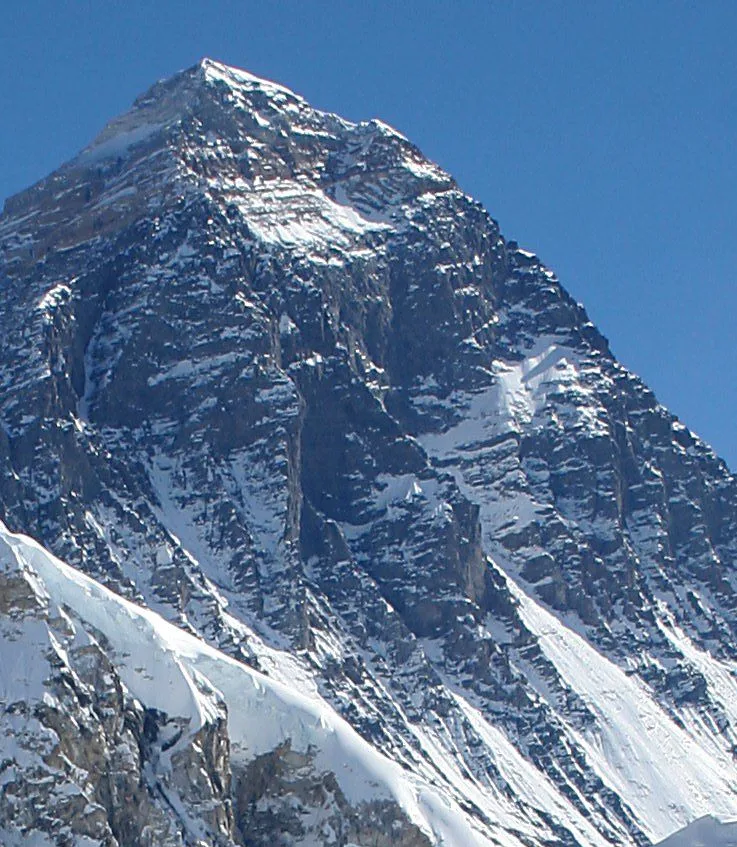
1975 British Mount Everest Southwest Face Expedition
The landmark autumn 1975 British expedition led by Chris Bonington that solved the 'Last Great Problem of the Himalayas' by conquering Mount Everest's colossal 2,300-meter Southwest Face, culminating in Doug Scott and Dougal Haston's summit and their legendary 8,760m survival bivouac.
Associated Chronicles & Stories (1)
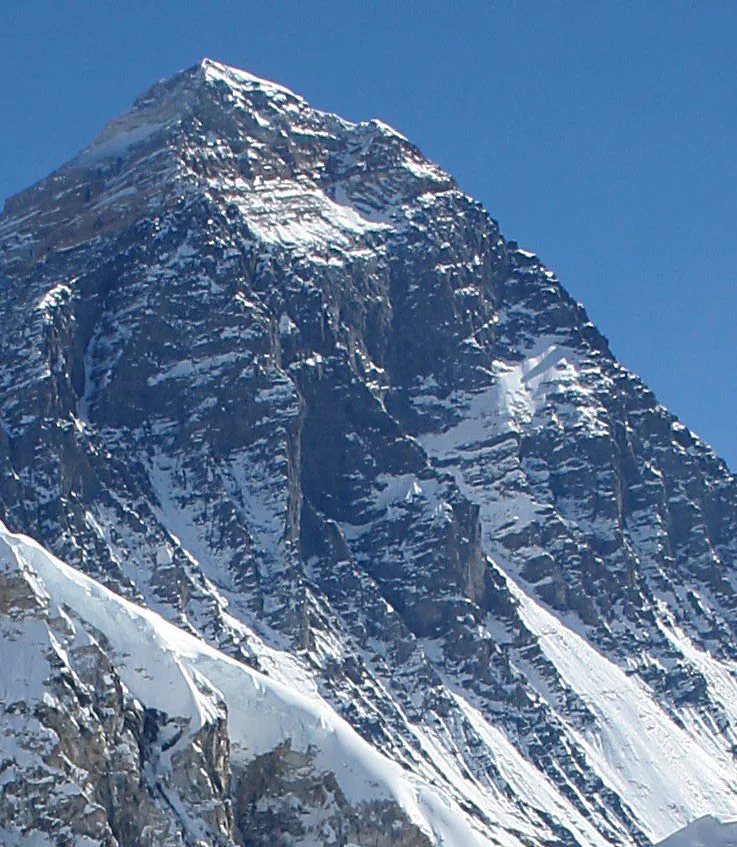
Everest 1975: The Southwest Face Rock Band and the 8,760m Survival Bivouac
On September 24, 1975, Doug Scott and Dougal Haston unlocked the vertical 300-meter Rock Band on Mount Everest's Southwest Face, standing atop the world and surviving a historic 8,760m open-air bivouac.
Documented Sources & Archival Citations
- Everest the Hard Way(Chris Bonington / Hodder & Stoughton)
Supporting claim: Official expedition record detailing Haston's summit push and South Summit bivouac
Accessed/Documented: 1976 - Annapurna South Face(Chris Bonington / Cassell)
Supporting claim: Comprehensive account of the 1970 big-wall breakthrough by Haston and Whillans
Accessed/Documented: 1971 - In High Places(Dougal Haston / Cassell)
Supporting claim: Autobiography recounting early Scottish climbing, the Eiger direct, and Himalayan expeditions
Accessed/Documented: 1972