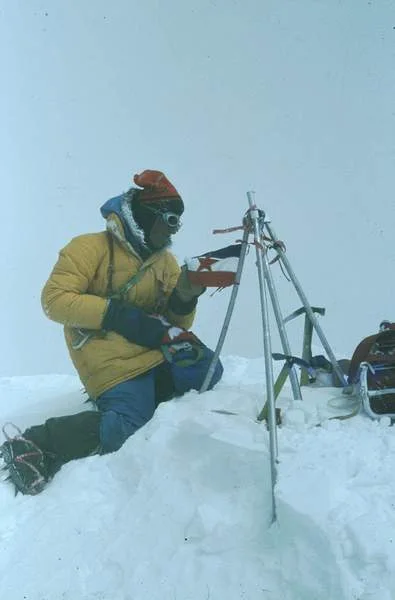
Nejc Zaplotnik
Nejc Zaplotnik (1952–1983) was an iconic Slovenian mountaineer celebrated for pioneering the legendary 1979 Complete West Ridge Direct on Mount Everest with Andrej Štremfelj. A titan of Yugoslav high-altitude climbing, Zaplotnik also completed formidable first ascents on the Makalu South Face in 1975 and Gasherbrum I in 1977. His autobiographical philosophical masterpiece Pot remains one of the most beloved and inspiring classics in world mountaineering literature.
Mountain Safety & Conditions Disclaimer: High-altitude climbing, glacial travel, and technical ascents entail severe objective risks including avalanches, serac collapses, rapid weather collapse, and altitude illness. Historical route descriptions and summit claims on Mountanity reflect documented archival sources and must not be used as live operational safety assessments. Local regulations, permits, and physical glacial topography change continuously.
Peer Review: Senior Editorial Board & Historical Reviewers • Editorial Standards
Biographical Record & Archival Chronicle
Jernej 'Nejc' Zaplotnik was born on April 16, 1952, in Kranj, Slovenia (then part of Yugoslavia). From a young age, Zaplotnik displayed a poetic soul paired with extraordinary physical stamina and fearless technical skill in the Julian Alps. He quickly rose to become the emotional heart and leading visionary of the golden generation of Slovenian and Yugoslav alpinism, which startled the global mountaineering community throughout the 1970s and 1980s with their uncompromising boldness on the world's most daunting big walls.
Zaplotnik made international headlines in October 1975 as part of the Yugoslav expedition to the colossal South Face of Makalu (8,485m). Climbing in extreme conditions, Zaplotnik and his partner reached the summit via a new direct line on the southern wall, marking Yugoslavia's first conquest of an eight-thousander. Two years later, in July 1977, Zaplotnik teamed up with Andrej Štremfelj to forge a bold new route on the Southwest Ridge of Gasherbrum I (8,080m) in the Karakoram, completing their second eight-thousander without supplemental oxygen.
Zaplotnik's defining crowning achievement arrived on May 13, 1979, during the historic Yugoslav Mount Everest Expedition led by Tone Škarja. Tackling the complete, unbroken West Ridge Direct from the Lho La—widely regarded as one of the hardest routes on Mount Everest—Zaplotnik and Štremfelj surmounted the terrifying technical crux of the Yellow Band (V+) at 8,300 metres amidst hurricane-force winds to reach the summit at 8,848 metres. During their desperate descent into the Hornbein Couloir, they survived a harrowing open bivouac at 8,400 metres in minus forty-degree temperatures.
In 1981, Zaplotnik published 'Pot' ('The Path'), an existential and deeply moving philosophical autobiography that became a sacred text for mountain lovers across Southeastern Europe. Tragically, on April 24, 1983, while leading an expedition on Manaslu (8,163m), Zaplotnik was swept away by a colossal serac ice avalanche below Camp I and killed at the age of thirty-one. His grave rests at the foot of Manaslu, eternally facing the Himalayan skies he so passionately revered.
Notable Milestones & Ascents
- First ascent of Mount Everest's complete and unbroken West Ridge Direct (8,848m) with Andrej Štremfelj on May 13, 1979
- First ascent of the severe 3,000-metre South Face of Makalu (8,485m) during the landmark 1975 Yugoslav expedition
- First ascent of the Southwest Ridge of Gasherbrum I (8,080m) with Andrej Štremfelj in July 1977
- Survived an emergency open bivouac at 8,400 metres on Mount Everest in the Hornbein Couloir during the 1979 summit descent
- First Yugoslav mountaineer to summit three eight-thousanders (Makalu, Gasherbrum I, Mount Everest)
- Author of the literary classic 'Pot' ('The Path'), widely regarded as the spiritual anthem of Slovenian mountaineering
Key Statistics & Topographic Figures
- Archive Classification
- MOUNTAINEERS
Mountanity Knowledge Corpus
- Verification Status
- Editorially Verified
Archival Standards
- Citation Standard
- Primary Source Verified
Alpine Research Desk
Archival Primary Source Quotations
“Great things are done when men and mountains meet; this is not done by jostling in the street.”
Defined Alpine Terminology & Concepts
- Archival Integrity
- The standard of verifying historical mountain facts, summit claims, and altitudes using primary expeditions journals and geodetic measurements.
Frequently Asked Questions: Nejc Zaplotnik
What historical significance does this mountaineer hold?
Nejc Zaplotnik represents an essential chapter in global mountaineering heritage, verified through contemporary expedition journals and archival sources.
How are the facts and records for Nejc Zaplotnik verified?
All records are checked against peer-reviewed journals, national alpine clubs, geodetic surveys, and the Mountanity Archival Integrity Policy.
Associated Summits (3)



Mount Everest
Mount Everest is the highest mountain above sea level on Earth, standing at an official elevation of 8,848.86 meters (29,031.7 ft). Straddling the international frontier between Nepal and China, it is known locally as Sagarmatha in Nepali ('Goddess of the Sky') and Chomolungma in Tibetan ('Mother Goddess of the World'). The peak rises into the extreme upper troposphere, where oxygen levels drop to barely one-third of sea-level pressure. Climbers face hurricane-force jet stream winds, severe frostbite conditions, shifting ice crevasses in the Khumbu Icefall, and the dangerous Death Zone above 8,000 meters.
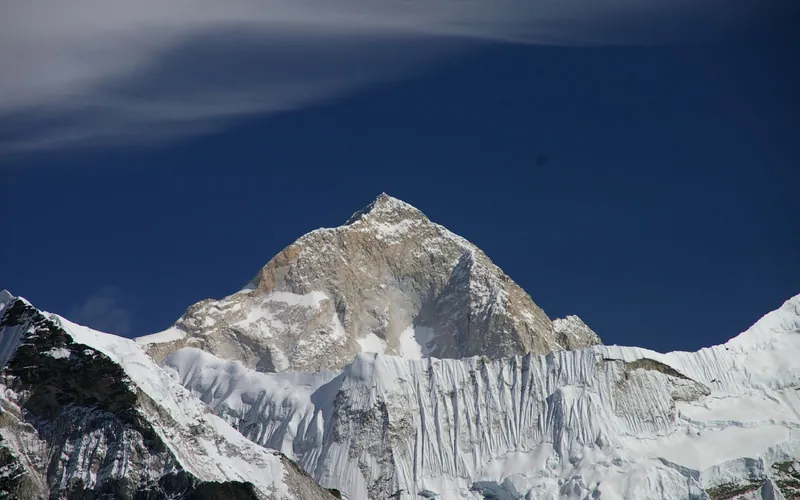
Makalu
Makalu, at 8,485 meters (27,838 ft), is the fifth-highest mountain on Earth, located 19 km southeast of Mount Everest. An isolated four-sided granite pyramid, it is known for technical knife-edge ridges, severe exposure, and punishing weather, making it one of the most challenging eight-thousanders.
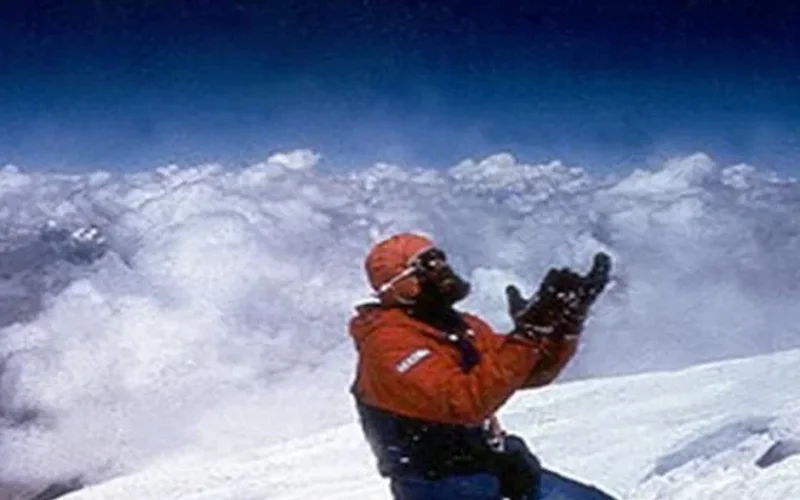

Gasherbrum I
Gasherbrum I, at 8,068 meters (26,470 ft), is the eleventh-highest mountain in the world. Named 'Hidden Peak' by explorer William Martin Conway due to its concealment behind surrounding Karakoram giants, it stands on the border between Pakistan and China. The peak was first climbed in 1958 by an American team led by Nick Clinch, and in 1992 Nazir Sabir summited it with Rajab Shah and Mehrban Shah, marking his fourth Pakistani eight-thousander.
Pioneered & Associated Routes (7)
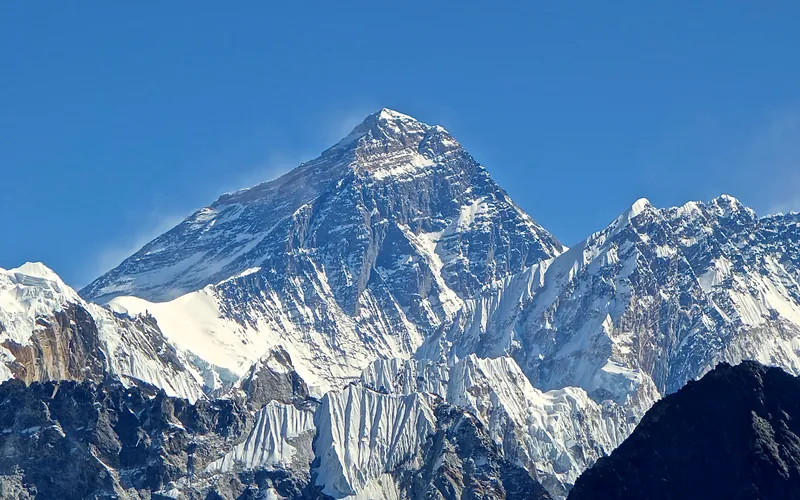
Mount Everest North Face (Hornbein Couloir Direct)
The North Face of Mount Everest via the Japanese Couloir and the sheer Hornbein Couloir is one of the most direct and formidable ice lines in the Himalayas. Rising 3,000 vertical meters from the Rongbuk Glacier to the summit, it funnels through a narrow 60-degree snow-and-ice cleft slicing straight through the Yellow Band and upper limestone cliffs of the North Face. In August 1986, Swiss alpinists Erhard Loretan and Jean Troillet executed one of the most audacious speed climbs in mountain history: climbing the entire face in a single 31-hour push at night without supplemental oxygen, tents, or fixed ropes. After summiting on August 30, they glissaded down the 3,000-meter face on their backs and buttocks in just 3.5 hours, completing the entire round trip in an astonishing 43 hours.
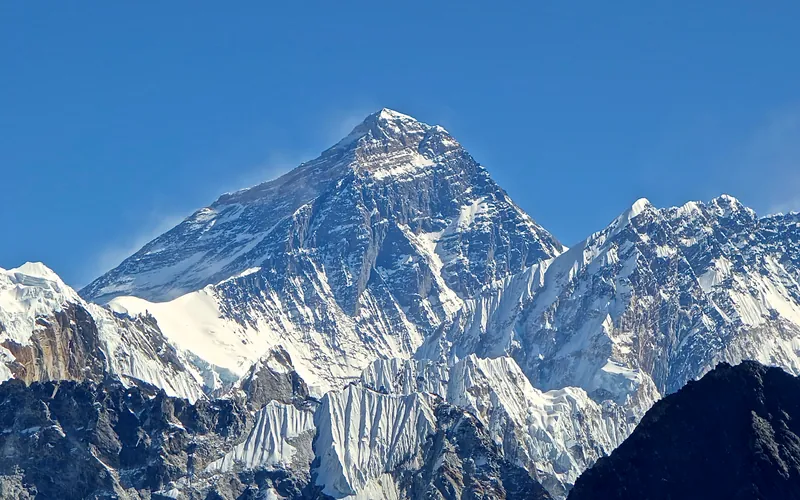
North Col & Northeast Ridge Route
The historic northern route on Mount Everest (8,848.86m), ascending from the Rongbuk and East Rongbuk glaciers to breach the icy wall of the North Col (7,020m). From the col, the route traverses the wind-blasted Northwest Ridge onto the North Face before joining the razor-like Northeast Ridge, navigating the notorious First, Second, and Third Steps in the Death Zone. This was the stage of George Mallory and Andrew Irvine's fateful 1924 climb and was first definitively surmounted on May 25, 1960, by Chinese climbers Wang Fuzhou, Qu Yinhua, and Gongbu.
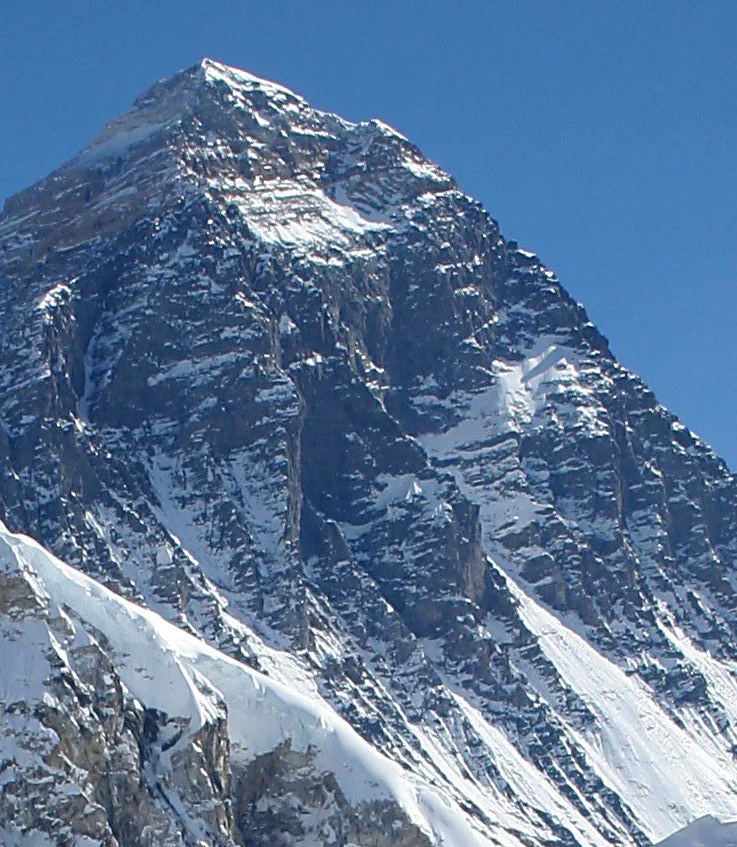
Mount Everest Southwest Face (Bonington Route)
The Southwest Face of Mount Everest (8,848.86m) rises 2,300 vertical meters from the Western Cwm to the summit, presenting one of the largest and most forbidding rock and ice faces in the world. Dominated by the vertical 300-meter 'Rock Band' at 8,200–8,500 meters, the face repelled six international attempts between 1969 and 1974. In autumn 1975, a legendary British expedition led by Chris Bonington breached the face when Paul Braithwaite and Nick Estcourt unlocked the key ramp through the Rock Band. On September 24, 1975, Doug Scott and Dougal Haston climbed to the South Summit and pushed on to the main summit, becoming the first Britons to conquer Everest. Trapped by nightfall during their descent, they survived an epic open bivouac at 8,760 meters without oxygen, sleeping bags, or frostbite.
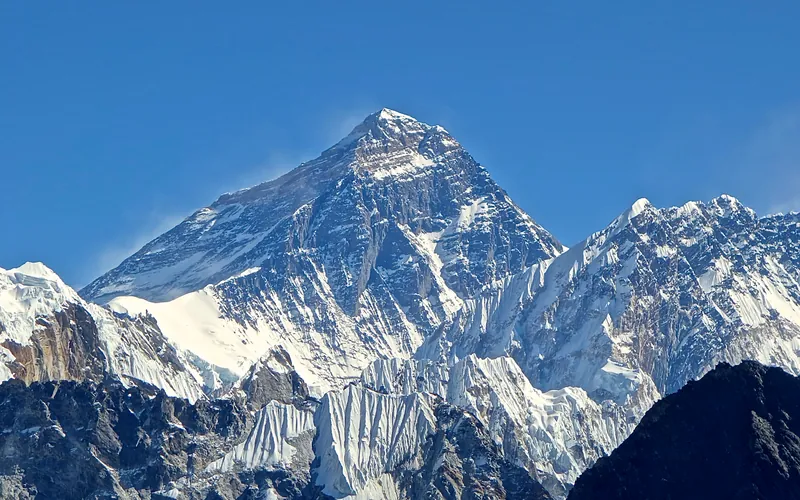
Mount Everest Complete West Ridge (Yugoslav Direct)
The Complete West Ridge of Mount Everest is one of the most formidable and sustained technical routes on the mountain. Pioneered in spring 1979 by an elite Yugoslav expedition led by Tone Škarja, the route tackles the integral knife-edge crest directly from the Lho La col (6,026m) all the way to the 8,848.86m summit. Unlike the 1963 American West Ridge route which diverted into the Hornbein Couloir from the North Face, the Yugoslav line stayed strictly along the razor-edge crest of the West Ridge, surmounting technical rock buttresses up to Grade V+ at extreme altitude before traversing around the Yellow Band. On May 13, 1979, Andrej Štremfelj and Nejc Zaplotnik achieved the first ascent of the complete ridge, followed two days later by Stane Belak, Marjan Manfreda, and Ang Phu Sherpa in one of the greatest feats in Himalayan history.
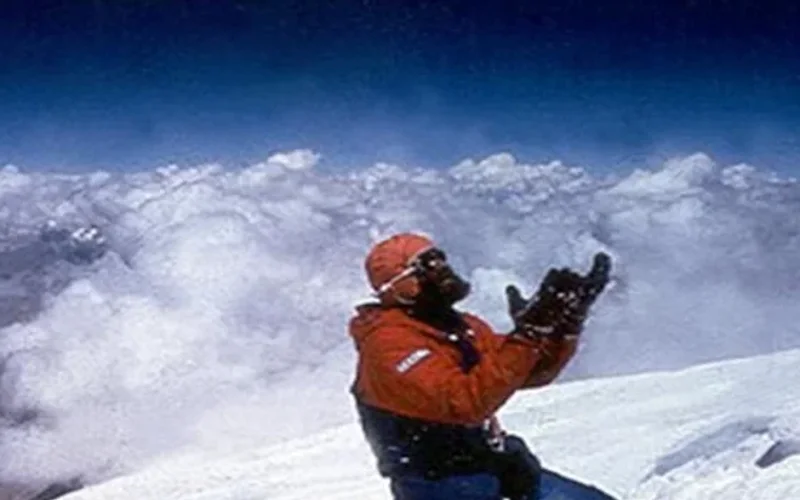
Northwest Face & Japanese Couloir (Normal Route)
The Northwest Face via the Japanese Couloir is the standard and most frequently climbed line on Gasherbrum I (8,068m / Hidden Peak). Starting from the South Gasherbrum Glacier, climbers traverse the shared lower icefall into the Gasherbrum Cwm, then branch southward toward the forbidding northwest wall. The technical centerpiece is the Japanese Couloir—a sustained 50 to 60-degree gully of hard blue ice and shattered rock leading to the high col and summit slopes. First ascended in 1958 by Americans Pete Schoening and Andy Kauffman via the South Ridge, the Japanese Couloir line became the modern benchmark, climbed rapidly in 1992 by Nazir Sabir, Rajab Shah, and Mehrban Shah.
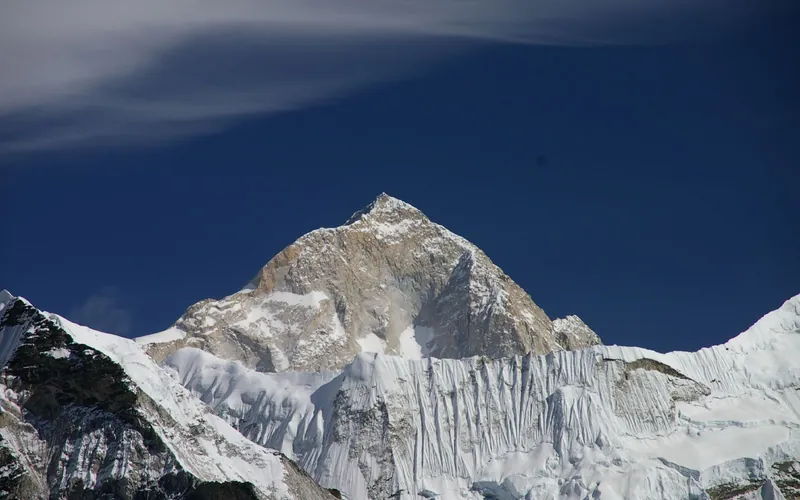
Makalu Northwest Ridge (French Route)
The Northwest Ridge is the classic pioneering line on Makalu, first opened by the historic French expedition of 1955. From Advanced Base Camp on the Chago Glacier, climbers ascend steep snow and ice fields to gain Makalu La (7,400m), a high, wind-blasted col connecting Makalu to Kangchungtse. Above Makalu La, the route climbs through the technical French Couloir—a mixed corridor of steep ice and broken granite—before emerging onto the exposed summit crest.
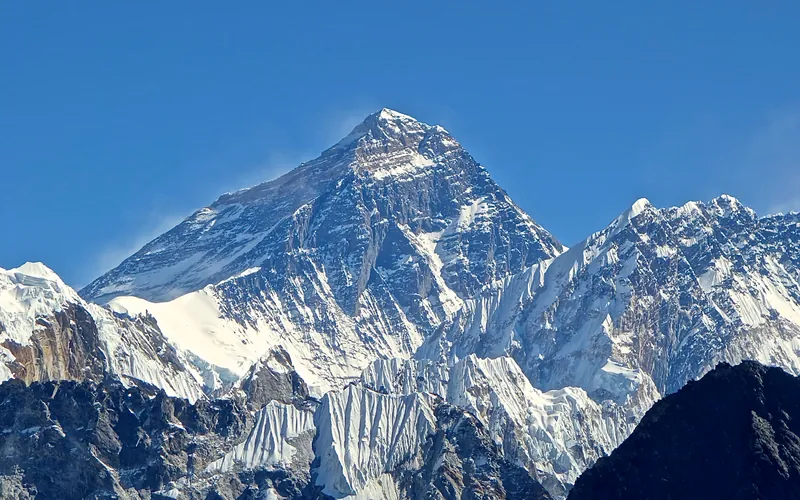
South Col & Southeast Ridge (Normal Route)
The South Col Route along the Southeast Ridge is the historic path of the 1953 first ascent and the most popular route on Mount Everest. Starting from Base Camp on the Khumbu Glacier in Nepal, climbers navigate the shifting seracs of the Khumbu Icefall into the Western Cwm. The route then scales the icy 45-degree slope of the Lhotse Face to the South Col at 7,925 meters, launching the final summit bid through the Balcony, South Summit, and Hillary Step to the summit of Earth at 8,848.86 meters.
Documented Expeditions (1)
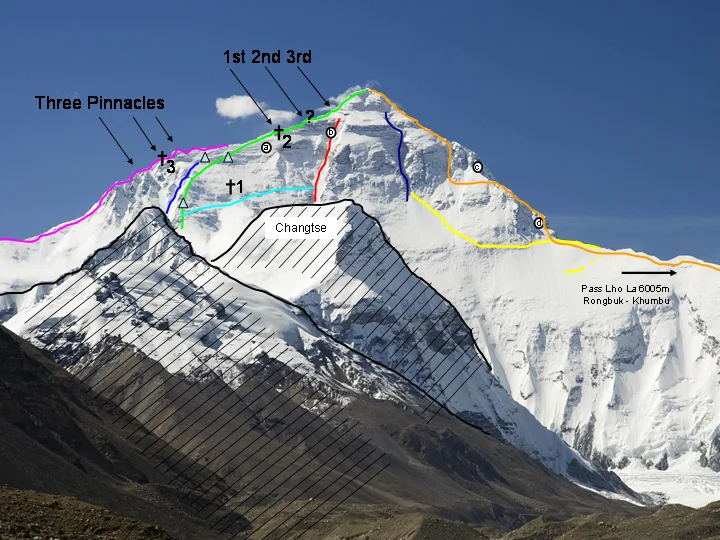
1979 Yugoslav Mount Everest West Ridge Direct Expedition
On May 13, 1979, Slovenian mountaineers Nejc Zaplotnik and Andrej Štremfelj achieved the historic first ascent of the complete, unbroken West Ridge Direct of Mount Everest (8,848m) without descending from the crest, overcoming the V+ Yellow Band crux at 8,300m and surviving an open bivouac at 8,400m.
Associated Chronicles & Stories (2)
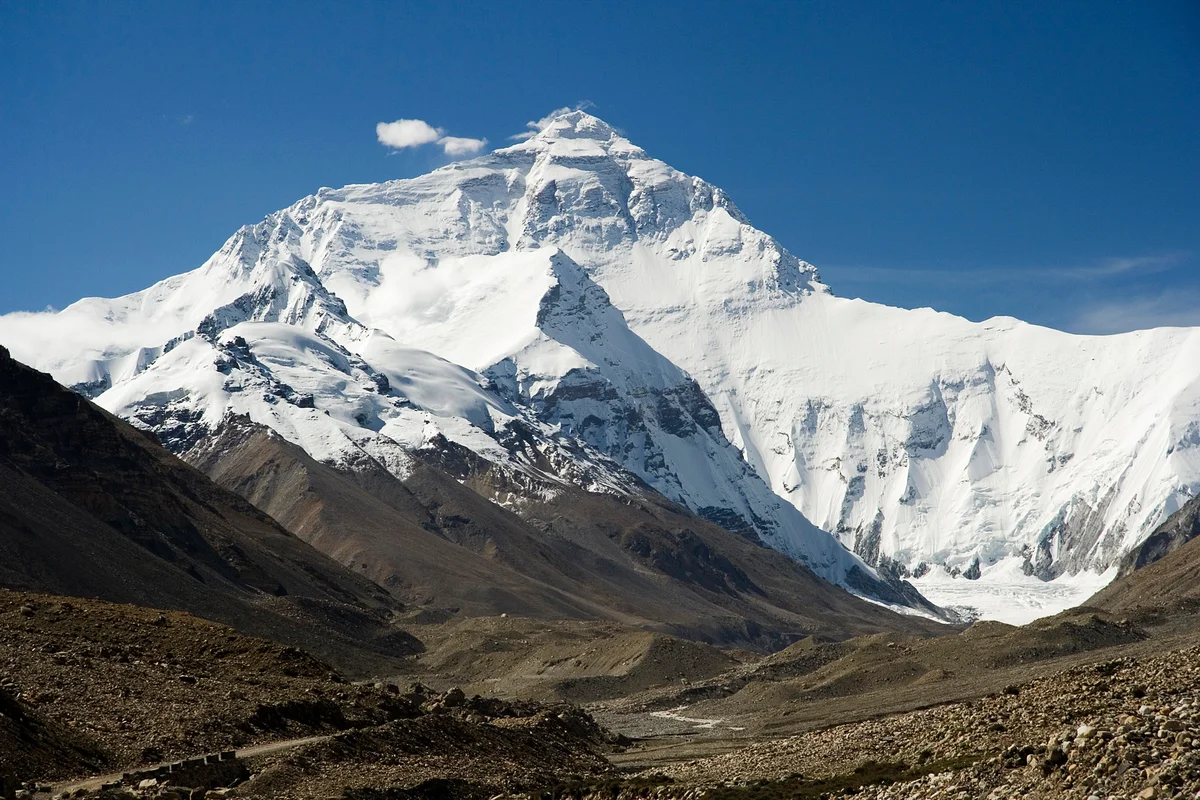
The Razor of the Sky: The 1979 Yugoslav First Ascent of Everest West Ridge
On May 13, 1979, Slovenian mountaineers Andrej Štremfelj and Nejc Zaplotnik conquered Mount Everest via the complete West Ridge direct, overcoming extreme Grade V+ rock in the death zone.
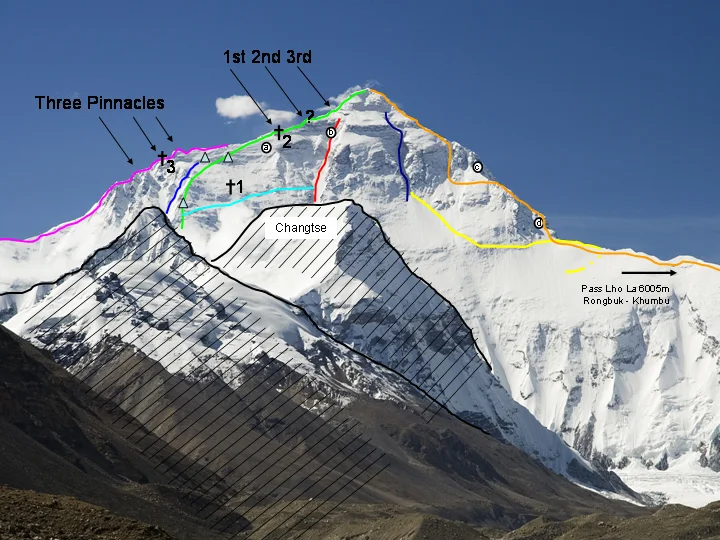
The Razor's Edge: Nejc Zaplotnik and the Complete Everest West Ridge Direct
On May 13, 1979, Slovenian mountaineers Nejc Zaplotnik and Andrej Štremfelj conquered Mount Everest's unbroken West Ridge Direct, surviving a minus forty-degree open bivouac at 8,400m.
Documented Sources & Archival Citations
- Everest: The West Ridge Yugoslav Expedition 1979(Tone Škarja / Mladinska Knjiga)
Supporting claim: Official expedition chronicle documenting Zaplotnik and Štremfelj's historic summit ascent
Accessed/Documented: 1981 - Pot (The Path)(Nejc Zaplotnik / Cankarjeva Založba)
Supporting claim: Autobiographical masterpiece describing Zaplotnik's life, ascents on Makalu, Gasherbrum I, and Everest
Accessed/Documented: 1981