
Kinga Baranowska
Kinga Baranowska (born 1975) is an elite Polish high-altitude mountaineer who has summited nine 8,000-meter peaks without supplemental bottled oxygen. Renowned as the first Polish woman to stand atop Dhaulagiri, Manaslu, and Kangchenjunga, Baranowska is a premier figure of modern Himalayan alpinism, continuing Poland's proud legacy of independent, fair-means high-altitude expeditions.
Mountain Safety & Conditions Disclaimer: High-altitude climbing, glacial travel, and technical ascents entail severe objective risks including avalanches, serac collapses, rapid weather collapse, and altitude illness. Historical route descriptions and summit claims on Mountanity reflect documented archival sources and must not be used as live operational safety assessments. Local regulations, permits, and physical glacial topography change continuously.
Peer Review: Senior Editorial Board & Historical Reviewers • Editorial Standards
Biographical Record & Archival Chronicle
Kinga Baranowska was born on November 17, 1975, in Wejherowo, in the Pomeranian region of northern Poland. Raised with proud Kashubian heritage, she studied geography and journalism at the University of Gdańsk. Developing a passionate fascination with the high mountains, she honed her climbing skills in the Polish Tatras and the Alps before launching her Himalayan career in the early 2000s.
In autumn 2003, Baranowska summited her first eight-thousander, Cho Oyu (8,188m), strictly without supplemental bottled oxygen—establishing an ethical standard she would never compromise. In July 2006, she conquered Broad Peak (8,051m) in Pakistan. The year 2008 proved to be an extraordinary double triumph: on May 1, 2008, Baranowska became the first Polish woman to reach the summit of Dhaulagiri I (8,167m); five months later, on October 5, 2008, she made history again as the first Polish woman atop Manaslu (8,163m).
On May 18, 2009, Baranowska achieved her defining masterpiece on Kangchenjunga (8,586m), the world's third highest mountain. Climbing from the Southwest Face without supplemental oxygen, she battled high-altitude blizzards and extreme cold to step onto the summit, becoming the first Polish woman to conquer the colossal peak where Wanda Rutkiewicz had disappeared seventeen years earlier. Baranowska dedicated the summit to Rutkiewicz's memory. She continued her clean-oxygen campaign with summits of Annapurna I (2010), Lhotse (2012), and Gasherbrum II (2015), reaching nine 8,000-meter peaks without supplemental oxygen. In 2015, the President of Poland decorated Baranowska with the Knight's Cross of the Order of Polonia Restituta.
Notable Milestones & Ascents
- Summited nine of the world's fourteen 8,000-meter peaks without supplemental bottled oxygen
- Became the first Polish woman in history to conquer Kangchenjunga (8,586m) on May 18, 2009, without oxygen
- Became the first Polish woman to reach the summits of Dhaulagiri (8,167m) and Manaslu (8,163m) in 2008
- Summited Annapurna I (8,091m) on April 27, 2010, becoming one of very few women in history to conquer the mountain without oxygen
- Summited Lhotse (8,516m) in 2012 and Gasherbrum II (8,035m) in 2015 without artificial oxygen
- Honored with the Knight's Cross of the Order of Polonia Restituta by the President of Poland for exceptional sports achievements
Key Statistics & Topographic Figures
- Lifespan
- Born November 17, 1975
Wejherowo, Pomerania, Poland
- First Polish Woman Kangchenjunga
- May 18, 2009 (8,586m)
Without Supplemental Bottled Oxygen
- Total 8,000m Summits
- 9 Peaks Without Oxygen
All Ascents Without Bottled Oxygen
- Polish Female Firsts
- Dhaulagiri & Manaslu (2008)
First Polish Woman to Summit Both Peaks
- State Honor
- Knight’s Cross Order of Polonia Restituta
Conferred by the President of Poland (2015)
Archival Primary Source Quotations
“On Kangchenjunga, I felt Wanda’s presence in every gust of wind; standing on top was a promise kept to every woman who dared to dream.”
Defined Alpine Terminology & Concepts
- Kashubian Himalayan Legacy
- The proud regional heritage carried by Kinga Baranowska, bringing the cultural endurance and spirit of northern Poland’s Kashubia to the highest peaks.
- Clean Oxygen Ethic
- The mountaineering standard championed by Kinga Baranowska of climbing the world’s 8,000-metre peaks exclusively on natural lung capacity.
Frequently Asked Questions: Kinga Baranowska
Who is Kinga Baranowska and what historic records does she hold?
Kinga Baranowska is an elite Polish mountaineer who summited nine 8,000-metre peaks without oxygen, including Kangchenjunga and Dhaulagiri.
When did Kinga Baranowska become the first Polish woman to summit Kangchenjunga?
She conquered Kangchenjunga (8,586m) on May 18, 2009, climbing without supplemental bottled oxygen via the Southwest Face.
To whom did Kinga Baranowska dedicate her Kangchenjunga summit?
She dedicated her summit to Wanda Rutkiewicz, the pioneer who disappeared on Kangchenjunga’s upper slopes seventeen years earlier in 1992.
Which other eight-thousanders did Kinga Baranowska climb first for Polish women?
In 2008, Baranowska made history as the first Polish woman to summit both Dhaulagiri I (8,167m) and Manaslu (8,163m).
Did Kinga Baranowska use supplemental bottled oxygen on any of her nine 8,000-metre summits?
No, all nine of her 8,000-metre summits were completed strictly without the use of supplemental bottled oxygen.
What other eight-thousanders has Kinga Baranowska climbed?
She has summited Cho Oyu (2003), Broad Peak (2006), Annapurna I (2010), Lhotse (2012), and Gasherbrum II (2015).
What regional heritage does Kinga Baranowska proudly represent?
Baranowska was born in Wejherowo and is deeply connected to her Pomeranian Kashubian heritage, carrying the Kashubian flag on expeditions.
What state decoration did Kinga Baranowska receive in Poland?
In 2015, the President of Poland decorated her with the Knight’s Cross of the Order of Polonia Restituta for outstanding sporting merit.
Associated Summits (8)

Kangchenjunga
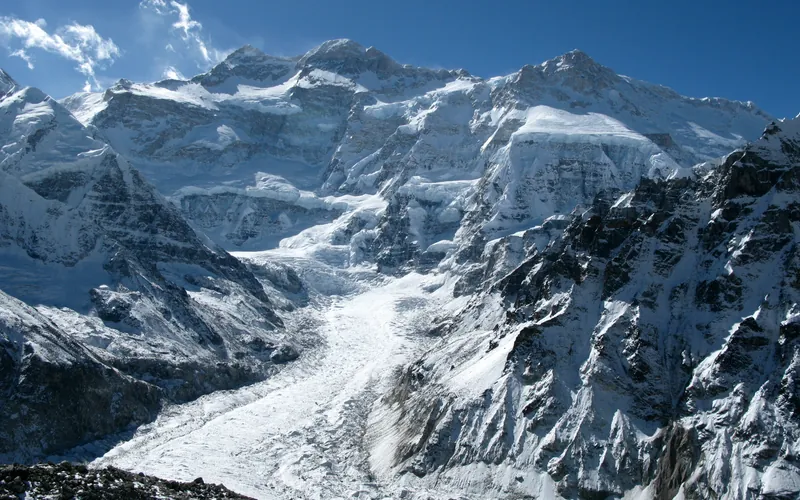
Kangchenjunga, at 8,586 meters (28,169 ft), is the third-highest mountain on Earth, rising on the border between Nepal and Sikkim, India. Honored as sacred by locals, early ascent teams respected local beliefs by stopping short of the actual highest crest. It features immense vertical relief and notorious storm cycles.

Lhotse
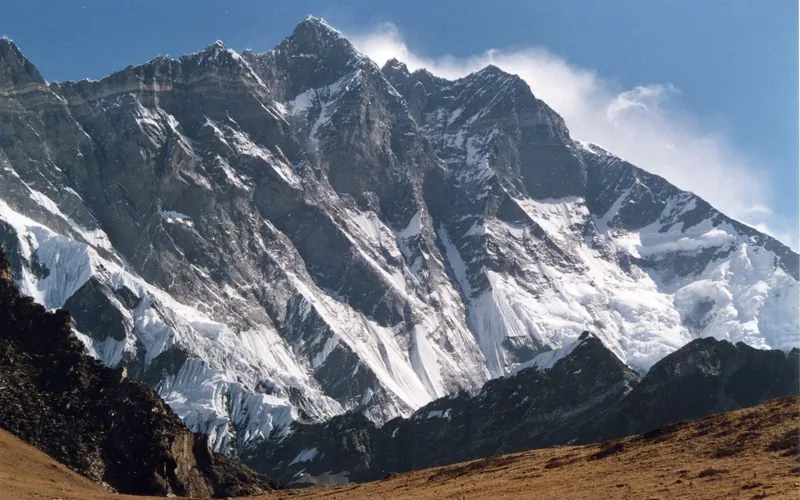
Lhotse, at 8,516 meters (27,940 ft), is the fourth-highest mountain on Earth, connected directly to Mount Everest via the South Col. Renowned for its sheer 3,200-meter South Face, one of the most imposing rock and ice walls in alpinism, the standard route tackles the grueling Lhotse Couloir from the Western Cwm.
Cho Oyu
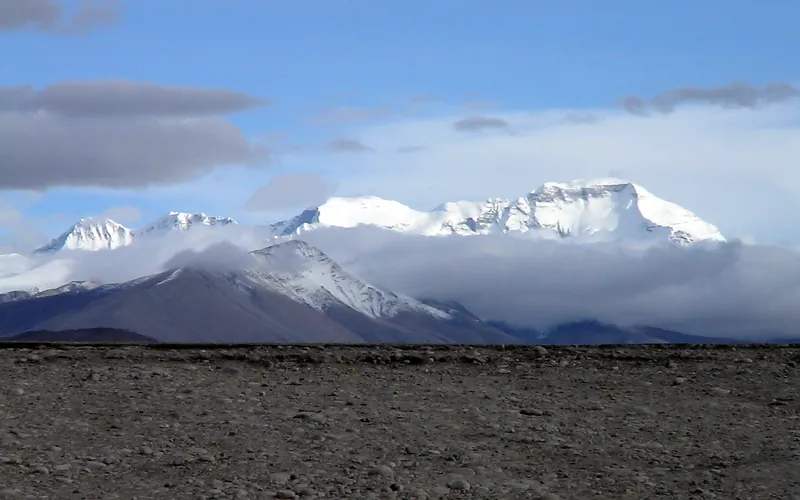
Cho Oyu, at 8,188 meters (26,864 ft), is the sixth-highest mountain in the world, situated 20 km west of Mount Everest. Meaning 'Turquoise Goddess' in Tibetan, it stands on the glaciated Nangpa La trade route between Nepal and Tibet. Its moderate northwest slopes make it the most accessible 8,000-meter peak.
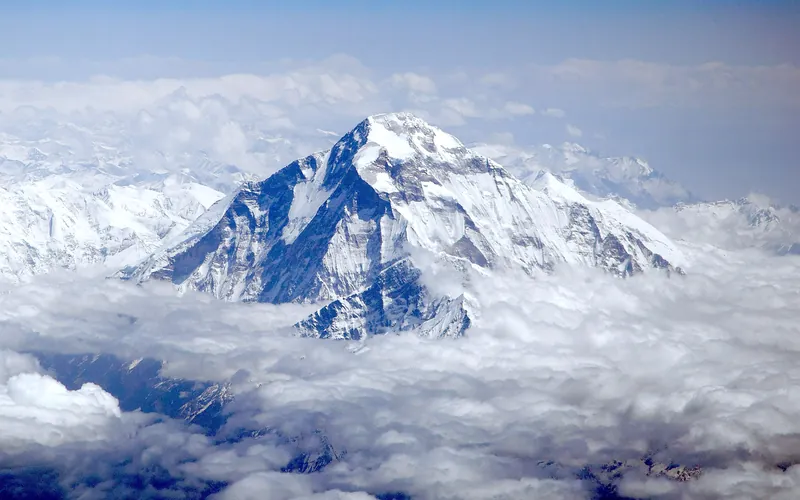
Dhaulagiri I
Dhaulagiri I, at 8,167 meters (26,795 ft), is the seventh-highest mountain on Earth and the highest peak situated entirely within Nepal. Rising steeply above the Kali Gandaki Gorge—the deepest gorge on Earth—opposite Annapurna, Dhaulagiri forms a staggering 7,000-meter vertical rise from the river valley.
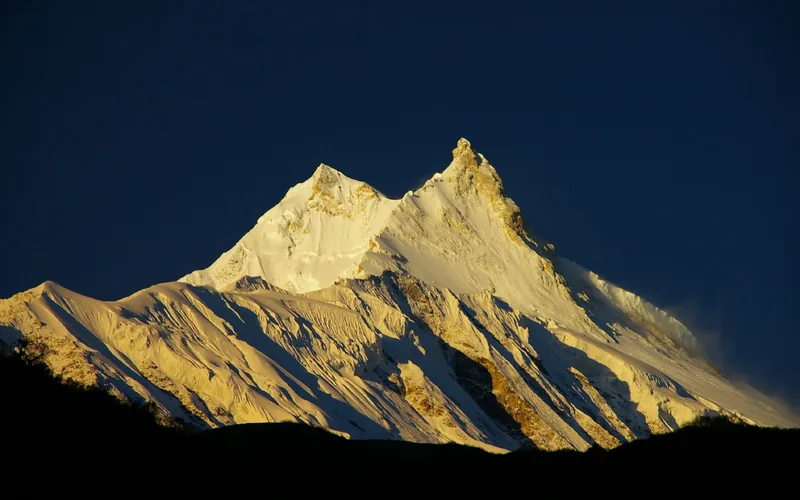
Manaslu
Manaslu, at 8,163 meters (26,781 ft), is the eighth-highest mountain in the world, situated in the Mansiri Himal of west-central Nepal. Known as the 'Mountain of the Spirit', its long ridges and valley glaciers offer dramatic topography culminating in a delicate, exposed knife-edge summit crest.
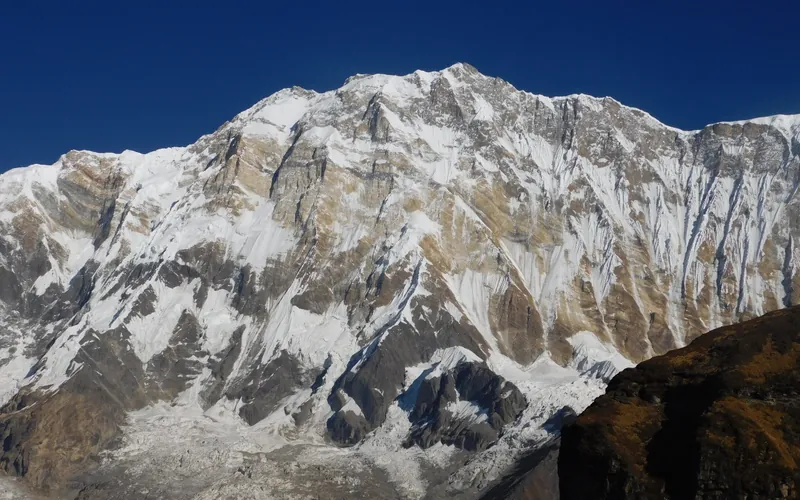
Annapurna I
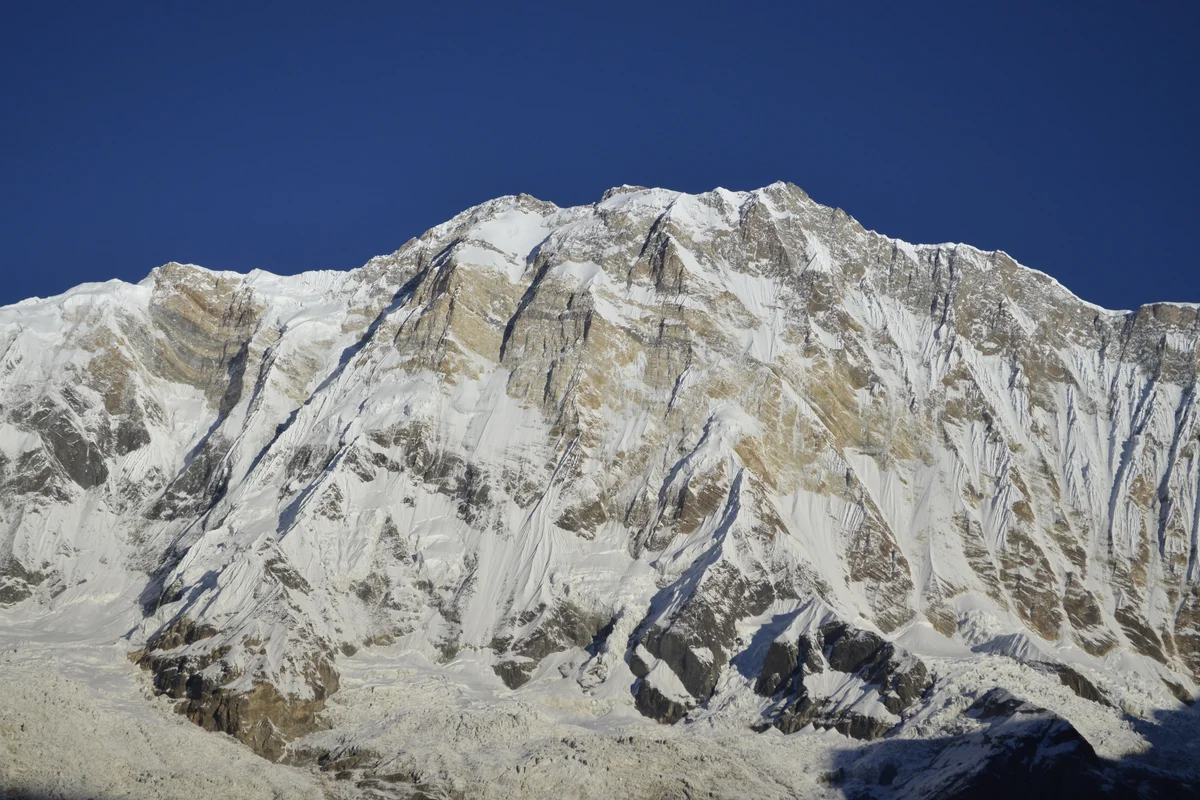
Annapurna I, at 8,091 meters (26,545 ft), is the tenth-highest mountain in the world and historically the first 8,000-meter peak ever summited (June 3, 1950 by Maurice Herzog and Louis Lachenal). Rising above the Annapurna Sanctuary, its north and south walls present extreme avalanche and serac fall hazards.
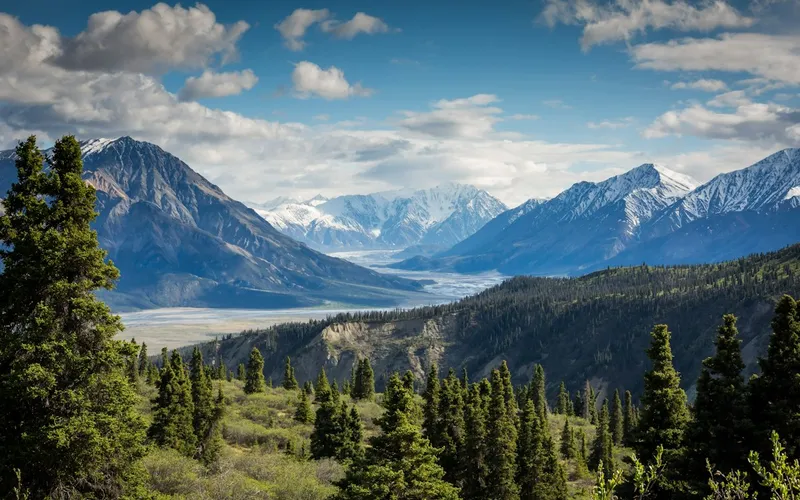

Broad Peak
Broad Peak, at 8,051 meters (26,414 ft), is the twelfth-highest mountain in the world. Located in the Karakoram directly across the Godwin-Austen Glacier from K2, it is famous for its 1.5-kilometre-long summit crest. First climbed in lightweight alpine style without supplemental oxygen or high-altitude porters in 1957 by an Austrian team.
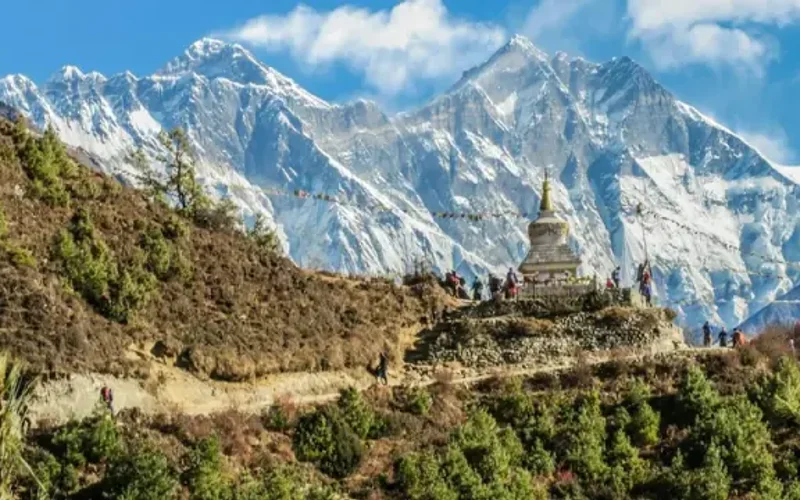
Gasherbrum II
Gasherbrum II, standing at 8,035 meters (26,362 ft), is the thirteenth-highest mountain on Earth and the third-highest peak of the Gasherbrum massif in the Karakoram. Located at the head of the Baltoro Glacier on the Pakistan-China frontier, it features a classic pyramidal profile with challenging ice couloirs. First summited in 1956 by an Austrian team, it was famously climbed in pure alpine style in 1982 by Reinhold Messner, Nazir Sabir, and Sher Khan.
Pioneered & Associated Routes (9)
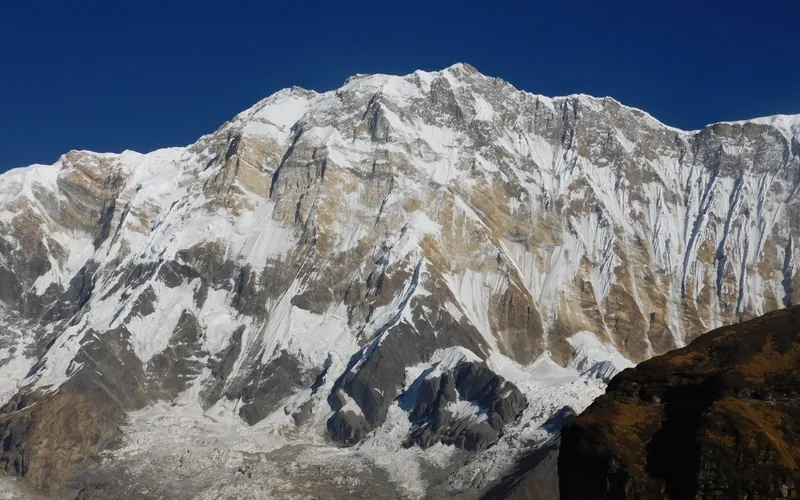
Annapurna I North Face (Herzog-Lachenal Route)
The North Face of Annapurna I is the historic first route ever climbed on an 8,000-meter peak, pioneered by French climbers Maurice Herzog and Louis Lachenal on June 3, 1950. Approached via the remote Miristi Khola valley, the route ascends the shattered North Annapurna Glacier, negotiates the terrifying avalanche-swept Sickle Glacier serac wall, and ascends steep snow gullies along the French Rib to gain the 8,091m summit.
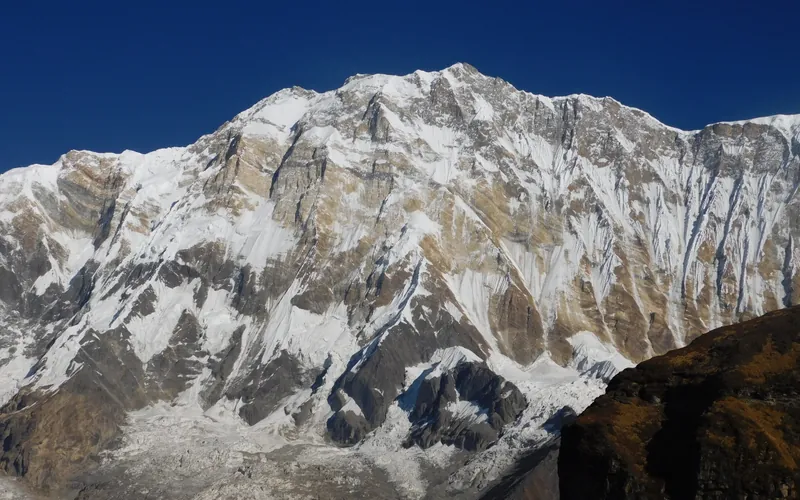
Annapurna I South Face (Bonington-Haston-Whillans Route)
The South Face of Annapurna I is one of the most formidable big-wall arenas in world mountaineering, rising 3,000 vertical metres of sheer rock, ice flutings, and overhanging bands directly from the Annapurna Sanctuary. First ascended via siege tactics by Dougal Haston and Don Whillans in 1970, it was later climbed in a revolutionary, lightweight solo push by Swiss alpinist Ueli Steck in October 2013 in just 28 hours round-trip.
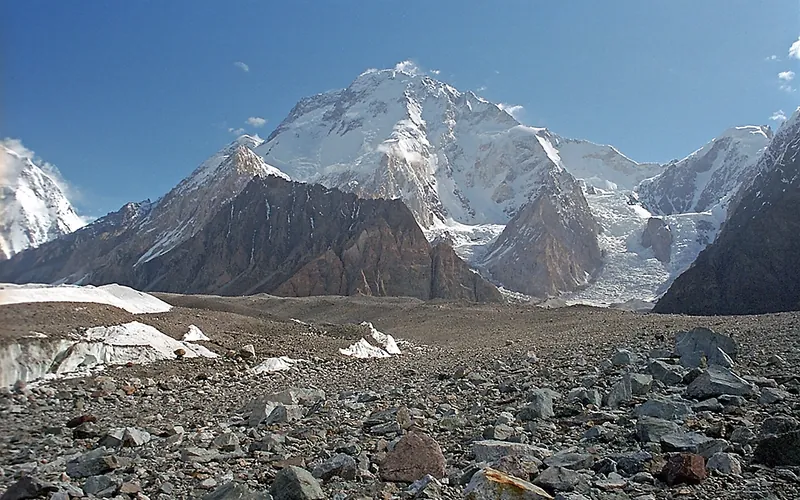
Normal Route (West Ridge & Northwest Face)
The Normal Route on Broad Peak ascends the rugged western spur from the Godwin-Austen Glacier, navigating steep mixed rock ribs before entering the upper glacial basin beneath the high saddle (the Col). From the Col at 7,800 meters, climbers enter the Death Zone to tackle the long, corniced summit ridge leading across the Foresummit to the true summit at 8,051 meters. First conquered in 1957 by an Austrian team in lightweight alpine style without bottled oxygen, and climbed in 1982 by Reinhold Messner, Nazir Sabir, and Sher Khan in a groundbreaking rapid alpine push.
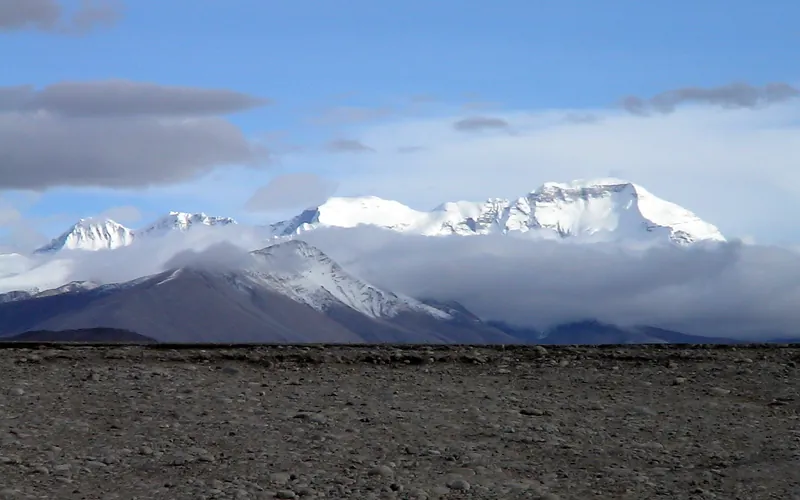
Cho Oyu Northwest Face & Ridge (Normal Route)
The Northwest Ridge is the standard and most climbed route on Cho Oyu, approached from the Tibetan plateau via the Gyabrag Glacier. First climbed in 1954 by an Austrian expedition, the route features relatively moderate snow slopes of 30 to 40 degrees, punctuated by a single prominent technical crux known as the Ice Cliff at 6,700m. Above Camp 3, climbers cross the Yellow Band and emerge onto a vast, gently rising summit plateau.
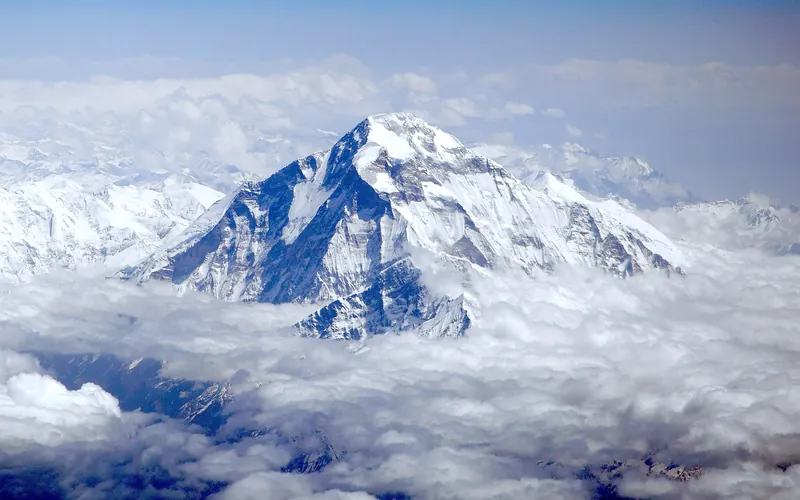
Dhaulagiri I Northeast Ridge (Normal Route)
The Northeast Ridge is the standard climbing route on Dhaulagiri I, first ascended in 1960 by a Swiss-Austrian team. The route begins on the glaciated Mayangdi Khola valley, climbs to the Northeast Col (5,700m), and works its way up the mountain's north-northeast face. The upper section traverses steep, wind-scoured blue ice shelves below the summit rocks and negotiates a final, exposed couloir leading directly to the 8,167m summit.
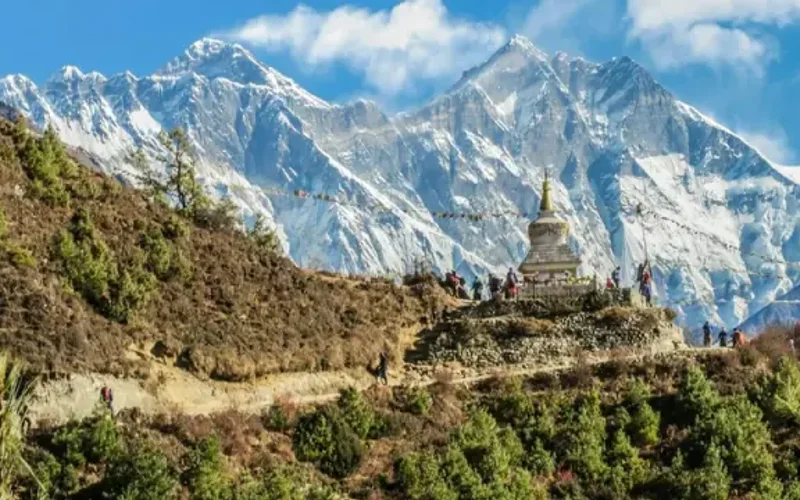
Southwest Ridge (Normal Route)
The Southwest Ridge is the standard and historically celebrated route on Gasherbrum II (8,035m). Starting from the South Gasherbrum Glacier, climbers navigate the heavily crevassed lower icefall into the Gasherbrum Cwm before tackling the technical crux of the route: the steep mixed snow and ice crest known as the Banana Ridge. Above Camp III, the route traverses expansive snow basins into the Death Zone, making a final push up a delicate diagonal couloir to the summit. First climbed in 1956 by an Austrian team, and completed in rapid alpine style in 1982 by Reinhold Messner, Nazir Sabir, and Sher Khan.
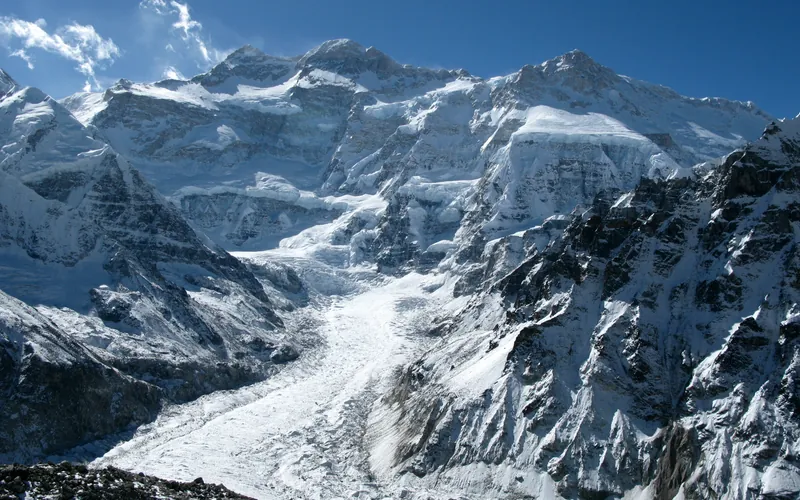
Kangchenjunga Southwest Face (Normal Route)
The Southwest Face route is the classic line of ascent on Kangchenjunga, climbing out of the Yalung Glacier cirque in eastern Nepal. First forged in 1955 by British mountaineers Joe Brown and George Band, the route negotiates heavily broken glacial icefalls, ascends the vast hanging snow terrace of The Great Shelf, and threads steep rock gullies in the Sickle Couloir before reaching the delicate summit crest.
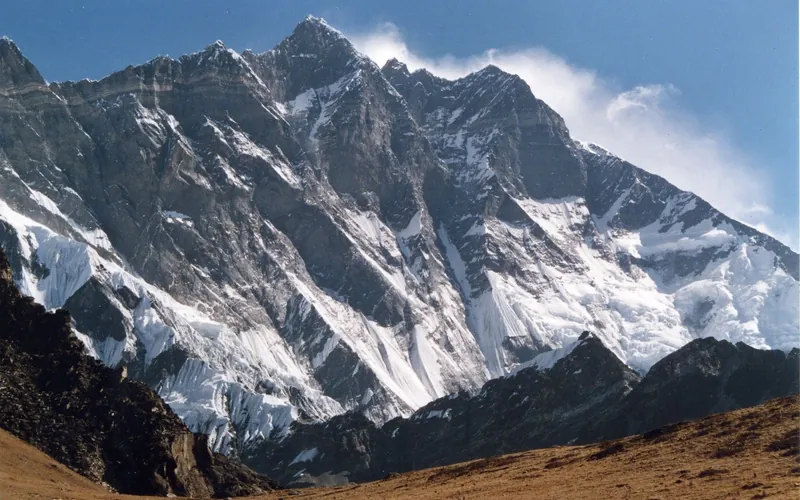
Lhotse Normal Route (West Face & Couloir)
The Normal Route on Lhotse shares the Everest South Col route through the treacherous Khumbu Icefall and across the Western Cwm up to Camp 3 on the Lhotse Face (7,200m). Beyond the Yellow Band, the route splits right from the South Col route and ascends directly into the notorious Lhotse Couloir—a narrow, 500-meter vertical gully of 45-to-50-degree hard blue ice funneling into the 8,516m summit.
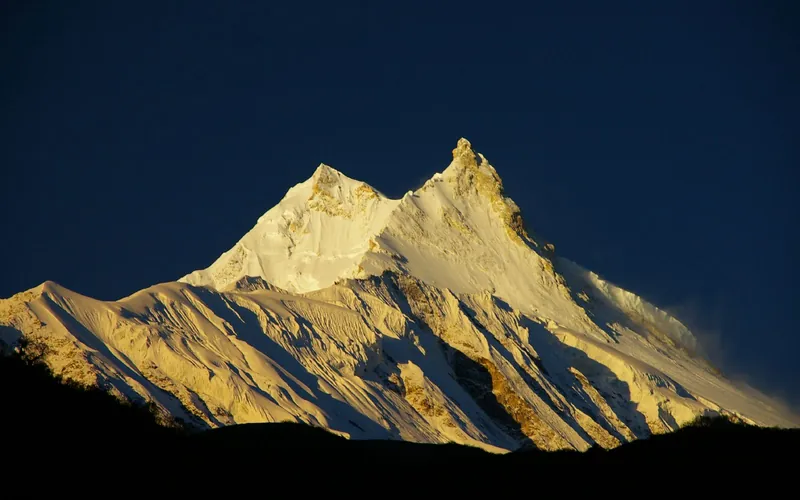
Manaslu Northeast Face (Normal Route)
The Northeast Face is the standard route on Manaslu, first forged in 1956 by a Japanese expedition. Ascending from the Manaslu Glacier above the village of Samagaon, the route climbs through an active, heavily crevassed icefall between Camps 1 and 2, traverses wide snow plateaus up to Camp 4, and culminates in a delicate, exposed knife-edge snow arête leading to the true summit pin.
Documented Expeditions (1)
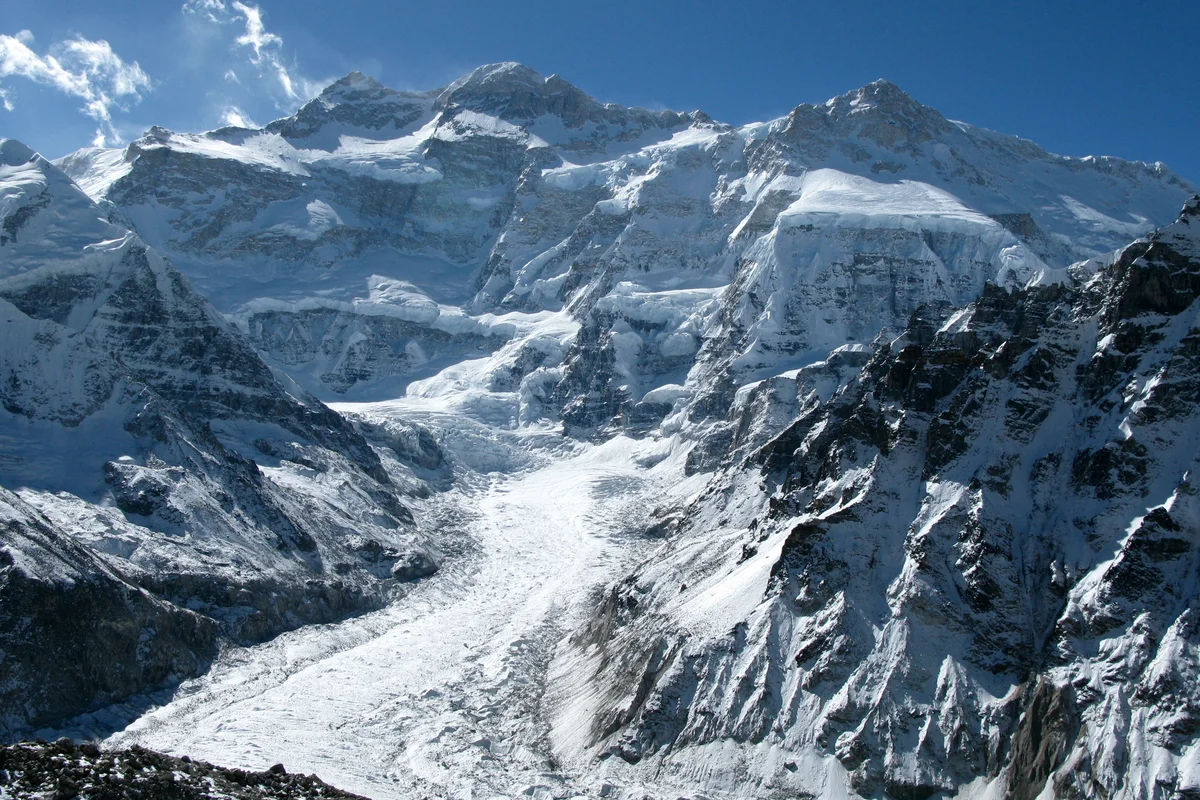
2009 Kinga Baranowska Kangchenjunga Expedition
On May 18, 2009, Polish mountaineer Kinga Baranowska conquered Kangchenjunga (8,586m) via the Southwest Face without supplemental oxygen, becoming the first Polish woman in history to stand on the summit of the world's third highest mountain.
Associated Chronicles & Stories (2)
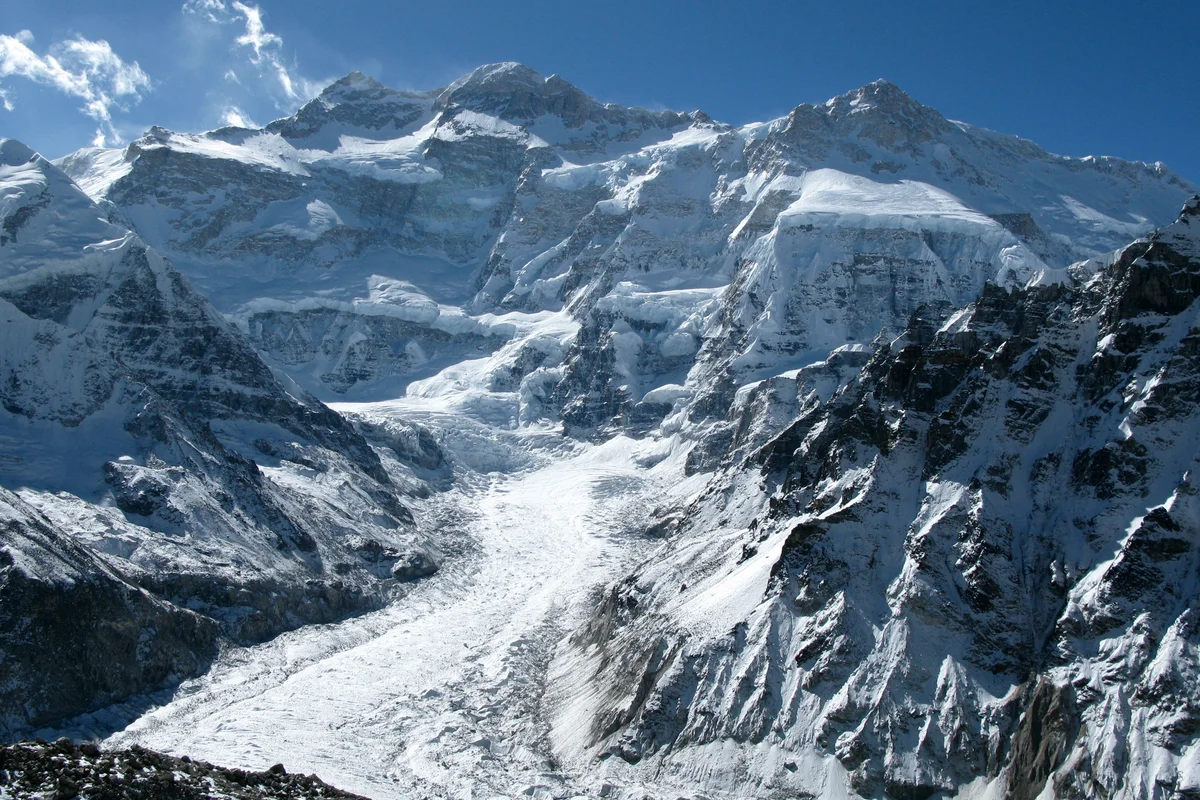
The Ghost of Yalung: Kinga Baranowska Conquers Kangchenjunga
On May 18, 2009, Kinga Baranowska became the first Polish woman to conquer Kangchenjunga without bottled oxygen, fulfilling the uncompleted dream of pioneer Wanda Rutkiewicz.
The Scholar's Crown: Piotr Pustelnik's 20-Year Quest on Annapurna
On April 27, 2010, Polish academic Piotr Pustelnik conquered Annapurna on his fifth attempt, becoming the third Pole and 20th person to climb all 14 eight-thousanders.
Documented Sources & Archival Citations
- American Alpine Journal: Kangchenjunga, First Polish Woman Ascent by Kinga Baranowska(American Alpine Club)
Supporting claim: Official climb record of the May 18, 2009 oxygenless summit of Kangchenjunga
Accessed/Documented: 2010 - Taternik: Polish Women on the 8000ers: Kinga Baranowska(Polish Mountaineering Association (PZA))
Supporting claim: Comprehensive documentation of Baranowska's nine oxygenless summits across Nepal and Pakistan
Accessed/Documented: 2016